


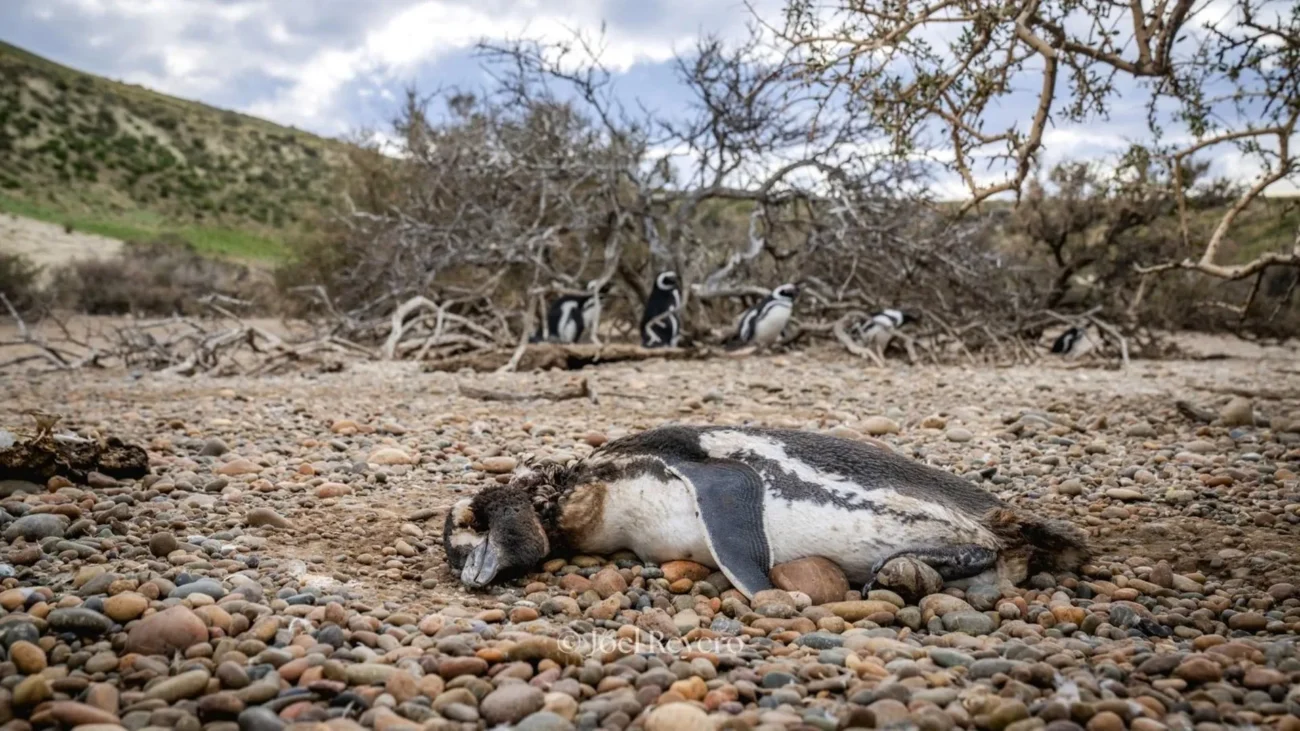
The delicate balance of restored ecosystems is being tested on Argentina’s Patagonian coast, where the return of a top predator, the puma, has introduced a new and complex threat to a burgeoning penguin population. This unfolding ecological drama at Monte Leon National Park raises fundamental questions for conservationists: when iconic species’ recovery paths intersect, potentially at the expense of another, how should conservation efforts be prioritized, especially in landscapes still bearing the scars of human alteration? The situation at Monte Leon underscores the intricate challenges of ecological restoration, particularly in areas that have undergone decades of human intervention and are now experiencing rapid, and sometimes unpredictable, environmental shifts.
From Cattle to Carnivores: A Shifting Patagonian Landscape
For much of the 20th century, Monte Leon and the surrounding Patagonian steppes were dominated by vast cattle ranches. This extensive agricultural practice significantly altered the natural landscape, suppressing native wildlife and concentrating livestock. The end of widespread cattle ranching in southern Argentina, particularly following policy shifts in the early 1990s, marked a pivotal moment for the region’s ecology. As the human footprint receded, the natural world began to reassert itself. Among the most significant beneficiaries of this ecological resurgence was the puma ( Puma concolor ), the apex predator of South America. Gradually, these magnificent cats began to reclaim territories that had been off-limits to them for generations, their presence a testament to the land’s recovery.
Simultaneously, a different kind of ecological shift was occurring among the marine and coastal inhabitants. Magellanic penguins ( Spheniscus magellanicus ), historically reliant on offshore islands for breeding, had begun a significant migration to the mainland. This terrestrial expansion was largely driven by the absence of effective land-based predators, offering them a seemingly safer haven to establish their colonies. For decades, this arrangement allowed penguin populations to flourish, unmolested by terrestrial threats. However, the return of the puma fundamentally altered this dynamic, bringing these two species into direct and unprecedented contact for the first time in modern recorded history.
A New Predator-Prey Dynamic Emerges
The arrival of pumas in areas frequented by Magellanic penguins presented a stark new reality for the flightless birds. Lacking the evolutionary defenses against large mammalian carnivores that their ancestors might have possessed, the penguins, particularly their young and vulnerable chicks, became an accessible food source. Initially, the extent of this new predation and its impact on the penguin colonies remained largely unknown, a growing concern for those monitoring the park’s recovering biodiversity.
Recognizing the importance of understanding these evolving ecological interactions, researchers established a dedicated monitoring program at Monte Leon National Park following its designation in 2004. Scientists from the Centro de Investigaciones de Puerto Deseado, affiliated with the Universidad Nacional de la Patagonia Austral, joined forces with park rangers to meticulously observe the penguin colonies. Their work involved systematic surveys of the nesting sites, focusing on identifying and documenting any signs of predation.
The Four-Year Study: Unveiling the Scale of Predation
A critical phase of this long-term observation spanned four years, from 2007 to 2010. During this period, researchers meticulously recorded instances of penguin carcasses directly attributable to puma attacks. This intensive data collection laid the groundwork for a more in-depth analysis of the predator-prey relationship.
To further scrutinize the findings and assess the long-term implications for the penguin population, the research team embarked on a collaborative effort with international experts. They partnered with researchers from the renowned Wildlife Conservation Research Unit (WildCRU) at Oxford University. This collaboration brought together local ecological knowledge with advanced analytical techniques and modeling expertise, enabling a comprehensive evaluation of the collected data.
Quantifying the Impact: Thousands of Penguins Lost
The results of the study were striking, revealing a significant level of predation. By analyzing the carcass counts, researchers estimated that a staggering number of adult penguins, exceeding 7,000, were killed by pumas over the four-year observation period. This figure represents approximately 7.6% of the estimated adult penguin population at Monte Leon, which numbered around 93,000 individuals at the time.
What amplified the concern was the nature of the kills. A substantial proportion of the carcasses were found to be only partially consumed, or in some cases, entirely uneaten. This observation strongly suggested that the pumas’ actions were not solely driven by nutritional necessity.
Melisa Lera, a postgraduate student at WildCRU and lead author of the study, elaborated on this phenomenon: "The number of carcasses showing signs of predation we found in the colony is overwhelming, and the fact that they were left uneaten means pumas were killing more penguins than they required for food. This is consistent with what ecologists describe as ‘surplus killing’." Lera drew a compelling parallel to domestic cats, explaining, "It is comparable to what is seen in domestic cats when prey are abundant and/or vulnerable: ease of capture can lead to cats hunting more birds, even when they do not end up actually eating them. We needed to understand if the penguin colony’s persistence could be threatened due to this behavior." This behavior, often termed "surplus killing," is characteristic of predators that exploit easily accessible prey, sometimes killing for reasons beyond immediate hunger, such as instinct or territorial display.
Population Models: Beyond the Apex Predator
While the scale of direct predation was significant, the research team’s application of sophisticated population models yielded a nuanced understanding of the penguin colony’s overall health. These models, which factor in various demographic variables, revealed that puma predation alone was unlikely to be the sole driver of extinction for the Monte Leon penguin colony.
Instead, the models pointed to other, more critical factors influencing the colony’s persistence. Foremost among these were breeding success – the number of chicks successfully hatched and raised – and the survival rates of juvenile penguins as they transitioned into adulthood. These elements, often more susceptible to environmental fluctuations, emerged as the primary determinants of the colony’s long-term viability.
The hypothetical scenarios explored by the models indicated that extinction would only become a probable outcome under extreme circumstances. These included a drastic decline in juvenile survival, where as many as 20% of young penguins failed to reach maturity, coupled with severely limited reproductive output, such as a maximum of one chick per breeding pair. In such dire conditions, elevated levels of puma predation would undoubtedly exacerbate the situation, but the models clearly indicated that these other factors would be the root cause of the crisis.
Dr. Jorgelina Marino, a co-author of the study and researcher at WildCRU, emphasized the broader significance of these findings: "This study captures an emerging conservation challenge, where recovering carnivores are encountering novel prey. Understanding how these dietary shifts affect both predators and prey is essential to inform conservation." Her statement highlights the growing recognition that as ecosystems heal, the interactions between species become more complex, requiring adaptive and informed conservation strategies.
The Shadow of Climate Change and Broader Pressures
The critical role of breeding success and juvenile mortality in penguin population stability underscores the vulnerability of these birds to environmental changes. The researchers strongly advocate for a deeper understanding of how environmental conditions, often influenced by global climate change, impact penguin reproduction. Factors such as the availability of food resources, oceanographic conditions affecting prey abundance, and sea surface temperatures are known to be sensitive to climate shifts and could significantly shape the future trajectory of the penguin colony.
The challenges observed at Monte Leon are not isolated incidents. Similar ecological reconfigurations are occurring globally as terrestrial predators expand their ranges and interact with previously undisturbed coastal environments. Mainland seabird colonies, often established on accessible landmasses, are becoming increasingly susceptible to novel threats. For instance, in the United States, invasive feral hogs have become significant predators of loggerhead sea turtle eggs along the Georgia coast. Concurrently, coyotes in eastern North America are expanding their presence onto coastal barrier islands, leading to significant alterations in these fragile ecosystems. These examples illustrate a recurring pattern of ecosystem recovery leading to new conservation dilemmas.
The Imperative of Ongoing Monitoring and Adaptive Management
The authors of the study are unequivocal in their assertion that continued, robust monitoring is not merely beneficial but essential for effective conservation. Early detection of population declines allows for timely intervention and guides management decisions before irreversible ecological damage occurs.
At Monte Leon National Park, this commitment to monitoring is ongoing. Park authorities, in collaboration with scientific institutions, continue to track both puma and penguin populations. This vigilant observation is crucial for navigating the complex consequences of ecosystem recovery, ensuring that the resurgence of one species does not inadvertently jeopardize the survival of another, and that the delicate balance of this recovering Patagonian landscape is preserved for future generations. The situation serves as a potent reminder that conservation is not a static endeavor but a dynamic process requiring constant adaptation and a willingness to address emergent challenges. The ongoing story of the pumas and penguins of Monte Leon offers a critical case study for conservationists worldwide grappling with the intricate realities of a world where nature is, in many places, making a comeback.

