


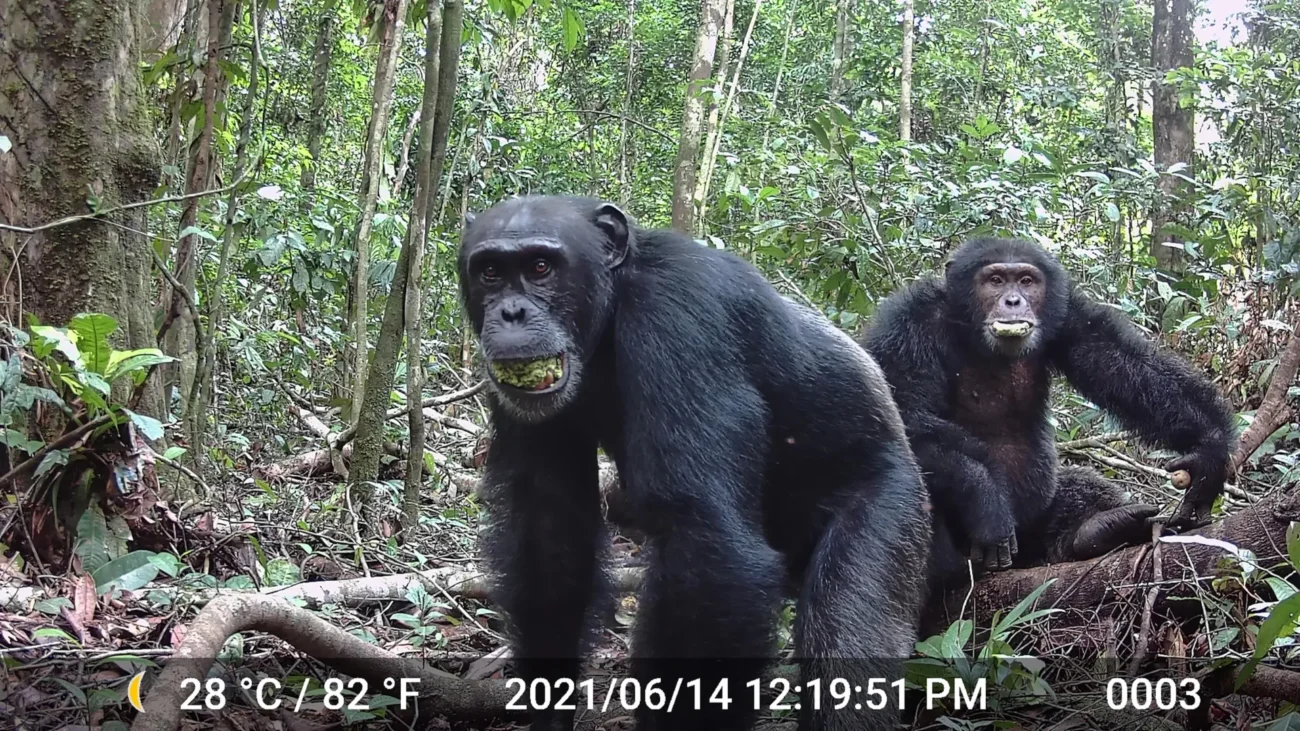
The groundbreaking findings from the University of California, Berkeley, have revealed that chimpanzees in their natural African habitat regularly consume alcohol through their diet of wild fruits. This landmark research, published in the esteemed journal Science Advances, provides the first quantitative evidence of ethanol intake in wild primates, suggesting that alcohol has been a consistent component of the diets of our closest living relatives and, by extension, our ancient human ancestors for millennia. The study indicates that chimpanzees may be ingesting the equivalent of more than two standard alcoholic drinks per day, a revelation that could profoundly reshape our understanding of primate evolution and human attraction to alcohol.
A Routine Part of the Primate Diet
For decades, scientists have debated the extent to which wild primates consume fermented foods. While the "drunken monkey" hypothesis, first proposed by Professor Robert Dudley of UC Berkeley over twenty years ago, posits deep evolutionary roots for human alcohol consumption stemming from ancient foraging habits, concrete evidence from wild populations has been scarce. This new research, led by UC Berkeley graduate student Aleksey Maro, offers compelling data to support this long-standing theory.
Maro meticulously analyzed 21 different fruit species commonly consumed by chimpanzees at two long-term research sites: Ngogo in Uganda’s Kibale National Park and Taï in Ivory Coast. Through sophisticated field techniques and laboratory analysis, the team determined that these fruits, on average, contain approximately 0.26% alcohol by weight. Considering that chimpanzees typically consume a substantial amount of fruit daily – estimated at around 10 pounds (4.5 kilograms) per day, making up roughly three-quarters of their total food intake – this seemingly low concentration translates into a significant daily alcohol dosage.
"Across all sites, male and female chimpanzees are consuming about 14 grams of pure ethanol per day in their diet, which is the equivalent to one standard American drink," stated Maro. "When you adjust for body mass, because chimps weigh about 40 kilos versus a typical human at 70 kilos, it goes up to nearly two drinks." A standard American drink is defined as containing 14 grams of ethanol, irrespective of the consumer’s body size, highlighting the substantial intake for these primates.
Rigorous Fieldwork and Advanced Measurement Techniques
The study’s foundation lies in two extensive field seasons conducted by Maro between 2019 and 2021. At Ngogo, home to one of Africa’s largest chimpanzee communities, researchers observed chimps actively harvesting fruits from trees, with a particular fondness for certain fig species. At Taï, where chimps often consume fallen fruits, similar collection methods were employed. The team focused on collecting intact, freshly fallen fruits from beneath fruiting trees where chimpanzees had recently been feeding, ensuring the samples accurately reflected what the animals were consuming.
Each collected fruit sample was immediately sealed in airtight containers, with detailed notes recorded on species, size, color, and softness. To preserve the alcohol content and halt further ripening, the fruits were frozen back at the research base camps. Maro then employed three distinct analytical techniques to measure the ethanol concentration: a semiconductor-based sensor akin to a breathalyzer, a portable gas chromatograph, and a chemical assay. Before deploying these methods in the field, Maro rigorously validated each technique in Professor Dudley’s laboratory at UC Berkeley, ensuring accuracy and reproducibility under challenging field conditions.
"The strength of Aleksey’s approach is that it used multiple methods," commented Professor Dudley. "One of the reasons this has been a tempting target but no one’s gone after it is because it’s so hard to do in a field site where there are wild primates eating known fruits. This dataset has not existed before, and it has been a contentious issue."
The measurement process itself was a testament to scientific ingenuity in remote settings. Two of the methods involved thawing the fruit, carefully peeling and de-seeding the pulp, and then blending it. The pulp was placed in a sealed container for a few hours to allow any produced alcohol to vaporize into the air above the pulp – the "headspace." This headspace was then analyzed for ethanol content. The third method involved extracting liquid from the pulp and using color-changing chemicals that react specifically to ethanol. These advanced techniques, applied consistently, yielded reliable and comparable alcohol readings, providing a robust dataset.
Alcohol-Rich Fruits and Chimpanzee Preferences
Intriguingly, the fruits that chimpanzees consume most frequently at both research sites also exhibited the highest alcohol concentrations. At Ngogo, the fig species Ficus musuco emerged as a prime source of ethanol, with groups of male chimpanzees often congregating in the trees to feast on these fruits before embarking on territorial patrols. Similarly, at Taï, the plum-like fruit of the evergreen Parinari excelsa proved to be a highly favored and alcohol-rich food source. Notably, these P. excelsa fruits are also known to attract elephants, animals that are themselves often drawn to the scent and presence of alcohol.
The study calculated weighted average alcohol content, factoring in the frequency with which chimps consume each fruit species. These figures revealed an average of 0.32% by weight at Ngogo and 0.31% at Taï, underscoring the consistent presence of alcohol in their diet.
Evolutionary Implications and the "Drunken Monkey" Hypothesis Revisited
The implications of these findings extend far beyond understanding chimpanzee dietary habits. They provide strong support for the "drunken monkey" hypothesis, suggesting that our last common ancestor with chimpanzees, a primate species that lived millions of years ago, likely encountered alcohol on a daily basis through fermenting fruits. This evolutionary exposure may have shaped our own species’ complex relationship with alcohol.
"Chimpanzees consume a similar amount of alcohol to what we might if we ate fermented food daily," Maro observed. "Human attraction to alcohol probably arose from this dietary heritage of our common ancestor with chimpanzees."
Professor Dudley elaborated on the hypothesis, which suggests that humans’ attraction to alcohol is not merely a modern cultural phenomenon but has deep evolutionary roots. The ability to detect and utilize the energy-rich sugars in fermenting fruits, often signaled by the presence of alcohol, could have provided a significant evolutionary advantage.
While chimpanzees in the study did not exhibit overt signs of intoxication, it’s important to note that their digestive systems are likely adapted to process these compounds. To become visibly drunk, a chimpanzee would need to consume an amount of fruit that would cause extreme physical discomfort due to stomach distension. Therefore, the observed intake represents a steady, low-level exposure rather than acute intoxication.
Broader Context: Alcohol in the Diets of Other Animals
The UC Berkeley research also situates primate alcohol consumption within a wider ecological context. Professor Dudley and his colleagues have previously investigated alcohol in the diets of other animals. A study earlier this year analyzed feathers from 17 bird species, finding alcohol metabolites in 10 of them, indicating significant ethanol intake from nectar, grains, insects, and even other vertebrates.
"The consumption of ethanol is not limited to primates," Dudley stated. "It’s more characteristic of all fruit-eating animals and, in some cases, nectar-feeding animals." This suggests that the presence of alcohol in food sources is a common ecological factor influencing a wide range of animal behaviors and evolutionary trajectories.
Several hypotheses attempt to explain why animals might seek out ethanol. One suggests that its scent acts as an olfactory cue, helping animals locate calorie-rich, ripe fruits or nectar. Another possibility is that alcohol may enhance the palatability or rewarding nature of food, similar to how humans perceive wine with a meal. Furthermore, the sharing of alcohol-containing fruits could potentially play a role in fostering social bonds within animal groups.
"It just points to the need for additional federal funding for research into alcohol attraction and abuse by modern humans. It likely has a deep evolutionary background," Dudley emphasized, highlighting the need for continued scientific inquiry into this complex issue.
Future Research and Unanswered Questions
This pioneering study has laid the groundwork for future investigations. Maro plans to continue his research by collecting urine samples from sleeping chimpanzees to test for alcohol metabolites, using kits similar to those employed in workplace drug testing in the United States. This next phase aims to directly measure how the body processes the ingested ethanol and to correlate these findings with observed foraging behaviors.
"The new research establishes a baseline for future projects in chimpanzee reserves that aim to determine how often chimps select fermented, alcohol containing fruits over less fermented options," the study concludes.
The collaboration included researchers Aaron Sandel from the University of Texas, Austin; Bi Z. A. Blaiore and Roman Wittig from the Taï Chimpanzee Project; and John Mitani from the University of Michigan, Ann Arbor, a co-founder of the Ngogo Chimpanzee Project. The research was primarily funded by UC Berkeley, underscoring the institution’s commitment to advancing our understanding of primate behavior and evolution. The findings represent a significant leap forward in a long-standing scientific debate, offering tangible evidence that the allure of alcohol may be deeply woven into the evolutionary fabric of our primate lineage.

