


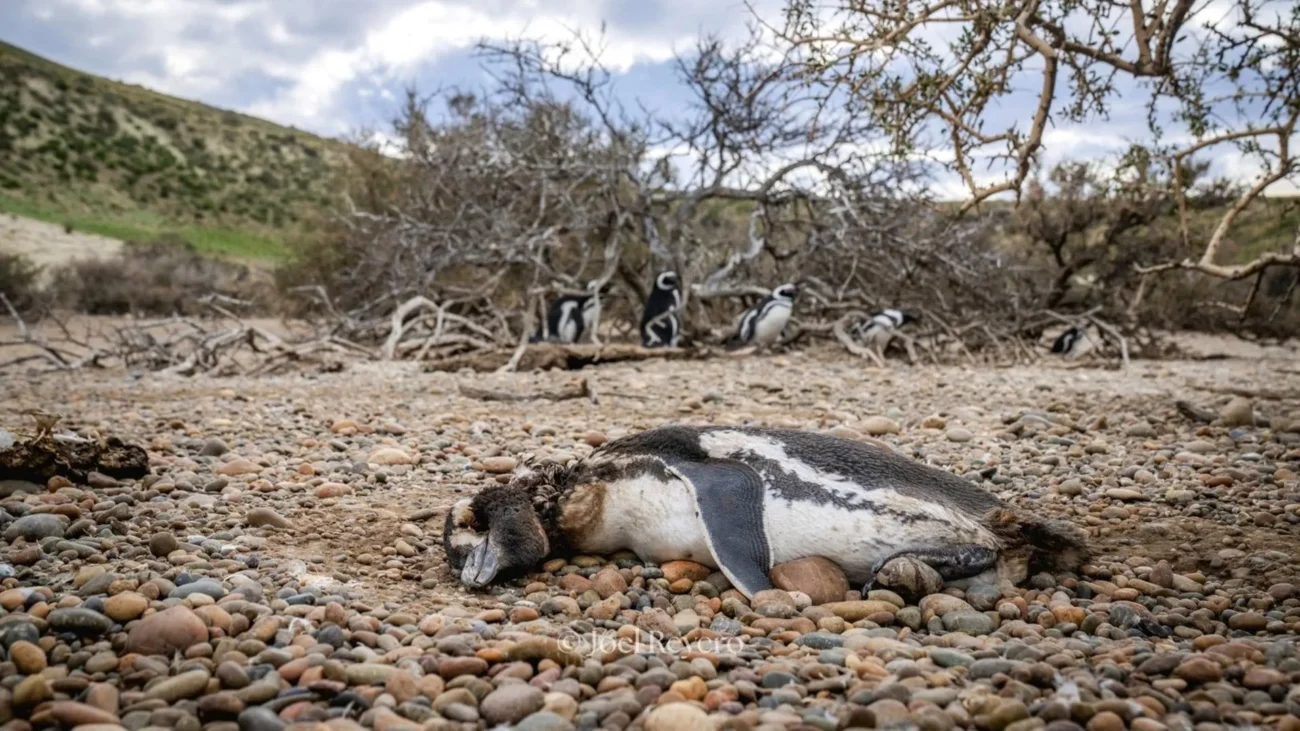
The delicate balance of nature, often disrupted by human intervention, presents conservationists with increasingly complex challenges. In the recovering landscapes of Monte Leon National Park on Argentina’s Patagonian coast, a stark dilemma has emerged: should conservation efforts prioritize the protection of one iconic species when that protection might inadvertently threaten another, particularly in an ecosystem still healing from decades of human activity? This profound question lies at the heart of a growing conservation puzzle, highlighting the intricate realities of restoring ecosystems that have undergone significant alteration and are now experiencing rapid ecological shifts.
A Resurgent Predator and a Vulnerable Prey
The story unfolds with the return of the puma ( Puma concolor ), a formidable predator that once roamed freely across southern Argentina. Following the cessation of widespread cattle ranching in 1990, these magnificent big cats gradually began to re-establish their presence in their historic territories. This resurgence, a triumph for wildlife recovery, brought pumas into direct contact with Magellanic penguins ( Spheniscus magellanicus ) for the first time in modern recorded history.
For decades, Magellanic penguins had found refuge on offshore islands, safe from terrestrial predators. As they subsequently began colonizing mainland sites, such as those within Monte Leon National Park, they did so in an environment largely devoid of large carnivores. This absence meant that the penguins developed few natural defenses against substantial land predators. Consequently, upon the pumas’ return, the penguins, with their limited evasive capabilities against such powerful hunters, became an accessible and vulnerable prey source. The extent to which this novel interaction was impacting penguin population numbers, however, remained largely unknown until recent scientific investigations.
Decades of Observation Culminate in a Groundbreaking Study
The establishment of Monte Leon National Park in 2004 marked a significant step towards ecological restoration. Since its inception, researchers from the Centro de Investigaciones de Puerto Deseado of the Universidad Nacional de la Patagonia Austral, in collaboration with park rangers, have maintained a vigilant watch over the penguin colonies. This long-term monitoring effort has been crucial in documenting the evolving ecological dynamics within the park.
A key phase of this monitoring occurred between 2007 and 2010. During this four-year period, researchers meticulously recorded instances of penguin carcasses directly attributable to puma attacks. These initial observations provided the first quantitative evidence of the predation pressure exerted by the re-established puma population on the Magellanic penguins.
Recognizing the potential long-term implications of these findings, the research team sought to deepen their understanding. They partnered with the esteemed Wildlife Conservation Research Unit (WildCRU) at Oxford University, a globally recognized center for ecological research and conservation. This collaboration brought together local expertise with international scientific rigor, enabling a comprehensive analysis of the collected data and an assessment of the sustained impact on the penguin colony’s viability.
The Scale of Predation: Thousands of Lives Lost
The subsequent analysis, incorporating data from the extensive carcass counts, revealed a sobering reality. Researchers estimated that over the four-year study period, more than 7,000 adult penguins fell victim to puma predation. The nature of these kills was particularly striking: many of the birds were found only partially consumed, or in some cases, not eaten at all. This behavior strongly suggested that the killings were not solely driven by nutritional necessity, but rather by a more complex predatory dynamic.
This figure represents a significant portion of the adult penguin population, estimated at around 93,000 individuals at the time, accounting for approximately 7.6% of the adult demographic.
Melisa Lera, a postgraduate student at WildCRU and lead author of the study, described the findings as "overwhelming." She elaborated on the unusual predation pattern: "The fact that they were left uneaten means pumas were killing more penguins than they required for food. This is consistent with what ecologists describe as ‘surplus killing.’ It is comparable to what is seen in domestic cats when prey are abundant and/or vulnerable: ease of capture can lead to cats hunting more birds, even when they do not end up actually eating them. We needed to understand if the penguin colony’s persistence could be threatened due to this behavior." This observation underscores the complexity of predator-prey relationships when novel interactions emerge.
Population Models: Unveiling the True Drivers of Decline
To ascertain the actual threat posed by puma predation, the research team employed sophisticated population models. These models, designed to simulate the dynamics of species populations over time, allowed scientists to project the future of the Monte Leon penguin colony under various scenarios.
The results of these simulations offered a nuanced perspective. They indicated that puma predation alone was unlikely to be the sole driver of the Monte Leon penguin colony’s extinction. Instead, the models pointed to other factors as being far more influential in determining the colony’s long-term persistence. These critical factors included breeding success rates and the survival of juvenile penguins.
Extinction was projected only in highly improbable hypothetical scenarios. These extreme conditions involved a combination of very low juvenile survival, where approximately 20% of young penguins failed to reach adulthood, coupled with severely limited reproductive output, where pairs managed to raise a maximum of only one chick. In such dire hypothetical circumstances, while high levels of puma predation would exacerbate the situation, it was not identified as the primary initiating cause of decline.
Dr. Jorgelina Marino, a co-author of the study from WildCRU at Oxford University, emphasized the broader significance of the research: "This study captures an emerging conservation challenge, where recovering carnivores are encountering novel prey. Understanding how these dietary shifts affect both predators and prey is essential to inform conservation." This sentiment highlights the evolving nature of conservation science and the need for adaptive management strategies.
The Shadow of Climate Change and Broader Environmental Pressures
The study’s findings underscore the critical importance of breeding success and juvenile mortality in maintaining the stability of penguin populations. Consequently, the researchers strongly advocate for a deeper understanding of how environmental conditions influence penguin reproduction. Factors such as nutrient availability in the marine environment, the abundance and accessibility of prey fish species, and ambient temperature are all known to be significantly impacted by climate change. These environmental variables are likely to play a substantial role in shaping the future trajectory of the Monte Leon penguin colony.
The challenges observed at Monte Leon are not isolated incidents. Similar ecological dramas are unfolding in various parts of the world as land predators expand their range into coastal environments. Mainland seabird colonies and other coastal species are increasingly finding themselves vulnerable to these shifts. For instance, in the United States, non-native feral hogs have become significant predators of loggerhead sea turtle eggs along the Georgia coast. Simultaneously, coyotes in eastern North America are expanding their territories onto coastal barrier islands, leading to profound alterations in those delicate ecosystems. These examples illustrate a global trend of shifting predator-prey dynamics in response to both ecological recovery and anthropogenic environmental changes.
The Imperative of Continuous Monitoring and Adaptive Management
The authors of the study are unequivocal in their assertion that ongoing, rigorous monitoring is paramount. Such continuous observation is essential for the early detection of population declines and for guiding effective management decisions before significant ecological damage becomes irreversible. At Monte Leon National Park, the commitment to this principle remains strong. Authorities continue to diligently track both puma and penguin populations, navigating the intricate and often unpredictable consequences of ecosystem recovery.
The long-term implications of this research extend beyond the specific case of Monte Leon. It serves as a critical case study for conservationists worldwide, emphasizing the need for nuanced approaches that consider the interconnectedness of species and the dynamic nature of recovering ecosystems. As human influence on the environment continues to evolve, so too must our strategies for safeguarding biodiversity, acknowledging that conservation success for one species can sometimes present unforeseen challenges for another. The ongoing efforts at Monte Leon National Park are a testament to the adaptive and resilient spirit of conservation science, striving to find solutions that foster the health of entire ecosystems, rather than focusing on individual species in isolation. The park’s journey exemplifies the complex ethical and ecological considerations inherent in true ecosystem restoration, where the re-emergence of natural processes necessitates careful observation and thoughtful intervention.

