


The scientific community stands at a pivotal juncture, grappling with profound questions surrounding nonhuman consciousness, a discourse significantly advanced by recent findings summarized from Dr. Irene Pepperberg’s 2026 paper. Fifty years have passed since Donald Griffin’s seminal 1976 book, "The Question of Animal Awareness," revolutionized the biological sciences by positing that nonhuman animals possessed levels of self-awareness comparable to humans. At the time, this proposition was nothing short of revolutionary. The prevailing scientific paradigm largely viewed nonhumans as instinct-driven entities, or, at best, creatures whose actions were conditioned solely by reward and punishment mechanisms, a perspective meticulously reviewed in Pepperberg’s 1999 work, "The Alex Studies." Today, while the debate over nonhuman consciousness — its very existence, extent, and methods of evaluation, particularly in non-primates such as birds — remains vigorously unsettled, a growing consensus is emerging. This shift was underscored by the 2024 New York Declaration on Animal Consciousness, signed by hundreds of scientists, asserting "strong scientific support" for consciousness in mammals, birds, and potentially all other vertebrates. However, concrete, unequivocal proof of such consciousness continues to elude researchers in both human and nonhuman subjects, presenting one of the most complex challenges in contemporary neuroscience and cognitive science.
Historical Context: The Dawn of Animal Awareness
Donald Griffin’s 1976 work fundamentally challenged the prevailing behaviorist and reductionist views that had dominated animal psychology for decades. Before Griffin, the scientific establishment, heavily influenced by figures like B.F. Skinner, largely dismissed the notion of animal minds, focusing instead on observable behaviors and conditioned responses. Animals were often seen as biological automata, responding mechanistically to environmental stimuli. Griffin, a renowned ethologist, meticulously compiled evidence from various fields, including animal communication, navigation, and problem-solving, to argue that such complex behaviors could not be adequately explained without invoking internal subjective experiences, or what he termed "awareness." His book served as a catalyst, sparking renewed interest in cognitive ethology and paving the way for a more nuanced understanding of animal sentience and cognition. While initially met with skepticism, Griffin’s courageous stance laid the groundwork for subsequent generations of researchers, including Dr. Irene Pepperberg, who would dedicate their careers to empirically investigating the cognitive capabilities of animals, particularly Grey Parrots.
Defining the Undefinable: The Elusive Nature of Consciousness
A significant hurdle in the study of nonhuman consciousness lies in its very definition and the development of robust, unbiased metrics for its evaluation. Many studies initially focused on sentience, defined as the ability to experience emotions and sensations, as a primary indicator. While an essential component, this approach immediately raises further questions: How can we reliably assess emotions and sensations in species that cannot verbally articulate their internal states? Humans themselves often struggle to accurately identify and describe their own complex emotions, as highlighted by basic reviews like Plutchik (2001). This inherent difficulty is magnified exponentially when attempting to probe the emotional landscapes of nonhuman animals. Reducing consciousness solely to the capacity for pain, while a necessary ethical consideration, would be overly simplistic and insufficient to capture the richness implied by human-like consciousness. Pain sensitivity, while indicative of basic sensory processing, does not necessarily imply higher-order cognitive functions or self-awareness.
In response to these challenges, researchers like Birch et al. (2020) and Bayne et al. (2024) have developed intricate metrics and theoretical frameworks for assessing animal consciousness. While these models offer valuable insights, they often carry an inherent bias towards human cognitive capacities, making their direct application to species with vastly different sensory and neurological architectures problematic. Recognizing these limitations, Pepperberg and Lynn (2000) proposed a hierarchical model of consciousness, suggesting that different "levels" of awareness might exist, correlating with the quantifiable cognitive abilities of a given species. This framework posited that these cognitive processing levels likely arose from homologous or convergent brain evolution, shared perceptual structures, and similar learning mechanisms. This theoretical leap, however, immediately confronted the scientific community with the challenge of identifying parallels between human and nonhuman cognitive processes and, crucially, the search for a "neural correlate of consciousness" (NCC). The quest for a definitive NCC remains ongoing even in humans (Cognitive Consortium, 2025), making its identification in nonhumans an even more formidable task.
The complexity is further compounded by the rapid advancements in artificial intelligence. Modern AI systems now demonstrate impressive levels of cognitive processing, often surpassing human capabilities in specific tasks. If processing power alone were the criterion for consciousness, then these sophisticated AI systems would be strong candidates. However, as Block (2025) points out, current AI systems demonstrably lack self-awareness. This distinction pulls the debate back towards the importance of sentience and away from purely higher-order cognitive processing as the sole determinant of consciousness, emphasizing that true consciousness encompasses more than just computational prowess.
The New Consensus and Persistent Challenges
The landscape of animal consciousness research underwent a significant shift with the promulgation of the New York Declaration on Animal Consciousness in 2024. This declaration, endorsed by a substantial number of leading scientists, formally asserted that strong scientific evidence now supports the existence of conscious experience in a wide range of nonhuman animals, including mammals, birds, and potentially even cephalopods. This statement represents a landmark moment, moving the discussion from whether animals are conscious to understanding the nature and extent of their consciousness. It calls for a re-evaluation of ethical and legal frameworks governing human-animal interactions, acknowledging the moral weight of these findings.
Despite this declaration, the scientific pursuit of definitive proof remains arduous. Full consciousness, as understood in this context, extends beyond mere monitoring of sensory inputs and mental states. It involves executive control over decision-making and voluntary action, and critically, an awareness of one’s own thoughts – the metacognitive capacity of being aware that one is aware. This last element, self-awareness, presents a formidable challenge for empirical investigation in nonhumans. Even species that exhibit advanced referential communication, such as some primates and parrots, do not possess the symbolic language structures necessary to verbally report or discuss their internal states of self-awareness. This communication barrier necessitates the development of ingenious behavioral tasks that can indirectly reveal the presence of self-awareness.
Grey Parrots: A Window into Avian Cognition
Among the most compelling subjects in the study of nonhuman cognition are Grey Parrots, epitomized by the groundbreaking research conducted by Dr. Irene Pepperberg and her avian collaborators, Alex and Griffin. For decades, Pepperberg’s work has systematically dismantled the notion that complex cognitive abilities are exclusive to primates or mammals. Her research, particularly with Alex, demonstrated Grey Parrots’ capacity for object recognition, numerical comprehension, functional use of English words, and even rudimentary syntax. Alex could identify objects by color, shape, and material, understand concepts like "same" and "different," and even express desires and frustrations. This body of work, summarized in "The Alex Studies," provided foundational evidence for sophisticated avian intelligence, setting the stage for deeper inquiries into their consciousness.
The current focus of Pepperberg’s research, as detailed in her 2026 paper, delves into specific behavioral patterns that, when observed in humans, are indicative of self-awareness. The key to these tasks is that successful completion requires the subject to demonstrate abilities that necessitate an understanding of their own mental states and future actions. These tasks serve as behavioral proxies for self-awareness, offering insights that complement more direct neurobiological approaches.
Delayed Gratification: A Hallmark of Self-Awareness
One of the most powerful illustrative examples highlighted in Pepperberg (2026) is the concept of delayed gratification. This task, widely used in human developmental psychology, involves the ability to forgo an immediate, less desirable reward in favor of a superior reward offered after a period of waiting. In humans, success in delayed gratification tasks is strongly correlated with executive function, impulse control, and future planning – all facets deeply intertwined with self-awareness.
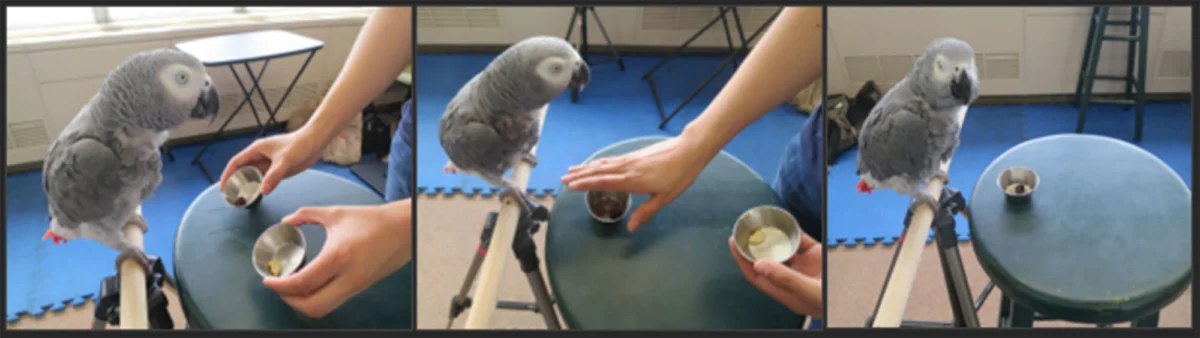
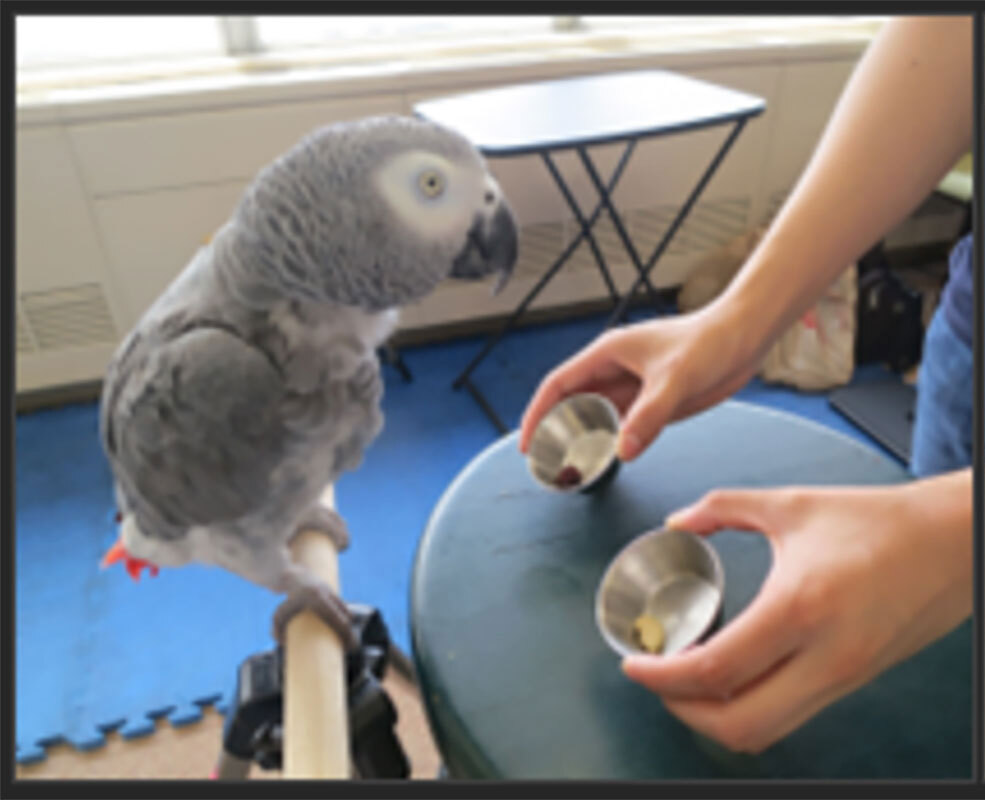
Grey Parrots, particularly Griffin (pictured in the original research), have shown remarkable aptitude in these tasks. In typical experiments, Griffin is presented with two sets of rewards, clearly demonstrating the difference in appeal (e.g., a small treat versus a larger, more desired one). One reward is then temporarily removed, and the remaining, less appealing one is briefly covered while Griffin is instructed to "wait." During this delay, Griffin must actively suppress his immediate impulse to consume the available, albeit less desirable, treat. To succeed, the parrot must:
- Recognize and Understand: Comprehend the value proposition and the potential conflict between immediate gratification and long-term goals.
- Suppress Impulses: Actively inhibit immediate needs and desires for the accessible reward.
- Maintain Memory: Keep the long-term, superior goal active in working memory throughout the delay period.
- Devise Strategy: Engage in strategic thinking, possibly involving internal monologue or mental simulation, to bridge the temporal gap and achieve the desired outcome.
Studies by Koepke et al. (2015), Pepperberg and Rosenberger (2022), and Pepperberg and Hartsfield (2023) have consistently demonstrated Grey Parrots’ impressive capabilities in these delayed gratification scenarios. Griffin’s ability to patiently wait, even with a desired but lesser reward within reach, strongly suggests a capacity for future planning, self-regulation, and an understanding of consequences – all attributes deeply linked to self-awareness. While Pepperberg (2026) also acknowledges potential problematic issues with delayed gratification tasks in general, the consistent performance of Grey Parrots across varied iterations provides compelling, albeit indirect, evidence.
It is crucial to emphasize that these illustrative examples, including delayed gratification tasks, do not constitute definitive proof of avian consciousness or, specifically, Grey Parrot consciousness. Rather, they provide significant insights and robust empirical evidence that must be integrated with other forms of data, including those derived from neurobiological and comparative cognitive tests proposed by researchers like Birch et al. (2020) and Bayne et al. (2024). The ongoing quest is to evaluate the levels and qualities of avian conscious behavior through a multi-faceted approach.
Beyond Proof: Ethical Imperatives and Welfare Implications
The pursuit of irrefutable scientific proof for nonhuman consciousness is a protracted and complex endeavor. However, Dr. Pepperberg argues that when considering how best to coexist with nonhumans, a pragmatic approach is warranted. The stringent levels of certainty typically demanded for scientific proof of consciousness might need to be re-evaluated and potentially lowered when translating findings into ethical and welfare protocols. In the spirit of the "Do No Harm" principle, as articulated by the New York Declaration (Andrews et al., 2024), evidence that is merely indicative of consciousness should be considered integral to the design of policies concerning animal welfare, humane treatment, and conservation.
This perspective implies a shift from requiring absolute certainty to adopting a precautionary principle. If there is strong suggestive evidence that a species possesses consciousness, even if not definitively "proven" to human standards, then ethical considerations should err on the side of caution. This approach would have profound implications for captive animal management, agricultural practices, wildlife conservation strategies, and even the legal status of animals. Recognizing the potential for complex internal lives in species like Grey Parrots necessitates a fundamental re-evaluation of how human societies interact with and impact the nonhuman world.
The Future of Animal Consciousness Research
The journey to fully comprehend nonhuman consciousness is far from over. It is an ongoing, interdisciplinary quest that demands rigorous scientific inquiry, open-mindedness to alternative explanations, and a willingness to challenge anthropocentric biases. The work summarized by Dr. Irene Pepperberg (2026) not only highlights the remarkable cognitive abilities of Grey Parrots but also contributes significantly to the broader scientific and philosophical discourse on animal minds. As research continues to uncover increasingly sophisticated cognitive and emotional capacities in diverse species, the ethical imperative to collect the best possible evidence – whether positive, negative, or even contradictory – becomes paramount. Ultimately, understanding the full spectrum of consciousness across the animal kingdom will not only redefine humanity’s place within it but also guide the development of more compassionate and responsible stewardship of all living beings.

