


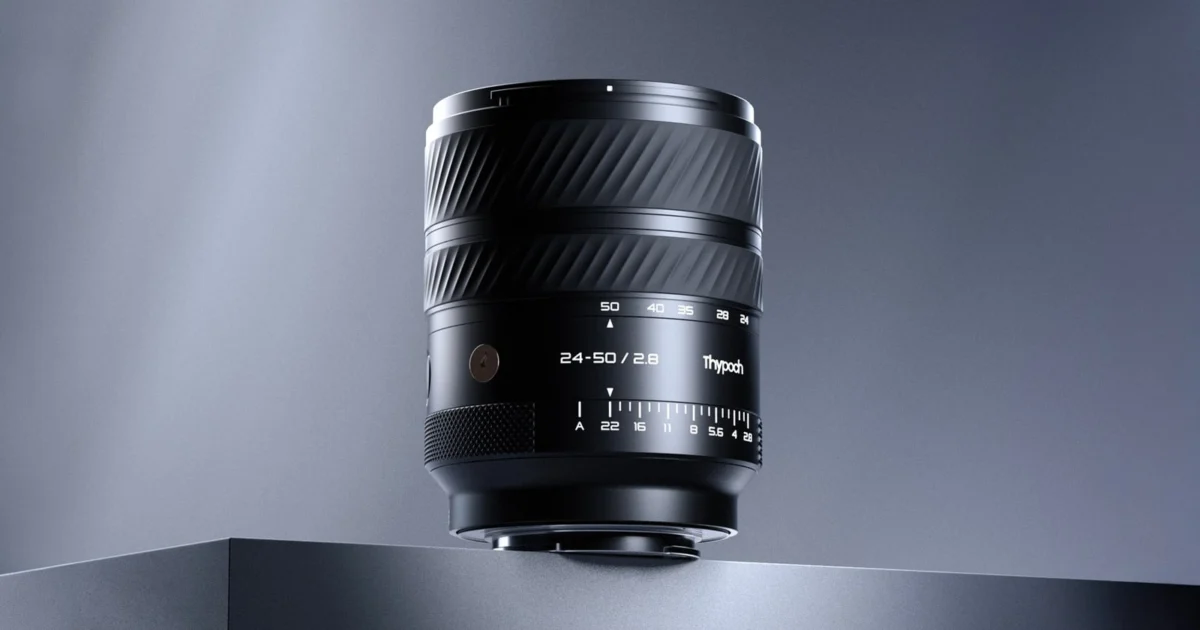
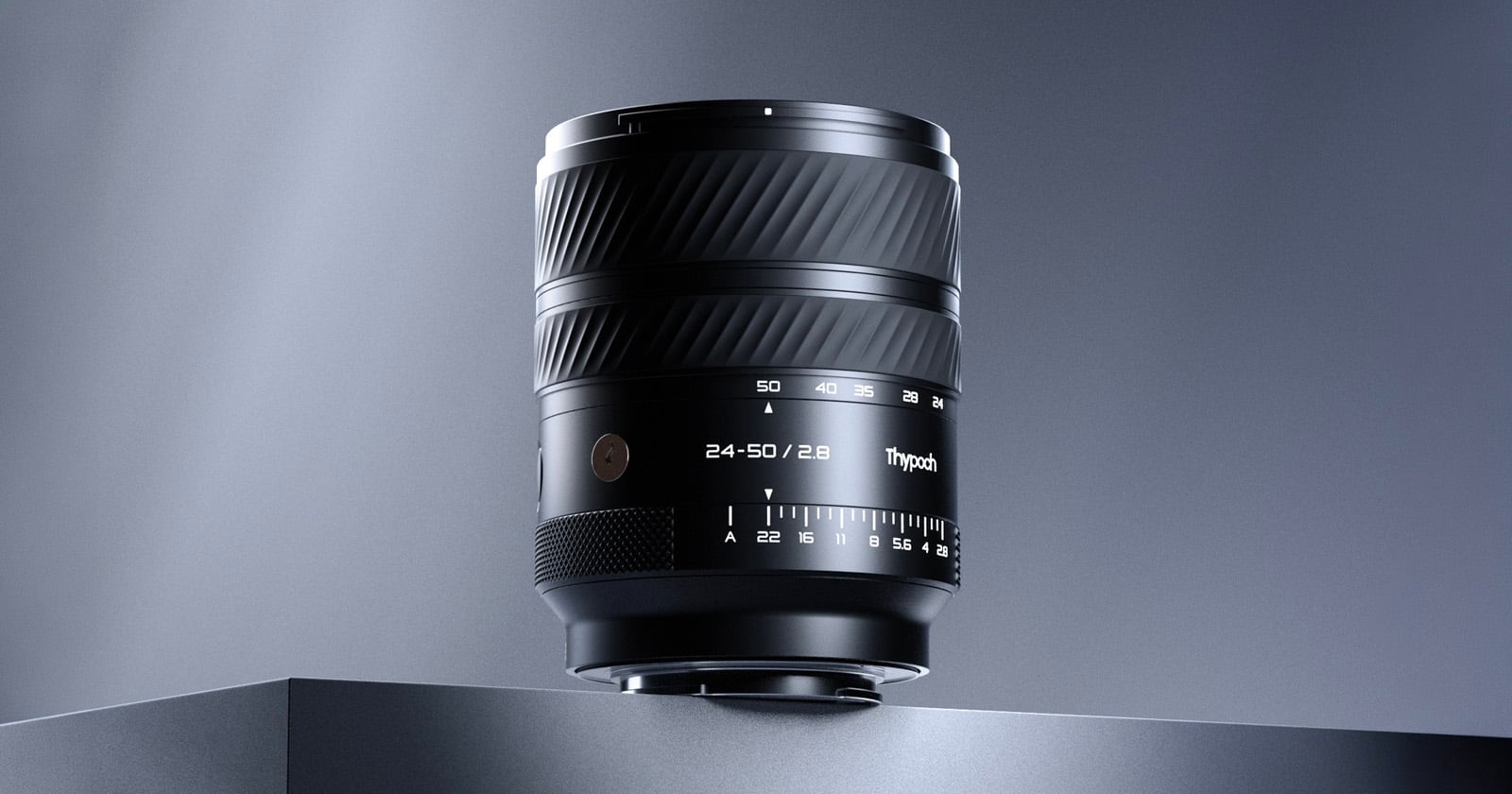
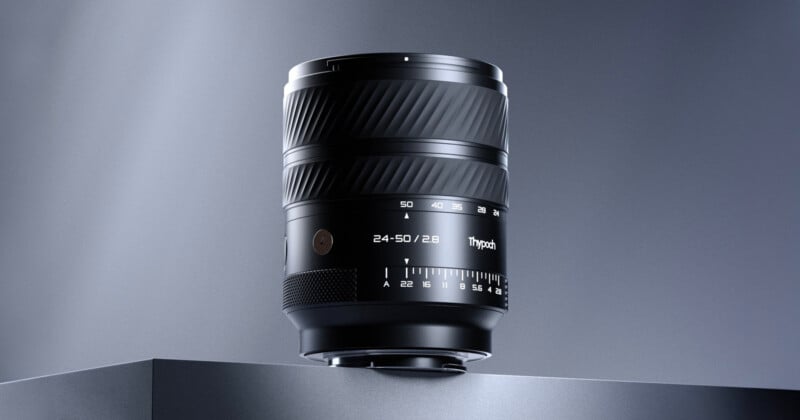
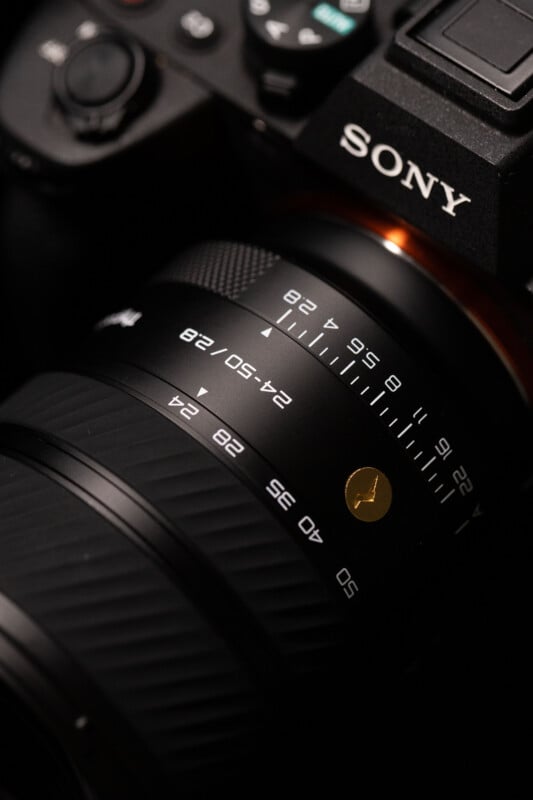
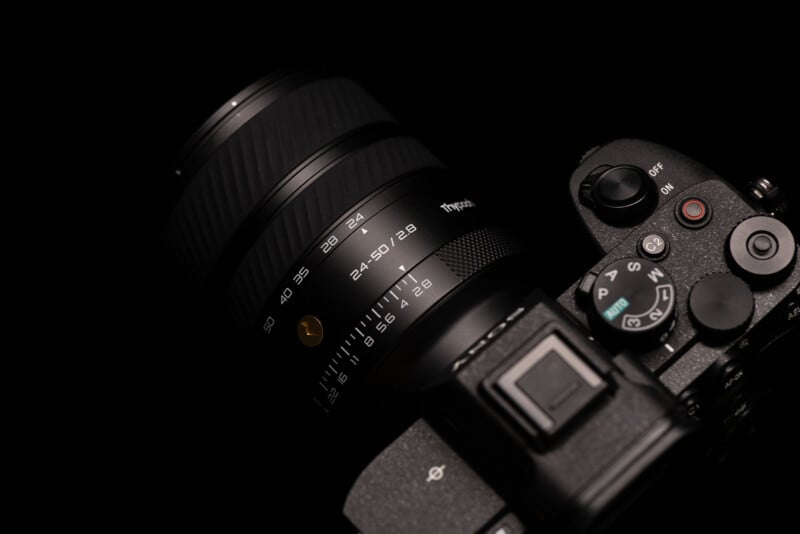
Shenzhen-based optical manufacturer Thypoch has officially marked its transition from a niche producer of manual-focus lenses to a serious contender in the high-performance mirrorless market with the release of the Voyager 24–50mm f/2.8. Designed specifically for Sony’s full-frame E-mount ecosystem, the Voyager represents a significant technological pivot for the company, serving as its inaugural autofocus (AF) lens and the first-ever full-frame autofocus zoom to be developed by a Chinese optical brand. This release is not merely a single product launch but the vanguard of a strategic expansion, as Thypoch has confirmed that the Voyager is the first of six planned autofocus lenses intended to challenge established third-party manufacturers and original equipment manufacturers (OEMs) alike.
A Strategic Entry into the Autofocus Ecosystem
For years, the Chinese optics industry was characterized by the production of affordable, manual-focus "charter" lenses that appealed to enthusiasts and vintage-style photographers. However, in recent years, brands like Viltrox, Sirui, and now Thypoch have aggressively moved up the value chain, investing heavily in the research and development required to master electronic communication protocols and precision motor control. The Voyager 24–50mm f/2.8 is the culmination of this evolution for Thypoch, a company that previously gained acclaim for its Simera series of M-mount manual lenses.
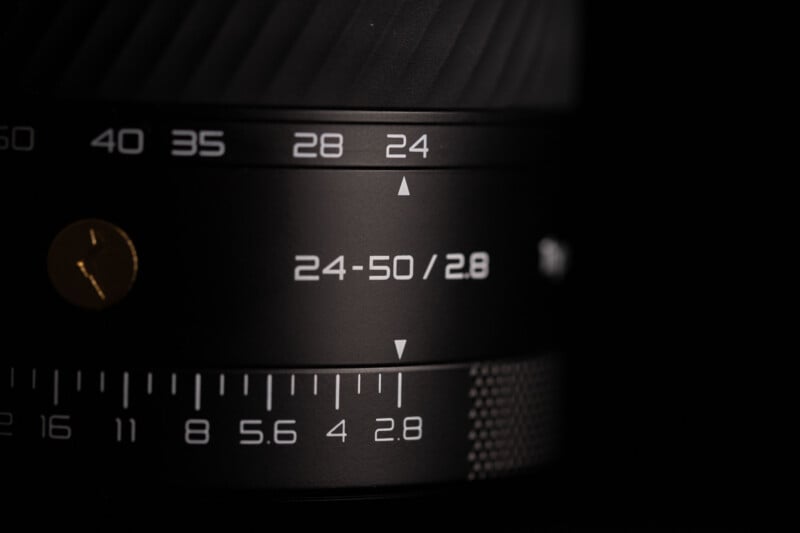
By choosing the 24–50mm focal range, Thypoch is targeting the most versatile segment of the market. While 24–70mm has long been the "gold standard" for professional zooms, modern photographers and videographers—particularly those working in street photography, environmental portraiture, and documentary filmmaking—increasingly prioritize portability and specialized performance over extreme telephoto reach. The Voyager aims to occupy the space of "three primes in one," effectively replacing the need for separate 24mm, 35mm, and 50mm lenses during a single shoot.
Chronology of Development: From NAB 2026 to Retail Launch
The journey of the Voyager 24–50mm f/2.8 began in the public eye during the National Association of Broadcasters (NAB) show in April 2026. At the Las Vegas convention, Thypoch showcased early prototypes of the lens, allowing industry professionals a first look at its autofocus capabilities. Early impressions from technical reviewers noted the lens’s surprisingly fast response times and its robust, metallic build quality, which contrasted with the plastic-heavy designs often found in entry-level zooms.
Following the positive reception at NAB, Thypoch spent the subsequent weeks refining the firmware to ensure seamless integration with Sony’s advanced subject-tracking algorithms. On May 14, 2026, the company officially moved to the commercial phase, announcing an aggressive introductory pricing strategy. The lens was launched at a promotional price of $619, valid through May 31, 2026, after which it would settle at a standard retail price of $649. This pricing positions the Voyager as a highly competitive alternative to Sony’s own FE 24-50mm f/2.8 G lens, which typically retails at a significantly higher price point.
Mechanical Innovation: The Internal Zoom Advantage
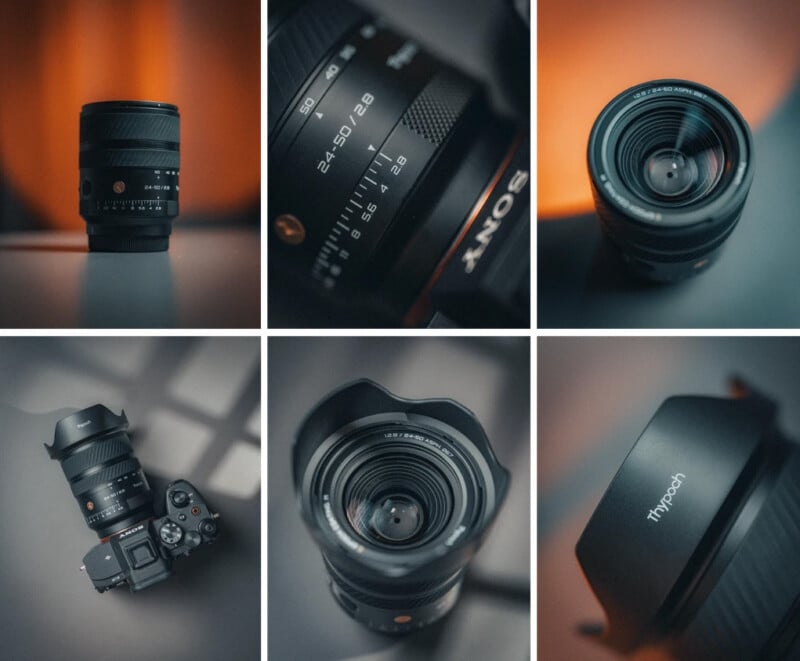
One of the most distinctive features of the Voyager 24–50mm f/2.8 is its internal zoom mechanism. In most standard zoom lenses, the physical length of the lens barrel extends or retracts as the user changes focal lengths. While common, this design introduces several challenges: it can shift the center of gravity, complicating use on gimbals and stabilizers, and it creates a "bellows effect" that can pull dust and moisture into the lens’s internal cavities.
Thypoch has addressed these issues by engineering the Voyager with a fixed-length barrel. Regardless of whether the photographer is shooting at the wide 24mm end or the narrow 50mm end, the physical dimensions of the lens remain constant. This "cine-style" approach is particularly beneficial for hybrid shooters who switch frequently between stills and video. For cinematographers, the internal zoom means that once a camera is balanced on a gimbal, focal length adjustments can be made without needing to rebalance the rig. Furthermore, the lack of external moving parts significantly enhances the lens’s structural integrity and environmental resistance.
Optical Architecture and Image Rendering
The Voyager is constructed with a sophisticated optical formula consisting of 16 elements arranged in 13 groups. To combat common optical aberrations such as chromatic fringing and spherical distortion, Thypoch has incorporated a variety of specialized glass elements, including aspherical lenses, extra-low dispersion (ED) glass, and high refractive index elements.
The design philosophy behind the Voyager deviates slightly from the modern trend of "clinical" sharpness. While the lens is engineered to provide high resolution across the frame, Thypoch’s engineers have focused on "controlled character." This involves balancing micro-contrast and sharpness with a rendering style that feels organic and three-dimensional.
A critical component of this rendering is the 10-blade aperture diaphragm. Most lenses in this class utilize 7 or 9 blades; by opting for 10, Thypoch ensures that the bokeh—the out-of-focus areas of an image—remains exceptionally smooth and circular even when the lens is stopped down. This makes the Voyager particularly effective for portraiture at the 50mm end, where background separation and highlight transitions are paramount.
Hybrid Performance: Autofocus and Video Integration
As Thypoch’s debut autofocus product, the Voyager’s electronic performance has been a focal point of industry scrutiny. The lens utilizes a high-speed stepper motor designed for near-silent operation, a requirement for modern video recording where on-camera microphones can easily pick up mechanical noise.
The lens supports the full suite of Sony Alpha autofocus features, including:
- Real-time Eye AF: Critical for wedding and portrait photographers.
- AF-C (Continuous) Tracking: Essential for sports and fast-moving subjects.
- In-body Image Stabilization (IBIS) Communication: Ensuring the lens and camera work in tandem to reduce motion blur.
The integration of these features suggests that Thypoch has successfully negotiated the complexities of the E-mount electronic interface, providing a "native-like" experience that was once the exclusive domain of first-party lenses.

Built for the Field: Ergonomics and Durability
The Voyager is designed to be a "workhorse" lens, capable of withstanding the rigors of professional use. It features comprehensive weather sealing at all critical points, including the mount, the control rings, and the front element. This allows photographers to continue working in light rain, humid tropical environments, or dusty desert conditions without fear of equipment failure.
Despite its robust construction and internal zoom mechanism, the Voyager remains remarkably compact. Weighing in at 432 grams (0.95 pounds) and measuring just 92.88 millimeters in length, it is small enough to serve as a permanent fixture on a camera body during travel. The 67mm filter thread is a standard size, allowing users to share filters with many other popular lenses in the Sony ecosystem, such as the 24-70mm f/2.8 or 70-200mm f/4.

Market Analysis and Broader Implications
The launch of the Voyager 24–50mm f/2.8 is a watershed moment for the global photography industry. For decades, the high-end autofocus market was a duopoly or triopoly of Japanese and German brands. The entry of a Chinese firm with a sophisticated, internally zooming, constant-aperture AF lens signals a shift in the global manufacturing landscape.
From a consumer perspective, the Voyager introduces much-needed price competition. At roughly $650, it provides a professional-grade f/2.8 aperture to a wider audience of hobbyists and content creators who might find first-party "G Master" lenses financially out of reach.

Furthermore, Thypoch’s roadmap of five additional autofocus lenses suggests that the company is looking to build a complete ecosystem. If the Voyager proves successful in terms of reliability and image quality, it could pave the way for Thypoch to become a primary choice for E-mount, L-mount, and Z-mount users worldwide.
Technical Specifications Summary
- Focal Length: 24–50mm
- Maximum Aperture: f/2.8 (Constant)
- Lens Mount: Sony E-mount (Full-Frame)
- Optical Construction: 16 elements in 13 groups
- Special Elements: Aspherical, ED, High Refractive Index
- Aperture Blades: 10
- Minimum Focus Distance: 0.3m (0.98 ft)
- Maximum Magnification: 0.216x
- Filter Diameter: 67mm
- Weight: 432g (0.95 lbs)
- Dimensions: 73.6mm x 92.88mm
- Zoom Type: Internal (Fixed length)
- Weather Sealing: Yes
Conclusion: The New Frontier of Optical Design
The Thypoch Voyager 24–50mm f/2.8 stands as a testament to the rapid maturation of the Shenzhen optics cluster. By merging cinema-inspired mechanical stability with modern autofocus technology and a versatile focal range, Thypoch has created a tool that addresses the specific needs of today’s hybrid creators. As the first of a new generation of AF lenses, the Voyager is not just a product; it is a statement of intent, signaling that the future of optical innovation is increasingly global, competitive, and accessible. For Sony users, the Voyager offers a compelling blend of "three-prime" flexibility and professional performance, all contained within a fixed-length barrel that is ready for the field.

