


Fifty years after Donald Griffin’s groundbreaking 1976 book, The Question of Animal Awareness, challenged the prevailing scientific dogma, the debate surrounding nonhuman consciousness continues to evolve, with recent research on Grey parrots offering compelling insights. Griffin’s initial proposition that nonhumans possessed levels of self-awareness comparable to humans was nothing short of revolutionary at a time when the scientific consensus largely relegated animals to the realm of instinctual beings or simple stimulus-response learners. This behaviorist perspective, which dominated much of the 20th century, posited that complex animal behaviors could be explained without recourse to internal mental states, emotions, or consciousness. However, the subsequent decades have witnessed a profound shift in understanding, driven by rigorous scientific inquiry and a growing recognition of the sophisticated cognitive abilities observed across the animal kingdom.
The very definition and empirical proof of consciousness, whether in humans or nonhumans, remains one of science’s most formidable challenges. Even today, the precise mechanisms and markers of consciousness are hotly debated, as evidenced by the ongoing search for a definitive "neural correlate of consciousness" (NCC) in humans, a quest the Cogitate Consortium highlighted in 2025. This complexity is amplified when attempting to extend the concept to nonhuman species, particularly those outside the primate lineage, such as birds. Despite these hurdles, a significant turning point occurred in 2024 with the New York Declaration on Animal Consciousness, signed by hundreds of scientists, asserting "strong scientific support" for consciousness in mammals, birds, and potentially all other vertebrates. This declaration underscores a growing consensus that the scientific community must seriously consider the subjective experiences of animals.
The inherent difficulty in directly measuring or proving consciousness has led many researchers to focus on sentience as an indicator. Sentience, defined as the ability to experience emotions and sensations, offers a more accessible, albeit foundational, entry point into the discussion. However, as Dr. Irene Pepperberg notes in her forthcoming 2026 paper, "Comments on consciousness in Grey parrots," relying solely on sentience immediately raises further methodological questions: How do scientists objectively evaluate emotions and sensations in nonhumans? Given that humans themselves often struggle to articulate or even recognize their own complex emotional states, the task of deciphering nonhuman emotions becomes exceptionally problematic.
One simplified approach might involve narrowing the focus to a single, more readily determinable sensation, such as sensitivity to pain. While pain perception is undoubtedly a crucial aspect of sentience and thus a necessary component of consciousness, it is widely considered insufficient on its own to argue for human-like consciousness. A truly comprehensive understanding requires exploring beyond basic sensory experiences to encompass higher-order cognitive functions.
Over the past few decades, various researchers have attempted to develop more sophisticated metrics for assessing animal consciousness. Figures like Birch et al. (2020) and Bayne et al. (2024) have proposed intricate frameworks, yet these often face criticism for being overly biased towards human capacities, potentially overlooking unique forms of consciousness or cognitive expression in different species. In a seminal 2000 paper, Pepperberg and Lynn suggested the existence of levels of consciousness, positing a correlation between these levels and quantifiable cognitive abilities within a given species. They hypothesized that such cognitive processing levels were likely outcomes of homologous or convergent brain evolution, shared perceptual structures, and similar learning mechanisms. This framework, however, still grapples with the challenge of establishing genuine parallels between cognitive processes in humans and nonhumans, and the persistent enigma of identifying an NCC that transcends species boundaries.
Further complicating the contemporary debate is the remarkable progress in artificial intelligence. Modern AI systems now demonstrate impressive levels of cognitive processing, capable of solving complex problems, learning, and even generating creative content. If processing power alone were the sole determinant, AI systems might be considered candidates for consciousness. Yet, as Block (2025) discusses, these systems currently lack self-awareness – the subjective experience of being aware that one is aware. This distinction forces researchers to reconsider whether the focus should revert to sentience and subjective experience rather than merely higher-order cognitive processing, highlighting the critical difference between simulated intelligence and genuine consciousness.
The Scientific Debate Around Animal Consciousness: Beyond Instinct
Full consciousness is understood to encompass a broad spectrum of mental faculties: the monitoring of sensory inputs and internal mental states, executive control over decision-making and voluntary actions, and crucially, an awareness of one’s own thoughts – the metacognitive ability to know that one is aware. This latter component, self-awareness, presents a particularly vexing challenge in nonhuman studies. Even species capable of some form of referential communication, such as certain primates and parrots, generally lack the symbolic language capabilities required to discuss or report instances of their own self-awareness to human researchers. This communicative barrier necessitates indirect methods of inquiry, relying on observable behaviors that, in humans, are indicative of self-awareness.
Dr. Pepperberg’s work with African Grey parrots, spanning decades, stands as a cornerstone in this quest. Her research with Alex, and later Griffin, has consistently demonstrated extraordinary cognitive abilities in these birds, including numerical comprehension, object categorization, and even an understanding of concepts like "same" and "different." These findings have gradually chipped away at the traditional view of avian intelligence, revealing minds far more complex than previously imagined. In her 2026 paper, Pepperberg highlights various behavioral patterns and successful task completions in nonhumans that, when observed in humans, serve as robust evidence of self-awareness. The critical element in these tasks is that successful execution demands the subject to exhibit abilities rooted in self-awareness.
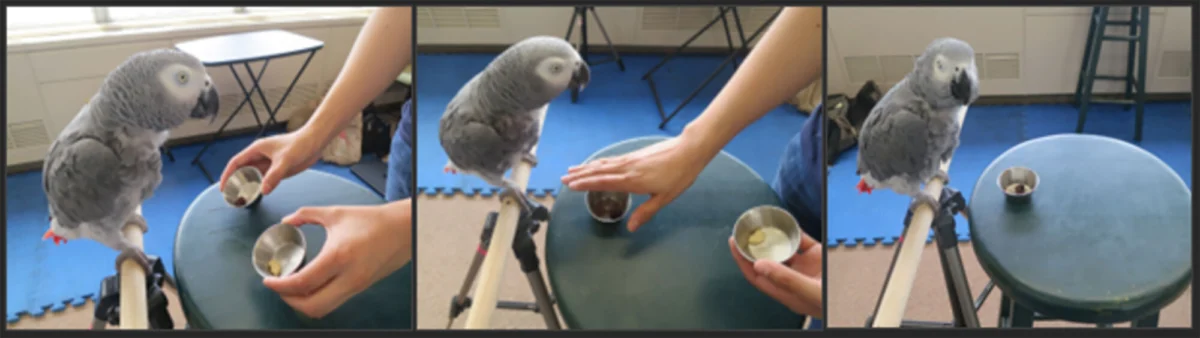
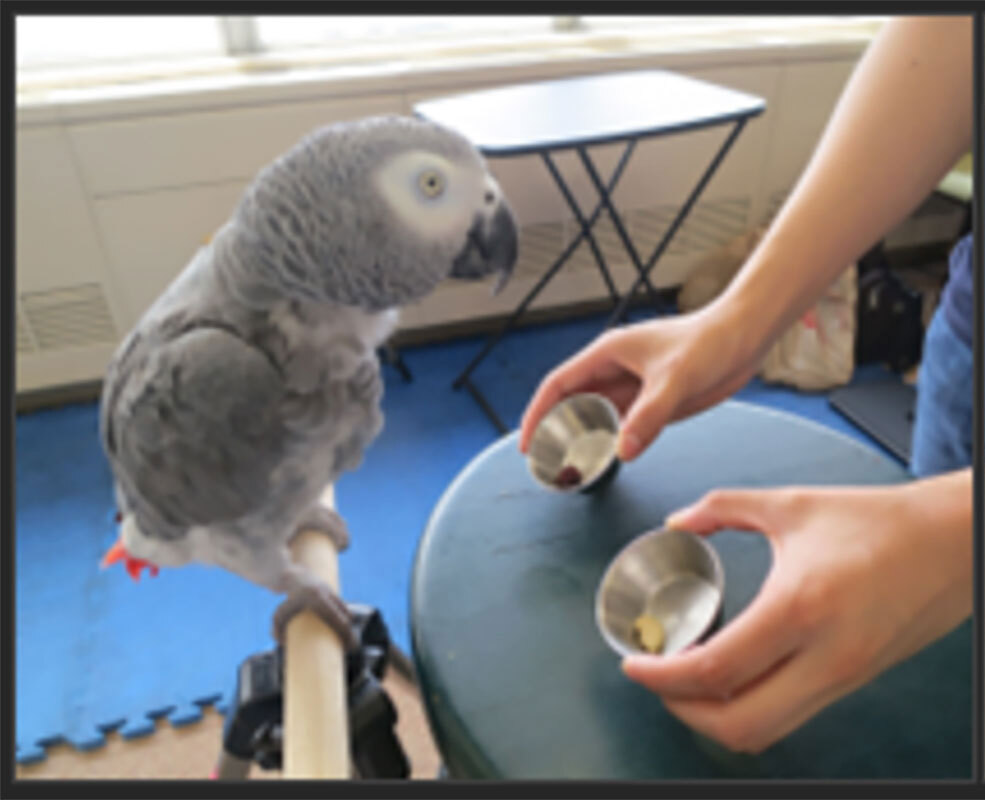
One particularly compelling example is the delayed gratification task. Popularized by the "Marshmallow Test" in human children, this paradigm requires subjects to forgo an immediate, less desirable reward in favor of a better or larger reward offered after a period of waiting. Success in such a task is not merely about patience; it demands a complex suite of cognitive functions indicative of self-awareness:
- Recognition and Understanding: The subject must recognize and comprehend the potential conflict between immediate impulse and a long-term goal.
- Impulse Suppression: They must actively suppress immediate urges, needs, and desires.
- Working Memory: The long-term goal must be actively maintained in memory throughout the delay period.
- Strategic Thinking: The subject must devise and employ a strategy to engage their thoughts and manage the waiting period, often involving distraction or self-regulation.
African Grey parrots, particularly those studied by Pepperberg and her colleagues, have proven remarkably adept at these delayed gratification tasks. Studies by Koepke et al. (2015), Pepperberg and Rosenberger (2022), and Pepperberg and Hartsfield (2023) have repeatedly shown Grey parrots, including Griffin, successfully waiting for superior rewards, demonstrating a sophisticated understanding of future outcomes and an ability to exert self-control. Griffin, for instance, has been observed waiting patiently with a less appealing but still desired reward during the delay, fully aware that a better option awaited him. While Pepperberg (2026) acknowledges potential methodological issues and alternative interpretations of delayed gratification tasks, the consistent performance of Grey parrots strongly suggests complex cognitive processes at play.
Implications and the "Do No Harm" Principle
It is crucial to emphasize that while these illustrative examples provide profound insights, they do not offer definitive "proof" of avian or Grey parrot consciousness in a strictly philosophical sense. Rather, they contribute a vital body of evidence that must be integrated with findings from other consciousness tests and frameworks. The ongoing scientific endeavor involves meticulously collecting and evaluating all available data, whether positive, negative, or even contradictory, while remaining open to alternative explanations for observed behaviors.
However, the implications of this research extend far beyond academic debate. When considering how best to coexist with nonhuman species, the ethical imperative becomes paramount. As highlighted by Andrews et al. (2024) and echoed by Pepperberg, prudence might dictate a lowering of the extremely high levels of certainty typically required for scientific evidence of consciousness when it comes to animal welfare. In the spirit of the "Do no harm" principle, any material indicative of consciousness should be considered integral to the design of protocols governing the welfare, humane treatment, and conservation of animals.
Recognizing the potential for consciousness in animals like Grey parrots fundamentally alters our moral obligations towards them. If these birds possess self-awareness, the capacity for complex emotions, and an understanding of their own existence, then their suffering, their well-being, and their right to thrive take on a new, profound significance. This shift demands a re-evaluation of practices in animal agriculture, research, entertainment, and wildlife management. For instance, the recognition of avian consciousness could lead to more stringent regulations on cage sizes, social enrichment, and cognitive stimulation for captive parrots, moving beyond basic physical needs to encompass psychological well-being. In conservation, it could bolster arguments for protecting natural habitats, not just as biodiversity reservoirs, but as vital spaces for conscious beings.
The quest to understand Grey parrot consciousness, therefore, is not merely an academic exercise. It is a journey that began with Donald Griffin’s radical ideas five decades ago and has been significantly advanced by pioneers like Dr. Irene Pepperberg. It is a journey that intertwines scientific discovery with profound ethical considerations, pushing humanity to re-examine its relationship with the animal kingdom and redefine the boundaries of intelligence and subjective experience in our shared world. The continuing research promises to unlock further mysteries of the avian mind, ultimately challenging us to embrace a more compassionate and responsible stewardship of all conscious life on Earth.

