


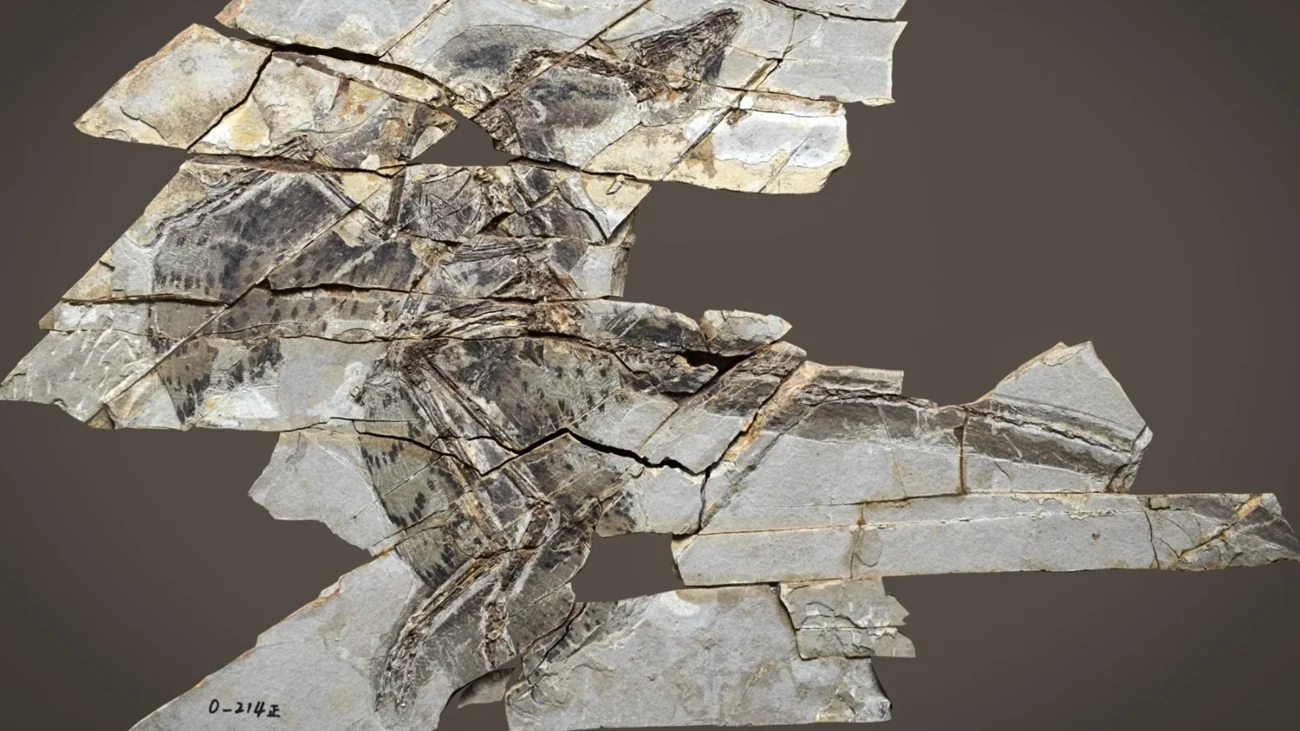
A groundbreaking study of exceptionally preserved dinosaur fossils has dramatically reshaped our understanding of avian evolution, revealing that some feathered dinosaurs, despite possessing the hallmarks of flight, had already lost the ability to fly millions of years before the dawn of modern birds. The research, led by Dr. Yosef Kiat of Tel Aviv University’s School of Zoology and the Steinhardt Museum of Natural History, meticulously analyzed rare fossils from eastern China, which not only retained their intricate feather structures but also their original coloration. This unprecedented level of preservation allowed scientists to decipher the molting patterns of these ancient creatures, offering a unique window into their functional capabilities and evolutionary trajectory. The findings, published in the prestigious journal Communications Biology by Nature Portfolio, challenge long-held assumptions about the singular path to powered flight and underscore the complex, multifaceted nature of wing evolution.
Unveiling the Secrets of Ancient Wings: The Anchiornis Fossil Discovery
The study’s focal point was nine fossil specimens of Anchiornis, a small, feathered dinosaur that roamed the Earth approximately 160 million years ago during the Late Jurassic period. Belonging to the Pennaraptora clade, a group of feathered dinosaurs considered distant ancestors of modern birds, Anchiornis fossils are remarkable for their exquisite preservation. The geological conditions in the region where these fossils were unearthed, characterized by fine-grained sedimentary rocks and rapid burial, created a unique environment that arrested the decay process, preserving delicate structures like feathers and even their pigments.
These Anchiornis fossils displayed wing feathers that were predominantly white with distinct black spots at their tips. It was this preserved coloration, coupled with the intact feather structures, that provided the crucial evidence for the researchers. Unlike typical fossil discoveries, which often reveal only skeletal remains, these specimens offered a tangible link to the soft tissues of these extinct animals, allowing for a level of analysis previously confined to extant species.
The Language of Molting: A Key to Flight Capability
Dr. Kiat, an ornithologist with a specialization in feather biology, explained the fundamental principle that underpinned the study’s breakthrough: the relationship between feather molting and flight. Feathers, he noted, are complex, protein-based structures that, once fully grown, become non-living material. They are subject to wear and tear and are periodically replaced through a process known as molting.
"Feathers grow for two to three weeks," Dr. Kiat elaborated. "Reaching their final size, they detach from the blood vessels that fed them during growth and become dead material. Worn over time, they are shed and replaced by new feathers – in a process called molting, which tells an important story."
The critical distinction lies in the molting strategy employed by different avian species. Birds that rely heavily on flight for survival – for hunting, evading predators, or migration – have evolved a highly organized and gradual molting process. This allows them to maintain flight symmetry by shedding and replacing feathers in an alternating pattern, ensuring that at least one wing remains fully functional at any given time. This strategy minimizes the disruption to their aerial capabilities.
In stark contrast, flightless birds, such as ostriches, emus, and penguins, exhibit a more irregular and seemingly random molting pattern. Lacking the imperative to maintain flight, their feather replacement can occur more haphazardly, without the need for strict symmetry or a gradual renewal.
Deciphering Anchiornis: An Irregular Pattern of Feather Replacement
By meticulously examining the fossilized wing feathers of Anchiornis, the research team observed a continuous line of black spots along the wing edges. Crucially, they also identified developing feathers where these black spots were not aligned with the pattern of the mature feathers. This misalignment indicated that these new feathers were in various stages of growth.
The analysis of this growth pattern revealed that the molting process in Anchiornis was not orderly or symmetrical. Instead, it was characterized by a more random and irregular shedding and replacement of feathers. This deviation from the typical flight-dependent molting strategy strongly suggested that Anchiornis was not capable of sustained, powered flight.
"Based on my familiarity with modern birds, I identified a molting pattern indicating that these dinosaurs were probably flightless," Dr. Kiat stated. "This is a rare and especially exciting finding: the preserved coloration of the feathers gave us a unique opportunity to identify a functional trait of these ancient creatures – not only the body structure preserved in fossils of skeletons and bones."
A Complex Evolutionary Tapestry: Flight Lost, Not Just Gained
The discovery that Anchiornis, a creature bearing the physical attributes associated with flight, likely could not fly, has profound implications for our understanding of dinosaur and bird evolution. It suggests that the development of feathers and the capacity for flight were not a unidirectional, inevitable progression. Instead, the evolutionary path was far more intricate, involving periods of both acquisition and loss of flight capabilities.
Dinosaurs diverged from other reptiles approximately 240 million years ago. Not long after, on an evolutionary timescale, many species began to develop feathers. These early feathers may have served various purposes, including insulation, display, or perhaps rudimentary gliding. Around 175 million years ago, the Pennaraptora lineage emerged, characterized by more advanced feather structures, particularly on their forelimbs, which are widely believed to have been the precursors to avian wings.
The fact that some of these Pennaraptorans, like Anchiornis, developed flight-like structures but ultimately lost the ability to fly points to a complex interplay of environmental pressures, ecological niches, and evolutionary experimentation. It is plausible that early feathered dinosaurs, perhaps in environments rich with food sources or lacking significant aerial predators, may have evolved basic flight abilities only to lose them later as their ecological roles or environmental conditions shifted. This mirrors the evolutionary trajectory of modern flightless birds, which have adapted to terrestrial or aquatic lifestyles.
Broader Implications: Rethinking the Origins of Flight
The significance of this research extends beyond the specific case of Anchiornis. It fundamentally challenges the prevailing narrative that the evolution of feathers was solely and directly tied to the development of powered flight. Instead, it highlights the possibility that feathers evolved for a multitude of reasons, and that flight was a later, and in some cases, a temporary adaptation within the broader evolutionary story of feathered dinosaurs.
"Feather molting seems like a small technical detail – but when examined in fossils, it can change everything we thought about the origins of flight, highlighting how complex and diverse wing evolution truly was," Dr. Kiat emphasized. "Anchiornis now joins the list of dinosaurs that were covered in feathers but not capable of flight, underscoring how complex and diverse wing evolution truly was."
This finding suggests that the evolution of flight in birds was not a singular event but rather a series of innovations, adaptations, and even reversals occurring over vast stretches of geological time. The presence of elaborate feather structures in non-flying dinosaurs implies that these features might have served other crucial functions, such as thermoregulation, signaling, or even assisting in arboreal locomotion, before being co-opted and refined for powered flight in a specific lineage that eventually gave rise to modern birds.
A Window into the Mesozoic: The Rarity of Preserved Color
The unique preservation of feather coloration in the Anchiornis fossils cannot be overstated in its scientific value. The ability to discern not just the shape and arrangement of feathers but also their original hues opens up new avenues for research into the behavior, ecology, and even the visual world of these ancient creatures. Feather color in modern birds is often linked to sexual selection, camouflage, and species recognition. While it is speculative to attribute similar functions to the coloration of Anchiornis without further evidence, the mere fact that such details are preserved offers tantalizing possibilities for future paleontological investigations.
The study’s collaborators, hailing from institutions in China and the United States, underscore the international nature of cutting-edge paleontological research. The meticulous work of analyzing these rare specimens, combining expertise in paleontology, evolutionary biology, and comparative anatomy, has yielded a result that will undoubtedly stimulate further debate and investigation into one of the most captivating evolutionary transitions in Earth’s history – the journey from terrestrial dinosaurs to the birds that fill our skies today.
Future Directions and the Enduring Mystery of Flight
The implications of this study are far-reaching. It compels scientists to re-examine existing fossil evidence with a fresh perspective, looking for subtle clues in feather structure and arrangement that might indicate flightlessness in other feathered dinosaurs. Furthermore, it prompts new questions about the selective pressures that favored flight in some lineages while leading to its abandonment in others.
The evolutionary history of flight is a testament to the power of natural selection to sculpt life in myriad ways, often through pathways that are far from linear or predictable. The story of Anchiornis serves as a vivid reminder that even the most iconic evolutionary advancements can have complex precursors and divergent branches, where seemingly advantageous traits are, in certain contexts, shed in favor of alternative strategies for survival and reproduction. As paleontologists continue to uncover and analyze the fossil record, the intricate dance of evolution, with its triumphs and apparent setbacks, continues to reveal its astonishing complexity. The feathers of Anchiornis, once silent witnesses to a lost world, now speak volumes about the profound and often surprising nature of life’s grand evolutionary saga.

