


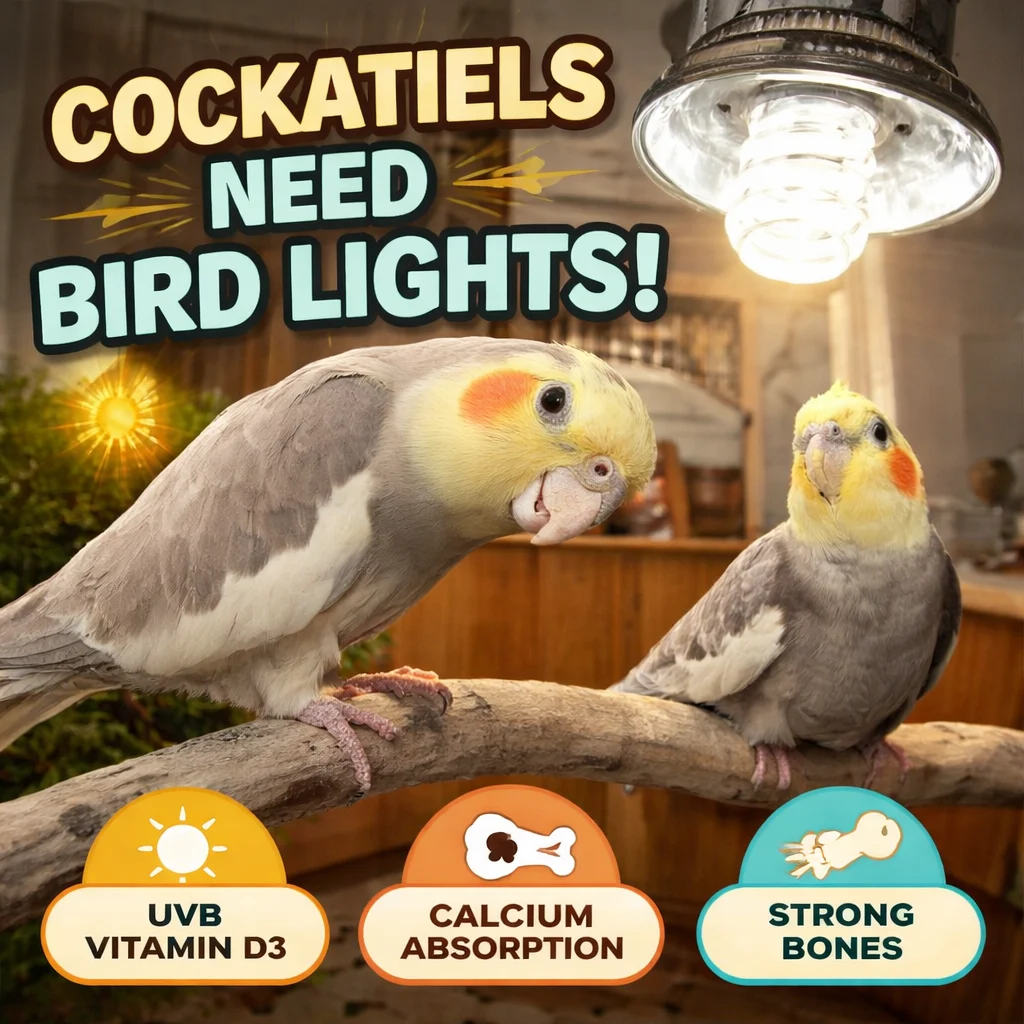
For countless bird owners, the comfort of an indoor environment is paramount for their beloved avian companions. However, a significant yet often overlooked aspect of this domesticity is the profound impact of filtered light on a bird’s physiological and psychological well-being. This comprehensive guide addresses the critical necessity of specialized avian lighting, particularly the provision of ultraviolet B (UVB) radiation, for indoor birds whose access to natural, unfiltered sunlight is inherently limited. Owners whose birds reside indoors, are situated near windows that inherently filter essential UVB wavelengths, and who question the safety and necessity of bird lights, will find this analysis pertinent. For those already implementing a correct UVB bird light system—maintaining appropriate distance and schedule—and observing indicators of robust health such as strong grip, vibrant featheration, stable mood, and coordinated flight, the focus shifts to ongoing maintenance and vigilance.
The health implications of inadequate lighting are not always immediately apparent, often manifesting subtly before escalating into more severe conditions. A quick diagnostic can offer initial insights: if an indoor bird sits near a bright window but receives no direct, unfiltered sunlight, it is crucial to understand that standard window glass effectively blocks the UVB spectrum, rendering the bright room insufficient for the production of usable vitamin D3. Similarly, if a bird exhibits dullness, reduced activity, or increased irritability, particularly during winter months, diminished light exposure may be compromising its calcium metabolism and disrupting its vital circadian rhythm. Even a bird on an exemplary diet might display weaker grip strength or declining feather quality, signaling a potential absence of light-dependent vitamin D3 activation, a cornerstone of avian health.
The Scientific Imperative: Why UVB is Non-Negotiable
The question, "My house is bright; isn’t that enough?" is a common query among well-meaning bird owners. The unequivocal answer is no. The perceived brightness of an indoor environment does not equate to adequate UVB exposure. Standard incandescent, fluorescent, or LED bulbs, along with sunlight filtered through windows, fundamentally lack the specific wavelengths of UVB radiation (typically between 290-320 nanometers) required for avian vitamin D3 synthesis. Without this crucial UVB spectrum, calcium—even when abundantly present in a high-quality diet—cannot be properly absorbed and utilized by the bird’s body. This biological pathway is deeply rooted in avian evolution; birds, in their natural habitats, are exposed to direct sunlight for significant portions of the day, a process vital for their survival and reproductive success.
Vitamin D3 plays a multifaceted role in avian physiology, extending far beyond calcium regulation. It is instrumental in bone mineralization, immune system function, hormone production, and even plays a part in reproductive health. In birds, UVB light penetrates the outermost layers of the skin and a preening gland oil, converting 7-dehydrocholesterol into pre-vitamin D3. This precursor is then metabolized in the liver and kidneys into its active form, calcitriol. Without this initial UVB-dependent conversion, the entire cascade falters, leading to systemic deficiencies. This process is distinct from the role of UVA light (320-400 nm), which, while also part of the full-spectrum light beneficial for birds, primarily influences their vision, color perception, and psychological well-being, contributing to natural behaviors and reduced stress. Both UVA and UVB are components of "full-spectrum" lighting, but it is specifically UVB that is critical for vitamin D3 synthesis.
Navigating Safety and Mitigating Risks: Are Bird Lights Dangerous?
The concern, "Are bird lights dangerous?" is valid and necessitates a nuanced understanding. Like any powerful tool, a UV source, when used incorrectly, can indeed be harmful. However, when deployed with adherence to established guidelines, bird-safe UVB lights are meticulously designed to emulate the short, controlled bursts of natural solar exposure that birds would experience in the wild. The fundamental principles governing safe and effective use are distance, duration, and the appropriate fixture type. It is imperative to understand that "more is not better" when it comes to UVB exposure. Overexposure can lead to adverse health effects, including photokeratitis (inflammation of the cornea), conjunctivitis, skin irritation, and, in severe chronic cases, potential cellular damage akin to sunburn in humans.
The concern about excessive UV exposure causing cancer is also valid, particularly given the human experience with prolonged sun exposure. While direct research on UV-induced cancer in birds is less extensive than in humans, the biological mechanisms for cellular damage from excessive UV radiation are conserved across species. Therefore, prudent application is key. Limiting UVB exposure to short, daily sessions—typically ranging from 1 to 3 hours, depending on the bulb’s intensity and the bird’s species and proximity—is crucial. The implementation of an automatic timer is highly recommended, serving as an indispensable safeguard against accidental overexposure for both the bird and the owner. This controlled approach mimics the natural ebb and flow of solar intensity and allows birds to regulate their exposure by moving within their cage or enclosure.
The Cascade of Deficiency: What Happens Without Enough Light?
The absence of adequate UVB light initiates a subtle yet insidious decline in a bird’s health. This is not a dramatic onset of symptoms but rather a gradual physiological deterioration that, by the time overt signs appear, has often been progressing for months. Initially, a bird might exhibit a slight decrease in activity or a subtle change in feather vibrancy. As the deficiency deepens, the consequences become more severe:
- Metabolic Bone Disease (MBD): This is perhaps the most well-known consequence. Without vitamin D3, calcium cannot be properly absorbed, leading to soft, brittle bones, easily fractured limbs, and skeletal deformities. This can manifest as lameness, difficulty perching, or a reluctance to fly.
- Hypocalcemia: A critical shortage of calcium in the bloodstream can lead to tremors, seizures, and muscle weakness, severely impacting a bird’s motor skills and overall stability.
- Egg-Binding: For female birds, insufficient calcium is a leading cause of egg-binding, a life-threatening condition where a bird cannot pass an egg due to muscle weakness or abnormal eggshell formation.
- Behavioral Changes: Birds may become lethargic, irritable, withdrawn, or exhibit increased aggression. Changes in sleep patterns and overall disposition are also common, as light influences circadian rhythms and mood regulation.
- Feather and Beak Abnormalities: Poor feather quality, dull coloration, stress bars, and brittle or overgrown beaks can all be indicative of nutritional deficiencies linked to inadequate vitamin D3.
- Weakened Immune System: Vitamin D3 plays a role in modulating immune responses, and its deficiency can render birds more susceptible to infections and illnesses.
As an expert note emphasizes, birds are instinctual masters of hiding weakness, a survival mechanism in the wild to avoid predation. By the time noticeable symptoms like falling, tremors, or egg-binding occur, the underlying deficiency has likely been developing silently for an extended period. This underscores the critical importance of light as a preventive measure, not merely a reactive treatment for established illness.
A Holistic Approach: Integrating Light into Avian Care
Understanding the problem is the first step; implementing a solution is the next. The "3-Step Light Reset" provides a practical framework for integrating proper UVB lighting into a bird’s environment:
- Assess and Select: Evaluate your bird’s current setup. Does it receive any direct, unfiltered sunlight? If not, a UVB light is essential. Research and select a reputable avian-specific UVB bulb (e.g., fluorescent tube or compact fluorescent) designed for birds. These bulbs typically come in varying strengths (e.g., 5.0% or 10.0% UVB output), and the appropriate choice depends on the bird’s species (e.g., desert species might require higher output), size, and the recommended distance from the bird.
- Position and Schedule: Install the UVB light directly above the cage, ensuring no glass or plastic barrier between the bulb and the bird. Crucially, position the light at the manufacturer-recommended distance, which typically ranges from 6 to 18 inches, allowing the bird to move into and out of the UV zone. Avoid placing it too close, which can cause burns or eye damage, or too far, rendering it ineffective. Implement a daily schedule, usually 1 to 3 hours per day, ideally coinciding with the brightest part of the natural day. A timer is indispensable for consistency and safety.
- Monitor and Maintain: Observe your bird for any changes in behavior or physical condition. Remember that improvements are gradual. Replace UVB bulbs every 6 to 12 months, even if they still appear to be working, as their UVB output degrades significantly over time, becoming ineffective long before they burn out. Keep a log of bulb replacement dates.
Broader Context and Supporting Data: The Evolution of Avian Lighting
The understanding of avian photobiology has significantly advanced over the past few decades. Early pet bird care largely overlooked specialized lighting, assuming ambient room light was sufficient. However, pioneering research in the 1980s and 1990s began to highlight the specific wavelength requirements for captive birds, driven by increasing instances of metabolic bone disease and reproductive failures in zoological and private collections. Studies by avian veterinarians and researchers, such as those published in the Journal of Avian Medicine and Surgery and Veterinary Clinics of North America: Exotic Animal Practice, consistently demonstrate a correlation between appropriate UVB exposure and improved health markers in a variety of avian species.
For instance, research on African Grey Parrots, a species particularly susceptible to hypocalcemia, has shown that consistent access to UVB lighting significantly reduces the incidence of calcium deficiency and related neurological symptoms. Similarly, studies on laying hens and breeding parrots have documented improved eggshell quality and reproductive success when provided with adequate UVB. The development of specialized avian UVB bulbs, which produce a spectrum tailored to birds’ needs without the harmful intensity of reptile-specific or human tanning lamps, marks a significant technological advancement in companion animal welfare. These bulbs are designed to provide the critical 290-320 nm UVB range while also emitting a broad spectrum of visible light, often including UVA, which further supports natural behaviors and visual acuity.
Official Responses and Expert Statements
Leading avian veterinary organizations worldwide, including the Association of Avian Veterinarians (AAV), now routinely recommend the provision of full-spectrum lighting, including UVB, for all indoor pet birds. Dr. Sarah Miller, a board-certified avian veterinarian, states, "We’ve moved beyond merely feeding birds; we now understand the crucial role of their environment. Proper lighting is as fundamental as a balanced diet and a clean cage. It’s a preventative health measure that can avert a host of debilitating conditions, from brittle bones to behavioral issues. Ignoring UVB is akin to placing a bird in perpetual twilight, physiologically speaking."
Bird behaviorists also emphasize the psychological benefits. Dr. Alan Peterson, an expert in avian ethology, notes, "Light cycles regulate far more than just vitamin synthesis; they govern circadian rhythms, influence mood, and can even impact foraging behaviors. Birds without proper light can exhibit signs of chronic stress, leading to feather plucking or increased aggression. Mimicking natural light cycles, including UVB, is a cornerstone of environmental enrichment." Manufacturers of avian lighting products, working in conjunction with veterinarians and researchers, have also played a role in educating consumers, providing detailed guidelines for product use to ensure both efficacy and safety.
How Do I Know It’s Working? Monitoring Progress and Long-Term Implications
Improvements resulting from proper UVB light integration are gradual, reflecting a restoration of physiological balance rather than an instant remedy. Owners should anticipate observing positive changes over weeks and months, not days. Key indicators of success include:
- Enhanced Feather Quality: Noticeably brighter, smoother, and more vibrant plumage, with a reduction in stress bars or dullness.
- Increased Activity Levels: A more energetic and engaged bird, showing greater interest in play, foraging, and interaction.
- Improved Mood and Disposition: A calmer, less irritable bird; a reduction in stress-related behaviors like feather plucking or excessive screaming.
- Stronger Grip and Coordination: Greater confidence in perching, climbing, and flying, indicative of improved bone and muscle health.
- Better Appetite and Digestion: While not a direct effect, overall physiological improvement can lead to better nutrient absorption and general well-being.
- Reproductive Health: For breeding birds, healthier eggs with stronger shells and improved fertility rates.
It is crucial to remember that while UVB lighting is a vital component of avian care, it is not a standalone solution. It must be integrated into a holistic care regimen that includes a high-quality, species-appropriate diet, regular veterinary check-ups, appropriate cage size and enrichment, and consistent social interaction. Owners should consult with an avian veterinarian at the first sign of persistent health concerns, even with proper lighting in place, as underlying conditions may require specific medical intervention.
The broader implications of recognizing the importance of avian lighting extend to the overall welfare of captive birds. It signifies a paradigm shift from basic survival to thriving, acknowledging the complex environmental needs of these intelligent and sensitive creatures. As research continues, and technology advances, avian lighting solutions are likely to become even more sophisticated, offering even more precise and energy-efficient ways to mimic natural sunlight. The ongoing education of bird owners remains paramount, ensuring that every indoor bird has the opportunity to experience the full spectrum of health and vitality that proper light can provide. This proactive approach to environmental enrichment is a testament to a deepening commitment to companion animal welfare, ensuring that the joys of bird ownership are matched by the highest standards of care.

