


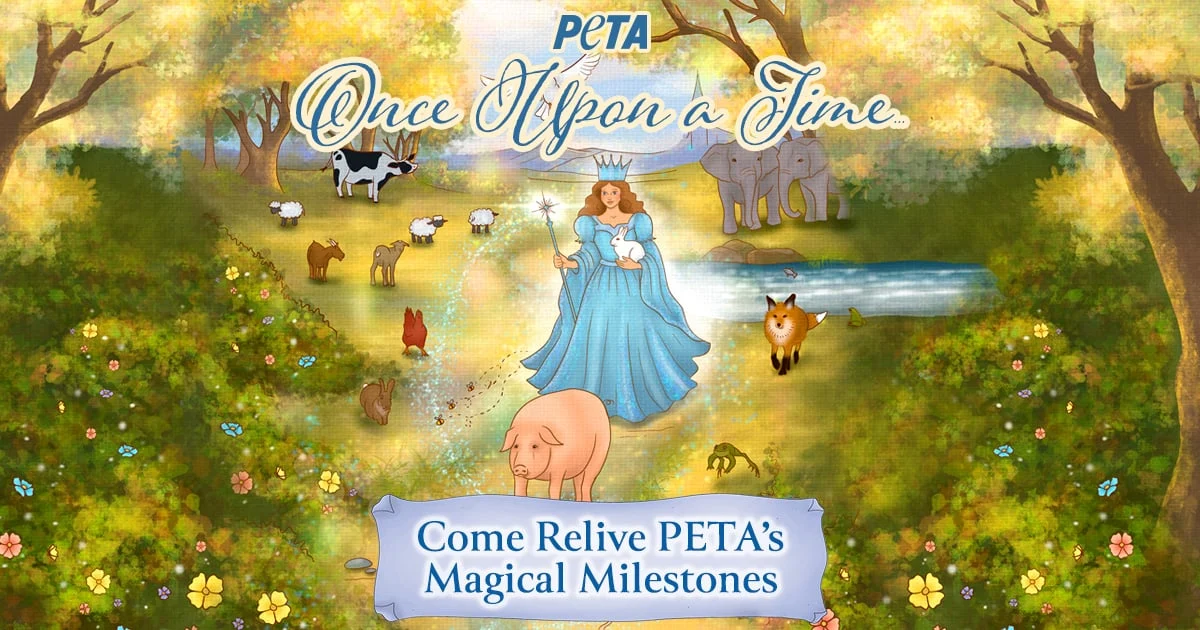
People for the Ethical Treatment of Animals (PETA) has officially announced a high-profile commemorative event to be held at its international headquarters, the Sam Simon Center, located in Norfolk, Virginia. Scheduled for Sunday, July 19, from 1:00 p.m. to 3:30 p.m., the gathering aims to serve as both a retrospective of the organization’s four-decade history and a strategic unveiling of its future initiatives. Led by PETA founder Ingrid Newkirk and President Tracy Reiman, the event will bring together executive leadership, long-term supporters, and local advocates for a program titled as a "journey like no other," focusing on the evolution of the animal rights movement from its fringe beginnings to its current status as a significant global social justice issue.
The event, which requires a $50 individual ticket for attendance, is designed to provide an immersive experience that blends social engagement with advocacy education. Attendees will be offered a selection of vegan canapés and cocktails, set against a backdrop of "commemorations" that highlight the organization’s most significant milestones. Beyond the social components, the afternoon will feature a curated silent auction of cruelty-free goods and a pop-up shop showcasing the organization’s latest merchandise. A key financial component of the event is a matching gift challenge; an anonymous donor has pledged to double all contributions made during the event, effectively doubling the impact of ticket sales and additional donations toward PETA’s animal liberation campaigns.
A Historical Retrospective: From 1980 to the Present
To understand the significance of this gathering, it is necessary to examine the trajectory of PETA since its inception in 1980. At that time, the concept of "animal rights" was largely absent from the public consciousness, and legislative protections for animals in laboratories and factory farms were virtually non-existent. The upcoming event in Norfolk will include a "retelling" of the organization’s early years, specifically focusing on the landmark 1981 Silver Spring monkeys case. This investigation, which led to the first-ever police raid on a research laboratory in the United States, is widely credited with launching the modern animal rights movement and resulting in the first Supreme Court case involving animal laboratory conditions.
Over the ensuing decades, PETA has grown from a small group of volunteers into the largest animal rights organization in the world, boasting more than 9 million members and supporters globally. The event at the Sam Simon Center—named after the late co-creator of The Simpsons and a major PETA benefactor—will serve as a physical testament to this growth. The venue itself is a hub for the organization’s international operations, housing departments dedicated to legal affairs, laboratory investigations, and corporate negotiations.
The Three Pillars of Modern Advocacy: Science, Law, and Investigation
The program for the July 19 event is structured around three primary pillars that define PETA’s current methodology: scientific advancement, legal strategy, and undercover investigations.
1. Groundbreaking Advances in Science
PETA’s leadership will present updates on the work of the PETA Science Consortium International e.V., which works to replace animal testing with modern, non-animal methods. This transition is not merely ethical but increasingly scientific, as researchers acknowledge that animal models often fail to accurately predict human responses. Data suggests that approximately 95% of new drugs that pass animal tests fail in human clinical trials. By funding the development of organs-on-chips and sophisticated computer modeling, PETA aims to shift the regulatory landscape. The event will likely highlight recent successes, such as the Environmental Protection Agency’s (EPA) commitment to reduce and eventually eliminate chemical testing on mammals.
2. Innovative Legal Strategies
The organization’s legal arm, the PETA Foundation, has increasingly utilized the judicial system to challenge the status of animals as mere property. This includes "personhood" lawsuits and challenges to the labeling of animal products. The event will detail how these legal maneuvers are designed to create precedents that could eventually grant animals fundamental rights. Supporters will hear about the "monkey selfie" copyright case and other high-profile litigation that, while controversial, has forced the legal system to reconsider the boundaries of non-human rights.
3. Daring Undercover Investigations
Undercover work remains a cornerstone of the organization’s public-facing campaigns. By placing investigators inside factory farms, slaughterhouses, and breeding facilities, PETA gathers the visual evidence necessary to lobby for corporate changes and criminal prosecutions. According to internal data, these investigations have led to the closure of dozens of facilities and the rescue of thousands of animals. The July event will feature testimonials and behind-the-scenes accounts of how these operations are conducted and the psychological toll they take on investigators.
Financial Dynamics and the Matching Gift Incentive
The financial structure of the Norfolk event reflects a sophisticated fundraising strategy common among large-scale non-profits. The $50 ticket price ensures accessibility for local supporters while the "sponsorship opportunities" cater to high-net-worth donors. However, the most significant driver for the afternoon’s fundraising is the matching gift.
Matching gifts are proven to increase donor response rates by up to 71% and increase the average gift size by 51%. By utilizing a fellow supporter’s generosity to double all contributions, PETA is leveraging the "urgency" factor to maximize the funding available for its upcoming fiscal year. These funds are earmarked for "animal liberation work," a broad term that encompasses everything from international litigation to the maintenance of the organization’s fleet of mobile spay/neuter clinics, which operate throughout Virginia and North Carolina.
Broader Socio-Economic Implications of Animal Advocacy
The event takes place at a time when the "cruelty-free" and "vegan" markets are experiencing unprecedented growth. Market analysis reports indicate that the global vegan food market is projected to reach over $31 billion by 2026, growing at a CAGR of 12.9%. Similarly, the global cruelty-free cosmetics market is expected to see significant expansion as more countries ban animal testing for beauty products.
PETA’s work has been a primary driver of these shifts. By targeting major corporations—such as the recent successful campaigns to persuade global fashion houses like Gucci, Versace, and Michael Kors to drop fur—PETA has influenced supply chains and consumer behavior on a global scale. The Norfolk gathering will provide a platform to discuss how these economic shifts are being used as leverage in ongoing negotiations with other industries, including the automotive sector (regarding leather interiors) and the pharmaceutical industry.
Official Reactions and Public Sentiment
While PETA’s methods have historically been a point of contention—often described as "radical" or "provocative" by critics in the agricultural and biomedical research sectors—the organization’s influence is undeniable. Industry groups often respond to PETA’s announcements with increased security protocols or counter-advocacy. However, public sentiment has trended toward greater concern for animal welfare. A 2023 survey indicated that nearly 70% of American consumers believe that the treatment of animals in food production is a "very important" or "somewhat important" issue.
Inferred reactions from the local Norfolk community suggest that the event will be well-attended, as PETA remains one of the region’s most prominent employers and a focal point for local activism. The inclusion of a silent auction and a pop-up shop further integrates the event into the local "ethical consumerism" scene, providing a tangible way for supporters to align their spending with their values.
The Road Ahead: A Vision for Animal Liberation
The final segment of the July 19 event is titled "the not-so-distant future." This portion of the program will move away from past victories to focus on what Newkirk and Reiman describe as the "liberation of animals from every imaginable harm." This includes the total abolition of animals in entertainment (such as circuses and marine parks), the end of the use of animals for clothing, and a global shift toward a plant-based food system.
PETA’s "new plans" likely involve an increased focus on artificial intelligence and its role in replacing animals in labs, as well as a more aggressive push into international markets where animal welfare laws are less stringent. The organization has recently expanded its presence in Asia and South America, recognizing that as Western markets shift, the "frontier" of animal rights advocacy is moving toward rapidly developing nations.
Event Logistics and Participation
For those planning to attend, the Sam Simon Center serves as a secure and modern facility designed to host high-level corporate and advocacy meetings. Located on the Norfolk waterfront, the building is a symbol of the organization’s permanence and professionalization. PETA has noted that more specific details, including security protocols and parking arrangements, will be provided to guests upon the confirmation of their RSVP.
The event represents a rare opportunity for donors to interact directly with the architects of the animal rights movement. As Ingrid Newkirk approaches her fifth decade of leadership, the gathering serves as both a celebration of her legacy and a transition toward a future led by Tracy Reiman and a new generation of activists.
Through a combination of historical reflection, scientific reporting, and financial strategizing, the July 19 event in Norfolk aims to reinforce PETA’s position as a dominant force in global advocacy. For the attendees, it is a chance to see the "path to big wins" and contribute to a movement that shows no signs of slowing down its pursuit of a world where, as PETA’s motto states, "animals are not ours to experiment on, eat, wear, use for entertainment, or abuse in any other way."

