


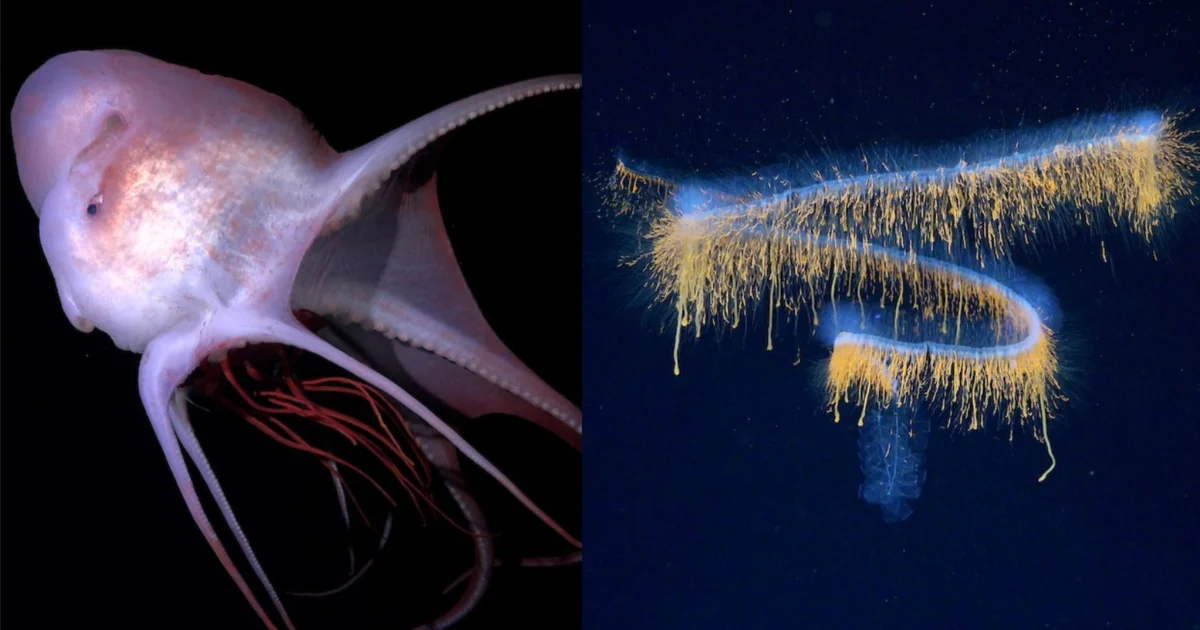
In a landmark achievement for marine biology and deep-sea exploration, an international team of scientists has identified 31 previously unknown species in the tropical South Atlantic Ocean within a span of just two weeks. This discovery, facilitated by the Schmidt Ocean Institute’s research vessel Falkor (too), represents a significant leap forward in our understanding of the Earth’s largest and most mysterious habitat: the midwater zone. Utilizing a suite of cutting-edge imaging technologies, the expedition successfully documented organisms so delicate that they would have likely been destroyed by traditional collection methods, such as trawl nets. The findings not only expand the known catalog of marine life but also demonstrate a revolutionary shift in how deep-sea taxonomy is conducted, moving from physical specimen collection to high-resolution, non-invasive digital analysis.
The expedition focused on the midwater, or pelagic zone—the vast expanse of water located between the sunlit surface and the dark seafloor. Despite accounting for the vast majority of the Earth’s habitable space, the midwater remains one of the least explored regions on the planet. The organisms inhabiting this zone have evolved unique physiological traits to survive in a high-pressure, low-light environment, often resulting in bodies that are predominantly gelatinous and incredibly fragile. For decades, the study of these "gelatinous zooplankton" was hindered by the fact that bringing them to the surface often reduced them to unrecognizable tissue, making the identification of new species a slow and arduous process.
A New Era of In Situ Taxonomy
The success of the two-week mission off the coast of Brazil was driven by the integration of three primary imaging systems mounted on the Remotely Operated Vehicle (ROV) SuBastian. These systems allowed scientists to perform "in situ taxonomy," or the classification of species in their natural environment, without the need for physical capture.
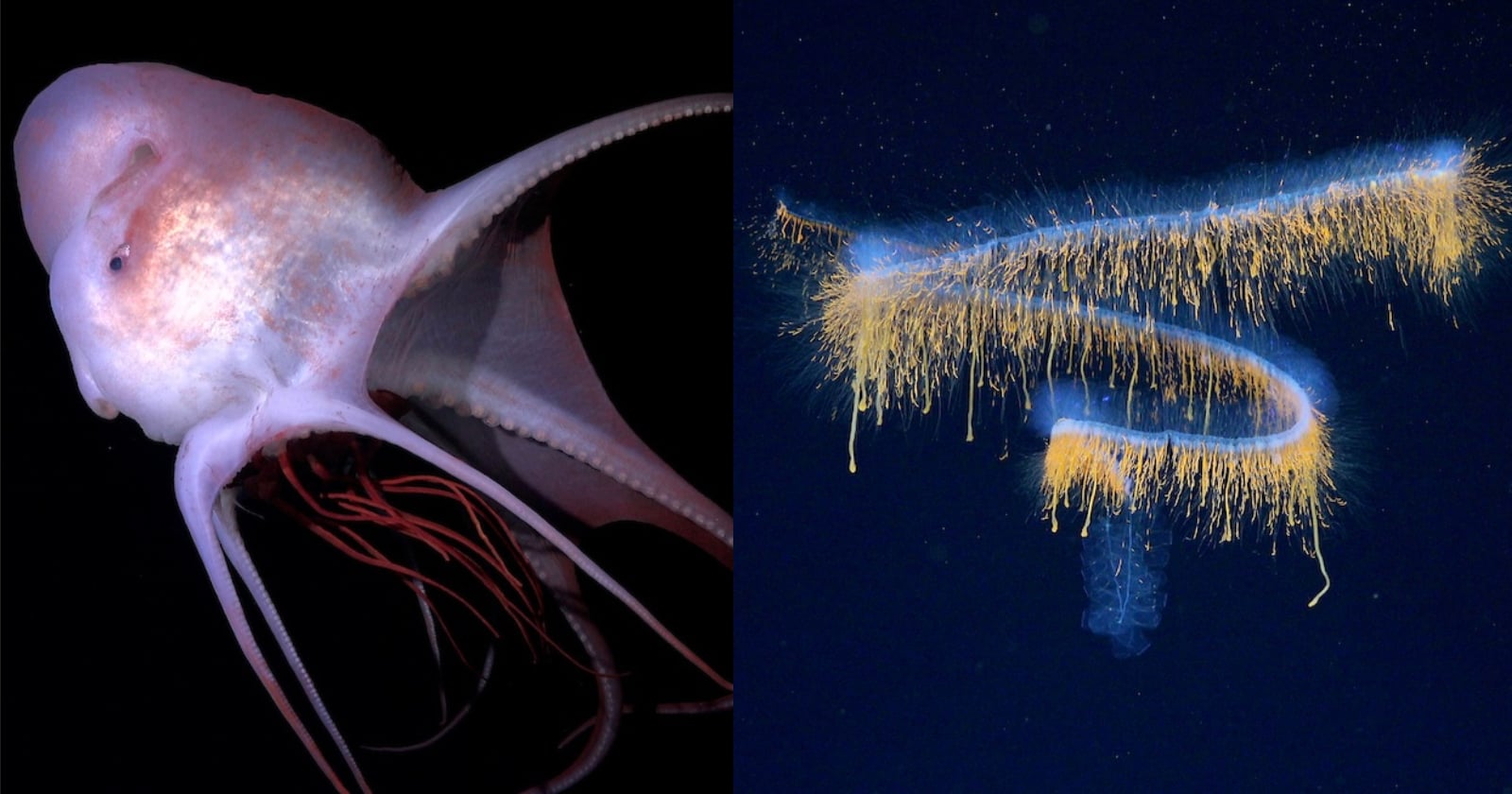
The first of these technologies is DeepPIV (Particle Image Velocimetry), developed by the Monterey Bay Aquarium Research Institute (MBARI). DeepPIV utilizes a thin sheet of laser light to illuminate a cross-section of an organism. By capturing how water and particles move through and around the animal, the system can reconstruct a highly detailed 3D model of its internal and external anatomy. This is particularly useful for transparent organisms like jellyfish and siphonophores, whose structures are often invisible under standard white light.
Complementing the DeepPIV was the EyeRIS (Remote Imaging System), another MBARI innovation. EyeRIS uses multiple high-resolution cameras to provide a stereoscopic view, allowing for the precise measurement of an organism’s dimensions and volume in real-time. Finally, the team employed a shadowgraph camera developed by the Japan Agency for Marine-Earth Science and Technology (JAMSTEC). This system captures high-contrast silhouettes of marine life, highlighting subtle structural details and refractive indices that laser-based systems might overlook.
By combining these data streams, the researchers were able to confirm the discovery of 31 new species in a matter of days—a process that traditionally takes years or even decades of laboratory analysis. This technological breakthrough allows for the rapid assessment of biodiversity in regions that are under immediate threat from climate change or potential deep-sea mining.
Chronology of Discovery: Two Weeks in the South Atlantic
The expedition began in the tropical waters off the Brazilian coast, targeting specific depths within the mesopelagic (200 to 1,000 meters) and bathypelagic (1,000 to 4,000 meters) zones. During the first few days of the mission, the ROV SuBastian encountered an unexpected density of life, suggesting that the South Atlantic midwater is far more biodiverse than previous models had predicted.
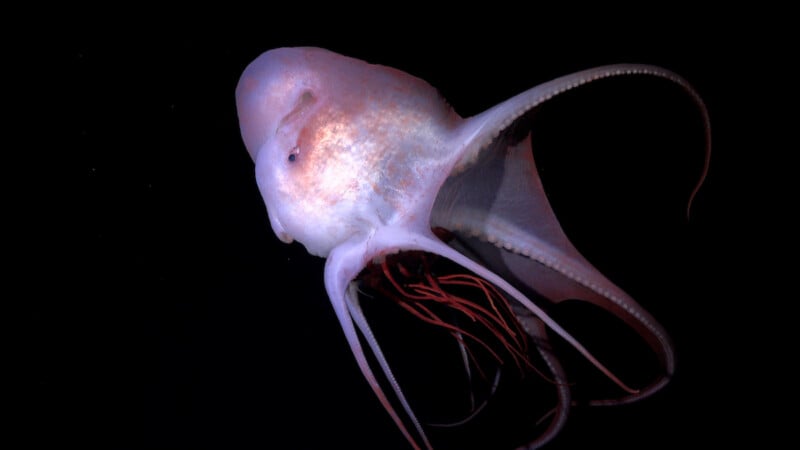
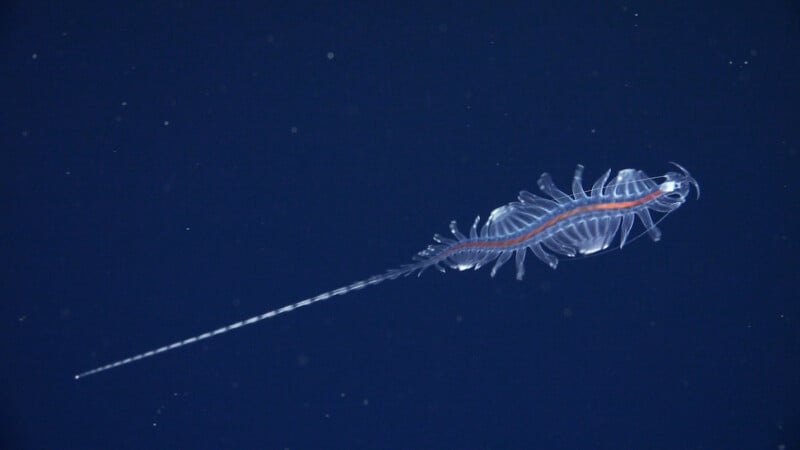
Midway through the first week, the team documented a significant find: a new species of Tomopteris, commonly known as a gossamer worm. While Tomopteris worms are known for their brilliant yellow bioluminescence, this new species displayed a movement speed and behavioral complexity that challenged existing assumptions about the genus. Shortly thereafter, the ROV captured rare footage of a female Haliphron atlanticus, or seven-arm octopus, at a depth of 2,624 meters. The octopus was observed consuming a jellyfish, providing invaluable data on the trophic interactions within the deep-sea food web.
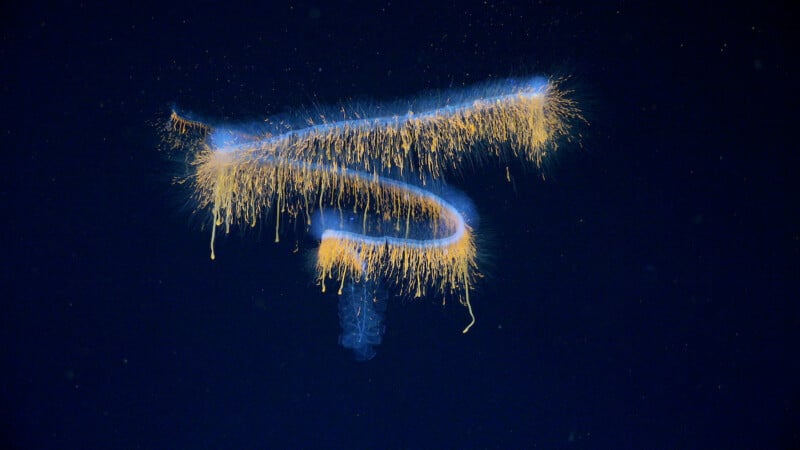
As the mission progressed into its second week, the discovery rate accelerated. The team identified nine new species of jellyfish and seven new siphonophores. Siphonophores are particularly complex colonial organisms related to corals and jellyfish; they consist of specialized individuals called "zooids" that function together as a single unit. Documenting these colonies in their intact state is nearly impossible without the use of non-invasive imaging, as the colonies tend to fragment the moment they are disturbed.
The final days of the expedition were marked by the discovery of seven new species of comb jellies (ctenophores) and four new larvaceans. Larvaceans are unique tadpole-like tunicates that construct elaborate "houses" made of mucus to filter-feed on microscopic particles. These structures are marvels of biological engineering but are so ephemeral that they vanish at the slightest touch. The ROV’s imaging systems allowed the team to map the intricate architecture of these mucus houses in 3D for the first time.
Supporting Data and Species Breakdown
The 31 new species discovered during the mission span a wide range of taxonomic groups, highlighting the diversity of the midwater ecosystem:
- Amphipods (1 species): A crustacean related to crabs and lobsters, adapted for a free-swimming life in the deep ocean.
- Gossamer Worms (1 species): A member of the Tomopteris genus, exhibiting unique swimming patterns.
- Jellyfish (9 species): Various medusae ranging from translucent to deep red, found at depths exceeding 2,000 meters.
- Siphonophores (7 species): Colonial organisms, some of which can reach lengths of several meters, functioning as apex predators in the planktonic world.
- Comb Jellies (7 species): Ctenophores that use rows of shimmering cilia to navigate the water column.
- Larvaceans (4 species): Chordates that play a critical role in the ocean’s carbon cycle by shedding their mucus houses, which then sink to the seafloor.
- Giant Rhizarians (2 species): Single-celled organisms that, surprisingly, are large enough to be seen with the naked eye and possess complex skeletal structures.
Official Responses and Scientific Significance
Dr. Karen Osborn, the expedition’s chief scientist and a curator at the Smithsonian National Museum of Natural History, emphasized the profound nature of these discoveries. "The largest habitat on Earth, the midwater, is filled with incredible animals we are only just starting to understand," Dr. Osborn stated. "I continue to be fascinated by the fantastic variety of solutions they have evolved to survive in this formidable environment, and that drives me to keep asking questions about our ocean."
The collaboration between the Schmidt Ocean Institute, MBARI, and JAMSTEC represents a paradigm shift in marine science. By sharing resources and technological expertise, these institutions are moving toward a "cyber-taxonomy" model. In this model, the "holotype"—the physical specimen used to describe a species—can be supplemented or, in some cases, replaced by a "digital holotype" consisting of high-resolution 3D scans and genetic data collected in situ.
Jyotika Virmani, Executive Director of the Schmidt Ocean Institute, noted that the speed of these discoveries is essential for conservation. "With the ocean facing unprecedented pressures from climate change and human activity, we cannot afford to wait decades to describe new life. These technologies provide the speed and precision necessary to catalog Earth’s biodiversity before it is lost."
Broader Impact and Environmental Implications
The discovery of 31 new species in such a short period suggests that the global ocean may contain millions of undiscovered organisms. This has significant implications for our understanding of the "biological pump," the process by which marine life transports carbon from the atmosphere to the deep ocean. Organisms like larvaceans and siphonophores are key players in this process; their waste and discarded structures serve as a major food source for seafloor communities and help sequester carbon for centuries.
Furthermore, the expedition highlights the importance of the South Atlantic, a region that has historically received less scientific attention than the North Atlantic or Pacific. The high level of biodiversity found off the Brazilian coast underscores the need for international cooperation in marine spatial planning and the establishment of Marine Protected Areas (MPAs) in the high seas.
As the scientific community processes the data from the RV Falkor’s mission, the focus will turn to the formal description of these 31 species. While the imaging technology has provided the necessary visual evidence, researchers will likely correlate these findings with environmental DNA (eDNA) samples collected during the dives to provide a complete taxonomic profile. This mission serves as a blueprint for future exploration, proving that with the right technology, the dark and fragile world of the midwater can finally be brought into the light.

