


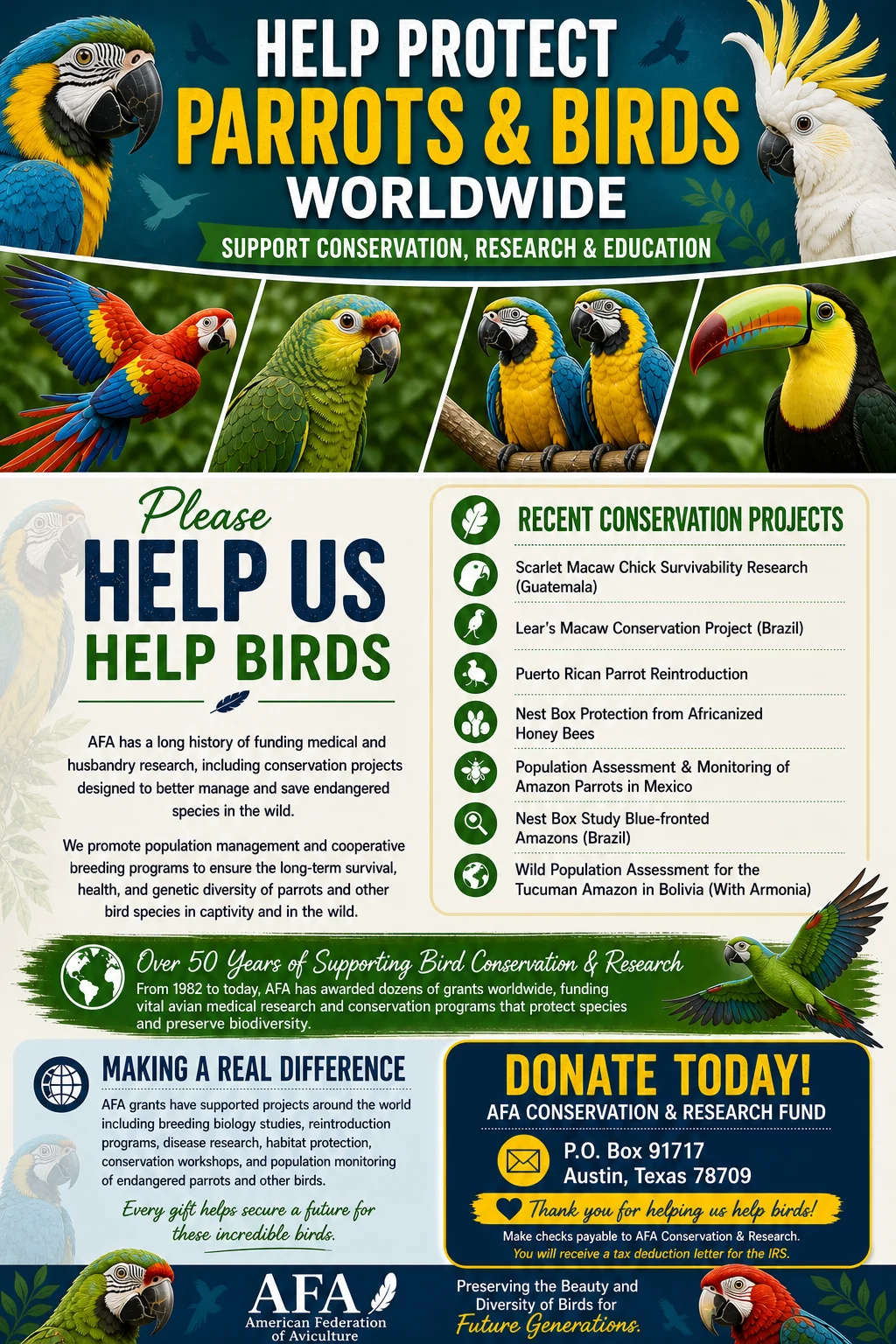
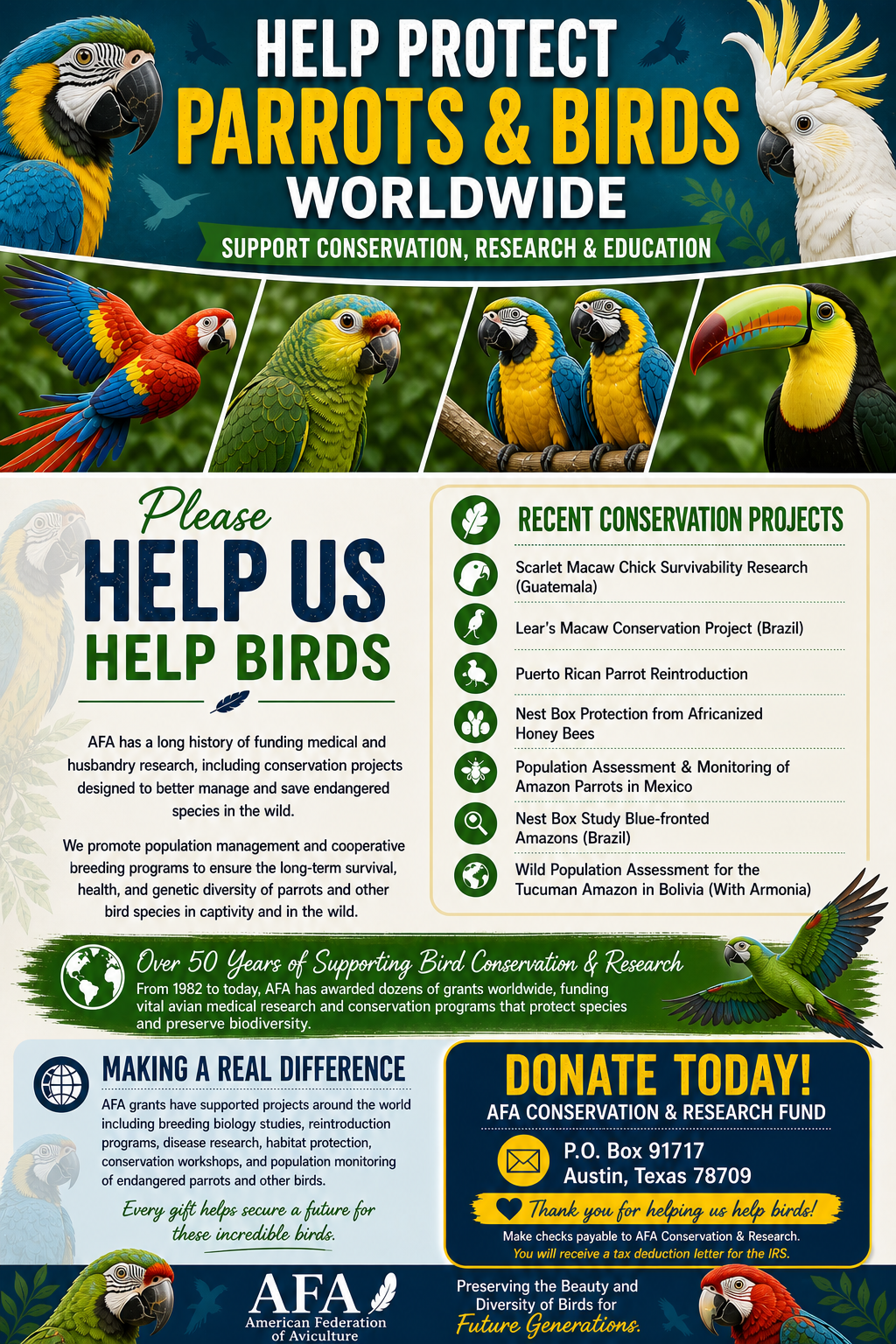
The American Federation of Aviculture (AFA) has officially unveiled its conservation and research agenda for the 2024-2025 cycle, marking a significant expansion of its efforts to protect wild parrot populations and support the avicultural community. Central to this initiative is a renewed partnership with Harrison’s Bird Foods, which recently underscored its commitment to avian welfare with a substantial $25,000 donation presented to AFA Chief Financial Officer Janice Lang. This funding serves as a cornerstone for the AFA’s small-grant program, which provides essential financial assistance to field researchers and conservationists working in native habitats across the globe.
As the threats of habitat loss, poaching, and climate change intensify, the AFA has positioned itself as a critical intermediary between private aviculture and international conservation science. By leveraging its 50-year history of advocacy, the organization is currently funding a diverse portfolio of projects ranging from high-tech veterinary research in the Amazon to community-based crop subsidies in the Brazilian highlands.
Field Conservation Initiatives for 2024-2025
The AFA Conservation Committee, led by industry veterans such as Rick Jordan, has identified several high-priority projects for the current funding year. These projects represent a blend of direct intervention and long-term biological research.
Scarlet Macaw Restoration in Mexico and Guatemala
One of the most prominent efforts is the Chajul Biology Station in the Lacandon rainforest of southern Mexico. In collaboration with Natura Mexicana, the project addresses a critical crisis: poaching has historically driven the fledgling rate of wild scarlet macaws to near zero. Through rigorous nest monitoring and the hand-rearing of at-risk hatchlings, the program has successfully returned over 150 scarlet macaws to the wild. For the 2024 season, the AFA has set a fundraising goal of $5,000 to provide the station with essential medical equipment, including portable incubators, gram scales, and brooders.
Similarly, in the Maya Biosphere Reserve of Guatemala, the AFA supports the Wildlife Conservation Society’s (WCS) Selva Maya Living Landscape Program. Since 2002, this initiative has focused on "experimental interventions" to increase chick survival rates. By treating scarlet macaws as a "landscape species," the WCS ensures that the protection of the birds results in the broader preservation of the Selva Maya ecosystem.
Veterinary Breakthroughs in the Tambopata Region, Peru
In the Peruvian Amazon, the AFA is funding cutting-edge physiological research led by investigators J. Jill Heatley, Lizzie Ortiz-cam, and Donald Brightsmith. Utilizing i-STAT analyzers, researchers are determining electrolytes, blood gases, and lactate levels "bird-side" in the field. This data provides an invaluable baseline for understanding the health of wild macaws and parrots.
A fascinating component of this research involves the study of "clay licks"—natural geological formations where parrots congregate to consume soil. The AFA-supported team is investigating whether these birds visit licks to supplement necessary electrolytes, a theory that could revolutionize the formulation of nutritional rations for companion birds in domestic settings.
Mitigating Human-Wildlife Conflict in Brazil
The Lear’s Macaw Corn Subsidy Program remains a vital component of the AFA’s mission. In Brazil, wild Lear’s macaws frequently forage on local farms, leading to significant crop loss and potential retaliation from farmers. The AFA and its partners supply these farms with corn to offset the losses, fostering a peaceful coexistence between the agricultural community and this endangered species.
Innovative Solutions: The "Push-Pull" Bee Protocol
Beyond direct species management, the AFA is addressing environmental threats such as the invasion of parrot nest boxes by Africanized honey bees. Principal Investigator Caroline A. Efstathion has developed a "push-pull" protocol that uses permethrin—a bird-safe insecticide—to repel scout bees from avian nesting sites. Simultaneously, bees are "pulled" toward pheromone-baited traps placed away from the birds. This dual-action strategy protects vulnerable hatchlings from bee attacks while providing alternative nesting sites for the bees, demonstrating a sophisticated approach to ecosystem management.
A Legacy of Advocacy: The History of the AFA
The American Federation of Aviculture was born out of crisis. In the early 1970s, an outbreak of Exotic Newcastle Disease in California led to the mass euthanasia of healthy exotic birds by the USDA. In response to this event and the subsequent threat of restrictive state legislation, Southern California bird clubs united in March 1974 to form the AFA.
Incorporated as a 501(c)3 non-profit, the AFA has evolved into a global "umbrella" organization representing thousands of aviculturists. Its mission is multifaceted: promoting breeding excellence, advancing husbandry practices, and ensuring that the voice of the avicultural community is heard in the halls of government. Since 1982, the organization has awarded over 40 major research grants, establishing a track record of scientific contribution that rivals much larger NGOs.

Navigating the Regulatory Landscape: CITES, WBCA, and ESA
A significant portion of the AFA’s work involves navigating the complex web of international and domestic laws that govern the movement of exotic birds.
CITES and International Trade
The Convention on the International Trade in Endangered Species of Wild Fauna and Flora (CITES) is the primary treaty regulating the global trade of parrots. The AFA holds official Non-Governmental Observer (NGO) status at CITES meetings, allowing the organization to provide expert input on psittacine issues. By participating in the CITES Animals Committee, the AFA ensures that the practical experience of breeders is considered when international trade restrictions are drafted.
The Wild Bird Conservation Act (WBCA) of 1992
In the United States, the WBCA effectively halted the mass importation of wild-caught birds. While the law was intended to protect wild populations, it created significant hurdles for aviculturists seeking to maintain genetic diversity. The AFA manages "Cooperative Breeding Programs" (CBPs), which allow for the limited importation of specific species—such as the Blue-eyed Cockatoo—under strict federal oversight. These programs ensure that U.S. aviculture remains a viable "genetic reservoir" for species that may be struggling in the wild.
The U.S. Endangered Species Act (ESA)
The ESA imposes strict domestic regulations on species deemed to be at risk of extinction. The AFA monitors the Federal Register constantly to track species being added to the act, such as the recent listings of certain military and Buffon’s macaws. The organization provides guidance to owners on "Interstate Commerce Permits" and "Captive-bred Wildlife Permits," ensuring that law-abiding enthusiasts can continue to care for these birds without running afoul of federal or state regulations.

Strategic Grants and Future Growth
The AFA continues to invite grant proposals for projects that align with its mission of avian conservation and research. While typical annual grants are modest—often $500 or less—they frequently serve as "seed money" that allows researchers to secure larger institutional funding. The deadline for submissions is September 15 for the following calendar year, with the Conservation Committee prioritizing projects that offer tangible benefits to wild populations or enhance captive husbandry.
The organization also encourages individuals and corporations to become "Conservation Partners." Recognition in the AFA Watchbird Journal and on the organization’s website provides partners with a platform to showcase their commitment to environmental stewardship.
Broader Impact and Global Collaboration
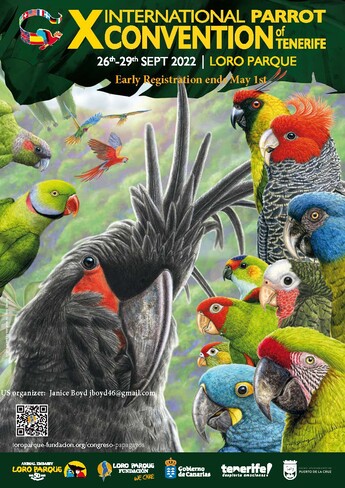
The AFA’s influence extends to global forums, such as the International Parrot Conference in the Canary Islands. By collaborating with international experts like Dr. Janice Boyd and Susan Clubb, DVM, the AFA ensures that American aviculture remains at the forefront of global conservation trends.
The success of the Pyhurra Conure CBP and the ongoing progress of the Blue-eyed Cockatoo program (which now includes several species of Black Cockatoos) demonstrate the power of cooperative management. These programs prove that when private breeders, veterinarians, and government agencies work together, they can create sustainable populations that safeguard species for future generations.
As the AFA looks toward the 2024-2025 season, its strategy remains clear: support the science, navigate the law, and empower the community. Through the generosity of partners like Harrison’s Bird Foods and the tireless work of volunteers like Rick Jordan and Mary Ellen LePage, the American Federation of Aviculture continues to be a vital shield for the world’s avian wildlife. Whether through a "push-pull" bee protocol in a backyard or a blood-gas analysis in the heart of the Amazon, the AFA’s impact is felt wherever birds take flight.

