


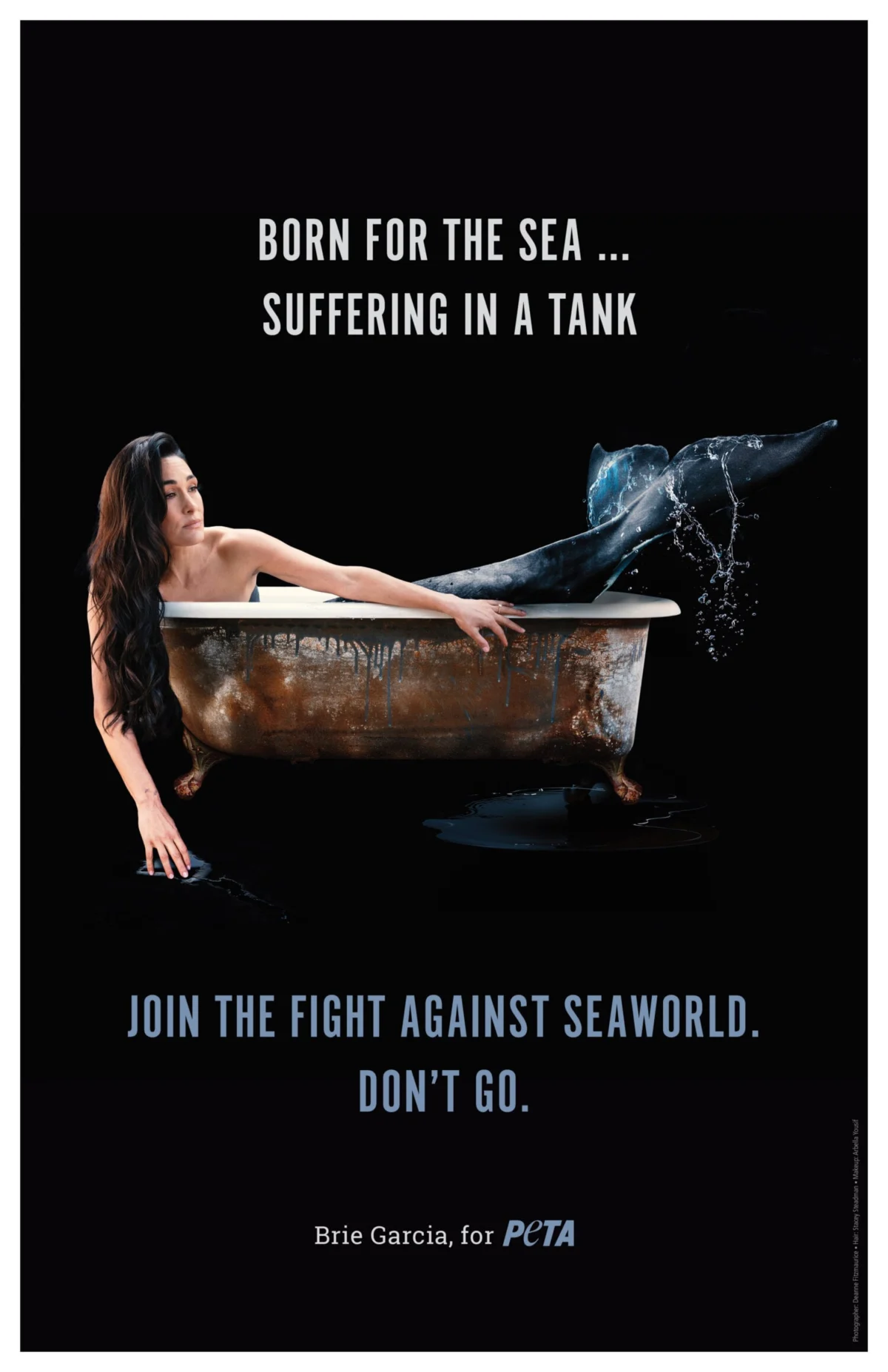
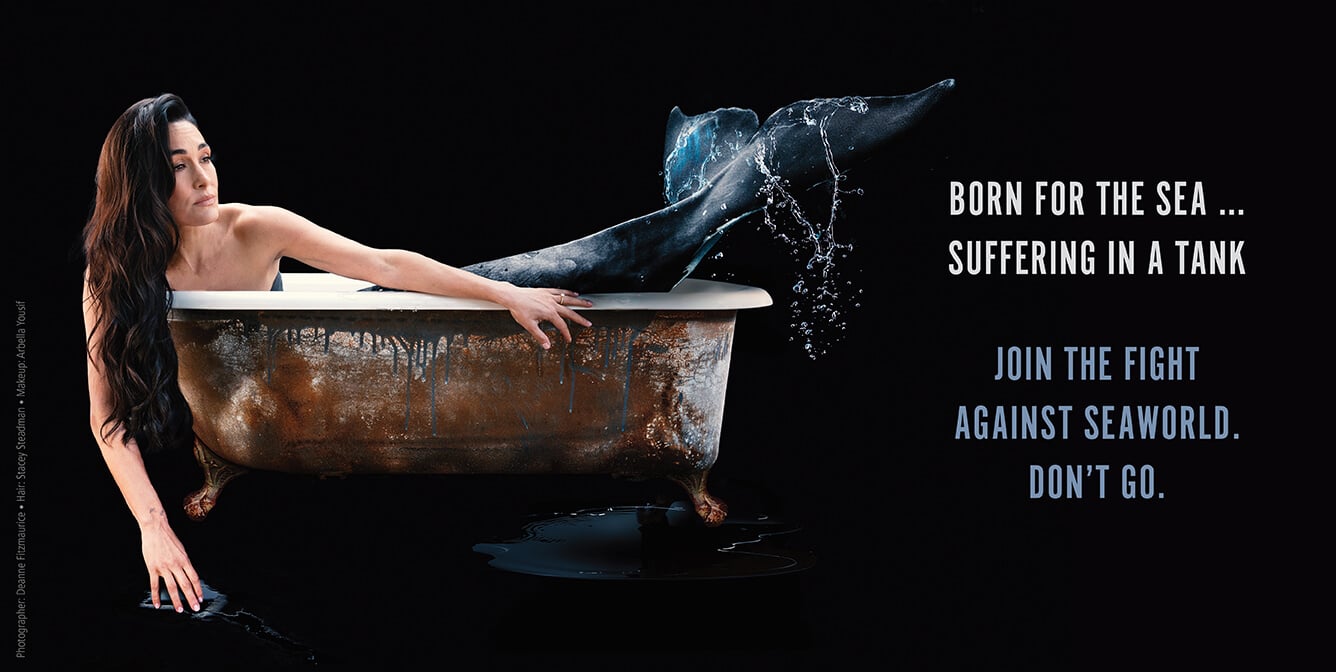
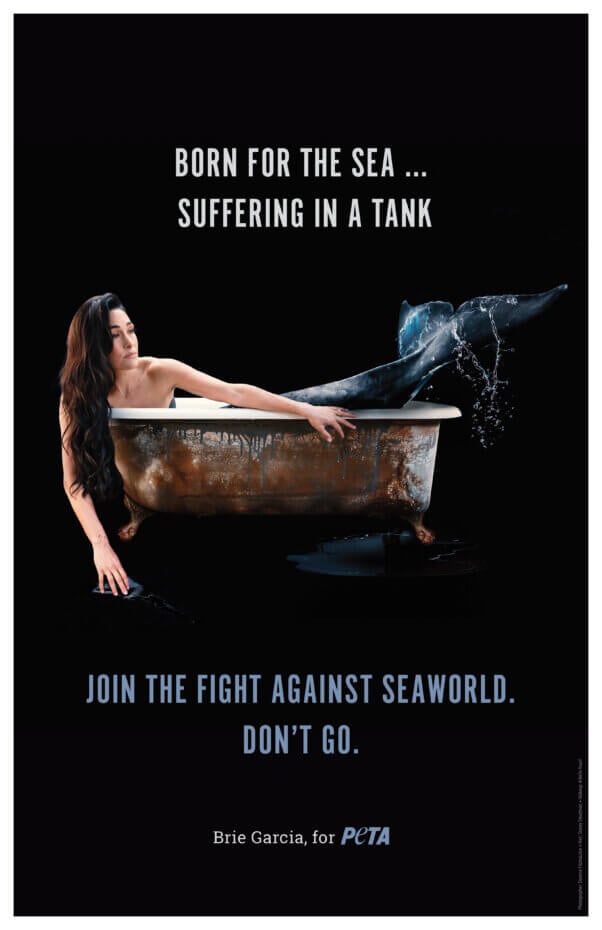
Professional wrestler and television personality Brie Garcia, widely recognized by her ring name Brie Bella, has officially launched a high-profile advocacy campaign in partnership with People for the Ethical Treatment of Animals (PETA). The campaign, strategically timed to coincide with the beginning of the busy summer tourism season, aims to discourage the public from visiting marine theme parks, specifically targeting SeaWorld. Garcia, a native of San Diego—home to one of SeaWorld’s flagship locations—is utilizing her global platform and the "Bella Army" fan base to highlight the living conditions of dolphins and orcas held in captivity. The centerpiece of the campaign features Garcia in a somber photographic spread, positioned inside a bathtub to serve as a metaphor for the confined spaces marine mammals occupy relative to their natural oceanic habitats.
The campaign extends beyond visual media into direct corporate engagement. Garcia recently participated in SeaWorld’s virtual annual meeting of shareholders, where she formally questioned the company’s executive leadership regarding their long-term plans for captive animals. Her inquiry focused on two primary demands: the cessation of dolphin breeding programs and the relocation of captive animals to seaside sanctuaries. Garcia’s involvement represents a significant escalation in celebrity-led activism against the marine park industry, combining visual advocacy with direct shareholder intervention.
The Bathtub Metaphor and the Reality of Captivity
The visual narrative of Garcia’s campaign is designed to evoke a sense of claustrophobia and restriction. In her statement accompanying the campaign, Garcia compared the life of a captive marine mammal to a human being spending their entire existence within the confines of a bathtub. This comparison is rooted in the biological and behavioral needs of cetaceans—whales, dolphins, and porpoises—which are known for their high intelligence, complex social structures, and vast migratory patterns.
In the wild, orcas (Orcinus orca) are known to swim up to 140 miles per day and dive to depths exceeding 1,000 feet. In contrast, the tanks at marine parks represent a fraction of one percent of their natural range. Marine biologists have frequently noted that the acoustic environment of concrete tanks is detrimental to animals that rely on echolocation to navigate and communicate. The reflection of sonar off flat concrete walls is thought to create a stressful sensory environment, contributing to the behavioral abnormalities often observed in captive specimens, such as repetitive swimming patterns and "logging," where animals float listlessly at the surface for extended periods.
Current Population and Conditions at SeaWorld Parks
According to data tracked by animal welfare organizations and confirmed by PETA, SeaWorld currently holds 16 orcas across its three locations in San Diego, California; Orlando, Florida; and San Antonio, Texas. Among these is Corky, an orca captured in 1969 off the coast of British Columbia. Now approximately 59 years old, Corky is the longest-held captive orca in the world. Advocacy groups have long campaigned for her retirement to a seaside sanctuary in her home waters, where her natal pod is still believed to reside.
Beyond the orcas, the scale of dolphin captivity is even more extensive. More than 130 dolphins are housed across SeaWorld’s facilities, often crowded into tanks that serve multiple purposes, including public performances and "swim-with-dolphin" interactions. PETA and other critics argue that the social dynamics in these tanks are artificial and often lead to aggression. In the wild, dolphins live in fluid, complex social groups where they can escape conflict. In captivity, the inability to retreat from dominant individuals can lead to "rake marks"—scars caused by the teeth of other dolphins—and chronic stress.
The Evolution of Public Sentiment and the "Blackfish" Effect
The timing of Garcia’s campaign reflects a broader, decade-long shift in public perception regarding marine mammal captivity. This shift was largely catalyzed by the 2013 documentary Blackfish, which detailed the life of Tilikum, an orca involved in the deaths of three people, including trainer Dawn Brancheau. The film raised fundamental questions about the psychological impact of confinement on apex predators and led to a significant downturn in SeaWorld’s attendance and stock value, a phenomenon often referred to as the "Blackfish Effect."
In response to sustained public pressure and legislative threats, SeaWorld announced in 2016 that it would end its orca breeding program, making the current generation of orcas the last to reside at its parks. However, the company has not extended this policy to its dolphin populations, which continue to be bred for display and interaction programs. Garcia’s current campaign specifically addresses this discrepancy, urging the company to apply the same sunsetting logic to all cetaceans under its care.
The Case for Seaside Sanctuaries
The primary objective of Garcia and PETA’s advocacy is the transition from tank-based displays to seaside sanctuaries. A seaside sanctuary is a protected coastal enclosure, usually a cordoned-off cove or bay, that allows captive-born or long-captive animals to live in a natural ocean environment while still receiving human care and food.
Proponents of the sanctuary model argue that it offers several key advantages over traditional tanks:
- Natural Environment: Animals are exposed to natural tides, currents, and ocean flora and fauna.
- Space: Sanctuaries typically offer significantly more room for movement and deeper diving opportunities.
- Acoustic Health: The natural seafloor and irregular coastline absorb sonar, reducing the "echo" effect found in concrete tanks.
- Autonomy: While the animals remain under human supervision, they have greater control over their daily activities and social interactions.
While SeaWorld has historically resisted the sanctuary model, citing concerns over the safety of the animals and the potential for exposure to ocean-borne toxins or diseases, other organizations have moved forward. The Whale Sanctuary Project, for instance, is currently working to establish North America’s first sanctuary for orcas and beluga whales in Nova Scotia. The success of such projects could serve as a proof-of-concept that challenges the necessity of permanent tank confinement.
Corporate and Economic Implications
SeaWorld Entertainment, Inc. (now rebranded as United Parks & Resorts Inc.) has consistently defended its practices by highlighting its contributions to conservation and animal rescue. The company maintains that its parks provide millions of people with the opportunity to see and appreciate animals they would otherwise never encounter, fostering a sense of stewardship for the oceans. Furthermore, SeaWorld is one of the world’s largest animal rescue organizations, having assisted tens of thousands of stranded or injured animals.
However, activists like Garcia argue that the educational value of seeing animals in an unnatural setting is outweighed by the ethical cost of their confinement. From an economic perspective, the persistent pressure from high-profile figures and organizations has forced marine parks to diversify their offerings. In recent years, SeaWorld has pivoted toward high-thrill rides and roller coasters to maintain attendance figures, a move analysts interpret as a hedge against the declining popularity of animal-based entertainment.
Analysis of Celebrity Influence in Animal Welfare
The partnership between Brie Garcia and PETA highlights the evolving role of celebrity influencers in social and environmental causes. Garcia’s "Bella Army" consists of millions of followers across social media platforms, many of whom belong to younger demographics that are statistically more likely to prioritize animal welfare in their consumer choices. By framing the issue through a personal lens—referencing her San Diego roots and her role as a mother—Garcia humanizes the plight of the animals, making the complex ethical debate more accessible to a general audience.
Professional wrestling, Garcia’s original platform, also provides a unique demographic reach. The crossover between sports entertainment fans and animal rights activism is a relatively new frontier for organizations like PETA, which have traditionally relied on actors and musicians. Garcia’s "tough" persona as a WWE star adds a layer of resilience to the campaign, reinforcing the idea that standing up for animal rights is a form of strength.
Future Outlook for Marine Parks
The conflict between animal rights organizations and marine theme parks shows no signs of abating. As more celebrities like Brie Garcia join the fray, the pressure on corporations to evolve becomes increasingly intense. The legislative landscape is also shifting; several jurisdictions, including Canada and certain U.S. states like California, have already passed laws banning the captive breeding or display of orcas.
The ultimate resolution may lie in a hybrid model where marine parks transition into rescue and rehabilitation centers that prioritize animal welfare over entertainment. Whether SeaWorld and its competitors will embrace the sanctuary model remains to be seen, but the advocacy of figures like Garcia ensures that the conversation remains at the forefront of public discourse.
As the summer season progresses, the impact of Garcia’s bathtub campaign will likely be measured by attendance trends and the continued dialogue at shareholder meetings. For now, the message from the "Bella Army" is clear: the era of performing dolphins and orcas in concrete tanks is facing an unprecedented challenge from both the court of public opinion and the very celebrities who once called these park-hosting cities home.

