


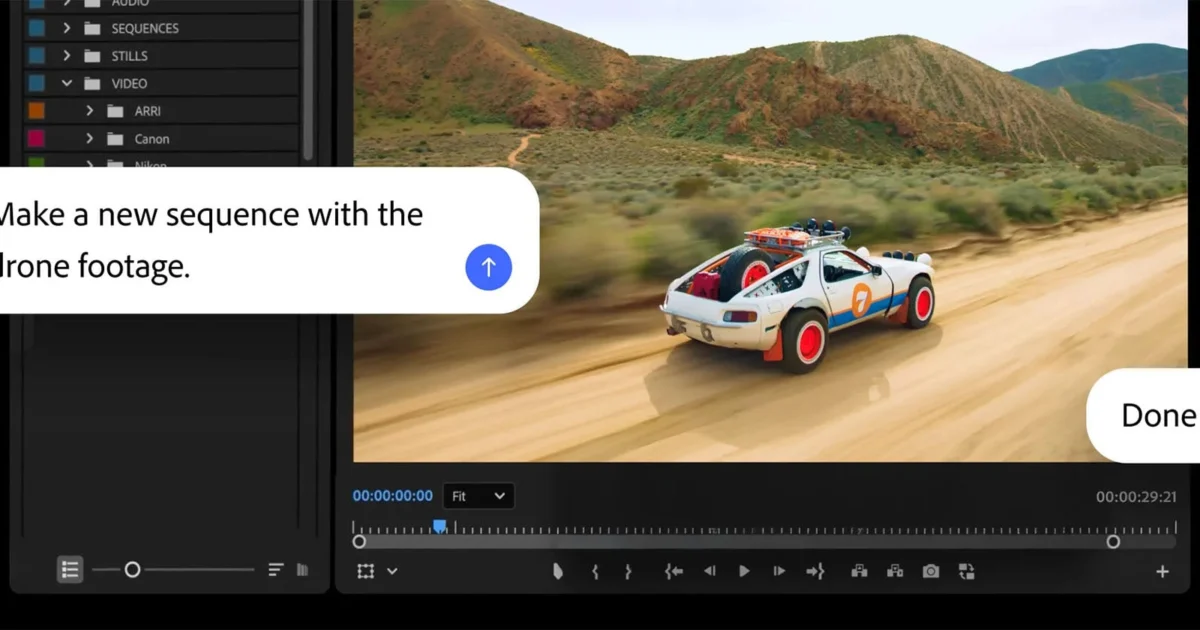
Adobe has officially transitioned its vision for "agentic AI" into a tangible reality with the integration of its Firefly-powered AI Assistant across the Creative Cloud ecosystem, including flagship applications such as Photoshop, Premiere Pro, Illustrator, InDesign, and the collaboration platform Frame.io. This strategic deployment marks a significant evolution in creative software, moving beyond simple generative image creation toward a sophisticated system capable of executing complex, multi-step tasks through natural language processing. By allowing users to issue direct commands for editing, organization, and workflow management, Adobe aims to fundamentally alter the relationship between the creator and the tool, prioritizing human intent over manual execution.
The implementation of agentic AI represents a departure from the "chatbot" model of artificial intelligence. Unlike standard generative models that produce static outputs based on prompts, an agentic system is designed to navigate the internal architecture of software to perform actions. In the context of Adobe’s latest update, this means the AI Assistant can interpret a user’s request—such as "organize my footage" or "prepare these files for social media"—and then execute the sequence of technical steps required to achieve that goal within the application. This shift is intended to alleviate the cognitive load on professionals who currently spend a disproportionate amount of their time on administrative and repetitive tasks rather than the core creative process.
The Evolution of Adobe Firefly and the Path to Agentic AI
The journey toward this integration began in earnest in early 2023 with the launch of Adobe Firefly, the company’s family of creative generative AI models. Initially, Firefly focused on text-to-image and text-effects capabilities, which were quickly integrated into Photoshop as "Generative Fill" and "Generative Expand." These features allowed users to add or remove content from images with unprecedented ease, but they remained largely focused on the generation of pixels.
By late 2023 and early 2024, Adobe began signaling a shift toward "agentic" capabilities. During its March 2024 showcase, the company demonstrated early iterations of an assistant that could understand the context of a project. The timeline of this development reflects a broader industry trend where AI is being repositioned not as a replacement for the artist, but as a "co-pilot" or "creative agent." The transition from public previews to the current public beta status for Premiere, Photoshop, Illustrator, InDesign, and Frame.io suggests that the technology has reached a level of stability and utility required for professional environments.
Adobe’s strategy has been consistently centered on "commercial safety" and "creator control." By training Firefly on Adobe Stock images, openly licensed content, and public domain content where the copyright has expired, the company has sought to provide a legal framework that professional agencies and enterprise clients can trust. The new AI Assistant follows this same philosophy, acting as a bridge between the user’s taste and the software’s technical complexity.
Application-Specific Capabilities and Workflow Enhancements
The utility of the AI Assistant varies across the Creative Cloud suite, tailored to the specific demands of different creative disciplines. In Photoshop, the assistant focuses on high-volume, tedious tasks. For instance, a photographer handling a large-scale commercial shoot can command the AI to remove backgrounds from dozens of open files simultaneously or resize an entire batch of images to specific dimensions. These are tasks that previously required the manual creation of "Actions" or scripts, a process that many users found cumbersome.
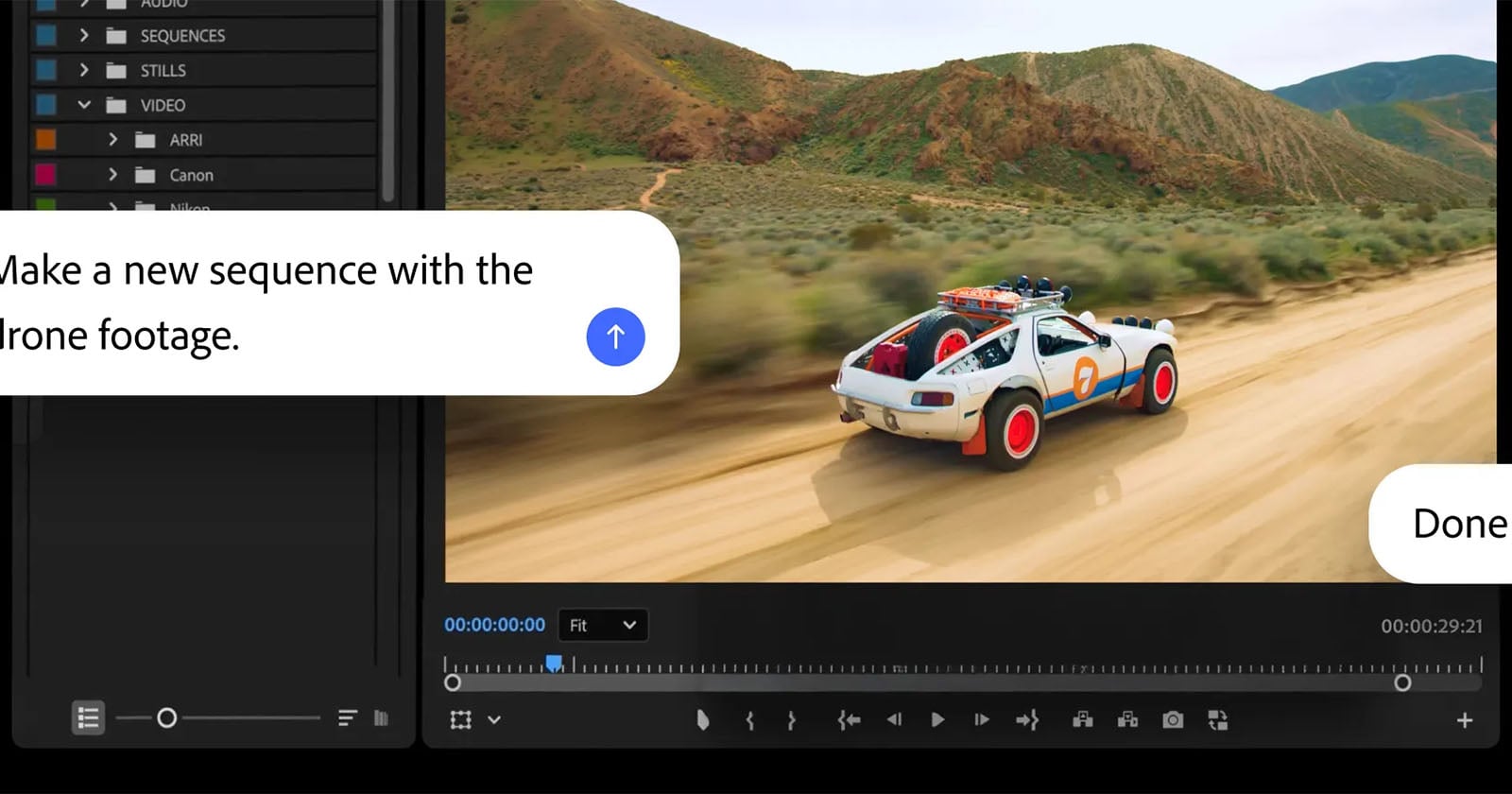
In the realm of video editing, the AI Assistant’s role in Premiere Pro and Frame.io is even more transformative. Video production is notoriously labor-intensive, often involving hours of logging and organizing media before the creative edit can even begin. The new AI Assistant can import source media, automatically sort it into bins based on content or metadata, and rename clips according to a specific naming convention. Furthermore, the assistant can analyze audio tracks to identify specific interview questions or dialogue beats, allowing editors to jump directly to the relevant portions of their footage. One of the most highlighted features is the ability to generate a new sequence from specific clips, such as "drone footage," through a simple text command, effectively creating a "rough cut" in seconds.
For designers using Illustrator and InDesign, the AI Assistant streamlines layout adjustments and vector management. It can help in identifying inconsistencies in a brand’s color palette across multiple pages or suggest layout refinements based on the existing hierarchy of elements. By handling these technical checks, the AI allows designers to focus on the visual storytelling and aesthetic impact of their work.
Supporting Data: The Growing Demand for AI Efficiency
The push toward agentic AI is supported by emerging data regarding how professionals actually interact with technology. According to recent industry surveys and Adobe’s own research, a significant majority of working photographers and videographers are not looking for AI to "create" their art for them. Instead, they are seeking solutions for the "friction" that exists in their daily workflows.
A 2024 survey of professional photographers revealed that over 60% of respondents already use some form of AI, but primarily for tasks like noise reduction, masking, and object removal. Only a small fraction expressed interest in using AI to generate entirely new images from scratch. This data underscores a critical market reality: the professional creative industry values AI as a tool for efficiency, not as a substitute for human vision.
Adobe’s internal metrics suggest that the time spent on "non-creative" tasks—such as file management, export preparation, and basic color correction—can account for up to 70% of a professional’s workday. By shifting these "relatively mindless" tasks to the background via an AI agent, Adobe estimates that users can significantly increase their output or, conversely, spend more time on the nuanced decisions that define high-end creative work.
Official Stance and Industry Reactions
Adobe has been vocal about its intent to keep the human creator at the center of the process. In official statements, the company emphasizes that the best creative work is defined by instinct, taste, and the ability to connect with an audience—qualities that AI currently lacks. "As a creative, you remain in control, choosing what to hand off, what to refine and how to apply your taste, expertise and judgment to shape every editable outcome," the company stated during the launch.
The reaction from the creative community has been cautiously optimistic. While there remains a lingering concern regarding the long-term impact of AI on entry-level jobs—tasks like "assistant editor" or "production artist" often consist of the very chores Adobe is now automating—many veterans in the field welcome the change. The consensus among many industry analysts is that the "barrier to entry" for complex software like Photoshop and Premiere Pro is being lowered. This educational aspect is a key component of the AI Assistant; it can serve as an on-demand tutor, showing novice users how to perform complex edits step-by-step rather than just doing it for them.
However, some critics argue that the "Efficiency Paradox" may take hold. As tools become faster and more efficient, the market often responds by demanding more volume and faster turnaround times, potentially negating the "time saved" for the individual creator. Adobe’s challenge will be to ensure that the AI Assistant remains a tool for empowerment rather than a catalyst for increased professional burnout.
Broader Impact and Future Implications
The introduction of agentic AI into Creative Cloud is likely to have far-reaching implications for the digital media landscape. First, it accelerates the democratization of high-end production tools. Small businesses and solo creators who may not have the budget for a full production team can now use the AI Assistant to manage the technical overhead of a project.
Second, the move solidifies Adobe’s position in the "AI arms race" against competitors like Canva, which has also been aggressive in integrating AI, and specialized tools like DaVinci Resolve, which has long used "Neural Engine" features for color grading and object tracking. By integrating these features into a unified "agent," Adobe is betting that a centralized, cross-app assistant will be more valuable than fragmented AI tools.
Finally, the shift toward agentic AI raises important questions about the future of software interfaces. We may be moving toward a "headless" software era where the traditional menus, toolbars, and panels become secondary to a natural language command line. If a user can simply tell the software what they want to achieve, the need for years of technical training to navigate complex UI becomes less critical.
Adobe’s AI Assistant is currently in public beta, a phase that will allow the company to gather more data on how users interact with the agent in real-world scenarios. As the technology matures, it is expected to become more proactive, potentially anticipating a user’s needs based on their past behavior and project history. For now, the focus remains on eliminating the "drudgery" of the creative process, ensuring that the final output remains "distinctly you," as Adobe describes it—a product of human craft supported by machine intelligence.

