


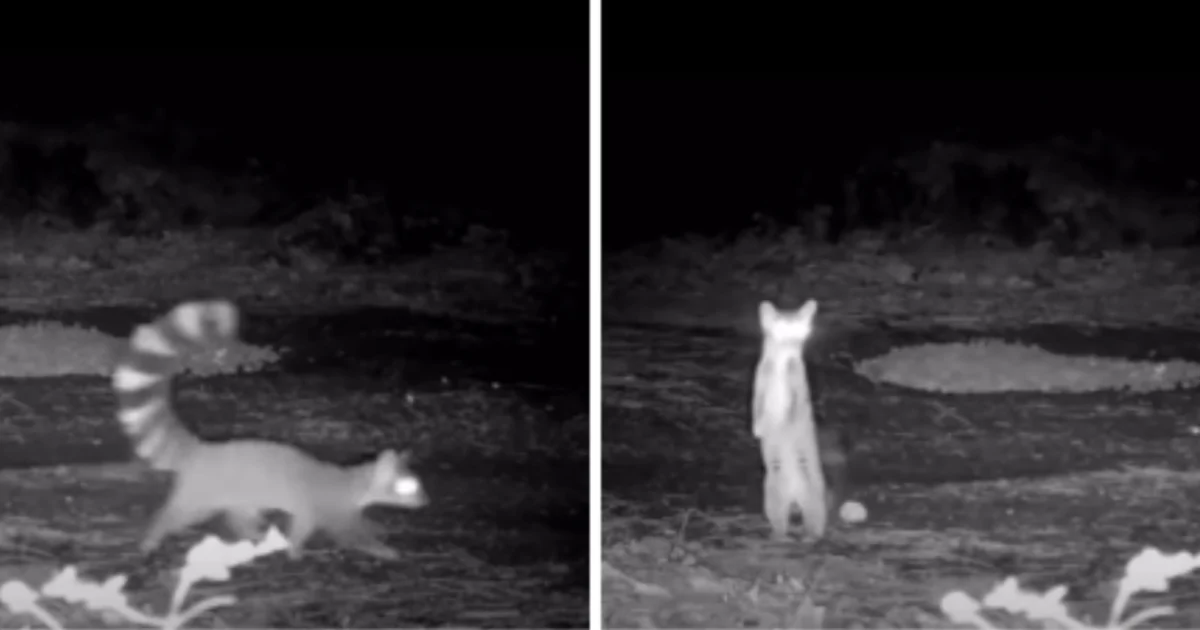
In a rare and significant event for wildlife biology in the Pacific Northwest, remote trail cameras have captured high-quality footage of a ringtail (Bassariscus astutus) within the Epstein Family Forest in Oregon’s Siskiyou Mountains. This sighting, documented on a 405-acre tract of land currently under conservation by the Pacific Forest Trust, represents a major milestone for regional conservationists. The ringtail, often referred to as the "ghost of the forest," is one of the most secretive and least understood mammals in the United States. Its presence on the Epstein property provides tangible evidence that decades of dedicated ecological restoration and forest stewardship are yielding measurable results for biodiversity.
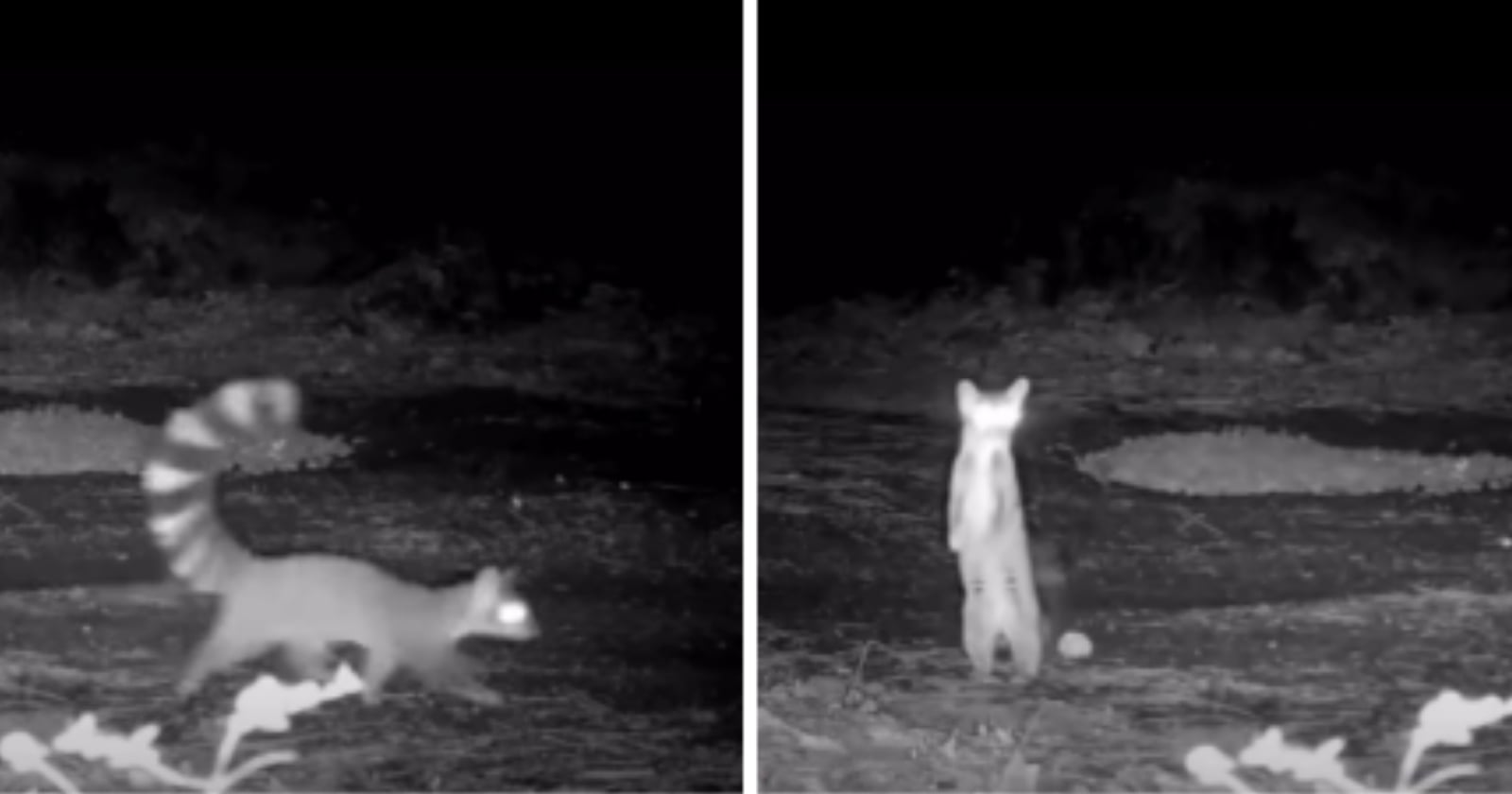
The footage, recorded under the cover of night, shows the small, fox-like carnivore approaching the camera with a mix of caution and curiosity. In a display of its unique physiology, the ringtail is seen standing on its hind legs to survey the surrounding environment—an area characterized by dense undergrowth and complex forest structures—before quickly retreating into the darkness. While the ringtail is a cousin to the common raccoon, it is significantly more elusive, primarily nocturnal, and rarely observed by humans in the wild. This specific sighting is being celebrated not just for its rarity, but for what it signals about the health of the Siskiyou Crest ecosystem.
A Profile of the Elusive ‘Miner’s Cat’
The ringtail is a member of the Procyonidae family, making it a relative of the raccoon and the coati. However, its physical appearance and behavior are distinct. Roughly the size of a squirrel but with a body more reminiscent of a slender cat or a marten, the ringtail is characterized by its large, dark eyes, pointed ears, and its most striking feature: a long, bushy tail ringed with alternating bands of black and white fur. This tail, which is often longer than the animal’s body, provides balance during its acrobatic maneuvers through rocky terrain and forest canopies.
Historically, the ringtail earned the nickname "Miner’s Cat." During the 19th and early 20th centuries, miners and settlers in the American West often encouraged these animals to live in their cabins and mine shafts. Because ringtails are expert hunters of rodents, they served as an effective, natural form of pest control. Despite this historical proximity to human industry, the species has remained remarkably shy. They are strictly nocturnal, with the bulk of their activity occurring during the darkest hours of the night to avoid predators such as great horned owls and bobcats.
The ringtail’s physical adaptations are a marvel of evolutionary biology. They are among the few mammals capable of rotating their hind feet 180 degrees. This allows them to maintain a firm grip with their claws and pads while descending steep surfaces head-first, much like a squirrel but with greater agility. They are also known for "chimney climbing," a technique where they press their back against one wall and their feet against another to ascend narrow crevices. Such specialized traits make them perfectly suited for the rugged, rocky outcrops of the Siskiyou Mountains.
The Restoration of the Epstein Family Forest
The sighting occurred within the Epstein Family Forest, located near Ashland, Oregon. The history of this 405-acre property is a testament to the impact of long-term environmental stewardship. When Bill and Sarah Epstein first acquired the land decades ago, it was a heavily damaged landscape. The forest had been degraded by historical logging practices and was originally slated to be divided into a subdivision for country homes—a move that would have fragmented the habitat and increased fire risks in the region.
The Epsteins chose a different path, opting to restore the land into a model of fire-resilient, ecologically managed forest. Working in partnership with the Pacific Forest Trust, the family has spent years implementing active restoration techniques. This includes thinning overstocked stands of timber to reduce fuel loads, encouraging the growth of diverse native plant species, and protecting the complex "old-growth" characteristics that many rare species require for survival.
To ensure the long-term protection of this recovery, the Epsteins are in the process of completing a working forest conservation easement with the Pacific Forest Trust. This permanent legal agreement ensures that the land will never be developed or subdivided, even if ownership changes. It mandates that the forest remain a "working" landscape—meaning it can still produce timber—but only under strict management practices that prioritize biodiversity, water quality, and ecosystem health.
The Siskiyou Crest: A Global Biodiversity Hotspot
The Epstein Family Forest is situated within the Oregon Conservation Strategy’s Siskiyou Crest Conservation Opportunity Area. The Siskiyou Mountains are recognized by scientists as one of the most botanically diverse regions in the temperate world. Located at the intersection of the Cascade Range and the Coast Range, the Siskiyou Crest serves as a "bridge" for wildlife, allowing species to migrate between different climatic zones and habitats.
This region is home to at least 16 rare or sensitive animal species, including the Pacific fisher and the northern spotted owl. The discovery of the ringtail adds another layer of significance to this corridor. Because ringtails require specific habitat features—such as hollow trees for nesting and a healthy population of insects and small mammals for food—their presence suggests that the Epstein’s restoration efforts have successfully recreated a functional, multi-layered forest environment.
Conservationists emphasize that the health of the Siskiyou Crest depends on a patchwork of public and private lands. While large national forests provide vast tracts of wilderness, private properties like the Epstein Family Forest often occupy crucial valley floors and transition zones. When private landowners manage their forests for ecological health, they create "habitat bridges" that allow wildlife to move safely across the landscape, which is increasingly vital as climate change forces species to shift their ranges.
Scientific and Legal Context of Ringtail Protection
The ringtail occupies a unique position in American wildlife law. It was protected under federal law even before the landmark Endangered Species Act (ESA) of 1973 was enacted. In Oregon, the ringtail is classified as a "fully protected furbearer," meaning it cannot be hunted or trapped. Despite these protections, the species remains "chronically understudied," according to wildlife biologists.
The lack of data on ringtail populations is largely due to their secretive nature. They do not leave obvious tracks, they avoid human structures, and they are active only when most researchers are asleep. Consequently, trail camera footage like that captured at the Epstein Family Forest is invaluable for researchers. It allows scientists to document the species’ range, assess their population density, and observe behaviors that have rarely been seen in the wild.
The Pacific Forest Trust notes that sightings like this help refine conservation strategies. By understanding where the ringtail thrives, conservationists can better identify which types of forest structures—such as snags, rock piles, and dense riparian corridors—are most critical for protection.
Implications for Future Forest Management
The successful documentation of a ringtail on restored private land provides a blueprint for future conservation efforts in the Pacific Northwest. It demonstrates that "working forests" can coexist with high-priority wildlife conservation goals. This "middle-path" approach—where land provides both economic value and ecological services—is seen as a key strategy for maintaining large, unfragmented landscapes in the face of increasing development pressure.
The Pacific Forest Trust’s use of conservation easements provides a financial and legal framework for this approach. By compensating landowners for the development rights they give up, these easements make it financially viable for families like the Epsteins to prioritize the environment over short-term profits from land sales or intensive logging.
Furthermore, the fire-resilient management practiced on the Epstein property is of particular importance in the Siskiyou Mountains, a region prone to high-severity wildfires. By creating a forest that is less susceptible to catastrophic fire, the Epsteins are not only protecting their own property but also safeguarding the habitat of the ringtail and other sensitive species from total destruction.
Conclusion and Outlook
The appearance of the ringtail at the Epstein Family Forest is more than just a fleeting wildlife encounter; it is a validation of a long-term conservation vision. As the Pacific Forest Trust and the Epstein family move toward finalizing the conservation easement, the ringtail stands as a silent ambassador for the hidden wonders of the Siskiyou Crest.
For the scientific community, the footage serves as a reminder of how much remains to be learned about the native species of North America. For the public, it offers a rare look at a creature that has shared the landscape with humans for centuries while remaining largely invisible. As monitoring continues, conservationists hope that the Epstein Family Forest will continue to serve as a sanctuary for the "ghosts of the forest," ensuring that the ringtail and its fellow rare species have a permanent home in an ever-changing world.

