


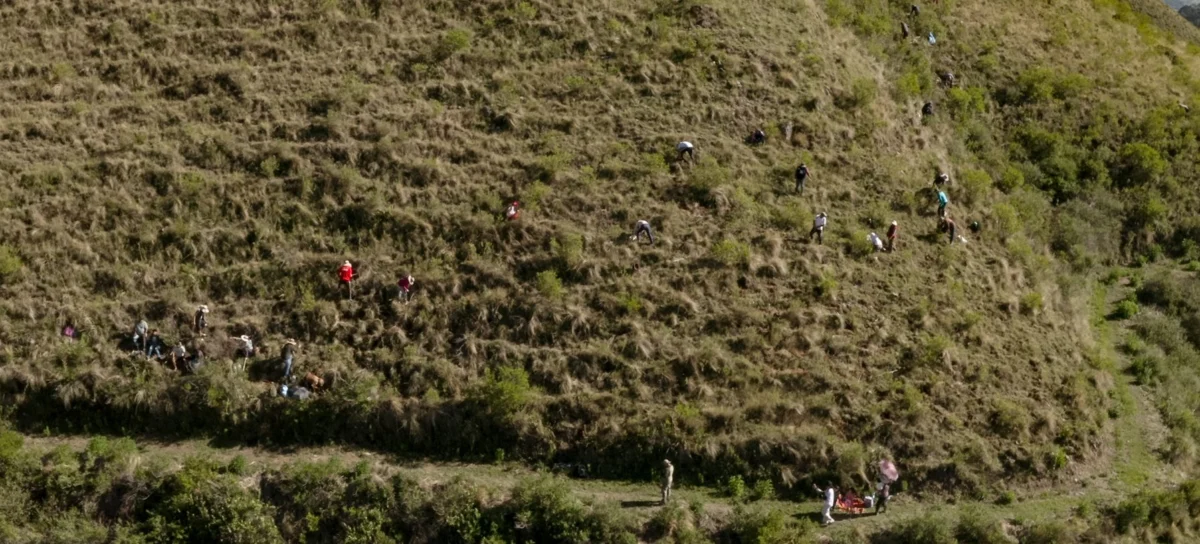
Asociación Armonía, a key partner in Bolivia, is spearheading the development of a groundbreaking long-term sustainable finance mechanism for Tunari National Park, aiming to secure the future of its vital ecosystems and the communities that depend on them. This initiative represents a significant shift in conservation strategy, moving beyond short-term project funding to establish a stable financial foundation for enduring environmental protection and restoration efforts.
The southern slopes of Tunari National Park, nestled high in the Bolivian Andes, are home to more than 80% of the nation’s remaining ancient Kewiña forests. These high-altitude ecosystems, characterized by their resilience and unique biodiversity, play a critical role in regional stability. They are instrumental in stabilizing steep Andean slopes, thereby mitigating the risk of landslides and erosion. Furthermore, these forests act as natural regulators of water flow, ensuring a consistent and clean supply to the Cochabamba metropolitan region, which serves over one million inhabitants. The ecological significance extends to the preservation of unique endemic wildlife, including the Near Threatened Cochabamba Mountain-finch (Poospiza garleppi), a species found nowhere else on Earth.

For decades, Tunari National Park has faced immense pressure. A confluence of factors, including recurrent wildfires, unchecked deforestation, and relentless urban expansion, has threatened its ecological integrity. Historically, relationships between local communities residing within the park’s boundaries and the managing authorities have been marked by tension, complicating cohesive, long-term conservation strategies. However, a palpable shift is now underway. Restoration efforts are gaining momentum, community members are increasingly taking on leadership roles, and a novel approach to funding conservation is emerging: a Payment for Ecosystem Services (PES) mechanism. This mechanism is designed to channel sustained, long-term financing into critical restoration projects and watershed protection initiatives.
This pioneering work is being meticulously developed by Asociación Armonía, a respected conservation organization in Bolivia, with crucial support from the Forest Impact Accelerator. The Accelerator, a program dedicated to investing in forest conservation, has been instrumental in fostering innovative financial models for ecological preservation.
The Imperative of Sustainable Financing for Forest Restoration
Over the past several years, Asociación Armonía, in close collaboration with local communities, has achieved substantial progress in restoring degraded areas within the Tunari protected area. To date, an impressive 1.25 million trees have been planted, with a significant portion of these efforts concentrated in the Tiquipaya municipality. Alongside these reforestation activities, vital infrastructure has been developed. Community wildfire brigades have been bolstered with improved training and resources, reservoirs have been constructed to enhance water security, and new participatory systems have been established to ensure community involvement in watershed management.

A cornerstone of this progress has been the strengthening of the Organismo de Gestión de Cuencas (OGC), a watershed governance body. This organization plays a pivotal role in coordinating restoration activities and formulating sustainable development strategies for the communities residing within the park. This collaborative approach has been instrumental in rebuilding trust among communities, park authorities, and conservation organizations. Notably, women leaders have emerged as influential figures, significantly shaping the direction and success of these initiatives.
Despite these advancements, a persistent challenge has been identified: the inherent long-term nature of ecological restoration versus the typically short-term cycles of conservation funding. Without reliable, sustained financing, the hard-won gains in restoration are vulnerable to erosion. This realization has been the driving force behind the exploration and development of the PES mechanism.
Designing a Payment for Ecosystem Services Mechanism
The proposed PES mechanism is designed to operate on a straightforward principle: those who benefit from essential ecosystem services contribute to their maintenance and restoration. The model envisions collecting small, regular contributions from downstream users, who benefit directly from the clean water, climate regulation, and biodiversity provided by the upstream forests. These contributions will be channeled into a transparent trust fund, managed by an independent governance structure.

The operational framework of the PES mechanism involves several key components:
- Transparent Trust Fund: All collected contributions will be deposited into a dedicated trust fund, ensuring financial accountability and enabling clear tracking of funds.
- Independent Governance: An independent body will oversee the management of the trust fund, ensuring impartial allocation of resources and adherence to conservation objectives.
- Strategic Investment Areas: Resources from the trust fund will be strategically invested in three primary areas:
- Restoration Activities: Funding will be allocated to ongoing and future tree planting, habitat restoration, and ecological rehabilitation efforts within the park.
- Watershed Protection: Investments will support initiatives aimed at preserving water quality, regulating water flow, and preventing erosion in the watershed.
- Community Livelihoods and Incentives: A portion of the funds will be directed towards supporting sustainable livelihood opportunities for local communities and providing incentives for their continued stewardship of the land.
This system offers a multifaceted benefit. For communities living within the watershed, it formally recognizes and compensates their role as custodians of these vital ecosystems. For urban residents, it provides a tangible and practical avenue to contribute to the preservation of the natural resources that sustain their daily lives. For public and private sector partners, it establishes a transparent and effective structure for long-term investment in landscape restoration and conservation.
Upon full implementation, this innovative mechanism is projected to generate an estimated £3 million annually for watershed protection and restoration. This significant financial inflow promises to transform the sustainability of conservation efforts in the region.

Building the Institutional Framework for Sustainability
The success of the PES mechanism hinges not only on its financial structure but also on robust governance and unwavering community participation. Over the past two years, Asociación Armonía has engaged extensively with municipalities, communities, and regional institutions to refine the PES concept for the Cochabamba region. This consultative process has involved extensive studies, assessments, and dialogues across the seven municipalities that comprise the Cochabamba metropolitan area’s watershed. A key finding from these consultations was the widespread recognition among residents of the direct link between forest health and their water security.
With support from the Forest Impact Accelerator, Asociación Armonía is now actively assisting communities in developing ten-year sustainable development strategies. These strategies identify specific restoration priorities and potential income-generating opportunities, ensuring that conservation efforts are integrated with local economic development. A multi-stakeholder platform is being established to oversee the initiative, providing a forum for guided decision-making and ensuring that diverse perspectives are considered. Concurrently, the park administration is receiving targeted support to enhance its monitoring capabilities, strengthen wildfire prevention measures, and improve overall coordination with local stakeholders.
A New Paradigm for Watershed Management
The work being undertaken in Tunari National Park represents more than just an ambitious tree-planting project; it is about constructing a resilient and enduring system that harmonizes ecological restoration, community empowerment, and long-term financial sustainability. Once operational, the PES mechanism has the potential to fundamentally transform the management of the Tunari watershed. Instead of relying on the unpredictable nature of intermittent project-based funding, the region will benefit from a locally supported, sustainable financing system. This system will not only reward ecological stewardship but also ensure the continued protection of the ancient Kewiña forests that have been the lifeblood of the Andean region for centuries.

The establishment of this mechanism is a testament to the power of partnership and innovation in conservation. By bridging the gap between environmental needs and financial realities, Tunari National Park is setting a precedent that could be replicated in other critical ecosystems facing similar challenges.
A Timeline of Progress and Support
The journey towards establishing the PES mechanism in Tunari National Park has been a multi-year endeavor, marked by significant milestones and crucial support from various entities.
- 2020 onwards: The initiative gains momentum with initial planning and community engagement. Asociación Armonía begins collaborating with local communities and municipalities to assess the feasibility of a PES model.
- Ongoing: The Forest Impact Accelerator provides critical technical and financial support, enabling detailed studies, assessments, and stakeholder consultations across the Cochabamba metropolitan area.
- Past Several Years: Significant progress is made in direct restoration efforts, including the planting of over 1.25 million trees, strengthening of community wildfire brigades, and the construction of water reservoirs.
- Current Phase: Development of the regional trust fund and the multi-stakeholder platform is underway. Communities are actively engaged in developing ten-year sustainable development strategies.
- Future Projection: Upon full operationalization, the PES mechanism is expected to generate an estimated £3 million annually, ensuring sustained funding for conservation and restoration.
The success of this initiative has been significantly bolstered by the contributions of several key donors. Special gratitude is extended to Accion Andina, the Darwin Initiative (through direct funding and the Accelerator program), Trillion Trees – BirdLife International, and FFBT (Flanders State of the Art – Agency Nature & Forest).

The Forest Impact Accelerator, in particular, has played a pivotal role over its five successful years. Generous support from the Hempel Foundation, the Waterloo Foundation, and the King Charles III Charitable Fund, coupled with £6 million in additional funding secured in collaboration with project partners, has been instrumental. The Accelerator’s impact is substantial, benefiting 38,000 local people, enhancing protection for 400 threatened species, and positively impacting over 1 million hectares of land.
A significant development in recent times is the awarding of a substantial Darwin Initiative Extra grant through the UK government’s Biodiversity Challenge Awards. This grant, amounting to £4,978,335, is earmarked to expand and scale these achievements. The funding will be directed towards securing 1 million hectares of Key Biodiversity Areas while simultaneously generating significant economic benefits for 200,000 local people. This award underscores the global recognition of the project’s innovative approach and its potential for widespread impact. The accompanying logos of the Darwin Initiative and UK Development signify the collaborative international effort driving this conservation success.
This comprehensive approach, integrating financial innovation, community empowerment, and robust institutional frameworks, positions Tunari National Park as a leading example of sustainable conservation in the face of mounting environmental and socio-economic pressures. The long-term vision for this vital ecosystem is now one of secured protection, thriving biodiversity, and resilient communities.

