


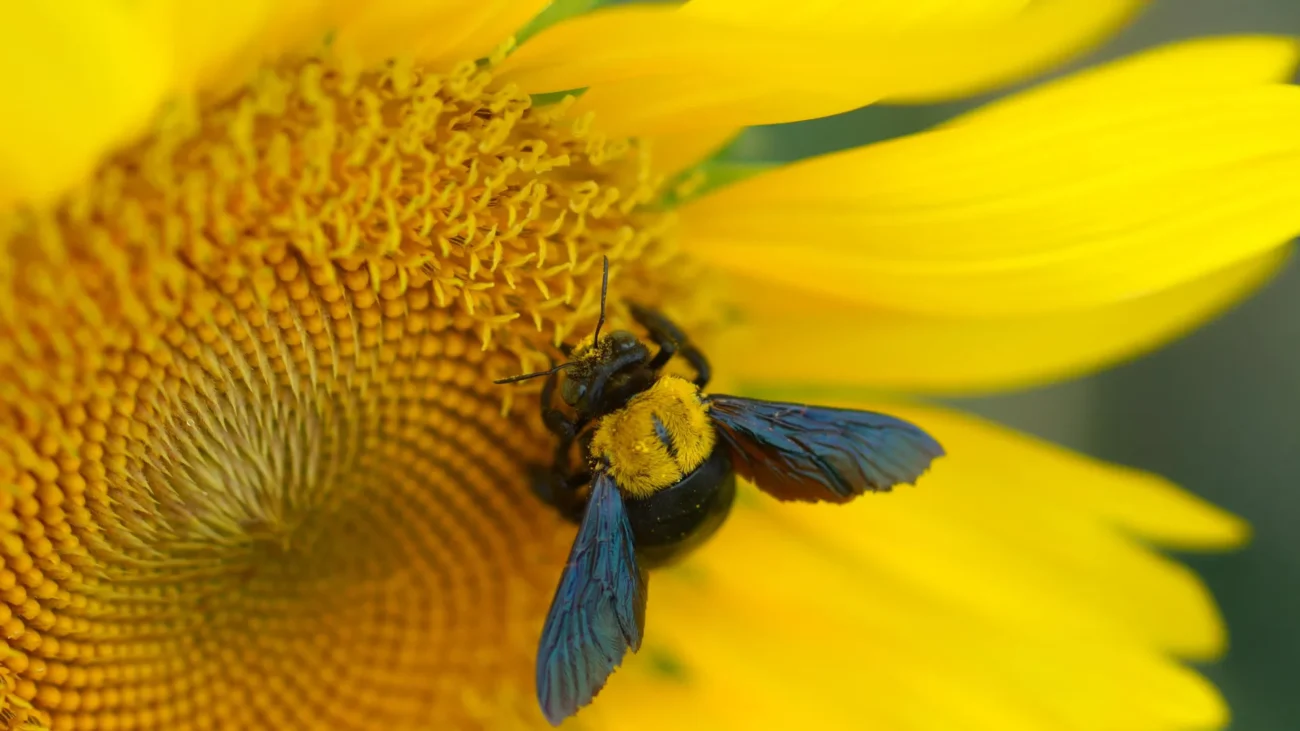
New research published in the prestigious journal Nature Communications has unveiled a critical insight into the escalating threat posed by climate change to Australia’s diverse native bee populations. The study, a comprehensive multi-institutional effort, indicates that native bee species that construct their nests within plant stems are likely to face the most immediate and significant danger from rising global temperatures. In stark contrast, those bee species that excavate their homes underground appear to be far better equipped to mitigate the impacts of extreme heat. This distinction in nesting strategies, the researchers posit, is a key determinant of a species’ resilience in a warming world.
The groundbreaking research was conducted by an interdisciplinary team of scientists hailing from prominent Australian universities: Macquarie University, The University of Sydney, La Trobe University, Flinders University, the University of Wollongong, Adelaide University, and The University of Queensland. Their investigation delved deep into the evolutionary adaptations of heat tolerance across 95 native bee species, meticulously surveying populations from the arid interior to the humid tropical north and the temperate southern regions of eastern mainland Australia. By examining this broad geographical and ecological spectrum, the team aimed to understand how different bee lineages have evolved to cope with thermal stress and to predict their future vulnerability under projected climate change scenarios.
Australia boasts an extraordinary diversity of native bees, with an estimated 1,700 distinct species. These fascinating insects exhibit a remarkable array of nesting behaviours, broadly categorized into three primary types: ground nesters, wood nesters, and stem nesters. Ground nesters, comprising the majority of species, excavate intricate burrows in the soil. Wood nesters, on the other hand, utilize pre-existing cavities found in deadwood, such as hollow logs, fallen branches, or decaying stumps. The third group, stem nesters, occupy the hollow pith of dead plant stems or small, naturally occurring holes within twigs and branches. It is this latter group, the stem nesters, that has emerged as the focus of concern.
The Critical Role of Nesting Location in Heat Survival
Dr. Carmen da Silva, the lead author of the study and a Research Fellow at the Pollinator Futures Research Centre at Macquarie University, elaborated on the findings, emphasizing the direct link between nesting strategy and thermal exposure. "Bees that nest underground are afforded a significant buffer against extreme heat," Dr. da Silva explained. "The earth acts as a natural insulator, preventing their subterranean abodes from reaching the punishing temperatures experienced on the surface. Consequently, they do not endure the same levels of thermal stress as their above-ground counterparts. This is particularly true for species that nest in the thin walls of plant stems, which offer very little insulation and expose the occupants directly to ambient heat."
The implications of this insulation disparity are profound. Dr. da Silva stated unequivocally, "Stem-nesting species appear to have the lowest capacity to escape unfavorable environmental temperatures. They are, therefore, likely to be the most acutely impacted by anthropogenic climate change in the near term." This highlights a critical vulnerability that has perhaps been overlooked in broader discussions about pollinator decline, which often focus on pesticide use and habitat loss.
The Ecological and Agricultural Imperative of Bee Conservation
The findings underscore the urgent need to protect native bees, not only for their intrinsic ecological value but also for their indispensable role in supporting human endeavors, particularly agriculture. "Bees are critical in ecosystems all over the world because of their role as pollinators," Dr. da Silva stressed. "They are fundamental to the health and functioning of virtually every terrestrial ecosystem, underpinning biodiversity and ensuring the reproduction of countless plant species. Unfortunately, they are under significant threat from warming and drying climates."
The economic consequences of bee decline are also substantial. Native bees are not merely romantic symbols of nature; they are vital economic engines. "Bees sustain native ecosystems and play a crucial role in agricultural crop production," Dr. da Silva continued. "For instance, tropical native bees are vital pollinators for commercially significant crops such as macadamia nuts, avocados, mangos, and lychees. The decline of these pollinators could have devastating impacts on food security and the livelihoods of farmers reliant on these crops." The Australian agricultural sector alone generates billions of dollars annually, with pollination services playing a significant, often unquantified, role in this economic output.
Geographic Disparities in Climate Vulnerability
Beyond nesting habits, the study also identified a discernible geographical pattern in climate change vulnerability. Bee species inhabiting regions closer to the equator, characterized by generally warmer climates, appeared to be more susceptible to the impacts of global warming. Tropical native bees, in particular, were found to face the highest overall risk.
Dr. Vanessa Kellermann, a Senior Lecturer in the Department of Ecology, Plant and Animal Sciences at La Trobe University and a senior author on the study, highlighted the complex nature of predicting species’ responses to climate change. "Predicting which species will be vulnerable to climate change is one of the biggest challenges in ecology," Dr. Kellermann commented. "Our findings reveal that species with the highest recorded heat tolerance were not necessarily the safest from warming. This is because many of these highly tolerant species already live in extremely hot environments. They have evolved to thrive under current high temperatures, but they may have little physiological room left to adapt to additional warming beyond their current thermal optima."
This observation presents a paradox: species that appear most adapted to heat may, in fact, be the most vulnerable to further increases. Their existing adaptations may have pushed them to their physiological limits, leaving them with no further capacity to cope with novel, unprecedented thermal conditions. This suggests that even minor temperature increases could push these species beyond their survival thresholds.
Unraveling the Mysteries of Australia’s Native Bees
The researchers emphasized that a significant knowledge gap exists regarding Australia’s vast and diverse native bee populations, making studies like this increasingly crucial for informing conservation strategies. "We still know so little about most of Australia’s amazing native bees," stated co-senior author Dr. Ros Gloag, a Senior Lecturer in Evolutionary Biology in the School of Life and Environmental Sciences at the University of Sydney. "This study helps us recognise that having a better understanding of native bee behavior, including their nesting preferences and physiological tolerances, is key to identifying the greatest threats to their wild populations and developing effective conservation interventions."
Historical Context and the Accelerating Climate Crisis
The findings of this study are situated within a broader scientific consensus regarding the accelerating pace of climate change. The Intergovernmental Panel on Climate Change (IPCC) has consistently reported that global temperatures are rising at an unprecedented rate, driven by human activities. The Australian continent, in particular, is experiencing significant warming trends, with hotter heatwaves, more frequent and intense droughts, and altered rainfall patterns becoming increasingly common.
For instance, historical data from the Bureau of Meteorology in Australia reveals a clear upward trend in average temperatures across the continent over the past century. The warmest years on record have predominantly occurred in the 21st century, underscoring the urgency of the climate crisis. This warming trend directly impacts terrestrial ecosystems, affecting plant phenology, water availability, and the thermal regimes experienced by insects.
The timeline of scientific understanding of climate change impacts on insects has evolved significantly. Early research often focused on direct mortality from extreme heat events. However, more recent studies, including this one, are revealing the complex interplay of factors such as physiological tolerance, behavioral adaptations, and ecological interactions. The concept of "thermal safety margins" – the difference between a species’ optimal temperature and the ambient temperature – has become a critical metric in assessing vulnerability. Species with narrow safety margins are at greater risk.
Broader Implications and Future Directions
The implications of this research extend beyond the immediate concern for native bees. The decline of pollinators has cascading effects throughout ecosystems. Plants that rely on specific bee species for pollination may experience reduced reproductive success, leading to declines in plant populations and affecting herbivores that depend on those plants. This can destabilize food webs and reduce biodiversity.
From an agricultural perspective, the reliance on native bees for crop pollination means that their decline could lead to reduced crop yields, increased food prices, and greater dependence on managed honeybees, which also face their own set of environmental challenges.
The study’s findings advocate for targeted conservation efforts. For stem-nesting species, this might involve habitat management that preserves suitable plant stems or the creation of artificial nesting sites. For ground-nesting species, protecting suitable soil habitats from disturbance and ensuring adequate moisture levels could be crucial.
Future research directions stemming from this study could include:
- Expanded Species and Geographic Coverage: Investigating a wider array of native bee species across different Australian biomes and comparing findings with similar studies in other continents.
- Physiological Thresholds: Conducting detailed laboratory and field experiments to pinpoint the precise thermal tolerance limits and physiological responses of various bee species.
- Behavioral Adaptations: Studying how different bee species modify their foraging times, activity patterns, and nest microclimates in response to heat.
- Interaction with Other Stressors: Examining how rising temperatures interact with other environmental stressors such as drought, pesticide exposure, and habitat fragmentation.
- Modeling Future Scenarios: Developing sophisticated predictive models to forecast the long-term impacts of various climate change scenarios on native bee populations and their ecological services.
The collaborative nature of this research, involving multiple leading Australian universities, underscores the national importance of understanding and protecting native biodiversity in the face of global environmental change. As Dr. Gloag succinctly put it, "Having a better understanding of native bee behavior is key to identifying the greatest threats to their wild populations." This study provides a crucial piece of that understanding, illuminating the critical, yet often hidden, role of nesting habits in determining the fate of these vital pollinators in a rapidly warming world. The scientific community and policymakers alike will need to heed these findings to implement effective strategies for safeguarding Australia’s unique bee fauna.

