


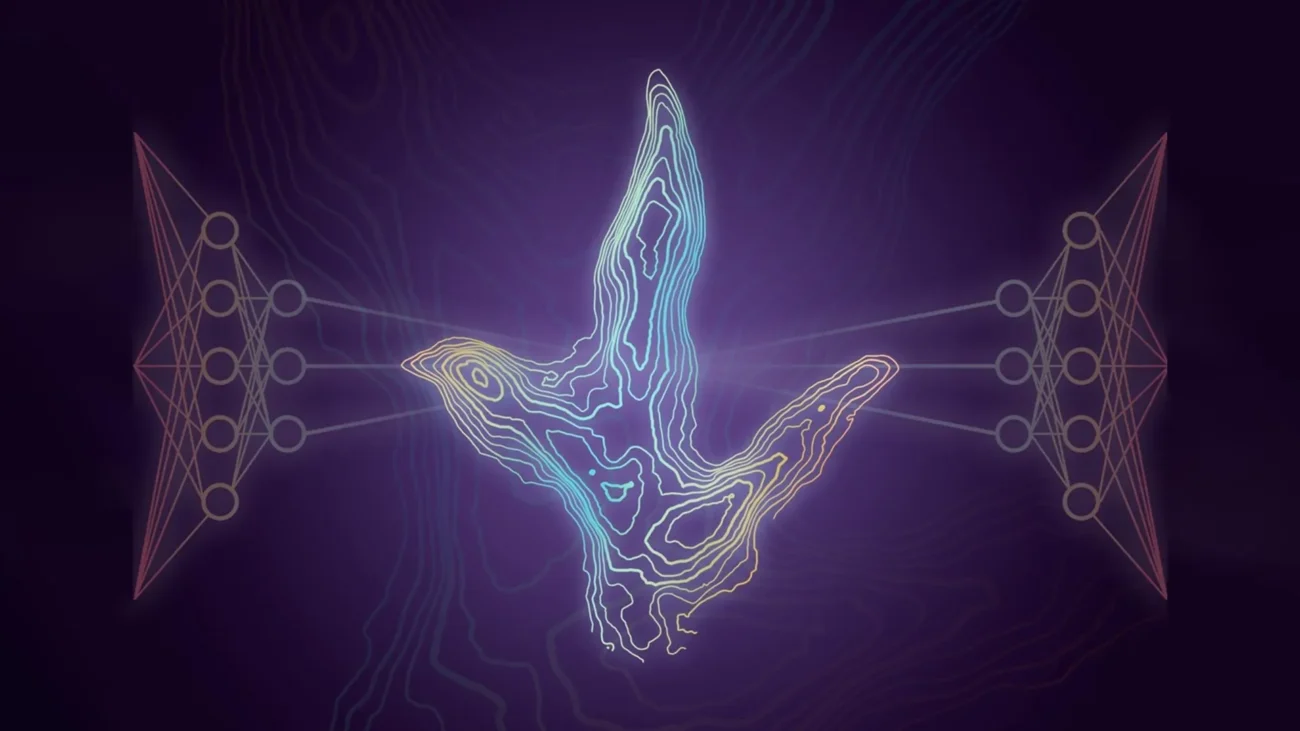
A groundbreaking artificial intelligence (AI) powered application, dubbed DinoTracker, is revolutionizing paleontology by offering scientists and the public an unprecedented tool to identify dinosaur footprints. This innovative technology, detailed in a recent study published in the prestigious journal Proceedings of the National Academy of Sciences (PNAS), promises to unravel long-standing debates surrounding the origins of fossilized tracks and their creators. Developed through a collaborative effort between the Helmholtz-Zentrum research centre in Berlin and the University of Edinburgh, DinoTracker transforms simple photographs of fossil impressions into immediate, data-driven analyses, potentially reshaping our understanding of prehistoric life and the evolutionary timeline of birds.
The Enduring Enigma of Fossilized Tracks
For decades, paleontologists have grappled with the complex challenge of interpreting dinosaur footprints. These ancient imprints, preserved in rock and sediment, offer invaluable clues about dinosaur locomotion, behavior, and diversity. However, the geological processes that preserve these tracks can significantly alter their original shape, leading to considerable ambiguity. Meat-eating theropods, herbivorous sauropods, and even early avian species have all been proposed as the architects of various fossilized trackways, fueling ongoing scientific discourse and debate. Traditional methods often relied on meticulously curated, manually constructed databases that linked specific track morphologies to known dinosaur genera. While effective to a degree, these approaches were susceptible to human bias, particularly when dealing with poorly preserved or unusual specimens. The subjective nature of expert interpretation meant that classifications could be contested, hindering definitive conclusions.
The development of DinoTracker represents a significant leap forward, moving beyond these traditional, and often subjective, methodologies. The core of this innovation lies in advanced machine learning algorithms designed to enable computers to learn independently about the inherent variability of dinosaur footprints. This self-learning capability is crucial for overcoming the challenges posed by post-depositional deformation and fossilization processes that can distort the original shape of a track.
DinoTracker: From Mobile Photo to Paleontological Insight
The user-friendly interface of the DinoTracker app allows anyone with a smartphone to contribute to scientific understanding. By simply uploading a photograph or even a detailed drawing of a dinosaur footprint, users can receive an immediate analysis. The AI system then meticulously evaluates the shape, structure, and morphometric features of the track to generate an informed estimate of the dinosaur species or group most likely responsible for its creation. This democratization of paleontological analysis opens new avenues for citizen science and public engagement with the fossil record.
The AI’s analytical power stems from its rigorous training. The model was exposed to a vast dataset comprising nearly 2,000 real fossil footprints, meticulously curated by experts. Crucially, this was augmented by millions of simulated examples. These simulations were specifically designed to replicate the myriad of realistic alterations that footprints undergo during their preservation over geological timescales. Factors such as compression, erosion, sediment infill, and differential weathering were all incorporated to ensure the AI could recognize tracks even when they deviated significantly from pristine examples. This extensive and varied training dataset is key to the app’s ability to generalize and accurately classify a wide range of fossil track morphologies.
Unpacking the AI’s Analytical Toolkit: Key Discriminatory Features
The sophisticated AI model employed by DinoTracker has been programmed to recognize eight critical features that differentiate one footprint from another. These include:
- Digit Spread (splay): The angle at which the toes diverge from each other.
- Heel Position: The relative placement of the heel impression.
- Contact Area: The overall surface area of the imprint left on the substrate.
- Weight Distribution: How the pressure was distributed across different parts of the foot, inferred from the depth and clarity of impressions.
- Claw Mark Presence and Morphology: The visibility and shape of any claw impressions, which can be indicative of predatory or defensive behaviors.
- Overall Track Outline: The general shape of the footprint, whether it is rounded, elongated, or asymmetrical.
- Digit Elongation: The relative length of the individual toe impressions.
- Symmetry: The degree to which the footprint is symmetrical along its longitudinal axis.
By analyzing these parameters, the AI can effectively reconstruct a digital "fingerprint" of the track. This digital signature is then compared against the vast library of known fossil examples and simulated variations. The system’s sophisticated algorithms then predict which dinosaur most likely produced the observed track.
When subjected to rigorous evaluation, the DinoTracker algorithm demonstrated remarkable accuracy, achieving a classification match with human expert assessments approximately 90% of the time. This high level of concordance is particularly significant, as it holds true even for species that are notoriously difficult to identify and have been the subject of ongoing scientific debate. This objective, data-driven approach offers a powerful new tool to resolve long-standing paleontological quandaries.
An Unexpected Evolutionary Link: Dinosaur Footprints and the Dawn of Birds
One of the most startling and potentially transformative findings to emerge from the DinoTracker analysis pertains to very ancient footprints, dating back over 200 million years. The AI detected striking similarities between some of these early dinosaur tracks and the foot morphology of both extinct and modern avian species. This observation has profound implications for our understanding of bird evolution.
The research team posits two primary interpretations for this discovery. The first, and perhaps most revolutionary, is that birds may have diverged from their reptilian ancestors significantly earlier than previously estimated. Current scientific consensus places the emergence of true birds in the Jurassic period, roughly 150 million years ago. If these 200-million-year-old footprints indeed belong to avian precursors, it would push back the evolutionary clock for birds by tens of millions of years, suggesting a much deeper evolutionary history for the lineage that would eventually lead to modern birds.
Alternatively, the researchers acknowledge the possibility that some early dinosaurs may have coincidentally evolved feet that closely resembled those of birds, without a direct evolutionary link. This would represent a remarkable example of convergent evolution, where unrelated species independently develop similar traits due to similar environmental pressures or ecological niches. Further research and analysis will be crucial in disentangling these possibilities and solidifying the evolutionary narrative.
Unraveling Mysteries from the Scottish Isles: The Isle of Skye Footprints
The DinoTracker system has also shed new light on a set of enigmatic footprints discovered on the Isle of Skye in Scotland. These tracks, formed on the muddy margins of a lagoon approximately 170 million years ago during the Jurassic period, have long puzzled paleontologists. Their unique morphology has defied easy classification, leaving their makers a subject of intense speculation.
The AI’s analysis suggests that these mysterious Skye footprints may have been left by some of the earliest known relatives of duck-billed dinosaurs, also known as hadrosaurs. If confirmed, this would represent one of the earliest fossil records of this iconic group of herbivorous dinosaurs discovered anywhere in the world. The presence of such early hadrosaur relatives on the Isle of Skye, which was part of the ancient supercontinent Laurasia during the Jurassic, provides valuable insights into the geographical distribution and early diversification of this important dinosaur clade.
Democratizing Paleontology: Empowering Public and Professionals Alike
The implications of DinoTracker extend far beyond the confines of academic research. Researchers emphasize that this technology creates unprecedented opportunities for both scientific inquiry and public engagement. By providing an accessible and objective tool for footprint identification, it empowers citizen scientists to actively participate in fossil research, contributing valuable data from their own discoveries. This can lead to a broader understanding of dinosaur distribution, behavior, and evolutionary history.
Dr. Gregor Hartmann of the Helmholtz-Zentrum research centre, a lead author on the study, highlighted the significance of the AI’s unbiased approach. "Our method provides an unbiased way to recognize variation in footprints and test hypotheses about their makers," Dr. Hartmann stated. "It’s an excellent tool for research, education, and even fieldwork." This sentiment underscores the versatility of DinoTracker, positioning it as a valuable asset for educational institutions, museum exhibits, and amateur paleontologists alike.
Professor Steve Brusatte, Personal Chair of Palaeontology and Evolution at the University of Edinburgh and another key figure in the research, expressed his enthusiasm for the project’s potential. "This study is an exciting contribution for paleontology and an objective, data-driven way to classify dinosaur footprints – something that has stumped experts for over a century," Professor Brusatte commented. He further elaborated on the broader impact: "It opens up exciting new possibilities for understanding how these incredible animals lived and moved, and when major groups like birds first evolved. This computer network might have identified the world’s oldest birds, which I think is a fantastic and fruitful use for AI."
The successful development and validation of DinoTracker were made possible through a confluence of funding and support from various institutions. These include the innovations pool of the BMBF-Project: Data-X, the Helmholtz project ROCK-IT, the Helmholtz-AI project NorMImag, the National Geographic Society, and the Leverhulme Trust. This multi-faceted support underscores the recognized importance and potential of this interdisciplinary research endeavor.
The Future of Fossil Discovery with AI
The DinoTracker app represents a paradigm shift in how we approach the study of fossilized footprints. By leveraging the power of artificial intelligence, it offers a more objective, efficient, and accessible method for identifying the ancient creatures that roamed our planet millions of years ago. The implications for understanding dinosaur behavior, evolution, and the origins of key lineages like birds are profound. As the technology continues to evolve and datasets expand, DinoTracker is poised to unlock even more of the Earth’s prehistoric secrets, making the thrilling world of paleontology more accessible and comprehensible to a global audience. The ability to turn a casual observation of a fossil into a scientifically significant insight is no longer the domain of specialized researchers alone; it is a possibility now within reach for anyone with a smartphone and a curiosity about the distant past. This fusion of cutting-edge technology and ancient history promises to redefine our connection with the natural world and our place within its vast evolutionary tapestry.

