


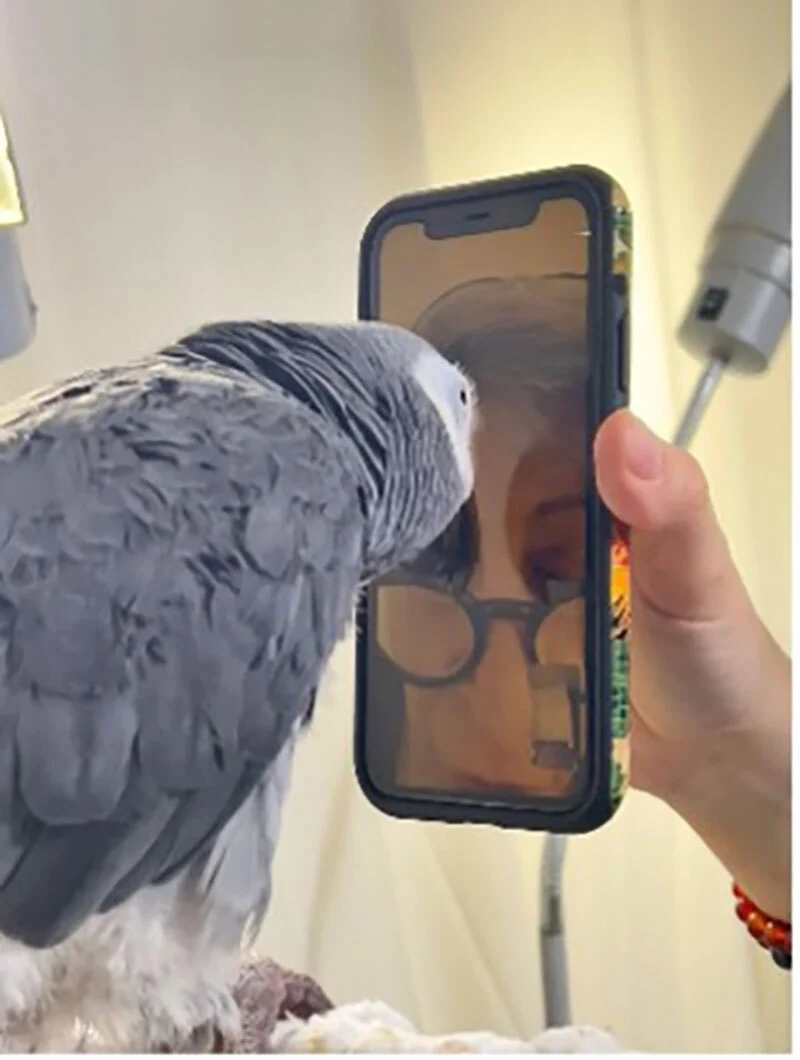
In an innovative application of modern technology to animal welfare and cognitive research, pioneering avian cognition scientist Dr. Irene Pepperberg has successfully integrated video calls into her routine to maintain a robust bond with her African Grey parrot, Griffin, during her extensive travels. This groundbreaking approach, which Dr. Pepperberg first conceptualized years ago, has proven to be an effective strategy in mitigating the behavioral challenges often associated with prolonged separation from highly intelligent and social avian companions. The practice not only sustains the emotional connection crucial for Griffin’s well-being but also significantly reduces the phenomenon known as the “cold wing” treatment, a discernible avian expression of displeasure or perceived abandonment upon a caretaker’s return.
The Genesis of a Digital Connection: A Pioneer’s Insight
Dr. Irene Pepperberg is globally recognized for her transformative work in animal cognition, particularly her decades-long research with African Grey parrots, most famously Alex, and subsequently Griffin and Athena. Her studies have fundamentally reshaped scientific understanding of avian intelligence, demonstrating parrots’ remarkable capacities for language comprehension, numerical reasoning, and complex problem-solving. It was within this context of deep interspecies understanding that Dr. Pepperberg first explored the potential of video conferencing to bridge geographical distances. Several years ago, she articulated her intention to utilize platforms like Zoom or FaceTime to communicate with her research parrots while away from her laboratory, an endeavor that at the time seemed both ambitious and novel. The recent follow-up confirms the efficacy of this strategy, highlighting a practical advancement in animal care and research protocols.
The impetus for this technological intervention stemmed from Dr. Pepperberg’s demanding professional schedule. As a leading figure in her field, her commitments frequently require travel for conferences, lectures, and collaborative research initiatives. While she notes a reduction in her travel frequency since turning 75—scaling back from an average of three trips per month to typically one—these absences, though less frequent, still present challenges for maintaining the continuous engagement vital for her highly social avian partners. Despite a dedicated team of research associates ensuring Griffin’s physical needs are met, Dr. Pepperberg emphasizes the paramount importance of reassuring Griffin that she has not abandoned him. This distinction underscores the unique and irreplaceable nature of the primary bond between a parrot and its chosen human companion, especially for a species known for forming deep, lifelong attachments.
Navigating Global Distances: Practicalities and Challenges
Implementing regular video calls across varying time zones introduces a layer of logistical complexity. When Dr. Pepperberg travels within the continental United States, managing a call typically involves a maximum three-hour time differential, allowing for convenient scheduling before Griffin’s 8 PM bedtime. However, international travel poses significantly greater hurdles. Journeys to locations such as Dubai, which entails an eight-hour time difference, or Japan, with a thirteen-hour shift compounded by the international dateline, drastically narrow the windows available for communication. These extreme time differentials often necessitate creative and sometimes impromptu solutions. Dr. Pepperberg recounts instances of connecting via an internet "hot spot" from a colleague’s car, demonstrating her unwavering commitment to these digital interactions. Interestingly, these unusual circumstances often lead to unexpected positive outcomes, as her colleagues frequently express enjoyment and fascination at witnessing Griffin’s unique responses to the calls.
This dedication to overcoming logistical barriers highlights the perceived value of these interactions. While seemingly minor in the grand scheme of scientific research, the consistent effort to connect underscores the profound understanding Dr. Pepperberg has of avian psychology and the specific needs of African Greys. It also implicitly suggests a model for other researchers or pet owners facing similar challenges, demonstrating that even brief, consistent digital interaction can yield tangible benefits.
Griffin’s Digital Engagement: Unraveling Interspecies Perception
Griffin’s interaction with the video calls offers fascinating insights into interspecies perception and communication. Dr. Pepperberg notes that despite uncertainties regarding what Griffin truly perceives through the screen, his responses are consistently positive and non-aversive. A particularly endearing behavior is his tendency to lean down and "kiss" the screen, an act that strongly suggests recognition and affection.
The scientific understanding of parrot vision, which differs significantly from human vision, complicates the interpretation of Griffin’s visual experience. Parrots possess tetrachromatic vision, meaning they have four types of cone cells in their eyes, allowing them to perceive wavelengths in the ultraviolet (UV) spectrum, a range invisible to humans. Cell phone cameras, however, are optimized for human vision and largely omit UV components. This means that while Dr. Pepperberg’s face likely appears as a "reasonable replica" to Griffin, it lacks the full spectrum of visual information, particularly the UV reflections that are crucial for avian communication and species recognition (e.g., on feathers). Similarly, the fidelity of human voices transmitted through phone speakers may not perfectly replicate the nuances of natural speech, raising questions about how well Griffin recognizes her voice specifically.
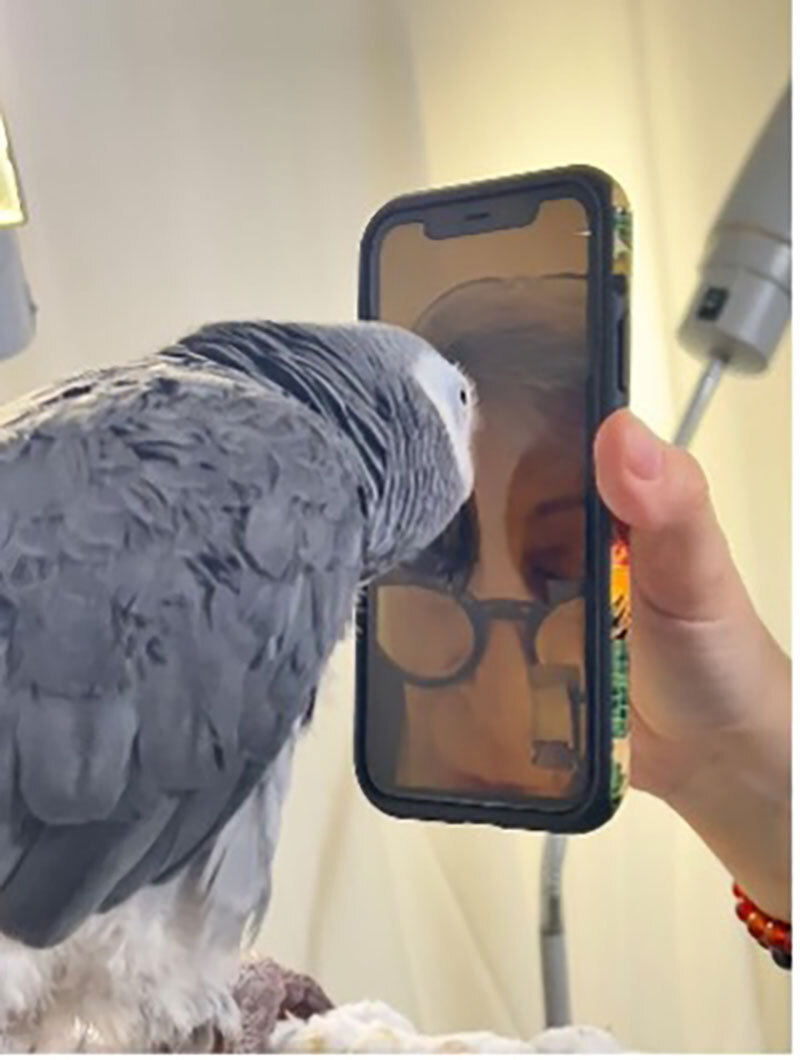
Despite these perceptual ambiguities, Griffin has clearly associated the sounds and images from the phone with Dr. Pepperberg. This suggests a form of learned recognition, where the specific pattern of visual and auditory stimuli, coupled with the consistent presence of Dr. Pepperberg on the other end, forms a meaningful connection. Furthermore, Griffin demonstrates a sophisticated understanding of the medium’s limitations. He has learned not to request physical interactions, such as "tickles," from the phone, indicating an awareness that the virtual representation is not a tangible presence. This ability to differentiate between a real and virtual interaction speaks volumes about avian cognitive capacities and their ability to adapt to novel forms of communication.
The "Cold Wing" Phenomenon and Social Bonds: A Behavioral Mitigation
One of the most significant benefits observed from these video calls is the reduction in the "cold wing" treatment Griffin previously administered upon Dr. Pepperberg’s return. The "cold wing" is a behavioral manifestation of displeasure or perceived abandonment, where the parrot actively ignores or snubs the returning caretaker. This behavior is rooted in the deep social bonds African Greys form. In the wild, these parrots live in complex social structures and form strong pair bonds, often for life. Separation from a primary companion can induce stress, anxiety, and a feeling of abandonment, leading to behaviors like withdrawal, aggression, or, in Griffin’s case, a noticeable cold shoulder.
For African Greys, consistent interaction, mutual preening, and shared activities are cornerstones of their social well-being. Dr. Pepperberg’s daily routine with Griffin typically includes at least an hour of direct physical interaction—tickles, preening—additional time in cognitive sessions, and shared "snack time" where she eats human snacks (like carrots, which Griffin reportedly dislikes) near him. These interactions reinforce their bond and provide crucial mental and emotional stimulation. The video calls, while not replacing these in-person engagements, serve as a vital continuity mechanism, bridging the gap during her absence.
The observation that Griffin is "much less likely" to exhibit the cold wing treatment, or engages in it for a "much shorter time period" after video calls, provides compelling evidence of their effectiveness. This mitigation of negative behavioral responses points to a reduction in separation-induced stress and a sustained sense of connection, confirming that the calls serve a crucial psychological function for the parrot. This finding holds significant implications for pet owners, animal sanctuaries, and zoological institutions grappling with the challenges of maintaining animal welfare during periods of human absence.
Beyond the Screen: A Qualified Success and Broader Implications
While unequivocally beneficial, Dr. Pepperberg candidly states that a phone call is "not really" a good substitute for her physical presence. The depth and breadth of in-person interaction—the tactile sensation of tickles, the shared presence during quiet moments, the direct engagement in training sessions—cannot be replicated by a 10-minute video call. However, she firmly concludes that a video call is undeniably "better than nothing." This nuanced perspective underscores the pragmatic approach to animal welfare, recognizing that while ideal conditions may not always be feasible, proactive measures to enhance well-being, even partially, are invaluable.
The success of this approach with Griffin opens avenues for broader application in animal care and research. For pet owners, particularly those with highly intelligent and social species like parrots, dogs, or even certain primates, video calls could offer a viable tool to mitigate separation anxiety and maintain emotional connections during travel or other periods of absence. Animal sanctuaries and zoos, where human caretakers often form deep bonds with their charges, could explore similar technologies to provide continuity of care and enrichment. The ethical implications of integrating technology into animal lives, while generally positive in this context, warrant careful consideration to ensure it genuinely enhances welfare without replacing essential natural behaviors or social structures.
Furthermore, this work contributes to the growing body of knowledge on interspecies communication and the potential of technology to facilitate it. It challenges conventional notions of animal perception and adaptability, demonstrating that animals can form meaningful associations with virtual representations. The parallel Dr. Pepperberg draws to human experiences with Zoom calls during the COVID-19 pandemic—where virtual connections, while not replacing real hugs, significantly eased feelings of isolation—underscores the universal human (and perhaps animal) need for connection and reassurance, even in a digital format.
In conclusion, Dr. Irene Pepperberg’s pioneering use of video calls to connect with Griffin stands as a testament to her innovative spirit and profound dedication to understanding and enhancing avian welfare. By embracing technology, she has not only found a practical solution to a common challenge in animal care but has also provided valuable insights into interspecies bonding, perception, and the profound impact of consistent emotional connection. This initiative, born from a desire to prevent the "cold wing" and ensure her cherished research partner feels cherished, offers a compelling model for leveraging digital tools to foster deeper, more resilient relationships between humans and the intelligent animals with whom we share our lives.

