


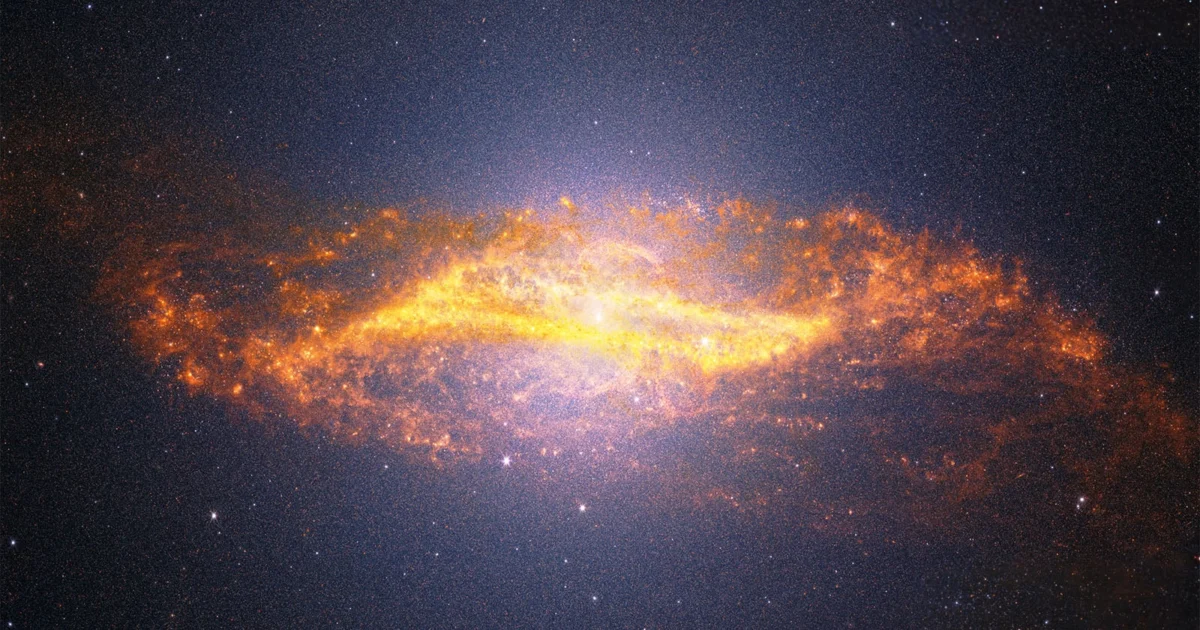
To commemorate the fourth anniversary of the James Webb Space Telescope’s (JWST) successful scientific operations, the National Aeronautics and Space Administration (NASA), the European Space Agency (ESA), and the Canadian Space Agency (CSA) have released a series of breathtaking new images of the iconic galaxy Centaurus A. Also designated as NGC 5128, this celestial body has long been a subject of intense scrutiny and academic debate within the astronomical community. The latest data from Webb’s sophisticated imaging systems provide a transformative look at the galaxy, utilizing infrared technology to pierce through thick layers of cosmic dust that have historically obscured its most vital structures. These observations not only celebrate a milestone in space exploration but also demonstrate the telescope’s unique ability to serve as a tool for "galactic archaeology," allowing scientists to reconstruct the violent and complex history of the universe.
The Scientific Significance of Centaurus A
Located approximately 11 million light-years from Earth in the constellation Centaurus, NGC 5128 is one of the closest and brightest galaxies in the night sky. Despite its proximity and the frequency with which it has been studied, Centaurus A remains an enigma. It is categorized as a "peculiar" galaxy because it does not fit neatly into the standard Hubble sequence of galactic classification. While NASA frequently describes it as a peculiar elliptical galaxy, a significant segment of the scientific community argues that it exhibits the characteristics of a lenticular galaxy—a transitional form between a spiral and an elliptical galaxy.
The galaxy is perhaps most famous for being a "starburst" galaxy. These are systems that undergo an exceptionally high rate of star formation, far exceeding the typical birth rate of stars in a galaxy like the Milky Way. In the case of Centaurus A, this frantic activity is believed to be the direct result of a massive galactic collision that occurred approximately two billion years ago. This ancient stellar merger left behind distinct scars, including a prominent warped disk of gas and dust that gives the galaxy its unique, distorted appearance. By studying Centaurus A, astronomers gain a "local" laboratory to observe the physics of galactic evolution and the interactions between supermassive black holes and their host environments.
A New Era of Observation: From Hubble to Webb
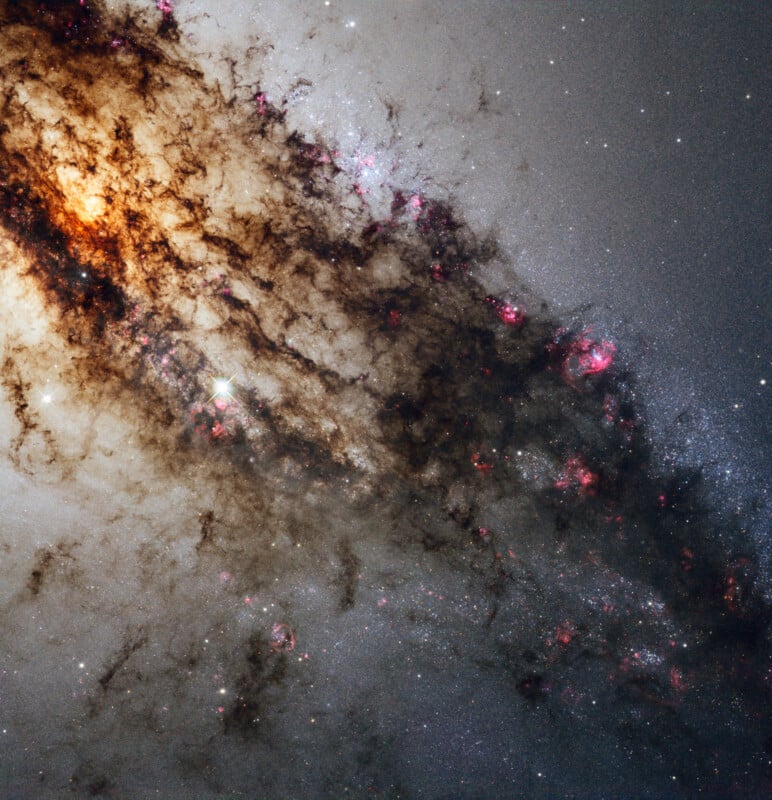
The release of these new images marks a significant technological leap over previous observational efforts. For decades, the Hubble Space Telescope provided the most detailed views of Centaurus A. However, Hubble primarily operates in the visible light spectrum. While its 2011 images of NGC 5128 were visually stunning, they were limited by the fact that visible light cannot penetrate the dense lanes of interstellar dust that shroud the galaxy’s core. Consequently, the central regions remained a mystery, hidden behind a dark, opaque veil.
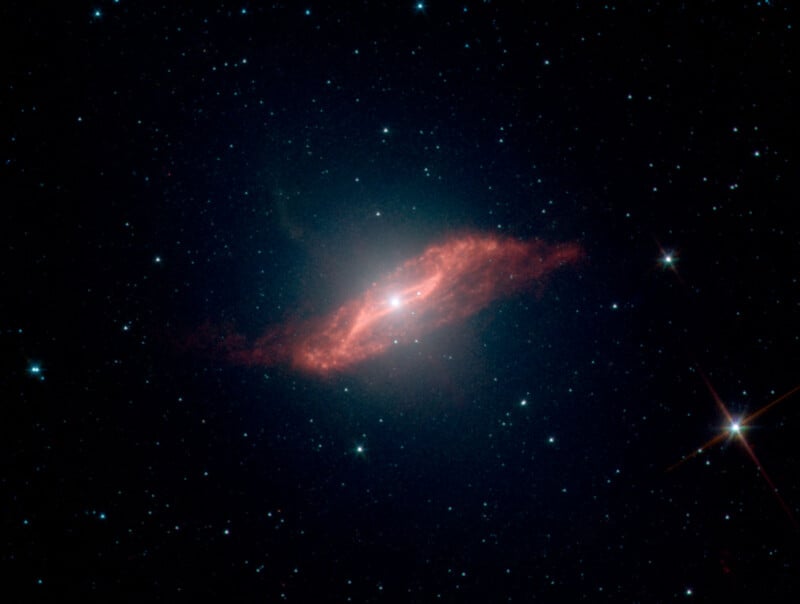
In 2004, the Spitzer Space Telescope attempted to solve this problem by observing the galaxy in the infrared spectrum. Spitzer’s infrared capabilities allowed it to see through the dust, revealing a glowing ring of material at the galaxy’s heart. However, Spitzer lacked the resolution required to distinguish individual stars or fine-scale structures. The resulting images, while scientifically valuable at the time, appeared relatively blurry compared to modern standards.
The James Webb Space Telescope, a $10 billion marvel of engineering, represents the synthesis of these two predecessors. It possesses the infrared sensitivity of Spitzer and the high-resolution optics necessary to surpass Hubble’s clarity. Equipped with the Near-Infrared Camera (NIRCam) and the Mid-Infrared Instrument (MIRI), Webb has finally provided a clear, unobstructed view of the internal dynamics of Centaurus A.
Analyzing the New Imagery: MIRI and NIRCam Data
The newly released images are a composite of data from Webb’s primary instruments, each offering a different perspective on the galaxy’s composition.
The Mid-Infrared Instrument (MIRI) Perspective
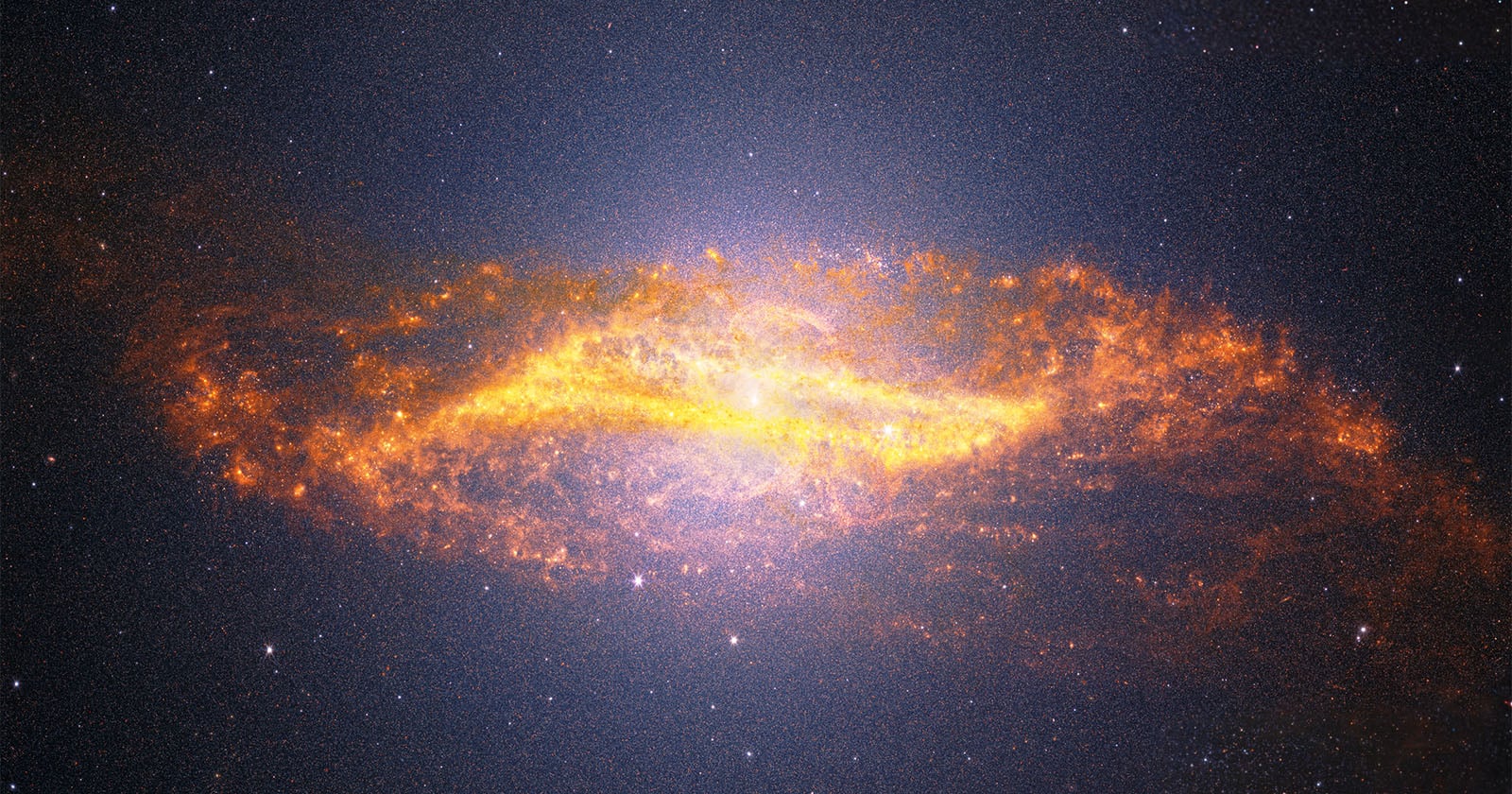
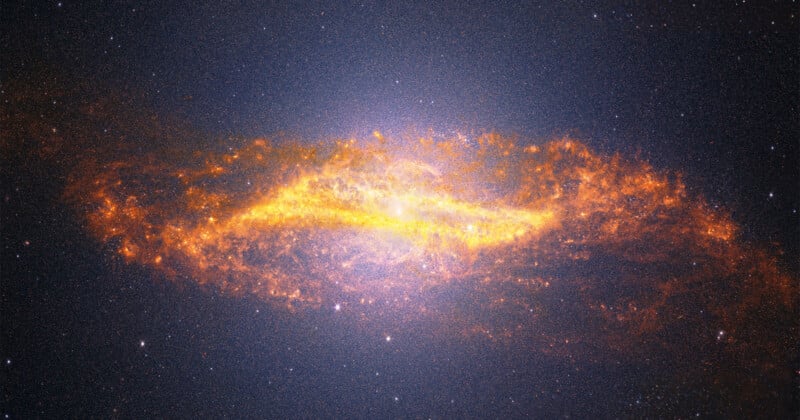
Webb’s MIRI captures light at longer wavelengths, which is ideal for detecting the thermal glow of cosmic dust. In the MIRI images, the galaxy’s dust structures are revealed in vivid shades of orange, yellow, and red. Most notably, the images highlight a peculiar S-shaped feature in the central disk. Scientists are currently theorizing whether this shape is a lingering consequence of the ancient collision or if it is being actively sculpted by the powerful gravitational forces and energy jets emanating from the galaxy’s central black hole. The MIRI data allows researchers to map the distribution of carbon-rich molecules known as polycyclic aromatic hydrocarbons, which play a crucial role in the cooling of interstellar gas and the subsequent formation of new stars.
The Near-Infrared Camera (NIRCam) Perspective
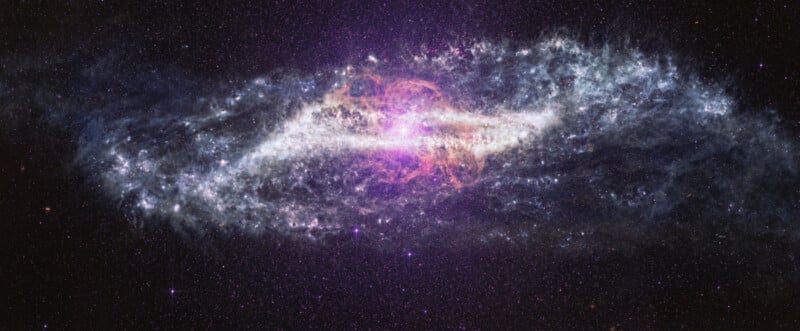
While the MIRI images focus on dust, the NIRCam images focus on the stars themselves. At first glance, the NIRCam data may appear "noisy" or grainy. However, astronomers have clarified that this is not digital noise; rather, the "grain" consists of millions of individual stars that Webb has successfully resolved. This level of detail is unprecedented for a galaxy at this distance. By isolating these stars, researchers can conduct "galactic archaeology," identifying different populations of stars based on their age and chemical composition. This data helps create a chronological timeline of the galaxy’s life, from the initial formation of its oldest stars to the sudden burst of star formation triggered by the collision two billion years ago.
The Role of the Supermassive Black Hole
At the heart of Centaurus A lies a supermassive black hole with a mass equivalent to 55 million suns. This black hole is classified as an Active Galactic Nucleus (AGN), meaning it is currently consuming vast amounts of matter. As gas and dust fall into the black hole, they form an accretion disk that heats up to millions of degrees, emitting intense radiation across the electromagnetic spectrum.
One of the most striking features of Centaurus A is the presence of relativistic jets—massive beams of high-energy particles being ejected from the black hole at nearly the speed of light. These jets extend thousands of light-years into intergalactic space. Webb’s new observations are helping scientists understand the "feedback" mechanism between the black hole and the galaxy. The energy from these jets can both trigger star formation by compressing gas clouds and inhibit it by blowing away the raw materials needed for new stars to form. Understanding this delicate balance is essential for explaining why some galaxies remain active while others become "quiescent" or dead.
A Chronology of Discovery: Webb’s Four-Year Journey
The release of the Centaurus A images is a celebration of a mission that has consistently exceeded expectations. Since its launch on December 25, 2021, and the commencement of its scientific operations in mid-2022, the JWST has reached several major milestones:
- July 2022: The "First Deep Field" image is released, showing thousands of galaxies in a tiny sliver of the sky, some dating back to the very early universe.
- 2023: Webb provides the first detailed chemical profiles of exoplanet atmospheres, detecting water vapor, carbon dioxide, and methane on worlds orbiting distant stars.
- Late 2023: The telescope observes the "Pillars of Creation" in high-definition infrared, revealing new details about star-forming nebulae.
- 2024: Webb’s fourth year of operations focuses on "near-field cosmology," using nearby galaxies like Centaurus A to refine our understanding of galactic mergers and black hole dynamics.
Official Reactions and Global Impact
The European Space Agency (ESA) emphasized the transformative nature of these images, stating that "Webb brings both clarity and depth" to our understanding of the cosmos. Scientists involved in the processing of the images, including experts from the Space Telescope Science Institute (STScI), noted that the ability to resolve individual stars in a galaxy 11 million light-years away was once thought to be an impossible feat for a space-based observatory.
The broader implications of this research extend to our fundamental understanding of dark matter and the expansion of the universe. By accurately measuring the distance to stars within Centaurus A—a task made easier by Webb’s resolution—astronomers can better calibrate the "cosmic distance ladder," which is used to calculate the rate at which the universe is expanding.
Furthermore, the study of Centaurus A provides insight into the future of our own galaxy. The Milky Way is currently on a collision course with the Andromeda Galaxy, a merger expected to take place in about four billion years. Centaurus A serves as a preview of the chaotic, yet creative, process of galactic transformation.
Conclusion: A Vivid Record of Cosmic History
The James Webb Space Telescope has once again proven to be a peerless instrument for scientific discovery. By tracing dust in never-before-seen detail and revealing the motion of gas near a supermassive black hole, Webb has transformed Centaurus A from a distant, fuzzy object into a vivid record of cosmic history. As the telescope enters its fifth year of operations, the international scientific community anticipates even more profound revelations. Each image returned by Webb is more than just a photograph; it is a data-rich map of the past, providing the clues necessary to solve the greatest mysteries of the universe. The "peculiar" nature of Centaurus A may finally be understood, thanks to the clarity provided by a $10 billion eye in the sky.

