


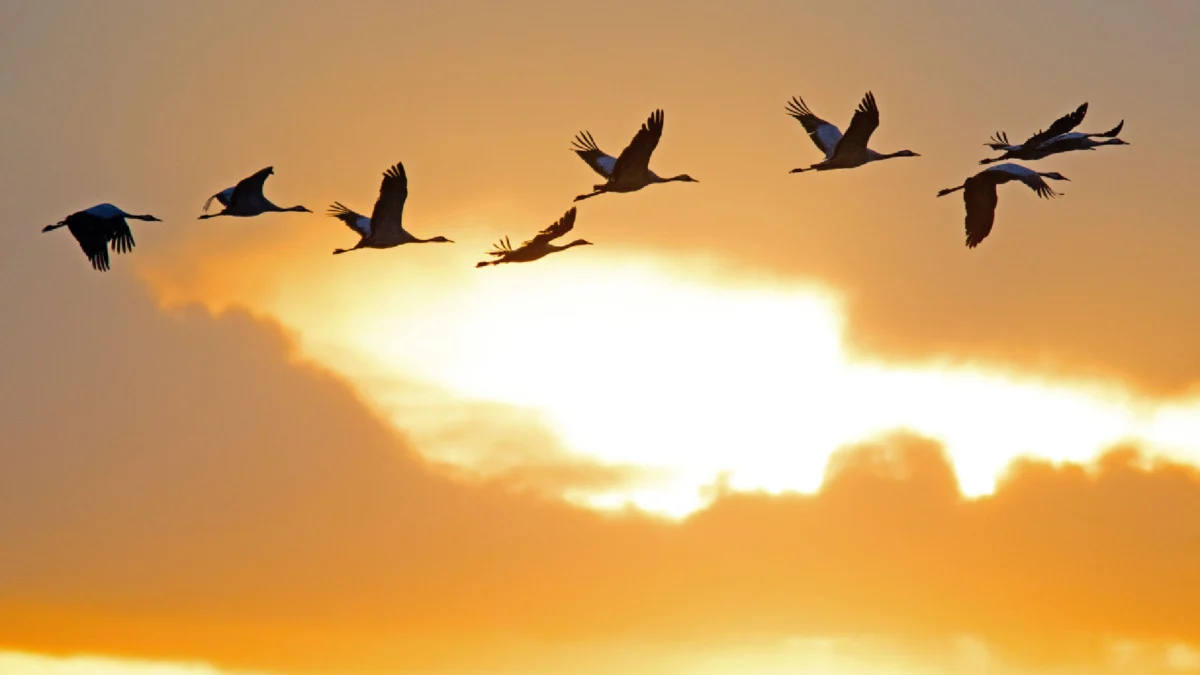
Every autumn, as the sun dips below the horizon across the United States, a silent, colossal migration begins. While the human world settles into the quiet of the night, millions of birds take to the wing, embarking on arduous journeys that span thousands of miles. For decades, this nocturnal movement remained largely a mystery, hidden in the dark, high-altitude corridors of the atmosphere. Today, however, ornithologists have gained an unprecedented window into this phenomenon, utilizing sophisticated weather radar systems to track the pulse of avian life as it moves across the continent.
The methodology behind this discovery is rooted in the technological advancements of the mid-20th century. During World War II, British radar operators tasked with tracking enemy aircraft began noticing "ghost" echoes on their screens. These clusters of interference, which did not behave like planes or weather fronts, were colloquially labeled "angels." It was not until post-war analysis that researchers realized these ethereal signatures were actually massive flocks of birds. This accidental discovery laid the groundwork for modern aeroecology—a discipline that bridges the gap between atmospheric science and ornithology.
The Evolution of Radar Surveillance: From WWII to NEXRAD
The transition from early radar systems to the current state-of-the-art infrastructure has been transformative. Ornithologists today rely heavily on the NEXRAD (Next-Generation Radar) network, formally known as the WSR-88D. This system consists of 160 high-resolution Doppler weather radars operated by the National Weather Service. Because these radars are designed to detect precipitation, they are sensitive enough to pick up the biological "clutter" created by birds, bats, and even insects moving through the sky.

The data gathered by NEXRAD is filtered through sophisticated algorithms that distinguish biological matter from rain or snow. This capability has enabled organizations like the Cornell Lab of Ornithology, Colorado State University, and the University of Delaware to create the BirdCast project. By integrating historical radar data with real-time atmospheric inputs, BirdCast provides a live, granular look at migration patterns across the lower 48 states, effectively turning the sky into a transparent, observable laboratory.
The Mechanics of Nocturnal Flight
The preference for nocturnal migration among many songbird species is not incidental; it is an evolutionary adaptation. Traveling at night offers several distinct advantages. First, the air is generally cooler and more stable, reducing the risk of overheating during strenuous flight. Second, the nighttime atmosphere provides fewer thermal currents, which, while beneficial for hawks and other raptors that soar during the day, can be disadvantageous for smaller birds that prefer steady, wing-beating flight.
Perhaps most importantly, nighttime flight minimizes the risk of predation. By avoiding the daylight hours, when hawks and falcons are most active, songbirds can utilize the safety of darkness to cover massive distances. During the day, these birds descend to "stopover sites"—habitats where they can rest, forage for insects and seeds, and build up the fat reserves necessary to continue their journey. This cycle of nocturnal travel and diurnal refueling is a finely tuned rhythm that has been perfected over millions of years of evolution.
Quantifying the Scale: A Billion Birds in the Air
The sheer volume of bird migration is difficult for the average observer to comprehend. Data analysis from the NEXRAD network suggests that on peak nights during the autumn season, upwards of one billion birds may be in the air simultaneously over the United States. To put this into perspective, a single sweep of a radar station can detect a concentrated movement of tens of thousands of birds flying over a single municipality, all while residents below are entirely unaware of the biological phenomenon occurring just a few hundred meters above their rooftops.

These migration events are not random; they are highly dependent on meteorological conditions. Birds are experts at exploiting wind patterns. They often wait for cold fronts that provide favorable tailwinds, which can significantly reduce the energy expenditure required for long-distance flight. When a major front moves across the country, it can trigger a mass departure, with waves of birds riding the winds across vast geographic regions.
Forecasting Migration: A Tool for Conservation
The ability to track migration has evolved into a predictive science. By combining radar observations with meteorological forecasting, experts can now predict major migration events before they occur. This capability serves a critical role in contemporary conservation efforts.
One of the most significant threats to migrating birds is light pollution. Many species rely on celestial cues to navigate, and the bright, artificial glow of urban centers can disorient them. This phenomenon often leads to fatal collisions with glass-clad buildings or exhaustion as birds circle illuminated areas until they collapse.
When BirdCast forecasts predict a high-intensity migration night, conservation groups and municipalities can take proactive measures. This includes "Lights Out" initiatives, where buildings and homeowners are encouraged to dim unnecessary lighting during peak migration windows. By reducing the light footprint in urban corridors, cities can create a safer passage for millions of birds, significantly reducing mortality rates in high-traffic flyways.

Chronology of Modern Ornithological Tracking
- 1940s: British radar operators discover mysterious "angels" on radar screens, later identified as bird flocks.
- 1960s-1970s: Ornithologists begin to use existing weather radar to quantify bird migration, though data processing remains largely manual and limited by analog technology.
- 1990s: The rollout of the NEXRAD (WSR-88D) network provides high-resolution, digital data, enabling more accurate biological monitoring.
- 2018: The BirdCast project is launched, providing real-time migration maps and forecasts to the public, blending big data with public outreach.
- 2026: Advanced machine learning models are integrated into radar analysis, allowing for near-instantaneous separation of biological echoes from atmospheric interference.
Implications for Urban Planning and Ecology
The intersection of radar technology and migration science has profound implications for urban planning and climate change mitigation. As urban areas continue to expand, the corridors through which birds travel are increasingly fragmented. Understanding where these birds move—and when they arrive in specific regions—allows city planners to design "bird-friendly" urban environments. This includes everything from bird-safe window glass and native plant landscaping at stopover sites to the strategic management of green spaces that provide essential food resources.
Furthermore, these data streams are critical for tracking how climate change is altering migration timing. Ornithologists have observed shifts in arrival dates, with many species migrating earlier in the spring or later in the autumn in response to warming temperatures. Long-term monitoring via radar provides an objective, large-scale dataset that helps researchers assess the health of avian populations and the resilience of migratory ecosystems.
Conclusion: A New Era of Awareness
The synthesis of weather radar data has effectively bridged the gap between human observation and the natural world. By decoding the "angels" that once puzzled WWII radar operators, modern science has unveiled a spectacular, invisible global highway. As technology continues to improve, our understanding of these nocturnal travelers will only grow deeper.
Ultimately, the goal of this research is not merely to satisfy scientific curiosity but to foster a deeper sense of responsibility toward the environment. Recognizing that we share our skies with billions of creatures on an epic journey serves as a powerful reminder of the interconnectedness of our ecosystems. As the next wave of autumn migration approaches, the data provided by platforms like BirdCast offers a call to action—a reminder that with simple, informed adjustments to our own behavior, we can ensure that these millions of travelers arrive safely at their destinations.

