


Taxonomic Profile and Nomenclature
The red-headed lovebird belongs to the genus Agapornis, a group of nine species of small parrots native to Africa. The name Agapornis is derived from the Greek words agape (love) and ornis (bird), aptly referring to the strong pair bonds these birds typically form. The species epithet pullarius comes from the Latin pullus, meaning ‘chick’ or ‘young animal,’ though its specific application in this context is less clear than the common name ‘red-headed’ or ‘red-faced’ lovebird, which directly references its most distinctive plumage feature.
These compact parrots are typically around 15 cm (6 inches) in length and weigh approximately 45 grams, making them one of the smaller members of the parrot family (Psittacidae or, more specifically, Psittaculidae). They are known for their relatively low noise level compared to many other parrot species, though their calls can still be shrill. In the wild, their lifespan can extend up to 20 years, a testament to their resilience in their natural environment.
Geographic Distribution and Natural Habitat
Like all members of the genus Agapornis, the red-headed lovebird is naturally found exclusively in Africa. Its distribution spans a broad, though patchy, band across western sub-Saharan Africa, extending eastward through Central Africa. Its range stretches from countries as far west as Guinea and Sierra Leone, across Nigeria, Cameroon, and Gabon, reaching into the Democratic Republic of Congo, and as far east as Ethiopia. This expansive yet fragmented distribution is often tied to the specific habitat requirements of the species.
The red-headed lovebird is predominantly a sedentary species, meaning it does not undertake extensive nomadic movements within its range. It exhibits a strong preference for tropical lowland savannah environments, which provide a mosaic of grasslands and scattered trees. While it appreciates the presence of some trees for roosting, nesting, and foraging, it actively avoids dense primary forests, suggesting an adaptation to more open woodland and grassland ecosystems. This preference places it in habitats that are often transitional zones between dense forests and arid regions. They can be found at altitudes up to 2,000 meters (approximately 6,550 feet), though they are more commonly observed at lower elevations. Within these habitats, they typically travel in pairs or small flocks, which can occasionally number up to a few dozen individuals, particularly during foraging or pre-roosting activities.
Two subspecies of Agapornis pullarius are recognized, each with slight variations in appearance and geographic range:
- Agapornis pullarius pullarius: This is the nominate subspecies, widespread across the western and central parts of the species’ range.
- Agapornis pullarius ugandae: Found in the eastern parts of the range, primarily in Uganda and parts of the Democratic Republic of Congo. This subspecies is generally noted to be slightly smaller and have a darker green plumage, with the red facial coloration being marginally less extensive or vibrant compared to A. p. pullarius.
Physical Characteristics and Sexual Dimorphism
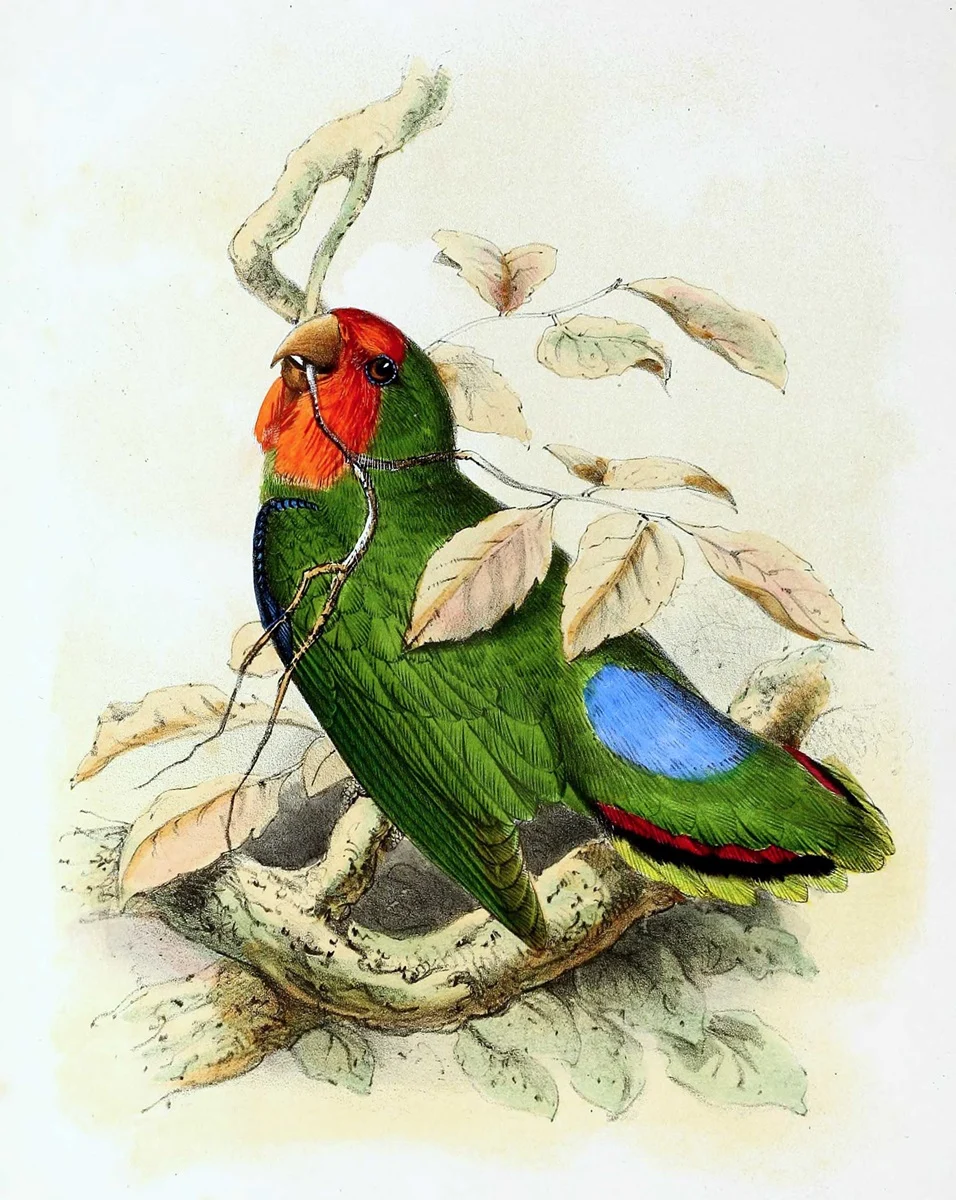
The red-headed lovebird is indeed a strikingly beautiful parrot, distinguished by its vibrant coloration. The majority of its body plumage is a bright, lush green, providing excellent camouflage amidst the foliage of its natural habitat. This verdant backdrop is dramatically contrasted by a vivid scarlet-red coloration that covers the bird’s face and extends down to its beak. A subtle dash of blue is often visible on the lower back and rump, and a small band of red can be observed on the tail feathers, adding further intricate detail to its appearance.

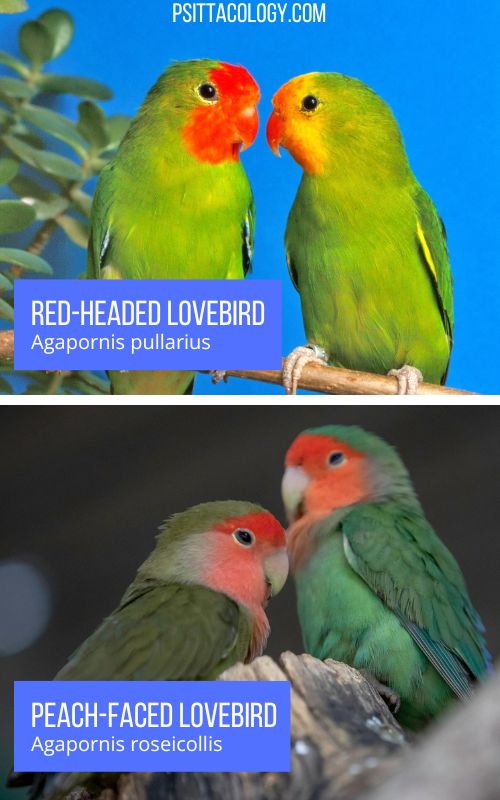
One notable aspect of Agapornis pullarius is its superficial resemblance to the Peach-faced Lovebird (Agapornis roseicollis), which is arguably the most popular lovebird species in aviculture. While both species share a predominantly green body and a contrasting facial mask, a key diagnostic feature distinguishes them: the beak. In the red-headed lovebird, the beak is entirely red, matching its facial plumage. In contrast, the Peach-faced Lovebird possesses a pale, horn-colored or beige beak. This seemingly minor detail is crucial for identification, especially given the rarity of Agapornis pullarius in captivity.
Furthermore, the red-headed lovebird exhibits distinct sexual dimorphism, allowing for visual differentiation between males and females. The male boasts a more intensely colored, brilliant scarlet face and beak. The female, while still attractive, displays a slightly duller facial coloration, often leaning more towards an orange hue rather than a deep scarlet, and her beak typically mirrors this softer tone. This subtle difference is a useful characteristic for breeders and researchers, although it can be challenging for the untrained eye to discern consistently.
Behavioral Ecology in the Wild
In their natural savannah habitats, red-headed lovebirds demonstrate fascinating social and foraging behaviors. They are typically observed in monogamous pairs or small family groups, although they can congregate into larger flocks of several dozen birds when food resources are abundant or during communal roosting. This social flexibility allows them to efficiently exploit patchy food sources and offers enhanced protection against predators.
Their diet is primarily granivorous, consisting mainly of grass seeds. They are highly adept at extracting seeds from various wild grasses. This dietary preference often brings them into conflict with human agricultural interests, as they readily feed on cultivated crops such as millet, maize, and rice, where available. This has unfortunately led to them being perceived as crop pests by local farmers in many parts of their range, often resulting in retaliatory killings. Beyond seeds, their diet is supplemented with wild fruits, including figs and guava, which provide essential vitamins and moisture, particularly during dry seasons. They are agile foragers, moving quickly through vegetation to locate their preferred food items.
Perhaps one of the most unique aspects of the red-headed lovebird’s biology is its nesting behavior. Unlike most parrot species that utilize tree hollows, Agapornis pullarius predominantly nests in arboreal termite or ant nests. The female excavates a burrow within these sturdy structures, creating a secure chamber for her eggs and chicks. The inside of the nest is then reinforced and lined with plant materials such as grass leaves and bark strips, which the female meticulously collects and carries in her rump feathers. This specialized nesting strategy provides excellent insulation and protection from predators, leveraging the natural architecture of the insect colonies. While termite mounds are preferred, they are occasionally observed nesting in tree hollows created by woodpeckers or even in ground-level structures if suitable arboreal sites are unavailable. During the rainy season, when food is abundant, females typically lay a clutch of up to six eggs, with incubation and rearing duties largely shared, though the female undertakes the initial nest preparation.
Conservation Status and Threats
Despite its widespread distribution, the red-headed lovebird faces significant conservation challenges. The International Union for Conservation of Nature (IUCN) Red List currently classifies Agapornis pullarius as a species of "Least Concern." However, this classification is nuanced and requires careful interpretation. While the species does not meet the criteria for "Vulnerable," "Endangered," or "Critically Endangered," the IUCN notes that it is locally uncommon throughout much of its natural range, indicating a fragmented and potentially declining population. This "Least Concern" status often masks a silent decline, where a species may be widespread but experience significant localized losses that, over time, can accumulate into a more severe overall threat.
The primary drivers behind the observed population decrease are multifaceted:
- Habitat Destruction: Extensive deforestation for agriculture, logging, and human settlement across West and Central Africa is rapidly eroding the tropical savannah and open woodland habitats vital for Agapornis pullarius. As these habitats shrink and become more fragmented, the availability of food, roosting sites, and suitable nesting locations (termite mounds) diminishes.
- Human-Wildlife Conflict: As mentioned, the lovebirds’ propensity to feed on cultivated grains like millet and maize leads to direct conflict with farmers. This often results in the birds being actively persecuted and killed as pests, exacerbating population declines, particularly in areas with intensive agriculture.
- Capture for the Pet Trade: Historically, and to some extent currently, the red-headed lovebird has been targeted for the international pet trade. A 2018 study highlighted the alarming statistic of almost 40,000 red-headed lovebirds exported since 1975. This figure represents a substantial removal of individuals from wild populations, especially considering the species’ stress-prone nature and the high mortality rates often associated with capture and transport. While CITES (Convention on International Trade in Endangered Species of Wild Fauna and Flora) regulates trade, illegal poaching and unregulated local markets continue to pose a threat. The quote from Parr & Juniper (2010) in "Parrots: a guide to parrots of the world" underscores this, stating, "Abundance also varies owing to nomadic habits, but a genuine overall decline appears to have occurred in many areas this century. Trapped for live bird trade with large numbers in captivity outside range."
Conservationists express growing concern that without targeted conservation efforts and stricter enforcement against illegal trade, the species’ "Least Concern" status could shift rapidly. Dr. Emeka Obi, a hypothetical ornithologist specializing in African parrots, might comment, "The ‘Least Concern’ label can be misleading. When a species shows consistent local declines across a broad range, it signals underlying systemic pressures. We need proactive measures, not just reactive ones, to ensure the long-term viability of the red-headed lovebird in the wild." Protecting savannah ecosystems and promoting sustainable agricultural practices that mitigate human-wildlife conflict are crucial steps.

The Red-Headed Lovebird in Aviculture: Challenges and Ethics
Compared to its more ubiquitous relatives, the red-headed lovebird is a rare sight in aviculture. It is not a common pet and is primarily kept by highly dedicated parrot enthusiasts or specialized breeders who possess extensive experience with sensitive avian species. This rarity stems directly from the species’ inherent stress-prone nature and pickiness, which pose significant challenges to successful acclimatization and long-term well-being in captivity.
Wild-caught red-headed lovebirds, in particular, are notoriously delicate. They can react severely to environmental disturbances, with sudden loud noises or abrupt changes in their surroundings sometimes leading to extreme stress, shock, and even sudden death. Their dietary preferences can also be rigid, with some individuals refusing to eat if kept in a shared aviary with more boisterous or aggressive neighbors. This sensitivity necessitates a quiet, stable, and carefully managed environment, making them unsuitable for typical pet ownership where interaction and adaptability are often expected. For this reason, those who do keep them generally view them as observational birds rather than interactive pets; "look, but don’t touch" is often the guiding principle.
The ethical implications of keeping such a sensitive, stress-prone, and historically wild-caught species in captivity are a subject of ongoing debate among avian welfare advocates. Given the species’ declining wild populations due to trade, emphasis is increasingly placed on responsible aviculture practices, particularly the importance of acquiring only captive-bred individuals. This not only reduces pressure on wild populations but also ensures that birds in captivity are better adjusted to human environments and generally healthier.
Comprehensive Captive Care Guidelines
For the experienced parrot enthusiast who has managed to source ethically captive-bred red-headed lovebirds, providing optimal care is paramount.
Housing Requirements:
These lovebirds thrive in a spacious and secure environment. A heated aviary is often the preferred choice, allowing for ample flight space and protection from adverse weather. Ideally, red-headed lovebirds should be housed in pairs, or even solo if a suitable pair cannot be formed, to minimize inter-species stress, especially if they are particularly nervous.
For indoor housing, a large cage is essential, with dimensions of at least 80 cm (30 inches) wide, 60 cm (24 inches) deep, and 60 cm (24 inches) high. The bar spacing should be appropriate for small parrots, around 1.25 cm (0.5 inches), to prevent escapes or injuries. The cage should be furnished with a variety of natural wood perches of different diameters to promote foot health, along with several foraging opportunities. Placement of the cage is crucial; it should be in a quiet room, away from high-traffic areas, direct drafts, and loud noises, with visual barriers on at least two sides to provide a sense of security.
Dietary Needs:
While many traditional lovebird keepers continue to feed dry or sprouted seeds, veterinarians generally advocate for a high-quality pelleted diet as the nutritional cornerstone for most captive parrots, including Agapornis pullarius. Pellets, such as those from reputable brands like Harrison’s, Roudybush, or Zupreem, are formulated to provide a balanced array of vitamins, minerals, and macronutrients, addressing potential deficiencies inherent in a seed-only diet.
Alongside daily pellets, a diverse diet should include:
- High-quality seed mix: Offered in moderation as a supplement, focusing on varieties like millet, canary seed, and oats.
- Fresh vegetables: A wide array of leafy greens (kale, spinach, romaine), broccoli, carrots, bell peppers, zucchini, and peas. These should be thoroughly washed and offered daily.
- Fresh fruits: Apples (no seeds), berries, melons, grapes, and citrus fruits can be offered in small quantities as treats.
- Cooked grains: Brown rice, quinoa, and whole wheat pasta can add variety.
- Foraged weeds: Dandelion greens, chickweed, and plantain leaves (ensure they are free from pesticides and identification is accurate).
- Protein sources: Especially important during breeding season, boiled egg, lean cooked chicken, or live/dried mealworms can be offered.
- Supplements: A cuttlebone or mineral block should always be available for calcium and mineral intake.
Enrichment Strategies:
Given their intelligence and propensity for stress, enrichment is critical for red-headed lovebirds. However, new items must be introduced gradually to avoid alarming the birds. Essential enrichment items include:
- Natural branches: Untreated branches from safe trees (e.g., willow, apple, eucalyptus) for chewing and climbing, replaced regularly.
- Chewable toys: Made from untreated wood, cardboard, paper, or natural fibers to satisfy their strong urge to chew and prevent boredom.
- Foraging toys: Devices that require the bird to work for its food, mimicking natural foraging behaviors.
- Swings and ladders: To provide physical activity and variety.
- Bathing opportunities: A shallow dish of fresh water for bathing, as lovebirds enjoy preening.
- Visual barriers: Placing plants or screens around part of the cage can offer privacy and a sense of security.
- Auditory enrichment: Soft classical music or nature sounds can be calming.
Health and Well-being:
Due to their sensitive nature, red-headed lovebirds are particularly susceptible to stress-related health issues, which can manifest as feather plucking, lethargy, or loss of appetite. Regular veterinary check-ups with an avian specialist are crucial for early detection and treatment of potential health problems. A clean environment, proper diet, and minimal stress are the best preventative measures.
Reproduction in Captivity: A Breeder’s Challenge
Breeding the red-headed lovebird in captivity is notoriously difficult, largely owing to its specific nesting preferences and nervous disposition. Unlike many other lovebird species that readily accept standard wooden nest boxes, Agapornis pullarius‘s natural inclination to burrow into termite nests presents a unique challenge.
Dedicated aviculturists and breeders, such as Dominique Veeckmans, who have successfully bred this species, have discovered innovative solutions. Nest boxes crafted from cork have proven effective. Cork’s texture and insulating properties mimic the natural termite mound environment, providing the birds with the sense of security and a substrate suitable for burrowing that they require. Additionally, providing ample nesting material like fresh grass, palm fronds, and bark strips is essential for the female to construct her nest chamber.
Successful breeding also hinges on replicating environmental cues. In the wild, breeding often coincides with the rainy season, when food is abundant. Captive breeders may need to adjust humidity, temperature, and dietary offerings (e.g., increased protein) to stimulate breeding behavior. Establishing a strong, compatible pair bond is also critical, as these monogamous birds require trust and comfort with their partner to reproduce successfully.
The challenges in captive breeding highlight the species’ specialized needs and underscore why it remains uncommon in aviculture. However, successful captive breeding programs are vital not only for providing ethical sources for enthusiasts but also for potentially establishing assurance colonies. These colonies could serve as a safeguard against further decline in wild populations and potentially contribute to future reintroduction efforts, though the latter would require extensive research and habitat restoration.
Conclusion: A Future for the Furtive Lovebird
The red-headed lovebird, Agapornis pullarius, stands as a unique and somewhat enigmatic member of the lovebird genus. Its striking appearance, specialized nesting habits, and particularly its stress-prone nature set it apart from its more commonly kept relatives. While currently categorized as "Least Concern" by the IUCN, the documented decline in its wild populations due to habitat loss, human-wildlife conflict, and historical pressures from the pet trade presents a clear warning.
The future of this furtive lovebird hinges on a multi-pronged approach. In the wild, conservation efforts must focus on protecting its crucial savannah habitats, mitigating conflicts with agricultural communities through sustainable practices, and strictly regulating the pet trade to prevent further depletion of wild stocks. In aviculture, the emphasis must remain on ethical captive breeding by experienced enthusiasts, ensuring that any birds kept are well-adjusted, healthy, and contribute to a sustainable captive population without impacting their wild counterparts. By understanding and respecting the unique biology and delicate disposition of Agapornis pullarius, we can work towards securing a brighter future for this fascinating African parrot.

