


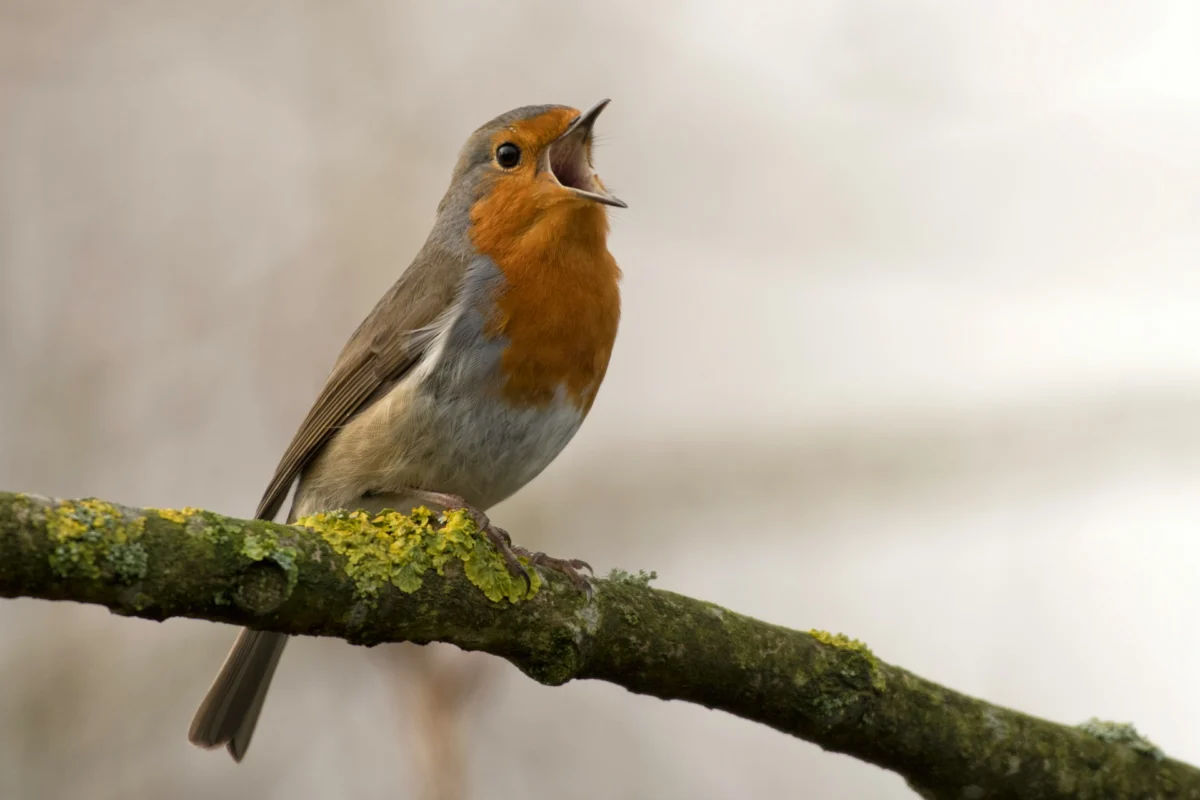
The intricate tapestry of avian life often presents a captivating spectrum of colors, each hue serving a purpose in the survival and propagation of species. For ornithology enthusiasts and casual birdwatchers alike, the visual appeal of birds is undeniable. Today, we embark on a specific quest: to identify ten bird species that exhibit a distinct combination of brown plumage and an orange chest. This exploration, which will inevitably lead us beyond the familiar borders of the United States, also offers an opportunity to delve into the fundamental reasons behind avian coloration and the biological mechanisms that create these vibrant displays.
The Evolutionary Significance of Avian Coloration
Birds’ plumage is far more than mere decoration; it is a critical evolutionary tool shaped by millennia of natural selection. Two primary drivers dictate the necessity of colored feathers:
- Camouflage: For many species, particularly females, muted and earth-toned plumage provides essential camouflage. This allows them to blend seamlessly with their surroundings, offering protection from predators while nesting and raising their young. The vulnerability of eggs and chicks necessitates a low profile, making camouflage a paramount survival strategy.
- Sexual Selection: In stark contrast, the often brilliant and varied colors of male birds serve a crucial role in attracting mates. These vibrant displays are not arbitrary; they act as honest signals of a male’s genetic quality, health, and vigor. A male’s ability to produce and maintain such striking colors can indicate his access to resources, his freedom from parasites, and his overall fitness, making him a desirable partner for reproduction.
The Biochemistry of Feather Pigmentation
The striking colors observed in bird feathers are primarily the result of pigments present within the feather structure. Two main classes of pigments are responsible for this remarkable diversity:
- Melanins: These pigments are naturally synthesized within the bird’s body and are responsible for producing a range of colors including blacks, browns, oranges, and grays. The concentration and distribution of melanin granules within the feather barbules determine the final shade and intensity of these colors.
- Carotenoids: Unlike melanins, carotenoids are not produced by birds endogenously. Instead, they must be acquired through the diet. These pigments are responsible for producing a dazzling array of brighter colors, including reds, yellows, and oranges, with the notable exception of blues. The bird’s ability to metabolize and deposit these dietary carotenoids directly influences the brilliance and saturation of the resulting feather colors.
It is important to note that certain colors, such as blues and iridescent greens, are not produced by pigments at all. Instead, they are the result of structural coloration, where the microscopic structure of the feathers interacts with light to scatter specific wavelengths, creating the illusion of color. For example, the vibrant blues in many bird species are achieved through light scattering, a phenomenon distinct from pigment-based coloration.
Given our specific objective to find brown birds with orange chests, we are likely to encounter species where melanin plays a significant role in the brown base coloration, while carotenoids contribute to the orange hues of the chest. This combination often points towards species where both camouflage and signaling are at play, or where the orange is a subtle accent rather than a dominant feature.
A Global Census: Ten Brown Birds with Orange Chests
Our initial search, even with a focus on the United States, quickly reveals that achieving a list of ten distinct species requires venturing beyond continental North America. The subtle beauty of these feathered creatures, often overlooked in favor of more overtly flamboyant species, offers a unique perspective on avian adaptation and diversity.
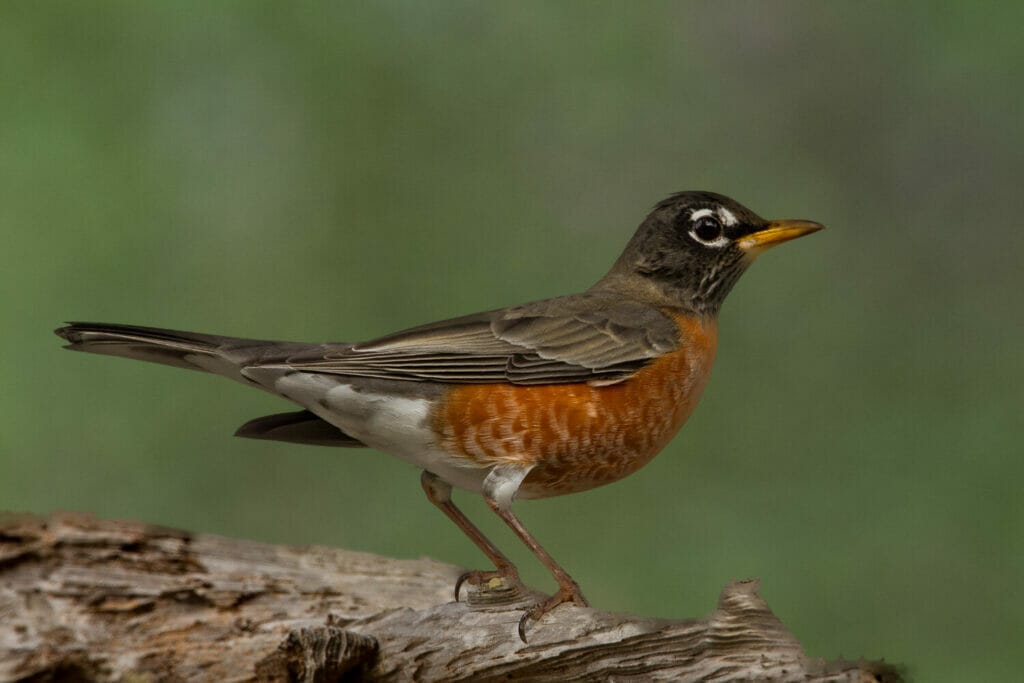
1. American Robin ( Turdus migratorius )
A familiar sight across North America, the American Robin is a thrush renowned for its cheerful song and its role as a harbinger of spring. While the male robin displays a prominent reddish-orange breast, the brown upperparts are also a defining characteristic. Females often exhibit a more muted version of this coloration, emphasizing the role of camouflage.

- Identification and Size: The American Robin is a relatively large songbird, measuring between 7.9 and 11.0 inches in length with a wingspan of 12.2 to 15.8 inches. Its back is a classic gray-brown, contrasting with its dark orangey-red belly.
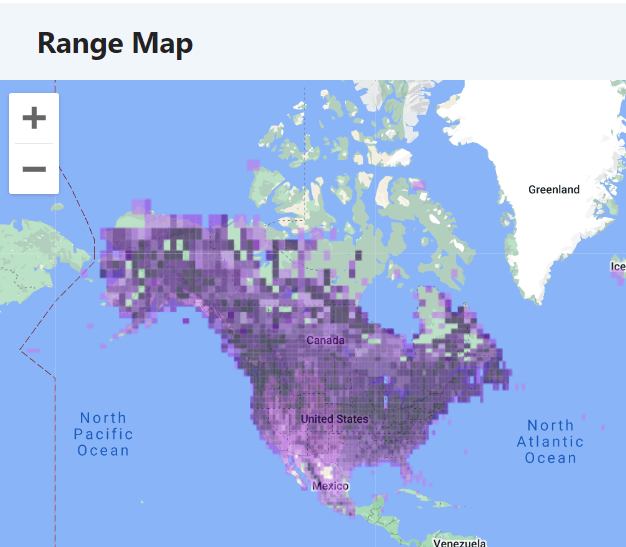
- Distribution: This species is widely distributed across continental North America, extending into Canada and Alaska in the north, and throughout Mexico in the south.
- Diet: Primarily insectivorous, American Robins forage for earthworms and insects in lawns and open parkland, but also consume berries during winter months.
- Interesting Fact: Despite their association with spring, American Robins do not migrate extensively in winter. Instead, they rely on winter berries found away from gardens, which explains their reduced visibility during colder periods.
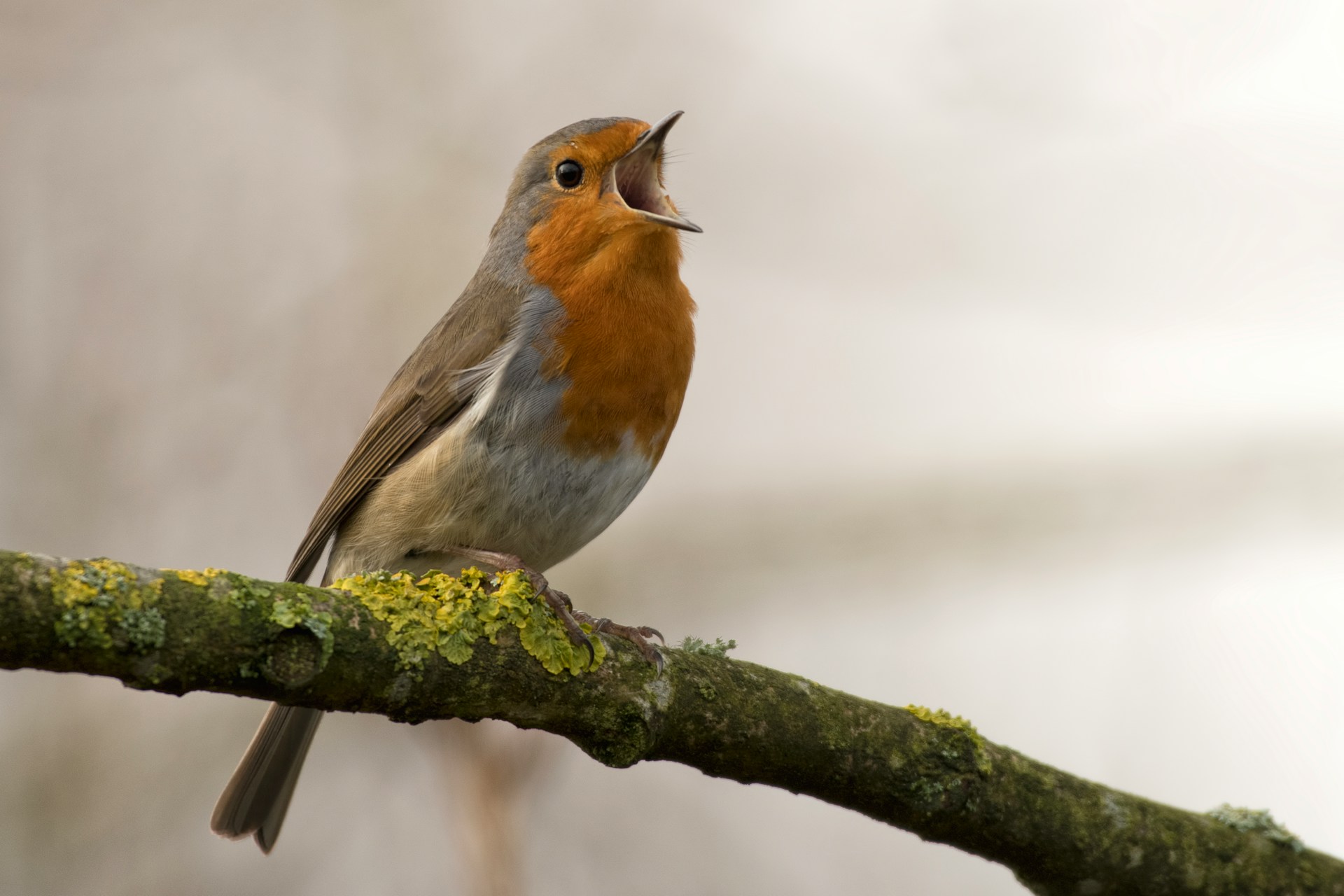
2. European Robin ( Erithacus rubecula )
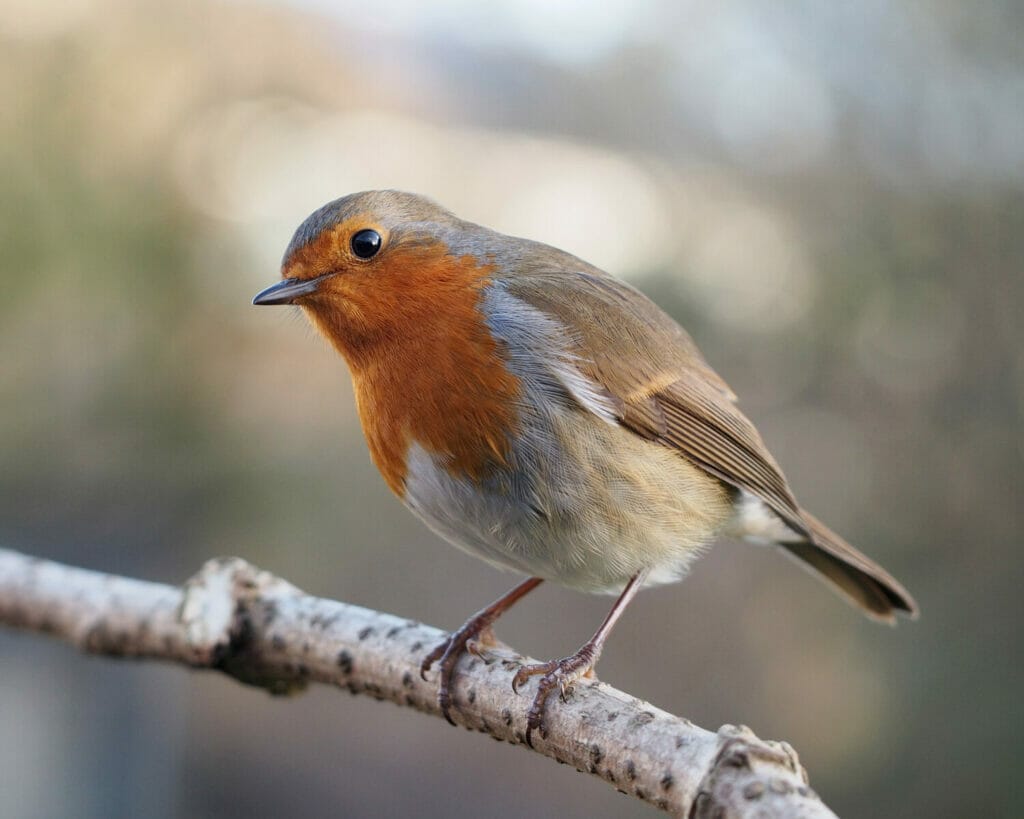
The European Robin, a small, plump bird, is instantly recognizable by its iconic orange-red breast and face, which extend to the throat. While the chest is its most striking feature, its upperparts are a subtle, warm brown, providing a necessary contrast and camouflage against the woodland floor.
- Identification and Size: This robin measures approximately 5.5 inches in length and weighs between 0.49 and 0.88 ounces. The brown upperparts are a key identification marker, blending seamlessly into the distinctive orange-red breast and paler gray underparts.
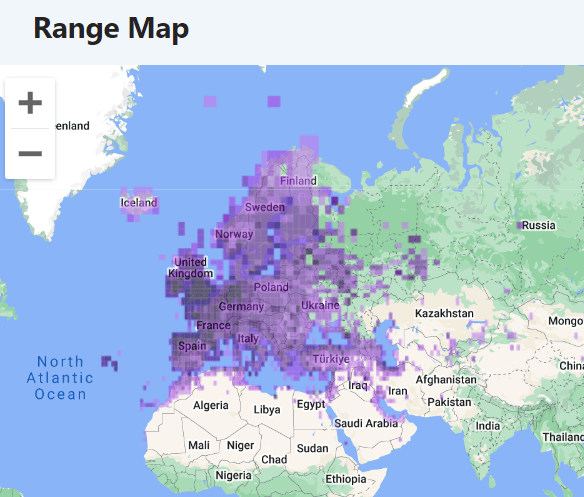
- Distribution: The European Robin is a ubiquitous presence across the entirety of Europe, with its range extending into northern Africa and the Middle East.
- Diet: Its diet is varied, comprising small vertebrates, invertebrates, fruits, and seeds.
- Interesting Fact: European Robins possess a diverse repertoire of calls and songs that change throughout the year, incorporating warbling, ticking, peeping, and even mimicry.
3. European Stonechat ( Saxicola rubicola )
The European Stonechat, particularly the female, fits our criteria perfectly. While the male boasts a more striking black head and throat, the female exhibits a warm brown upper body with a pale buff belly that transitions into a distinct orange chest.
- Identification and Size: This species measures around 5 inches in length and weighs between 0.5 and 0.6 ounces. The female’s plumage is characterized by its overall brown coloration, with the orange chest being a notable feature.
- Distribution: The European Stonechat is a common resident throughout Europe, with populations extending into North Africa and the Middle East.
- Diet: Primarily insectivorous, they feed on insects and their larvae, occasionally supplementing their diet with seeds or fruit.
- Interesting Fact: The bird derives its name from its call, which resembles the sound of stones being clicked together, a distinctive characteristic for birdwatchers.
4. Brambling ( Fringilla montifringilla )
This attractive finch presents a subtle yet captivating combination of brown and orange. Outside of the breeding season, Bramblings display an orange breast, a white rump, and intricate brown, black, and white patterns on their wings. The overall impression is one of earthy tones with a warm, inviting chest.
- Identification and Size: Measuring between 5.3 and 6.2 inches in length and weighing 0.6 to 1 ounce, the Brambling is a small finch. Its non-breeding plumage features an orange breast that contrasts with its patterned wings.
- Distribution: The Brambling is widespread across Western Europe and extends eastward into Asia, reaching as far as Japan.
- Diet: Their diet consists mainly of fruits and seeds, with insects being taken opportunistically.
- Interesting Fact: Bramblings are migratory, and at certain times of the year, enormous flocks, sometimes numbering in the millions, can be observed across Europe, creating a spectacular natural phenomenon.
5. Zebra Waxbill ( Amandava subflava )
Found in Africa, the Zebra Waxbill, also known as the Orange-breasted Waxbill, is a small and vibrant bird. Its distinguishing feature is its vivid orange breast, which stands out against its olive-brown back and bright red rump. This species demonstrates how even small birds can exhibit striking color patterns.
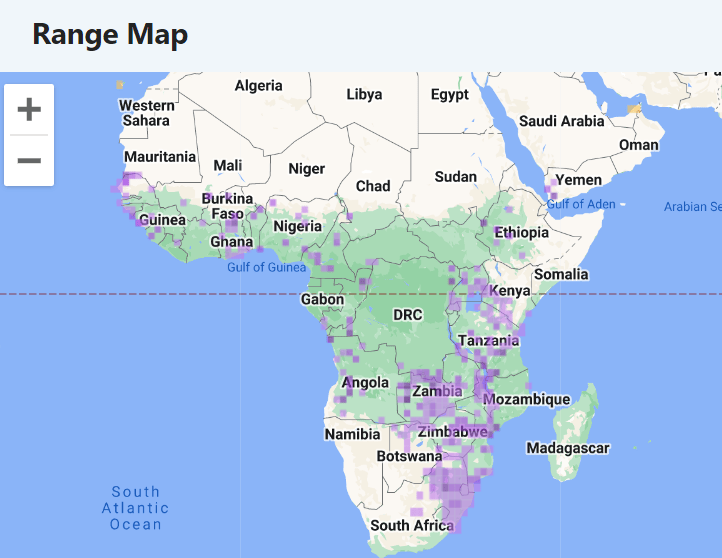
- Identification and Size: This tiny waxbill measures approximately 3.5 inches in length and weighs between 0.18 and 0.38 ounces. The bright orange breast is a defining characteristic.
- Distribution: The Zebra Waxbill is found in southwestern and northeastern Africa.
- Diet: Primarily a seed eater, it will also consume insects, particularly during its breeding periods.
- Interesting Fact: Courtship rituals for the Zebra Waxbill are elaborate, involving significant bowing and mutual preening, highlighting the importance of pair bonding in this species.
6. European Pied Flycatcher ( Ficedula hypoleuca ) – Note: This species is often described with black and white, but males can have rufous/orange on the chest and females are brown.
While often described with stark black and white plumage, particularly the males, the European Pied Flycatcher presents a nuanced case. The males, during breeding season, can display a distinct rufous or orange wash on their chest. Females, however, are predominantly brown with a paler underside, sometimes with a subtle peachy or orangey hue on the breast, fitting our criteria more consistently. This species highlights the variability within a species and the influence of season and sex on coloration.
- Identification and Size: This flycatcher measures about 5 inches in length. Males are striking black and white with an orange-rufous wash on the breast, while females are a more subdued brown with a paler underside, sometimes tinged with orange.
- Distribution: The European Pied Flycatcher breeds across Europe and winters in sub-Saharan Africa.
- Diet: Primarily insectivorous, they catch flying insects on the wing.
- Interesting Fact: This species is known for its acrobatic flight as it hunts for prey, often sallying forth from a perch to catch insects in mid-air.
7. Orange-breasted Thornbird ( Phacellodomus ferrugineigula )
This South American species is a testament to the subtle beauty found in avian coloration. Despite being largely brown, the Orange-breasted Thornbird possesses warm tones that fade into a muted orange on its breast, creating an understated yet striking appearance.
- Identification and Size: Measuring between 7 and 7.2 inches in length and weighing 0.84 to 0.88 ounces, this thornbird’s plumage is characterized by its predominantly brown coloration with a warm orange breast.
- Distribution: This species inhabits wetland or marsh habitats on the eastern side of South America.
- Diet: Little research has been conducted on this elusive bird, but it is believed to feed primarily on arthropods.
- Interesting Fact: Information on the behavior of this thornbird is scarce. Its name, however, appears in numerous languages, indicating a long history of observation across different cultures.
8. Russet-bellied Spinetail ( Synallaxis zimmeri )
Endemic to Peru, the Russet-bellied Spinetail is a rare and endangered bird. Its russet-orange breast extends down to its belly and tail, contrasting with its gray-brown upperparts. Its rarity underscores the importance of conservation efforts for species with specialized habitats.
- Identification and Size: This spinetail measures 6.5 to 6.7 inches in length and weighs 0.42 to 0.49 ounces. The distinctive russet-orange breast is a key identifying feature.
- Distribution: This species is resident in western Peru, specifically in the Ancash region of the Andes.
- Diet: The Russet-bellied Spinetail is omnivorous, feeding mainly on flying insects and spiders.
- Interesting Fact: The endangerment of this spinetail is primarily attributed to habitat loss and the lack of suitable corridors for range expansion, highlighting the impact of human development on avian populations.
9. Orange-breasted Trogon ( Harpactes oreskios )
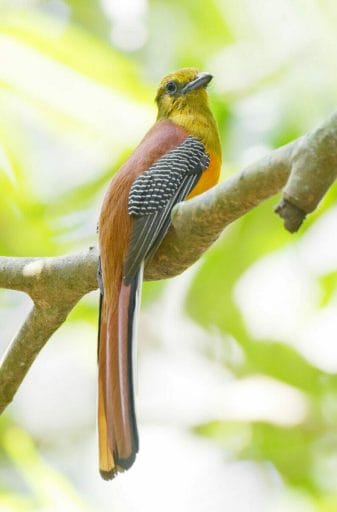
Found in the forests of Southeast Asia, the Orange-breasted Trogon presents a beautiful display of color. Both sexes are similar, featuring a bright orange breast bordered by a paler yellow, set against a cinnamon-brown back and olive-yellow neck and head.

- Identification and Size: This trogon measures 9.8 to 12.2 inches in length and weighs 1.7 to 2 ounces. The vivid orange breast is a prominent characteristic.
- Distribution: This trogon is found in low-level forests across Southeast Asia.
- Diet: Its diet is varied, including available insects and plant material, gathered from the ground and the mid-canopy.
- Interesting Fact: The Orange-breasted Trogon employs a "sally-stall" technique to hunt insects, where it pursues prey from leaf to branch before stalling in front of it, startling the insect and pouncing.
10. Sharp-shinned Hawk ( Accipiter striatus )
While often recognized for its predatory prowess, the Sharp-shinned Hawk also exhibits subtle orange hues. The breast of this relatively small hawk can be streaky orange or fully shaded, running into a pale belly. The back ranges from brown in younger birds to darker in adulthood, making it a good candidate for our list, especially during certain developmental stages or in specific subspecies.
- Identification and Size: This agile hawk measures 9.4 to 13.4 inches in length with a wingspan of 16.9 to 22.1 inches. Its weight ranges from 3.1 to 7.7 ounces. The streaky orange breast is a notable feature.
- Distribution: The Sharp-shinned Hawk is resident across the United States and into Canada and Alaska, with populations extending into Central America and parts of South America.
- Diet: This swift raptor primarily hunts other small birds, often within forests, but will also prey on birds at backyard feeders.
- Interesting Fact: The Sharp-shinned Hawk earns its name from its featherless legs, which extend all the way down to its toes, a unique adaptation for its hunting style.
Conclusion: A Mosaic of Earthy Tones and Fiery Accents
Our expedition to find ten brown birds with orange chests has been remarkably successful, though it has revealed that precisely ten such species can be challenging to pinpoint without delving into subspecies or seasonal variations. We have identified nine distinct species that largely fit the description, showcasing a beautiful array of adaptations across continents. The American Robin and European Robin are familiar, while the Zebra Waxbill and Orange-breasted Trogon offer a glimpse into the avian richness of Africa and Asia, respectively. The more elusive species like the Russet-bellied Spinetail highlight the critical need for conservation.

While we set out to find ten, the journey has underscored the incredible diversity within avian coloration. The prevalence of brown plumage, often coupled with a vibrant orange chest, speaks to a fascinating interplay between camouflage and signaling, a constant evolutionary dance that shapes the visual landscape of our planet. The Orange-breasted Thornbird, with its striking yet subtle coloration, stands out as a personal favorite for its ability to imbue an otherwise unassuming brown bird with such warmth and vibrancy. This exploration serves as a reminder that even the most common of birds can possess extraordinary qualities, and that the natural world holds endless wonders for those who take the time to observe.
Frequently Asked Questions (FAQs)
Q1: What common bird in the United States has an orange belly?
The American Robin is the most commonly encountered bird in the United States with a distinctly orange or reddish-orange belly.
Q2: Does the Barn Swallow have an orange chest?
The Barn Swallow does possess an orange or rufous chest, but its overall plumage is not primarily brown, making it unsuitable for our specific list of brown birds with orange chests.
Q3: Which birds are black with orange bellies?
Numerous species of orioles, found across various continents, typically exhibit black and orange or black and yellow plumage, with the orange or yellow coloration often present on their bellies.

Q4: What bird is described as reddish-brown with a buff breast?
The Brown Thrasher is a bird characterized by its reddish-brown upperparts and a buff-colored breast. While it has a brown appearance, the breast coloration does not typically present as the vibrant orange we sought for this list.

