


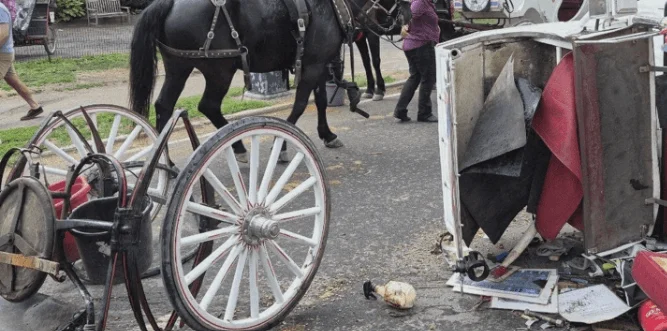
The death of 18-year-old Romanch Mahajan following a high-speed horse carriage accident in Central Park has reignited a fierce legislative and public debate over the future of the horse-drawn carriage industry in New York City. On Wednesday, June 17, 2026, a horse pulling a carriage occupied by a vacationing family suddenly bolted, leading to a catastrophic loss of control that resulted in the carriage overturning and the subsequent death of Mahajan. The incident, which occurred during a period of high pedestrian traffic, has intensified calls from the victim’s family, animal rights organizations, and local legislators for an immediate and permanent cessation of all horse-drawn carriage operations within the five boroughs.
The Fatal Incident: A Chronology of the Crash
According to eyewitness accounts and verified video footage from the scene, the incident began near the southern end of Central Park, an area characterized by a dense mix of tourists, cyclists, and motor vehicles. The horse, whose name has not been officially released by the carriage company, reportedly became startled by an undetermined stimulus—a common occurrence in the volatile urban environment of Manhattan.
The animal accelerated into a full gallop, pulling the carriage and its passengers through the park’s winding paths. Romanch Mahajan was seated in the carriage with his family when the vehicle began to sway violently. Witnesses described Mahajan’s final moments as heroic; the teenager reportedly attempted to shield his mother and stabilize the situation before being ejected from the vehicle as it struck a curb and flipped. Emergency medical services arrived on the scene within minutes, but Mahajan succumbed to his injuries shortly thereafter. The remaining family members sustained various non-life-threatening injuries and were treated at a nearby hospital.
The Mahajan family, through a legal representative, issued a statement expressing their profound grief and a singular demand for the city’s administration. They have called upon Mayor Zohran Mamdani and the New York City Council to enact a total ban on the industry, arguing that no family should have to endure such a preventable tragedy in the name of tourism.
A Pattern of Incidents: The Death of Deniz
The tragedy involving the Mahajan family is not an isolated event. It follows closely on the heels of another high-profile fatality within the industry. Just one week prior to the Central Park crash, a carriage horse named Deniz collapsed and died while in harness. Deniz was reportedly being forced to pull passengers through the park during a period of rising temperatures when the animal suffered a fatal medical episode.
The back-to-back deaths of a passenger and a horse have provided a grim catalyst for advocacy groups. On the day following Deniz’s death, People for the Ethical Treatment of Animals (PETA) joined NYCLASS (New Yorkers for Clean, Livable, and Safe Streets) and various members of the City Council for a rally on the steps of City Hall. The demonstration aimed to pressure the administration to move forward with pending legislation that would phase out horse-drawn carriages in favor of modern, electric alternatives.
The Legislative Battle: Intro 573 and the Push for Reform
The primary legislative vehicle for change is a bill sponsored by Council Member Christopher Marte. The proposed legislation seeks to replace horse-drawn carriages with electric-powered, vintage-style "e-carriages." Proponents of the bill argue that this transition would preserve the historical aesthetic and tourism revenue of the park while eliminating the inherent risks associated with live animals in traffic.
"The events of this past week are a heartbreaking confirmation of what we have been saying for years," Council Member Marte stated during a memorial vigil held on Monday, June 22. "New York City’s streets are too loud, too crowded, and too dangerous for horse-drawn carriages. We have the technology to move past this, and we have a moral obligation to do so before another life is lost."
The vigil, held at Cherry Hill Fountain near the site of the fatal accident, was attended by city and state officials, animal welfare advocates, and members of the public. A statement from the Mahajan family was read aloud, reinforcing their plea to Mayor Mamdani to prioritize public safety over industry tradition.
Safety Data and Environmental Challenges
The debate over horse-drawn carriages in New York City is rooted in decades of recorded incidents. Between 2010 and 2026, the city documented dozens of accidents involving carriage horses spooking, colliding with vehicles, or collapsing due to heat exhaustion and respiratory ailments.
Urban planners and veterinary experts have frequently pointed out the physiological toll Manhattan’s infrastructure takes on horses. The hard asphalt surfaces contribute to chronic lameness and joint issues, while constant exposure to bus and car exhaust fumes can lead to debilitating respiratory conditions. Furthermore, horses are "flight" animals by nature; the unpredictable noises of a metropolis—sirens, construction, and sudden movements—create a constant state of low-level stress that can escalate into a "bolt" response at any moment.
Data from the New York City Department of Transportation suggests that the congestion in and around Central Park has increased by nearly 15% over the last decade, further narrowing the margin of safety for slow-moving, animal-drawn vehicles. The intersection of horse carriages with the city’s growing fleet of electric bikes and scooters has added a new layer of complexity to the safety landscape.
Industry Defense and Economic Considerations
Despite the mounting pressure, the horse-drawn carriage industry, represented largely by the Transport Workers Union (TWU) Local 100 and various carriage owners, maintains that the industry is a vital part of New York’s cultural fabric. Industry spokespeople argue that the horses are well-cared for, receiving regular veterinary check-ups and mandatory pasture time outside the city.
The industry also emphasizes the economic impact of a ban. Currently, the carriage trade supports approximately 300 jobs, including drivers, stable hands, and blacksmiths. Owners argue that the transition to electric carriages would require significant capital investment and could lead to the loss of livelihoods for families who have been in the business for generations. They contend that better regulation, rather than a total ban, is the solution to safety concerns.
However, critics point out that previous attempts at reform—such as restricting carriage operations during high-heat indices or limiting their travel to specific park zones—have failed to prevent catastrophic accidents like the one that killed Romanch Mahajan.
Broader Implications and Global Trends
New York City is not the only major municipality grappling with the ethics and safety of horse-drawn transport. In recent years, cities such as Chicago, Salt Lake City, and Las Vegas have implemented bans or heavy restrictions on the practice. Internationally, cities like Rome and Montreal have also moved toward phasing out horse carriages in favor of more humane and urban-compatible alternatives.
The death of Mahajan has shifted the conversation from animal welfare alone to a broader issue of public safety and municipal liability. Legal experts suggest that the city could face significant litigation following the Central Park accident, as the administration was aware of the documented risks and previous incidents within the industry.
As the city enters the height of the summer tourism season, the pressure on Mayor Mamdani’s administration is reaching a breaking point. The Mayor, who campaigned on a platform of progressive urban reform, now faces a critical decision: maintain a storied but controversial tradition or heed the calls of a grieving family and a growing coalition of voters demanding an end to the era of horse-drawn carriages.
Conclusion: The Path Forward
The memorial at Cherry Hill Fountain serves as a somber reminder of the human cost of the current impasse. For the Mahajan family, the loss of an 18-year-old son is an irreparable tragedy. For the city of New York, it is a moment of reckoning.
As the City Council prepares for upcoming hearings on the proposed ban, the evidence presented will likely focus on the irreconcilable nature of 19th-century transport in a 21st-century city. Whether the "e-carriage" bill gains the necessary momentum to pass remains to be seen, but the events of June 2026 have ensured that the status quo is no longer an option. The legacy of Romanch Mahajan may ultimately be the catalyst that finally removes horse-drawn carriages from the streets of Manhattan, closing a chapter of New York history in the name of safety and compassion.

