


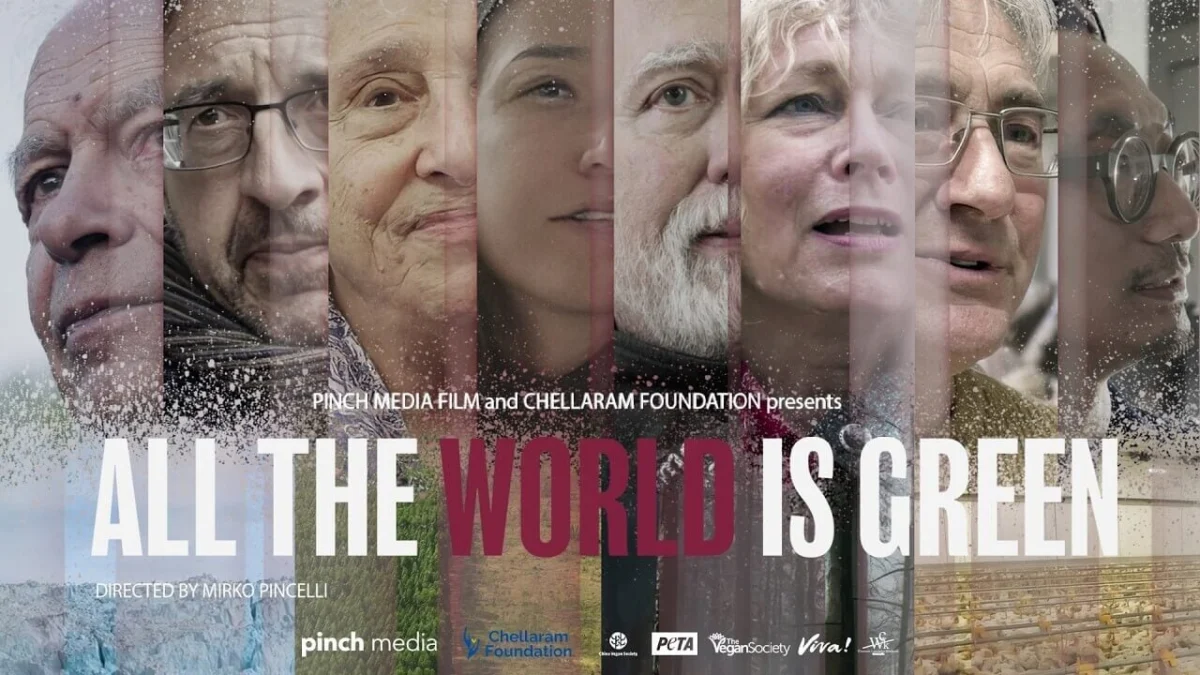
The global environmental landscape is currently navigating a period of unprecedented volatility characterized by retreating glaciers, systemic deforestation, and a precipitous decline in biodiversity. Amidst this backdrop of ecological instability, the newly released documentary All the World Is Green provides a comprehensive examination of the intersection between dietary choices and planetary health. Featuring a panel of internationally recognized experts—including philosopher Peter Singer, environmental journalist George Monbiot, nutrition scholar Marion Nestle, philanthropist Philip Wollen, and PETA founder Ingrid Newkirk—the film argues that the transition toward a plant-based economy is no longer merely a lifestyle preference but a fundamental requirement for climate stabilization.
The documentary arrives at a critical juncture in environmental history. According to recent data from the Intergovernmental Panel on Climate Change (IPCC), the window for limiting global warming to 1.5 degrees Celsius is rapidly closing. While much of the public discourse focuses on the transition to renewable energy and the electrification of transport, All the World Is Green shifts the spotlight toward the food system, which remains one of the most significant yet under-addressed drivers of the climate crisis.
The Environmental Toll of Industrial Animal Agriculture
A central pillar of the documentary is the analysis provided by George Monbiot, whose investigative work has long highlighted the inefficiencies of the modern food chain. Monbiot asserts that food production represents the single greatest threat to the living world. This claim is supported by data from the Food and Agriculture Organization of the United Nations (FAO), which estimates that livestock production is responsible for approximately 14.5% of global greenhouse gas emissions—a figure comparable to the emissions produced by the entire global transportation sector.
The film details the mechanics of this environmental impact through three primary lenses: land use, water scarcity, and pollution. Animal agriculture currently utilizes 77% of all agricultural land globally, yet it provides only 18% of the world’s calories and 37% of its protein. This disproportionate use of resources necessitates the clearing of carbon-dense ecosystems. In the Amazon rainforest, for instance, cattle ranching and soy production (the majority of which is used for animal feed) are responsible for over 80% of deforestation. By removing these "carbon sinks," the industry contributes to a dual-threat: the release of stored carbon and the loss of the planet’s ability to sequester future emissions.
Furthermore, the documentary explores the hydrological footprint of meat production. It takes an average of 15,000 liters of water to produce just one kilogram of beef, compared to roughly 300 liters for a kilogram of vegetables. As freshwater reserves dwindle in regions like the American West and North Africa, the film posits that the continued expansion of water-intensive livestock farming is increasingly untenable.
Biodiversity Loss and the Sixth Mass Extinction
Philip Wollen, a former Vice President of Citibank turned animal advocate, provides a sobering perspective on the biological costs of human consumption patterns. Wollen notes in the film that approximately 10,000 species are lost every year due to human activity, much of it driven by habitat destruction for grazing land. This loss of biodiversity is what scientists frequently refer to as the "Sixth Mass Extinction."
The documentary highlights a stark comparison: if the human species were being eliminated at the same rate as the species displaced by animal agriculture, humanity would face total extinction within a single weekend. This data-driven approach underscores the urgency of "rewilding"—a concept championed by Monbiot and other experts in the film. Rewilding suggests that by shifting away from land-intensive animal farming, vast tracts of land could be returned to their natural states, allowing ecosystems to recover and biodiversity to flourish. Research from the University of Oxford suggests that if the world adopted a plant-based diet, global farmland use could be reduced by more than 75%, an area equivalent to the US, China, European Union, and Australia combined, while still feeding the global population.
The Ethical and Nutritional Framework for Change
While the environmental arguments form the documentary’s core, All the World Is Green also integrates the ethical and nutritional dimensions of the vegan movement. Peter Singer, often regarded as the father of the modern animal rights movement, discusses the moral implications of industrial farming. Singer argues that the "speciesism" inherent in modern society allows for the exploitation of sentient beings in ways that are inconsistent with our purported values of compassion and justice.
The film emphasizes the cognitive complexity of farm animals—noting that cows form deep social bonds, pigs demonstrate problem-solving skills comparable to primates, and chickens communicate through sophisticated vocalizations. By humanizing these animals, the documentary seeks to bridge the gap between consumer behavior and the industrial processes hidden from public view.
From a public health perspective, Marion Nestle provides an analysis of how dietary shifts impact human longevity and healthcare systems. Nestle points to the rising rates of non-communicable diseases—such as type 2 diabetes, heart disease, and certain cancers—that are linked to high consumption of processed meats. The film suggests that a shift toward whole-food, plant-based diets could not only mitigate the climate crisis but also alleviate the economic burden on global healthcare infrastructures.
A History of Cultural Transformation
Ingrid Newkirk, who co-founded PETA in 1980, provides a historical timeline of how animal advocacy has evolved from a fringe movement into a mainstream cultural force. The documentary traces the chronology of this shift, beginning with the early challenges of introducing veganism to a public that viewed it as radical or nutritionally deficient.
Over the last four decades, the movement has achieved significant milestones:
- The 1980s-90s: The focus was primarily on exposing the realities of factory farming and the fur industry.
- The 2000s: The rise of scientific literature linking meat consumption to climate change (notably the 2006 FAO report "Livestock’s Long Shadow").
- The 2010s-Present: The explosion of the plant-based food market, with major corporations investing in alternative proteins.
Newkirk reflects on the progress made in the commercial sector, noting that vegan options are now ubiquitous in grocery stores and restaurants. This "market normalization" is a key theme of the film, suggesting that the barriers to entry for compassionate living have never been lower. In 2023, the global plant-based meat market was valued at approximately $12 billion and is projected to reach $160 billion by 2030, reflecting a significant shift in investor confidence and consumer demand.
Analysis of Implications and the Path Forward
The documentary concludes with a call to action that is rooted in empowerment rather than despair. The film’s analysis suggests that while the scale of the climate catastrophe is daunting, the solution is partially located in the hands of the individual. This "bottom-up" approach to environmentalism complements the "top-down" legislative changes required to meet international climate goals.
The implications of the film’s message are twofold. Economically, a transition to plant-based systems would require a restructuring of agricultural subsidies, which currently favor meat and dairy production in many developed nations. Socially, it requires a re-evaluation of cultural traditions and culinary identities.
However, the documentary maintains that the benefits of this transition far outweigh the costs. By reducing the demand for animal products, society can simultaneously address carbon emissions, water scarcity, antibiotic resistance (largely driven by sub-therapeutic use in livestock), and the ethical dilemmas of factory farming.
All the World Is Green serves as a synthesis of decades of research and advocacy. It does not merely present a list of grievances against industrial agriculture but offers a blueprint for a sustainable future. The film asserts that the "green" world described in its title is not a nostalgic look at the past, but a tangible possibility for the future—provided that the global community is willing to make the necessary shifts in consumption and policy.
As the documentary becomes available to a global audience, it is expected to spark renewed debate in policy circles regarding the role of food systems in national climate action plans. With the upcoming COP (Conference of the Parties) summits likely to face increased pressure to include agriculture in their formal agendas, the voices featured in All the World Is Green provide a timely and data-backed argument for why the plate is the next frontier of the environmental movement.

