


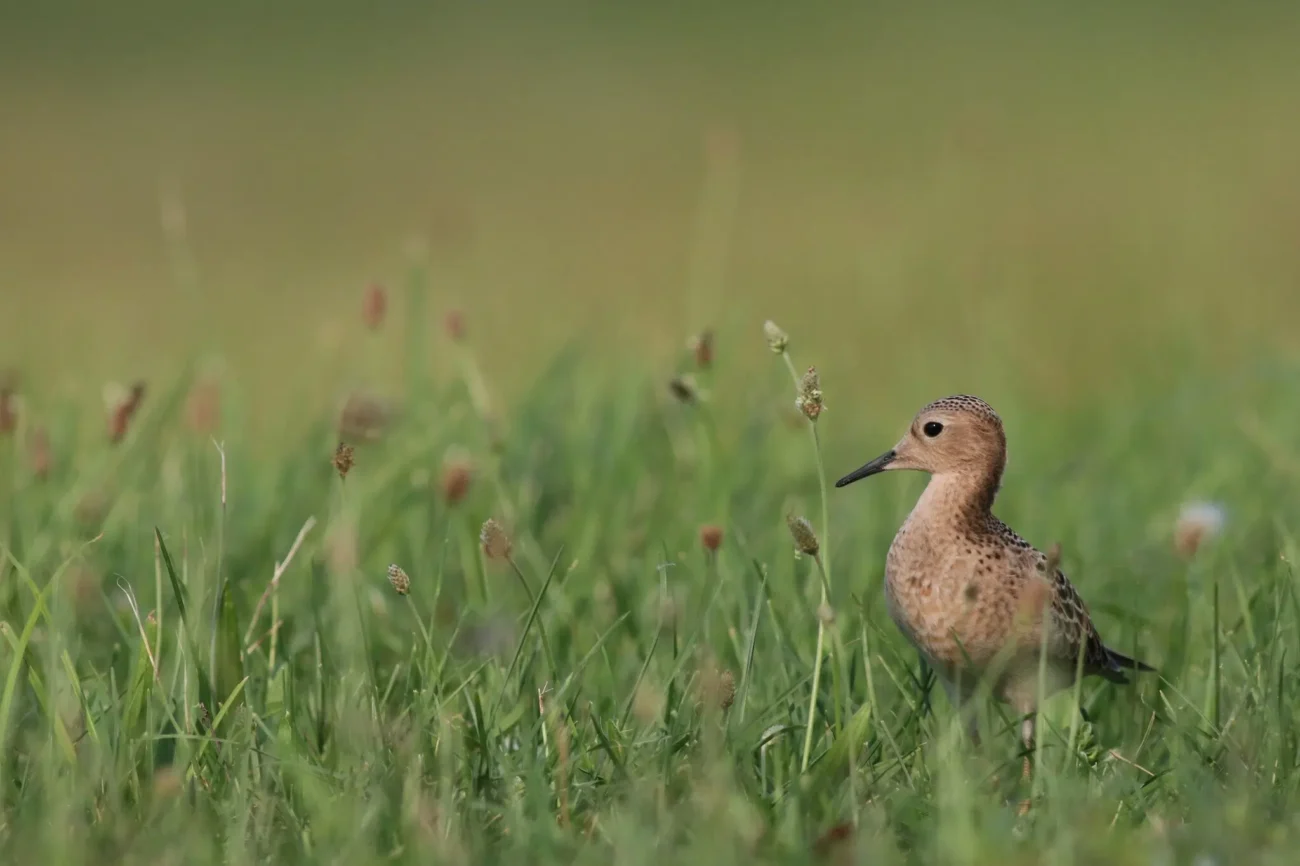
Birds navigate the skies using intricate superhighways known as flyways, essential routes connecting their breeding grounds, feeding territories, and seasonal havens. Among these aerial navigators is the Buff-breasted Sandpiper (Calidris subruficollis), a remarkable long-distance migrant undertaking an extraordinary journey along the Americas Flyway. This species traverses the vast North American grasslands, culminating its seasonal odyssey in the warm embrace of the South American pampas. With an estimated global population of approximately 550,000 individuals, the Buff-breasted Sandpiper thrives in diverse ecosystems, including dry grasslands, prairies, and agricultural fields. However, this species is currently listed as Vulnerable by the IUCN Red List of Threatened Species, facing a confluence of threats that include habitat conversion and the lingering effects of historical hunting practices.
The annual cycle of the Buff-breasted Sandpiper begins amidst the stark beauty of the Arctic tundra. Here, these birds engage in sporadic breeding activities, with populations scattered from central Alaska to Devon Island in Canada. A characteristic that sets them apart from many other shorebird species is their unique lek mating system. In these designated display areas, males congregate, performing elaborate courtship rituals to attract females, a strategy vital for the species’ reproductive success. Following the intense breeding season, the sandpipers embark on a distinctive circular migration. Their southward journey typically takes them through the North American Great Plains, leading them to their primary wintering grounds nestled within the expansive South American pampas, a region encompassing parts of Argentina, Uruguay, and Brazil. The return journey, northbound, presents a different set of ecological challenges and opportunities, with the Llanos de la Orinoquia—a seasonally dry savanna region spanning Colombia and Venezuela—serving as crucial feeding grounds.
Vital Stopovers and Wintering Havens: The Role of Key Biodiversity Areas
During their arduous southbound migration, the Buff-breasted Sandpiper relies heavily on a network of sites designated as Key Biodiversity Areas (KBAs). These globally recognized locations are pivotal for safeguarding biodiversity and act as critical "fuelling stations" and essential refuges for this tireless long-distance traveler. The strategic importance of these KBAs cannot be overstated, providing the necessary resources for the birds to survive and thrive across vast continental distances.
West Mamoré River (Bolivia): A Crucial Southbound Hub
In Bolivia, the West Mamoré River region stands out as the most significant KBA for the Buff-breasted Sandpiper. Astonishingly, over 40% of the species’ global population utilizes this site and the adjacent Beni savanna grasslands during their southbound migration. The sandpipers exhibit a specific foraging preference, favoring the shortgrass areas found along river edges, maintained by the grazing of livestock, and the sandy banks of the Mamoré and Madre de Dios rivers. They actively avoid the denser tallgrass savannas and the forested islands within the landscape. The Buff-breasted Sandpiper’s reliance on the Beni Savanna ecosystem during this southbound leg is absolute. Critically, the grasslands are dry and provide ideal foraging conditions at this time. However, as the seasons shift and the northbound migration begins, the Beni grasslands become inundated, rendering them unsuitable for foraging and highlighting the temporal criticality of these habitats.
Estuário da Laguna dos Patos (Brazil): A Key Concentration Point
Further south, the Estuário da Laguna dos Patos, located at the southernmost edge of the Patos Lagoon in Brazil, serves as another vital KBA. Torotama Island, within this estuary, is consistently a site where the largest concentrations of Buff-breasted Sandpipers are observed in Brazil. Despite its ecological significance, this KBA faces mounting pressures from urban expansion and the increasing threat of flooding, underscoring the need for vigilant conservation efforts.
Laguna de Rocha (Uruguay): An Important Wintering Ground

Laguna de Rocha, a brackish lagoon in Uruguay, has been confirmed as a KBA of global priority. This site is an integral part of the coastal lagoon system that stretches across southeastern Brazil and eastern Uruguay. For the Buff-breasted Sandpiper, Laguna de Rocha represents a crucial wintering ground, and it is recognized as one of the qualifying species for its KBA status. The ecological importance of this site is further amplified by its designation as a Western Hemisphere Shorebird Reserve Network (WHSRN) site and a Ramsar site, reflecting its international recognition for wetland conservation.
Bahía de Samborombón y Punta Rasa (Argentina): A Major Austral Summer Hub
In Argentina, the Bahía de Samborombón y Punta Rasa KBA functions as a major stopover and wintering site. During the austral summer, substantial numbers of migratory shorebirds, including the Buff-breasted Sandpiper, congregate here. This KBA is instrumental in preserving some of the last remaining tracts of the iconic Pampas grassland. Its qualification as a KBA is directly linked to the presence of the Buff-breasted Sandpiper, among other significant bird species. Similar to Laguna de Rocha, this site also holds the esteemed designations of WHSRN and Ramsar site status, emphasizing its critical role in hemispheric shorebird conservation.
The Northbound Journey: Critical Staging Grounds in the Llanos
As the calendar pages turn and the Buff-breasted Sandpiper commences its northward migration between February and April, a new set of critical staging grounds emerges. The Llanos de la Orinoquia, a vast savanna region in Colombia and Venezuela, becomes paramount. These areas offer essential opportunities for the birds to refuel and prepare for the final leg of their arduous journey.
Reservas de la Vereda Altagracia (Colombia): A Vital Spring Migration Stopover
Within the Colombian Llanos, the Reservas de la Vereda Altagracia KBA plays a significant role in supporting the Buff-breasted Sandpiper’s spring migration. This site is known to host more than 1% of the global population of the species during this critical period. The sandpipers here depend on what are locally known as "benches"—elevated areas that remain dry as the rainy season begins to encroach upon the landscape. These elevated refuges are crucial for foraging and resting.
Puerto Rico y La Polonia Natural Reserve (Colombia): Partnering for Conservation
The Puerto Rico y La Polonia Natural Reserve, a privately protected area in Colombia, is another important KBA. This reserve safeguards natural savannas and wetlands, and its management practices are highly conducive to shorebird conservation. Traditional livestock management within the reserve aligns exceptionally well with the needs of the Buff-breasted Sandpiper, providing the grazed grassland structure that the species requires for successful foraging. The collaboration between private landowners and conservation organizations in this area is a testament to the diverse approaches being taken to protect these vital habitats.
Conservation in Action: Safeguarding Grassland Ecosystems
The conservation strategy for the Americas Flyways places a significant emphasis on the protection and restoration of grassland ecosystems. These sprawling landscapes, which span the breadth of the Americas, encompass critical habitats such as the Pampas of the Southern Cone, the Beni Savanna in Bolivia, the Llanos of Colombia and Venezuela, the Chihuahuan Desert in Mexico and the USA, and the Great Plains of the USA and Canada. These regions are not only essential for the Buff-breasted Sandpiper but also provide indispensable breeding, migration, and wintering grounds for a multitude of migratory bird species.

Alianza del Pastizal: A Grasslands Alliance for Sustainable Futures
To ensure the continued health and vitality of grasslands in the Southern Cone, a crucial regional initiative known as Alianza del Pastizal (Grasslands Alliance) was established in 2006. This collaborative effort, spearheaded by BirdLife International, is actively implemented by its esteemed partners: Aves Argentinas, SAVE Brasil, Guyra Paraguay, and Aves Uruguay. These organizations are working in concert to conserve these vast and ecologically significant landscapes. The Alianza del Pastizal fosters a unique model that brings together producers, conservationists, researchers, and governmental stakeholders. Its core principle is the promotion of grassland-based livestock systems as a potent conservation tool. This approach aims to restore degraded habitats for grassland birds and other key biodiversity, while simultaneously supporting sustainable agricultural practices. To date, the nature-friendly livestock management system championed by Alianza del Pastizal now encompasses over 1 million hectares and involves hundreds of landowners across the four participating countries, demonstrating a tangible and scalable impact.
Beni Eco-Friendly Ranching Alliance: Sustainable Practices in Bolivia
In Bolivia, a focused initiative known as the Beni Eco-Friendly Ranching Alliance is dedicated to the conservation of the Beni Savanna. This alliance was forged through a partnership between Asociación Armonía, BirdLife International’s Partner in Bolivia, and the Beni Cattle Ranchers’ Federation. The alliance unites ranchers who are committed to producing beef through environmentally sustainable grazing practices. Working in close collaboration with its members, Armonía actively supports the transition from conventional cattle ranching methods to shorebird-friendly management. This approach not only maintains high-quality grassland habitat essential for species like the Buff-breasted Sandpiper but also enhances the overall sustainability and productivity of ranching operations.
Barba Azul Nature Reserve: A Sanctuary for Shorebirds
Complementing these broader initiatives, Asociación Armonía established the Barba Azul Nature Reserve in 2008. This 12,200-hectare reserve has earned recognition as Bolivia’s sole Western Hemisphere Shorebird Reserve Network Site of Regional Importance. This designation is a direct consequence of the significant numbers of Buff-breasted Sandpipers that migrate through the area annually. To ensure the long-term financial viability of the reserve, Armonía employs a strategic approach by managing a herd of approximately 1,200 cattle. Livestock grazing is not merely an economic activity but a critical management tool. Carefully controlled grazing is employed to maintain grass heights within a specific range of 4 to 6 cm at river-edge shortgrass sites. This precise management creates the optimal foraging habitat, precisely tailored to the needs of migrating Buff-breasted Sandpipers, ensuring their successful passage through this vital corridor.
The Enduring Significance of a Continental Connection
The migratory journey of the Buff-breasted Sandpiper serves as a powerful narrative of interconnectedness. It vividly illustrates how a cross-continental voyage can unite not only diverse ecosystems but also distinct cultures and human communities. The protection of Key Biodiversity Area networks, which form a vital connective tissue across the continent, is paramount to ensuring the continued persistence of bird species like the Buff-breasted Sandpiper. Furthermore, these conservation efforts are instrumental in preserving the rich tapestry of grassland biomes that define the Americas, thereby safeguarding the natural heritage and the human cultures that have thrived within these magnificent landscapes for generations. The future of these iconic migratory birds hinges on our collective commitment to protecting these vital links in their epic journey.

