


Published On: May 25, 2026
Last updated on: May 25, 2026
For many companion bird owners, the sight of inconsistent droppings, a sudden lack of interest in favored foods, or inexplicable "stress poops" can be a source of significant anxiety. While these signs often signal mild digestive upset, they are frequently early indicators of underlying dietary imbalances or environmental stressors that, if unaddressed, can escalate into more severe health complications. This article delves into the intricate relationship between a bird’s diet, environment, and gut health, offering a comprehensive guide for owners seeking to naturally improve their avian companions’ digestive wellness through informed daily feeding habits and proactive care, rather than relying solely on supplementary solutions. It is crucial, however, to differentiate between mild issues suitable for home nutrition adjustments and critical symptoms requiring immediate veterinary intervention. Signs such as vomiting, passing blood, unexplained weight loss, prolonged lethargy, a fluffed posture, or the presence of undigested food in droppings unequivocally demand prompt consultation with an avian or exotics veterinarian, as these indicate a serious medical emergency beyond the scope of nutritional management.
The Foundational Role of Diet in Avian Digestive Health
The common lament among bird owners—"Why does my bird keep having poop changes even though nothing seems seriously wrong?"—underscores a widespread misunderstanding of avian nutritional needs. Many digestive issues originate subtly, long before a bird exhibits overt signs of illness. Modern companion bird diets often fall short of replicating the nutritional diversity and complexity found in their natural habitats. Birds, through millennia of evolution, developed digestive systems exquisitely adapted to process a vast array of fresh foods: various plant materials, fibers, seeds, buds, insects, and seasonal nutrients. This contrasts sharply with the monotonous, often dry, and calorie-dense diets frequently offered in captivity, which can lead to chronic low moisture intake, poor plant diversity, and selective eating behaviors that gradually compromise the digestive tract over time.
Understanding Avian Digestive Anatomy and Function
To truly appreciate the impact of diet, it’s essential to understand the avian digestive system. Unlike mammals, birds possess unique adaptations for rapid and efficient digestion. Food first enters the crop, a muscular pouch where it is softened and stored. From there, it moves to the proventriculus (glandular stomach), which secretes digestive enzymes, and then to the ventriculus (gizzard), a muscular organ that grinds food, often aided by grit. The small intestine is where most nutrient absorption occurs, followed by the large intestine and finally the cloaca, a multi-purpose opening for digestive, urinary, and reproductive waste. Each stage relies on specific conditions—adequate moisture, enzymes, and a balanced microbiome—to function optimally. A diet lacking diversity, moisture, and fiber can disrupt this delicate balance at multiple points, leading to inefficiencies and distress.
Identifying Digestive Distress: What to Look For
Bird owners often experience anxiety over what constitutes a "normal" dropping, sometimes panicking over benign variations or, conversely, overlooking serious red flags. A healthy bird dropping typically comprises three distinct components:
- Feces: The solid, usually dark green or brown, coiled portion, reflecting the digested food. Its consistency should be firm but not hard, indicating proper fiber and moisture.
- Urates: The white, chalky part, representing concentrated uric acid, the avian equivalent of urine. It should be opaque and creamy white.
- Urine: The clear, liquid component, which can vary in volume depending on hydration and diet.
What May Be Normal (and often causes undue concern):
- Dietary-induced color changes: Eating berries, dark leafy greens, or certain pellets can temporarily alter fecal color.
- Larger-than-usual droppings: Common after a long sleep or periods of increased food intake.
- Temporary stress poops: Often watery, occurring during brief stressful events like car rides or vet visits, typically resolving quickly.
- Variations in urine volume: Higher liquid intake (e.g., eating watery fruits or sprouts) will naturally increase the clear urine component.
What Deserves Immediate Attention (and indicates potential issues):
- Persistent watery droppings: Beyond temporary stress, this can indicate kidney issues, infection, or malabsorption.
- Changes in fecal color or consistency: Black, tarry droppings (melena) suggest internal bleeding; bright red indicates fresh blood; clay-colored or grey can point to liver or pancreatic problems. Undigested seeds or food particles in feces are a sign of severe maldigestion.
- Foul odor: A strong, unusual smell from droppings can signal bacterial or yeast overgrowth.
- Straining or difficulty passing droppings: Could indicate constipation, impaction, or cloacal issues.
- Excessive urates: A significant increase in the white, chalky portion, especially if discolored (e.g., yellow, green), can suggest kidney disease or dehydration.
Crucially, the significance of dropping changes is amplified when they occur in conjunction with behavioral alterations. A bird that is suddenly lethargic, fluffed, unwilling to eat, or experiencing other signs of illness alongside altered droppings requires urgent veterinary assessment.
The Cornerstone of Gut Health: Moisture and Fiber
Many companion birds are inadvertently fed diets that, while calorie-dense, are biologically dry. This chronic lack of moisture and fiber is a primary driver of digestive dysfunction. Fiber, both soluble and insoluble, plays a multifaceted role in avian digestion:
- Supports healthy gut motility: Insoluble fiber adds bulk, promoting regular bowel movements and preventing constipation.
- Feeds beneficial gut bacteria: Soluble fiber acts as a prebiotic, nourishing the gut microbiome.
- Aids in toxin elimination: Fiber binds to toxins, facilitating their removal from the body.
- Promotes satiety: Fiber-rich foods help birds feel fuller, reducing overeating of less nutritious items.
Moisture is equally critical. It lubricates the digestive tract, aids in the breakdown of food, and ensures proper hydration, which is vital for kidney function and overall cellular health. Birds on predominantly dry diets often compensate by drinking excessive amounts of water, leading to watery or messy droppings, or they may overeat calorie-dense, dry foods while still suffering from nutritional deficiencies. The digestive tract operates optimally when food provides not just calories, but also intrinsic moisture, varied textures, a rich fiber content, and a wide spectrum of nutrients.
Nutritional Pillars for Digestive Wellness: Natural Food Interventions
Incorporating specific natural foods into a bird’s diet can dramatically enhance digestive function and overall well-being.
-
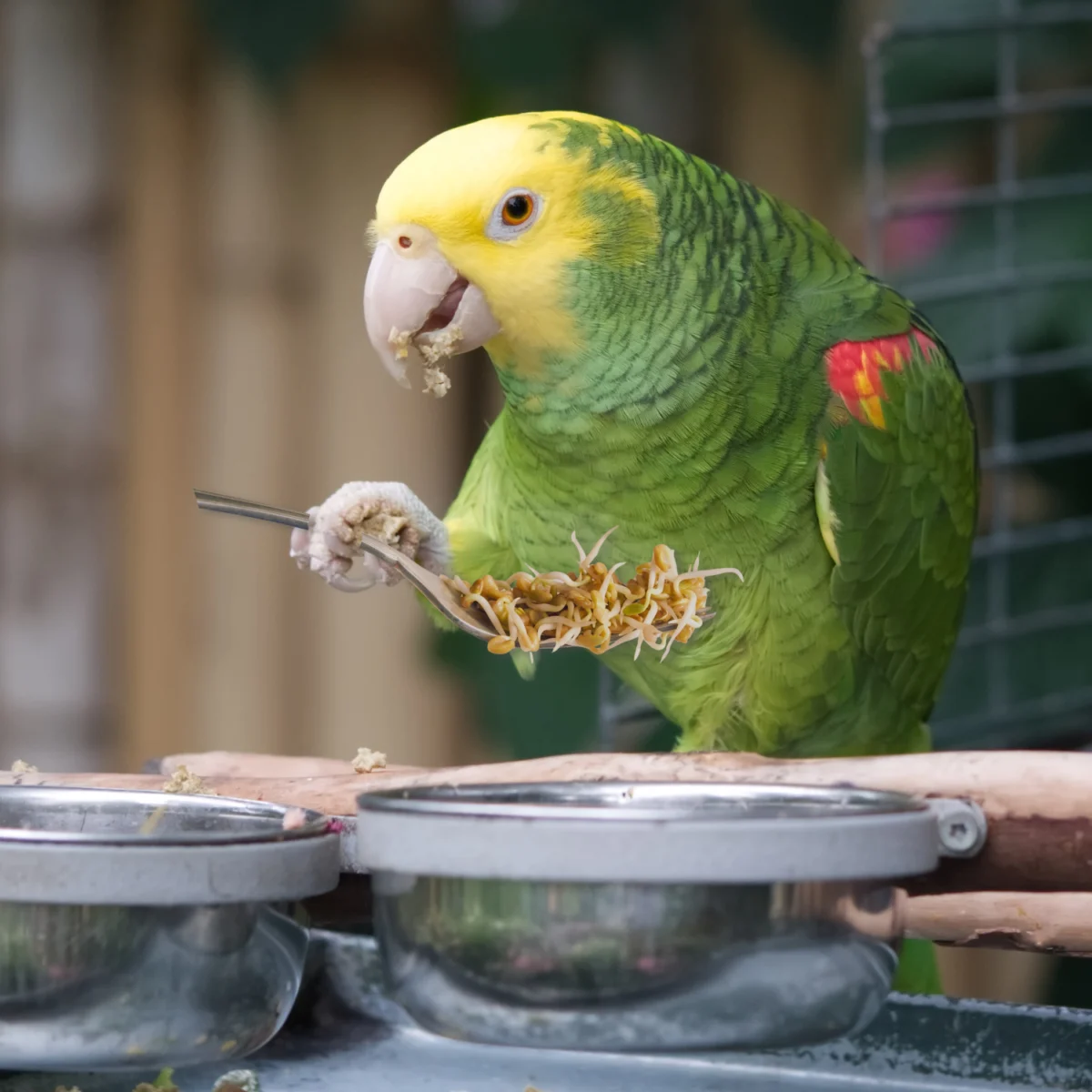
Sprouts: The Living Food Advantage
- Problem Addressed: Inconsistent or dry droppings, low interest in vegetables, reliance on dry feed.
- Mechanism: Sprouting transforms dormant seeds into "living foods," significantly increasing moisture content, enzyme activity, and nutrient bioavailability. The complex carbohydrates are broken down into simpler sugars, making them easier to digest. Vitamins (especially C and B-complex) and antioxidants are amplified.
- Why it Works: Sprouts offer a powerful combination of hydration, easily digestible nutrients, and feeding enrichment, mimicking the tender, nutrient-rich plant growth birds would seek in the wild. High-quality sprouting seeds (e.g., mung beans, lentils, alfalfa, specific bird-safe mixes) encourage natural foraging behaviors and provide a highly bioavailable nutrient source.
-
Omega-Rich Seeds: Enhancing Stool Quality and Gut Integrity
- Problem Addressed: Dry, flaky droppings, dull feathers, limited fresh food intake, heavily processed diets.
- Mechanism: Seeds like chia, flax, and hemp hearts are powerhouses of fiber and essential omega fatty acids (Omega-3 and Omega-6). Fiber contributes to optimal stool consistency and bulk, facilitating smoother digestive transit. Omega fatty acids are crucial for maintaining the integrity of the gut lining, reducing inflammation, and supporting skin and feather health.
- Why it Works: The synergistic effect of fiber and healthy fats supports both the physical passage of food and the health of the digestive tissues. Chia seeds, for instance, absorb water and form a gel, aiding hydration and stool consistency. Flax seeds are rich in lignans, which have antioxidant properties, while hemp hearts provide easily digestible protein and a balanced fatty acid profile. Products like "OmegaGlow Seed Fusion" are designed to deliver these benefits.
-
Leafy Greens: Diversity for the Microbiome
- Problem Addressed: Vegetable refusal, extremely repetitive diets.
- Mechanism: A wide variety of leafy greens (e.g., kale, collard greens, dandelion greens, cilantro, parsley, romaine) provides essential fiber, a diverse array of phytonutrients, vitamins, and minerals. This botanical diversity is key to fostering a robust and varied gut microbiome, which is critical for digestion, nutrient absorption, and immune function.
- Why it Works: Plant diversity directly supports a healthier digestive ecosystem. Different greens offer different types of fiber and unique compounds that feed various beneficial bacteria, leading to better overall digestive function than a diet dominated by dry, processed foods. "Bird Greens" blends can supplement diets where fresh vegetable intake is challenging.
-
Calming Herbs: Addressing Stress-Related Digestive Upset
- Problem Addressed: "Stress poops," watery droppings during environmental changes, appetite fluctuations, hormonal regurgitation.
- Mechanism: The gut and the nervous system are intimately connected via the gut-brain axis. Stress, whether acute or chronic, profoundly impacts gut motility, enzyme secretion, blood flow to the digestive tract, and the gut microbiome composition. Calming herbs, such as chamomile, lavender, and lemon balm, have traditionally been used to modulate the nervous system, thereby reducing stress responses that can manifest as digestive upset.
- Why it Works: By supporting a calmer physiological state, these herbs can indirectly promote calmer, more consistent digestive function. This is particularly beneficial during periods of environmental change, social stress, or hormonal fluctuations. Products like "SereniTea" can offer gentle, natural support for stress-related digestive issues.
The Unseen Burden: How Stress Affects Digestion in Parrots
Parrots are highly intelligent and sensitive creatures, making them particularly susceptible to stress. Owners frequently observe digestive changes during:
- Environmental shifts: Moving to a new home, cage changes, new cage mates.
- Social disruptions: Loss of a companion, changes in household dynamics, lack of social interaction.
- Hormonal periods: Breeding season can trigger increased anxiety, regurgitation, and erratic behavior.
- Dietary changes: Abrupt shifts in food can cause digestive upset.
- Perceived threats: Loud noises, unfamiliar people or pets, even subtle changes in routine.
Stress can manifest in various ways, impacting:
- Appetite and water intake: Leading to either decreased consumption or compensatory over-drinking.
- Stool consistency: Often resulting in watery droppings or diarrhea.
- Gut motility: Either slowing down (constipation) or speeding up (diarrhea).
- Microbiome balance: Stress hormones can alter the composition of gut bacteria.
- Regurgitation: A common stress response, especially during hormonal surges.
The constant communication between the gut and the nervous system means that stress-related digestive changes are incredibly common in parrots. Addressing the root causes of stress is as vital as dietary modifications.
Common Dietary Pitfalls and Practices to Avoid
While a focus on beneficial foods is crucial, it’s equally important to identify and eliminate habits that actively harm avian digestive health. These often include:
- Monotonous, dry seed-only diets: Lacking moisture, fiber, and essential nutrients, leading to deficiencies and chronic dehydration.
- Excessive processed pellets: While better than seed-only, relying solely on pellets can still lack the diversity and textural enrichment of natural foods.
- High-sugar fruits and treats: Can disrupt gut flora, contribute to obesity, and provide minimal fiber.
- Table scraps and human junk food: Often high in salt, sugar, fat, and artificial additives, which are toxic or detrimental to birds.
- Lack of fresh water availability: Stale, contaminated, or infrequent water changes can deter drinking and lead to dehydration.
- Abrupt diet changes: Sudden shifts can shock the digestive system; gradual transitions are always recommended.
- Over-reliance on supplements without dietary improvement: Supplements cannot compensate for a fundamentally poor diet.
The underlying issue is typically chronic low-grade dietary stress, an accumulation of small, seemingly innocuous feeding mistakes over time, rather than a single dramatic error.
Beyond Probiotics: A Holistic View of the Microbiome
The avian gut microbiome—the complex community of bacteria, fungi, and other microorganisms—is central to digestive health, nutrient assimilation, and immune function. While probiotic products are heavily marketed to bird owners, they represent only one facet of gut health. Current avian veterinary research suggests that while probiotics can offer support, particularly after antibiotic therapy or during acute stress, their long-term efficacy pales in comparison to the impact of consistent, healthy feeding patterns.
A truly robust and beneficial microbiome is cultivated through:
- Dietary diversity: Providing a wide range of plant materials (fruits, vegetables, sprouts, herbs) offers diverse prebiotics to nourish different microbial species.
- Fiber intake: Essential for creating a favorable environment for beneficial bacteria.
- Moisture: Supports microbial growth and function.
- Stress reduction: Chronic stress negatively alters microbiome composition.
- Minimizing unnecessary antibiotics: Which can indiscriminately kill beneficial bacteria.
The strong takeaway for owners is that a thriving microbiome is primarily fostered by superior daily feeding habits and a supportive environment, not by simply adding a powder to an otherwise suboptimal diet.
Proactive Strategies: Building a Digestion-Supportive Chop Bowl
Implementing small, consistent upgrades to a bird’s diet typically yields better results than drastic, unsustainable overhauls. A "chop bowl"—a mixture of finely diced fresh vegetables, greens, sprouts, and other healthy additions—is an excellent vehicle for delivering diverse nutrition.
| Key Components for a Digestion-Supportive Chop Bowl: | Add | Why |
|---|---|---|
| Sprouts | Increased moisture, enzyme activity, nutrient bioavailability | |
| Leafy Greens | Essential fiber, diverse phytonutrients, vitamins | |
| Omega-Rich Seeds | Healthy fats for gut lining, stool support, nutrient diversity | |
| Bird Greens Powder | Concentrated plant diversity for picky eaters, micronutrients | |
| Calming Herbs | Stress reduction, digestive comfort during challenging times | |
| Chopped Vegetables | Wide range of vitamins, minerals, fiber, texture | |
| Small amount of whole grains | Complex carbohydrates, additional fiber |
When Digestive Symptoms Need a Vet
While many minor digestive upsets can be managed with dietary adjustments, certain symptoms unequivocally demand immediate professional veterinary attention. Owners must be vigilant for signs that indicate a more serious underlying condition. These include:
- Persistent vomiting or regurgitation: Especially if accompanied by lethargy or weight loss.
- Passing blood in droppings (hematochezia or melena): Bright red blood indicates lower GI bleeding; black, tarry stools (melena) suggest upper GI bleeding.
- Undigested food in droppings: A critical sign of severe maldigestion or malabsorption.
- Sudden, unexplained weight loss: A rapid decline in body condition is a red flag for serious illness.
- Prolonged lethargy, weakness, or fluffed posture: These are general signs of severe illness in birds.
- Loss of balance or coordination: Can be associated with systemic illness affecting digestion.
- Severe dehydration: Indicated by sunken eyes, tented skin, or sticky mucous membranes.
- Any combination of poop changes with behavioral changes: A bird that is sick and has abnormal droppings is in urgent need of medical care.
Digestive symptoms become significantly more serious when accompanied by concurrent behavioral changes, indicating that the body’s compensatory mechanisms are failing.
Expert Perspectives and Broader Implications
Avian veterinarians and nutritionists consistently emphasize that diet is the single most controllable factor influencing a companion bird’s health and longevity. Dr. Susan O’Malley, an avian specialist, notes, "Many of the chronic diseases we see in pet birds—liver disease, kidney failure, obesity, feather destructive behaviors—have their roots in suboptimal nutrition. Addressing diet isn’t just about digestion; it’s about holistic wellness." The implications of neglecting avian nutrition extend beyond physical health, impacting a bird’s temperament, cognitive function, and overall quality of life. A bird struggling with digestive discomfort or nutritional deficiencies may exhibit irritability, aggression, or apathy, straining the owner-bird bond. Conversely, a well-nourished bird is more likely to be vibrant, engaged, and resilient. Investing in high-quality, diverse nutrition and understanding avian digestive needs is therefore not just a matter of care, but a commitment to the bird’s long-term health and happiness.
In conclusion, achieving optimal digestive health in companion birds is a multifaceted endeavor that prioritizes natural, moisture-rich, fiber-dense, and diverse diets over repetitive dry foods. By understanding the intricacies of avian digestion, recognizing early warning signs, mitigating stress, and making informed nutritional choices, owners can significantly enhance their birds’ well-being. While supplements and probiotics may have a role, they are secondary to the profound impact of a thoughtfully constructed, biologically appropriate diet, laying the groundwork for a healthier, happier avian companion.

