


The University of Minnesota is currently facing intense scrutiny following a series of whistleblower allegations detailing severe surgical errors, animal suffering, and a subsequent internal cover-up within its neuroscience laboratories. The reports, brought to light by People for the Ethical Treatment of Animals (PETA) through university insiders, describe a pattern of negligence involving two prominent researchers, Professor Jan Zimmermann and Professor Geoff Ghose. The allegations center on the treatment of rhesus macaques used in invasive brain-mapping experiments, raising significant questions regarding the efficacy of institutional oversight and the ethical boundaries of federally funded animal research.
The Case of Everett: Surgical Errors and Alleged Concealment
At the center of the controversy is a rhesus macaque named Everett, who was subjected to a procedure led by Jan Zimmermann, a neuroscience professor who does not hold a surgical degree. According to internal reports and scans shared with PETA, Everett suffered through weeks of documented agony after approximately 20 metal screws were drilled into his skull. The screws were reportedly driven so deeply that they pierced the brain tissue, a catastrophic surgical failure that led to a cascade of neurological symptoms.
Laboratory records indicate that Everett exhibited multiple "red flags" indicative of severe distress and neurological impairment. These included lethargy, thinning hair, vomiting, and abnormal ocular movements. Insiders noted that Everett displayed weakness in one arm—a clinical sign of a possible stroke—and repeatedly pressed his head against the bars of his cage, a behavior known as "head-pressing" which animals use to seek relief from crushing intracranial pressure or headaches.
The allegations against Zimmermann extend beyond surgical incompetence to include deliberate concealment. Insiders claim that Zimmermann took extraordinary measures to hide Everett’s condition from university veterinarians and oversight committees. These actions allegedly included deleting medical notes made by laboratory staff and removing digital scans of another monkey who had suffered similar complications. It is reported that Zimmermann misrepresented the veterinarian’s findings to his colleagues, claiming no neurological issues were present when, in fact, the veterinarian had not been allowed to review the results. The situation only came to light when a veterinarian threatened to report the matter to the university’s animal experimentation oversight committee. Everett was eventually euthanized due to the severity of his injuries.
Documented Failures in the Ghose Laboratory
The allegations also implicate Professor Geoff Ghose, whose research involves inducing visual impairments in infant monkeys to study neurological responses. In one series of experiments, Ghose reportedly blocked the vision of infant macaques, alternating between the left and right eyes to induce abnormal alignment, before subjecting them to craniotomies—surgeries where a portion of the skull is removed to allow for the implantation of electrodes.
Two specific cases, involving monkeys named Bilbo and Gandalf, highlight a recurring theme of procedural failure. In the case of Bilbo, Ghose reportedly placed a recording chamber incorrectly on the animal’s skull. During a corrective surgery, the monkey’s brain was accidentally punctured, causing a dangerous spike in heart rate and blood pressure. Furthermore, during the same procedure, Bilbo’s head allegedly slipped from the stereotaxic frame—a device used to immobilize the head—resulting in a metal bar jamming into his eye. The injury was so severe the monkey could not open the eye for nearly two days.
Bilbo’s ordeal continued when an infection weakened the stability of his cranial implants. Despite recommendations to remove the recording hardware, Ghose allegedly refused. The chamber eventually fell off, exposing the monkey’s brain. Reports suggest that the primary veterinarian delayed emergency surgery for three days to "think" about the situation, leaving the brain exposed to the environment.
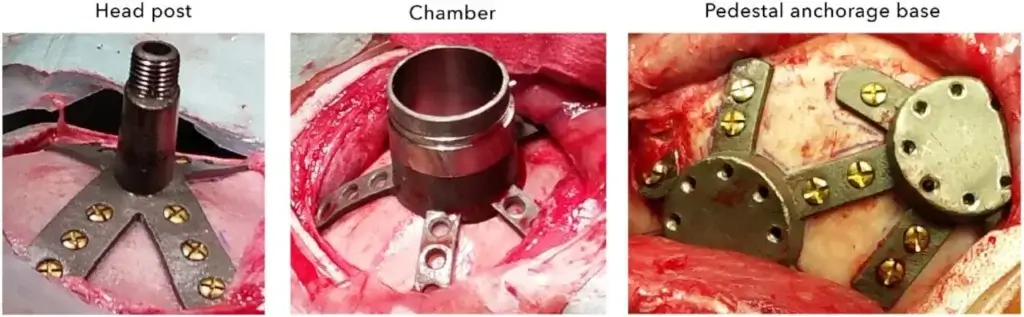
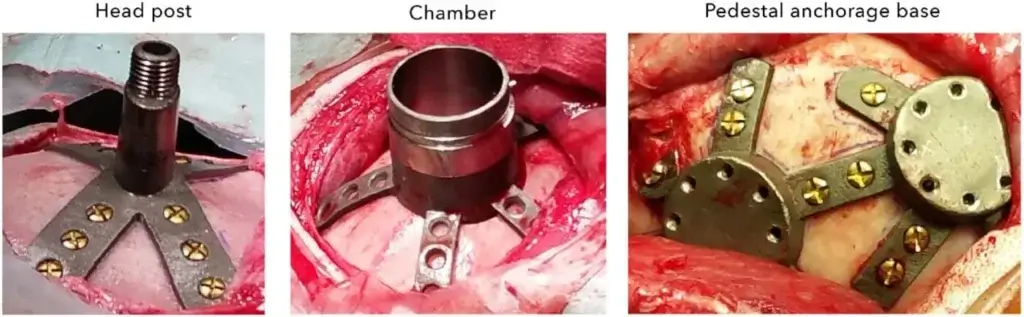
Another monkey, Gandalf, suffered a traumatic injury when his headpost—a device bolted to the skull to facilitate head restraint—was sheared off during a routine cage transfer. Insiders suggest the post may have been improperly implanted or weakened by chronic infection, a common complication in such research. Gandalf underwent two additional surgeries to repair the damage.
Technical Context: The Risks of Invasive Neurophysiology
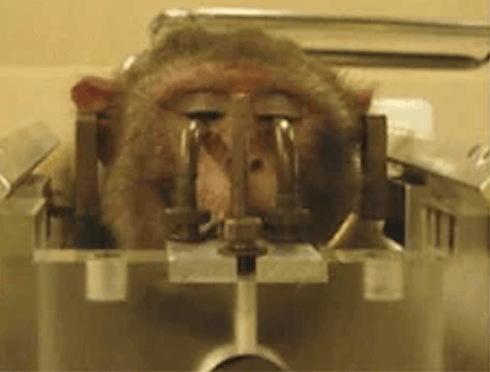
The experiments conducted by Zimmermann and Ghose are categorized as "curiosity-driven" basic research, often funded by the National Institutes of Health (NIH). These studies typically require monkeys to be restrained for hours while performing visual or cognitive tasks in exchange for liquid rewards. To facilitate this, hardware must be permanently attached to the animal’s head.
A craniotomy involves removing a piece of the skull and replacing it with a recording chamber or headpost. Because metal and ceramic materials do not integrate naturally with biological tissue, the site of the implant remains a permanent wound. This creates a constant risk of infection, which can lead to bone degradation (osteomyelitis) and skin recession. When infections occur, the hardware can loosen, necessitating "re-tightening" surgeries that further compromise the animal’s wellbeing. Insiders at the University of Minnesota have alleged that such infections are unusually frequent in these specific laboratories, suggesting a failure in aseptic technique or post-operative care.
Institutional Oversight and Regulatory Response
The University of Minnesota’s Institutional Animal Care and Use Committee (IACUC) is federally mandated to oversee all animal research and ensure compliance with the Animal Welfare Act. However, the whistleblower reports suggest a breakdown in this bureaucratic safeguard. Staff members who raised concerns were reportedly ignored or disparaged by the lead researchers. When these concerns were elevated to the IACUC, the committee allegedly suggested "workarounds" rather than reporting the violations to federal authorities.
The regulatory response from federal agencies was initially slow. According to PETA, early complaints to the U.S. Department of Agriculture (USDA) and the NIH’s Office of Laboratory Animal Welfare (OLAW) were glossed over. It was only after a persistent internal push and a subsequent inspection that the USDA issued a formal report citing the university for violations of the Animal Welfare Act.
In 2023, the university took the step of temporarily halting Ghose’s experiments on monkeys. More recently, he was reportedly stripped of the privilege to manage his own laboratory. However, critics point out that both Ghose and Zimmermann remain employed by the university and continue to have access to animal research facilities, with Zimmermann retaining his surgical privileges.
Financial Ties and the Role of Private Industry
The controversy is further complicated by the financial landscape of the research. Jan Zimmermann has been linked to a San Francisco-based startup called NeuralThread. The company, which reportedly received approximately $1 million in NIH funding, employs Zimmermann’s expertise in primate brain implantation.
This connection highlights the intersection of taxpayer-funded academic research and private-sector neurotechnology. Critics argue that the pressure to produce data for commercial ventures may incentivize researchers to overlook animal welfare protocols or perform high-risk surgeries without adequate clinical training. The lead experimenter at NeuralThread reportedly has ties to Elon Musk’s Neuralink, a company that has faced its own share of federal investigations regarding animal deaths and surgical mishaps during the development of brain-computer interfaces.
Chronology of Events
- Initial Surgeries (2022-2023): Major surgical complications occur in the labs of Zimmermann and Ghose involving monkeys Everett, Bilbo, and Gandalf.
- Internal Whistleblowing: Laboratory staff document symptoms of distress and report surgical errors to the lead researchers and the IACUC.
- Alleged Cover-up: Zimmermann allegedly deletes medical records and misleads colleagues regarding Everett’s neurological state.
- Veterinary Intervention: A university veterinarian threatens to report the lab, leading to the disclosure of Everett’s condition and his subsequent euthanasia.
- External Reporting: PETA receives documentation from insiders and files formal complaints with the USDA and NIH.
- Regulatory Action (2023-2024): The USDA conducts an inspection and issues a report of non-compliance. The university restricts Ghose’s lab privileges.
- Public Advocacy: PETA files a complaint with the Minnesota Board of Veterinary Medicine and calls for a permanent ban on the researchers’ animal work.
Broader Implications for Scientific Research
The events at the University of Minnesota have reignited the debate over the necessity of non-human primate models in neuroscience. Proponents of the research argue that monkeys are essential for understanding complex brain functions that cannot yet be modeled in silicon or through non-invasive human studies. They contend that breakthroughs in treating Parkinson’s disease and spinal cord injuries rely on these models.
Conversely, animal welfare advocates and a growing segment of the scientific community argue that the ethical costs and the high rate of surgical complications render these experiments unjustifiable. They point toward "human-relevant" research methods—such as advanced neuroimaging, organ-on-a-chip technology, and sophisticated AI modeling—as more ethical and potentially more accurate alternatives to the "mangling" of primate brains.
The allegations of record tampering and the circumvention of oversight committees also suggest a systemic issue within academic self-regulation. If the primary mechanism for ensuring animal welfare—the IACUC—is perceived as a shield for researchers rather than a watchdog for the animals, the public’s trust in federally funded science may be significantly undermined.
As of mid-2024, PETA and other advocacy groups continue to pressure the University of Minnesota to permanently bar Zimmermann and Ghose from animal experimentation and to redirect funding toward non-animal methodologies. The University has maintained that it takes animal welfare seriously and follows all federal guidelines, though the specific details of the Everett and Bilbo cases remain a point of significant public and regulatory contention.

