


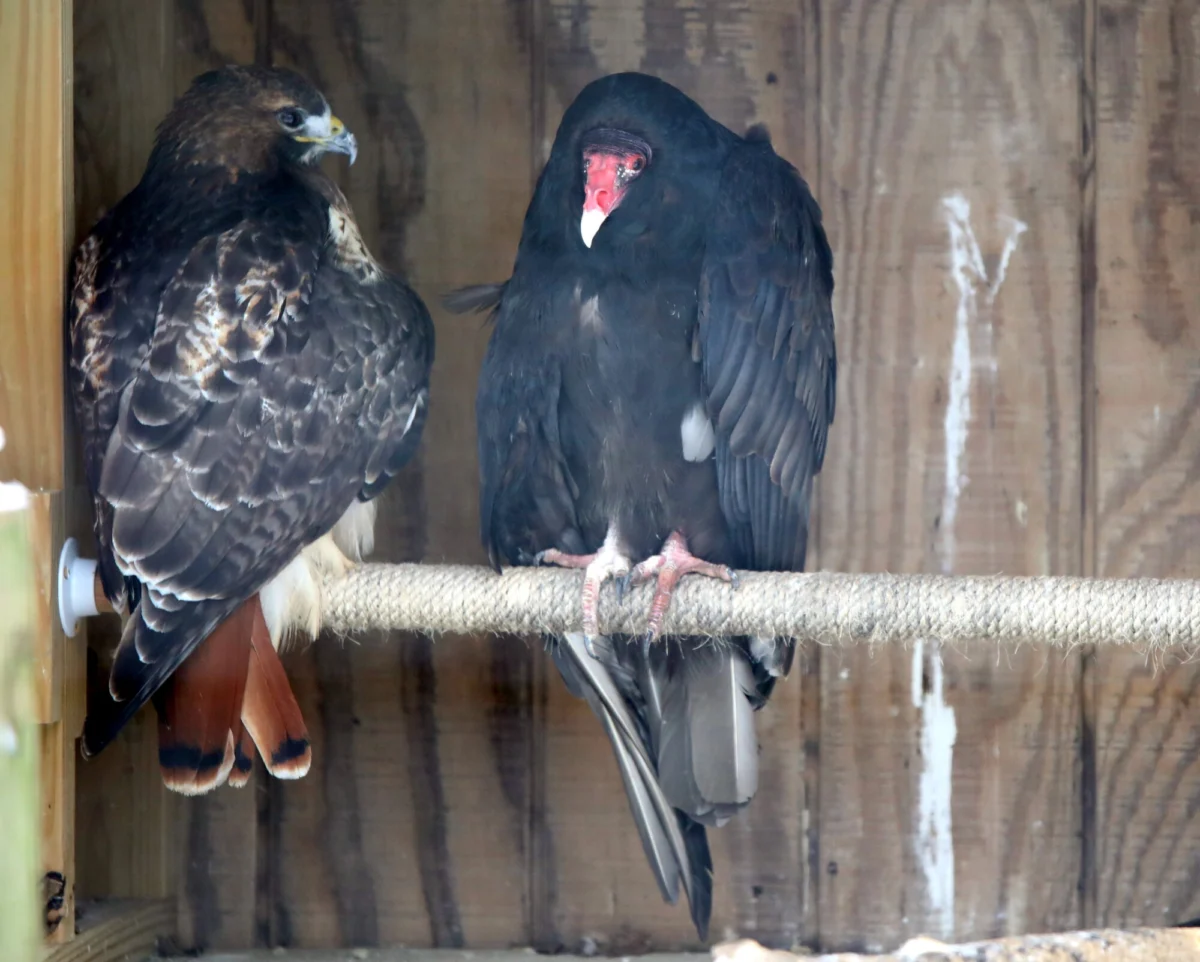
The Elmwood Park Zoo in Norristown, Pennsylvania, is home to a compelling narrative of interspecies camaraderie, a testament to the unexpected bonds that can form even among disparate creatures. This is the story of Stan, a 20-year-old female Turkey Vulture, and Hunter, a 22-year-old female Red-tailed Hawk, two avian residents whose enduring friendship has captivated staff and visitors alike for over a decade. Their alliance, forged in a shared aviary and born from similar circumstances of injury and rehabilitation, defies typical species-specific behaviors, offering a unique glimpse into the complexities of animal social structures and the profound capacity for connection.
A Sanctuary for Injured Wildlife: The Elmwood Park Zoo’s Role
The Elmwood Park Zoo, established in 1924, has a long-standing commitment not only to wildlife conservation and education but also to animal welfare, often serving as a permanent home for animals that cannot be returned to the wild due to injury or other incapacities. It is within this nurturing environment that Stan and Hunter found their sanctuary and, remarkably, each other. Their journey to the zoo highlights a critical aspect of modern zoological institutions: providing long-term care for non-releasable wildlife, offering them a second chance at a quality life, and in turn, allowing humans to learn from their resilience.
Individual Journeys: A Shared Trauma of Injury
The arrival of both Stan and Hunter at the Elmwood Park Zoo in 2005 marks the beginning of their intertwined story. Hunter, the Red-tailed Hawk, was the first to arrive in July 2005. Transferred from a now-defunct rehabilitation center, she bore a severe injury: an air-rifle pellet lodged in her right wing, which had caused a fractured humerus. Despite diligent medical care, the bone never healed properly, leaving her permanently unable to achieve sustained flight necessary for survival in the wild. Red-tailed Hawks (Buteo jamaicensis) are powerful raptors, known for their soaring flight and keen eyesight, crucial for hunting prey from above. A debilitating wing injury is a death sentence in their natural habitat, making her placement at the zoo a necessity.
Just a month later, in August 2005, Stan, the Turkey Vulture, arrived at the zoo. Her journey began after she was discovered by the Newark Police Department and subsequently transferred to Tri-State Bird Rescue & Research, a highly respected avian rehabilitation center in Newark, Delaware. Stan, too, had suffered a pellet wound to her right wing, resulting in a fracture to both her radius and ulna. Like Hunter, the extensive damage meant her wing never recovered sufficiently for her to regain full flight capabilities. Turkey Vultures (Cathartes aura) are masters of thermals, soaring effortlessly for hours without flapping, using their incredible sense of smell to locate carrion. Their inability to fly would render them utterly helpless in the wild, unable to find food or escape predators.
The parallel nature of their injuries – both sustained from air-rifle pellets and both resulting in permanent flight limitations – formed an initial, unspoken connection. This shared vulnerability likely played a significant role in their ability to coexist peacefully and eventually form a deep bond, transcending the typical predatory-prey dynamics or competitive behaviors that might otherwise characterize interactions between a hawk and a vulture in the wild.
The Formation of an Unlikely Bond: A Decade of Friendship
The Elmwood Park Zoo staff observed the gradual but undeniable formation of a profound bond between Stan and Hunter. For at least 10 years, they have been considered "bonded" by their caregivers, a term usually reserved for animals of the same species forming a breeding pair or very close social unit. Housed together in a dedicated aviary enclosure, without other birds, the conditions were ripe for the two to rely on each other for companionship and interaction.
Their friendship manifests in several observable behaviors that are particularly striking given their species differences:
- Shared Foraging: When food is introduced into their enclosure, Hunter, the Red-tailed Hawk, frequently gathers portions and shares them with Stan. This behavior is noteworthy because Red-tailed Hawks are typically solitary hunters and can be territorial, while Turkey Vultures, though social, are primarily scavengers. Hunter’s act of sharing fresh food, rather than defending it, underscores the depth of their established relationship.
- Allopreening: Stan and Hunter have been observed engaging in allopreening, a behavior where birds preen each other’s feathers. Allopreening is a significant social behavior in many bird species, serving to maintain plumage, reinforce social bonds, reduce stress, and establish trust. Seeing a hawk preen a vulture, and vice versa, is an extraordinary sight, indicating a high level of comfort, acceptance, and mutual care between them.
- Nest-Sitting: Perhaps one of the most remarkable instances of their bond occurs when Hunter lays eggs. In an act that mimics pair bonding, Stan has been observed sitting on these eggs. While the eggs are infertile, Stan’s participation in this nesting behavior highlights a profound level of social integration and a shared sense of purpose or domesticity within their unique partnership.
These behaviors collectively demonstrate a relationship built on trust, cooperation, and mutual support, challenging conventional understandings of avian social dynamics.
Divergent Worlds: The Biology of Vultures and Hawks
To fully appreciate the uniqueness of Stan and Hunter’s friendship, it is crucial to understand the distinct ecological roles and typical behaviors of their respective species.
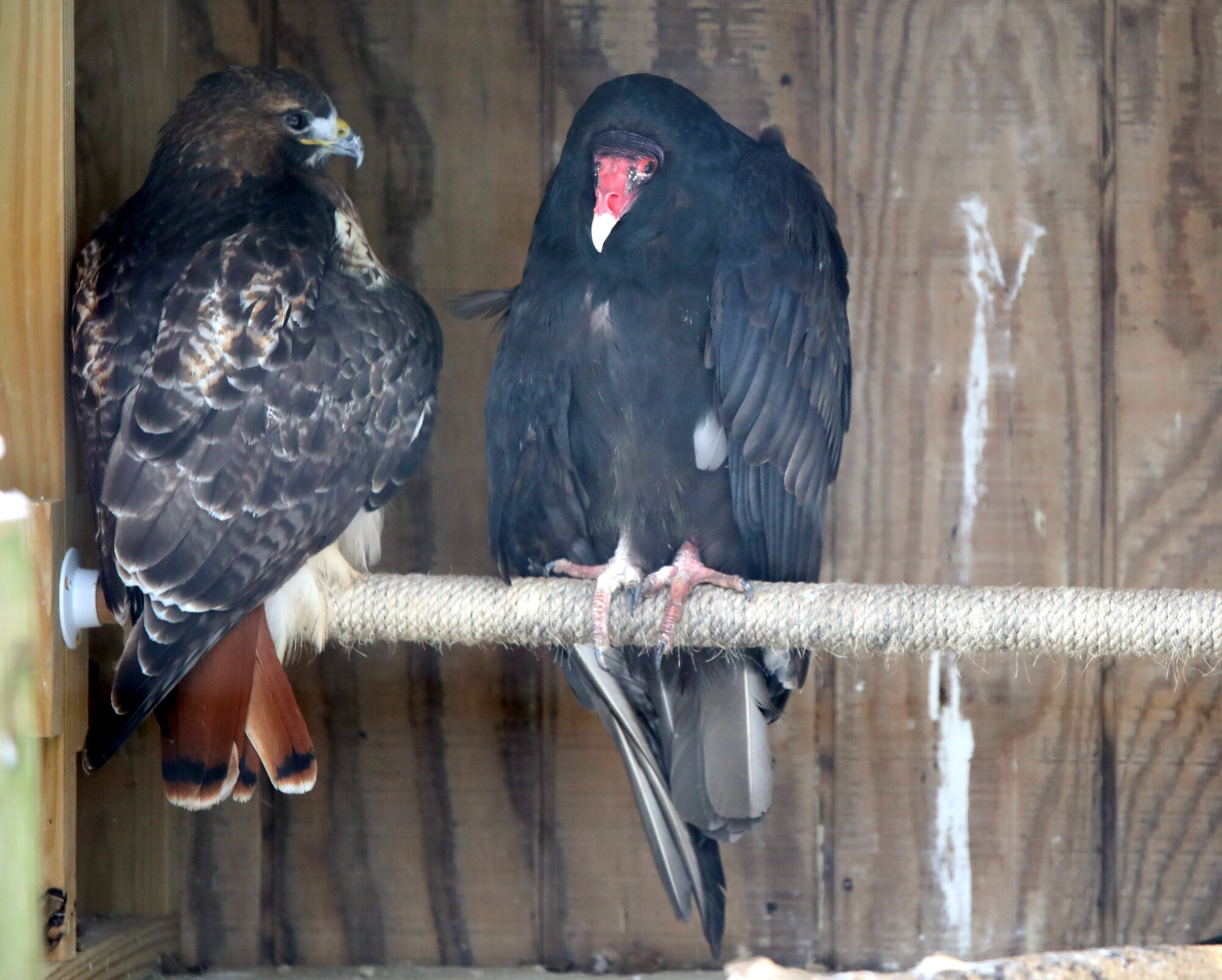
Turkey Vultures (Cathartes aura): Nature’s Clean-Up Crew
Turkey Vultures are New World vultures, belonging to the family Cathartidae. They are primarily scavengers, playing a vital ecological role by consuming carrion, thus preventing the spread of disease and recycling nutrients.
- Diet: Exclusively carrion, located primarily by their exceptional sense of smell, which can detect ethyl mercaptan, a gas produced by decaying flesh.
- Habitat: Widely distributed across the Americas, found in diverse habitats from forests to deserts.
- Social Behavior: Generally social, often roosting and feeding in groups, especially at larger carcasses. They are not known for forming strong, long-term pair bonds outside of breeding season, nor for forming close social bonds with other raptor species.
- Physical Characteristics: Large, dark birds with featherless red heads (in adults), broad wings, and a distinctive teetering flight pattern. They lack strong talons and beaks for tearing live prey.
- Conservation Status: Of Least Concern, with stable or increasing populations.
Red-tailed Hawks (Buteo jamaicensis): Apex Aerial Predators
Red-tailed Hawks are one of North America’s most common and widespread raptors, known for their powerful hunting abilities.
- Diet: Primarily small mammals (rodents, rabbits), but also birds, reptiles, and sometimes insects. They are opportunistic predators, hunting live prey.
- Habitat: Highly adaptable, found in almost every type of open country and woodland edge across North America.
- Social Behavior: Generally solitary outside of the breeding season, forming monogamous pair bonds during nesting. They are highly territorial and can be aggressive towards other raptors, especially those competing for food or nesting sites.
- Physical Characteristics: Large, robust hawks with broad, rounded wings and a distinctive rufous (reddish-brown) tail in adults. They possess sharp talons and a hooked beak for capturing and tearing prey.
- Conservation Status: Of Least Concern, with stable populations.
Given these fundamental differences – one a scavenger with a keen sense of smell, the other a sight-hunting predator; one relatively social, the other highly territorial – the close friendship between Stan and Hunter is a remarkable deviation from natural instinct and behavior. It suggests that in the controlled, safe environment of a zoo, individual personalities and shared experiences can override ingrained species-specific characteristics.
Interspecies Friendships in Captivity: A Broader Phenomenon
While Stan and Hunter’s bond is exceptional, interspecies friendships in zoological settings are not unheard of. Zoos and sanctuaries often provide unique conditions that foster such relationships:
- Absence of Natural Threats: The immediate pressures of survival, such as predation, territorial disputes, and competition for resources, are removed.
- Limited Social Options: Animals that cannot be housed with conspecifics (members of their own species) due to injury, age, or social incompatibility may seek companionship from other species in their enclosure.
- Human Intervention: Animal care specialists carefully monitor and manage interactions, ensuring safety and facilitating positive engagements.
- Shared Experiences: As seen with Stan and Hunter, shared trauma or a common background (e.g., being hand-raised, living with disabilities) can create a powerful foundation for connection.
These friendships offer valuable insights into animal psychology, demonstrating their capacity for emotional depth, adaptability, and the formation of complex social bonds that extend beyond reproductive or survival imperatives. They highlight that animals, like humans, can form friendships based on mutual comfort, companionship, and shared space.
Statements from Related Parties: The Zoo’s Perspective
While direct quotes were not provided in the original text, it is logical to infer the perspective of the Elmwood Park Zoo staff. A hypothetical statement from a lead animal care specialist or zoo curator might articulate the significance of Stan and Hunter’s bond:
"Stan and Hunter represent one of the most heartwarming and educational stories here at the Elmwood Park Zoo," a hypothetical Dr. Eleanor Vance, Curator of Birds, might say. "Their friendship, spanning over a decade, is a powerful example of how animals can form deep connections, even across species lines, especially when given a safe and stable environment. Both birds arrived with severe injuries that prevented their return to the wild. Their shared experience of overcoming adversity, coupled with the consistent care they receive, has allowed them to develop a truly unique and beautiful companionship. Observing their interactions – from Hunter sharing food with Stan to Stan sitting on Hunter’s eggs – offers our visitors an extraordinary lesson in empathy, adaptability, and the universal need for connection. They are true ambassadors for understanding animal sentience and the vital role zoos play in providing lifelong care for non-releasable wildlife."
Broader Impact and Implications: Education and Empathy
The story of Stan and Hunter carries several significant implications beyond their immediate enclosure:
- Educational Value: For zoo visitors, Stan and Hunter offer a tangible and moving lesson in interspecies relationships, challenging preconceived notions about animal behavior. It encourages empathy and a deeper appreciation for the complex emotional lives of animals. Children, in particular, are often captivated by the idea of an unlikely friendship, making these birds powerful educational tools for fostering respect for wildlife.
- Animal Welfare and Rehabilitation: Their story underscores the critical role of wildlife rehabilitation centers like Tri-State Bird Rescue & Research and zoos like Elmwood Park. Without these institutions, birds like Stan and Hunter, suffering from human-inflicted injuries, would have no chance of survival. Their continued care in captivity provides them with a high quality of life, demonstrating a humane approach to wildlife conservation.
- The Ethics of Captivity: While ideal for wild animals to live free, Stan and Hunter’s situation presents a strong ethical argument for compassionate long-term care in captivity when release is impossible. Their bond suggests that a rich, fulfilling life, complete with social connections, is possible even for animals with disabilities in a managed environment.
- Human Impact on Wildlife: The fact that both birds were injured by air-rifle pellets serves as a somber reminder of human impact on wildlife. It highlights the often-unseen consequences of human actions and implicitly advocates for greater awareness and responsible behavior towards the natural world.
An Enduring Legacy
As Stan and Hunter continue to live out their lives side-by-side at the Elmwood Park Zoo, their story remains a beacon of hope and an emblem of resilience. Their shared trauma of injury, their unique bond, and their observable acts of companionship paint a vivid picture of adaptation and the capacity for connection in the animal kingdom. They are more than just two birds in an aviary; they are living proof that friendship knows no species boundaries, and that even in adversity, remarkable harmony can be found. Their enduring alliance will undoubtedly continue to inspire and educate countless visitors, leaving a lasting impression on all who witness the extraordinary friendship between a Turkey Vulture and a Red-tailed Hawk.

