


Migratory birds, with their remarkable ability to traverse vast distances, serve as crucial ecological connectors, linking landscapes, nations, and even continents. These avian travelers navigate established routes known as "flyways," vital arteries that facilitate their seasonal journeys between breeding and non-breeding grounds. In a concerted effort to safeguard these critical pathways, a significant conservation initiative is underway along the African-Eurasian Flyway, a sprawling corridor that stretches from the Arctic Circle to the southernmost reaches of Africa. This ambitious project, spearheaded by the RSPB (The Royal Society for the Protection of Birds), a partner in the UK, and bolstered by the support of the Ecological Restoration Fund (ERF), aims to protect migratory birds and their essential habitats across this immense geographical expanse.
The work involves dedicated conservationists who are on the front lines, meticulously monitoring bird populations and advocating for the preservation of their habitats. This series delves into their vital efforts, offering an intimate look at the challenges and triumphs of protecting these globally significant avian routes.
Understanding the African-Eurasian Flyway and its Significance
The African-Eurasian Flyway is one of the most biologically diverse and extensively utilized migratory routes globally. It encompasses a mosaic of ecosystems, from the boreal forests and tundra of Northern Europe and Asia to the savannas, wetlands, and coastal areas of Africa. This flyway is a lifeline for millions of birds, including a multitude of species that undertake some of the longest migrations on Earth. Their journeys are not merely feats of endurance but are integral to the health of the ecosystems they inhabit, playing roles in seed dispersal, insect control, and nutrient cycling.

The African-Eurasian Flyway stretches across more than 80 countries, presenting a complex conservation challenge that necessitates international cooperation and coordinated action. The RSPB, through its extensive network of partners, is working to establish a connected series of protected areas and to mitigate threats along this critical route. The ERF provides crucial financial backing for these endeavors, enabling on-the-ground activities that are essential for the survival of migratory species.
Spotlight on Malawi: Chia Lagoon as a Crucial Stopover
Within the vast network of the African-Eurasian Flyway, certain sites emerge as particularly vital for the survival of migratory birds. Chia Lagoon, located in Malawi’s Nkhotakota district, has been identified as one such critical area. Blessings Chingagwe, the Programme Manager at the Wildlife and Environmental Society of Malawi (WESM), the BirdLife Partner in Malawi, is at the forefront of conservation efforts at this significant site. Malawi’s strategic position along the flyway makes its wetlands and other natural habitats essential resting and feeding grounds for birds en route between Europe, the Middle East, and Africa.
Chia Lagoon, recently designated as a Key Biodiversity Area (KBA), is a 1700-hectare shallow freshwater wetland. Its ecological composition is characterized by open water bodies, expansive mudflats exposed by seasonal water level fluctuations, and surrounding grasslands that transition into agricultural landscapes. These exposed mudflats are rich in invertebrates, providing a critical food source for a diverse array of both migratory and resident waterbirds.
Biodiversity Hotspot: The Avian Inhabitants of Chia Lagoon
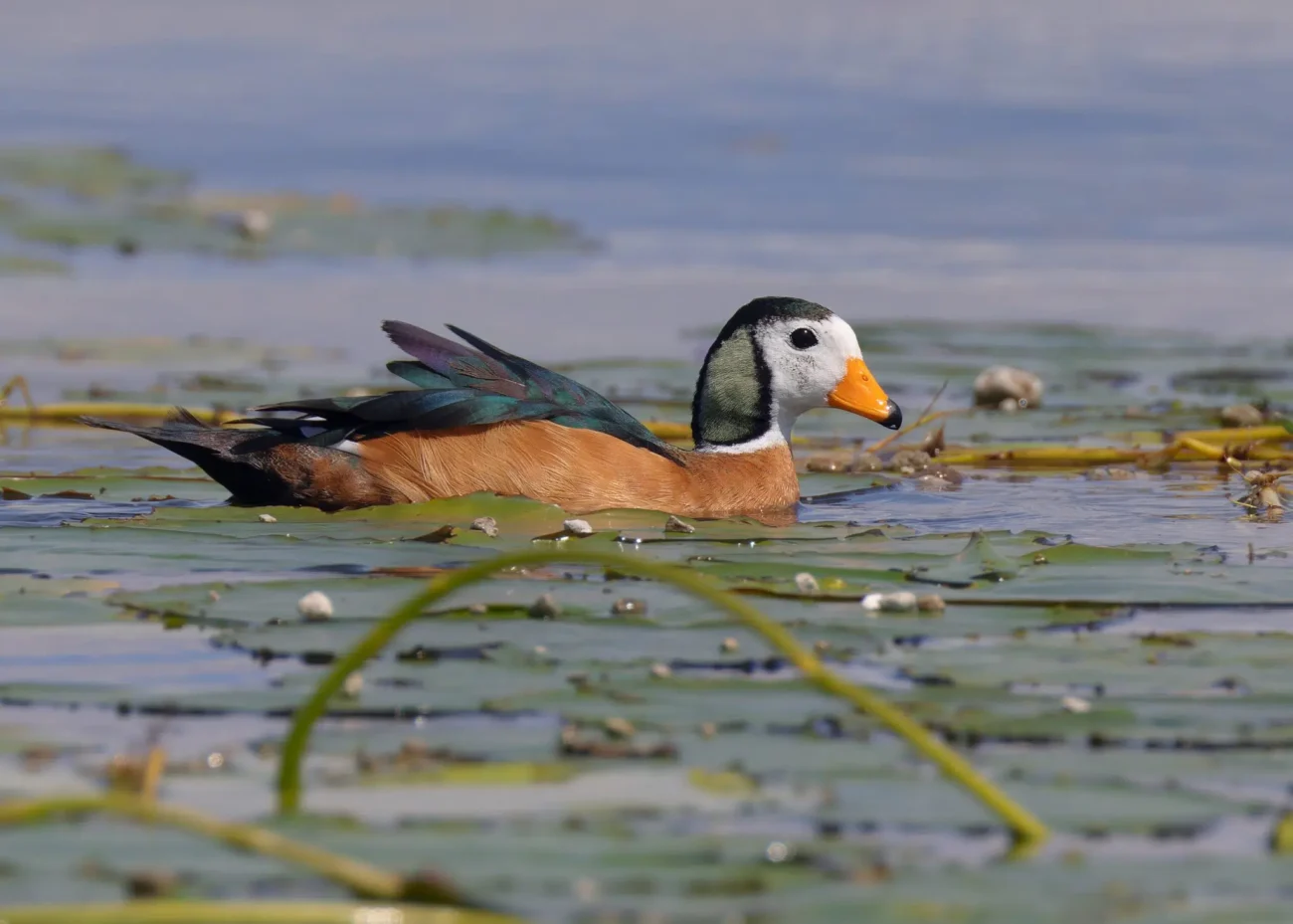
The ecological richness of Chia Lagoon supports a vibrant community of avian species. Among the notable residents and visitors are the Black Heron (Egretta ardesiaca), known for its elegant hunting techniques; the Ring-necked Dove (Streptopelia capicola), a common sight across much of Africa; the Lesser Masked Weaver (Ploceus intermedius), a gregarious species often seen in large flocks; the African Jacana (Actophilornis africanus), a distinctive bird with elongated toes that allow it to walk on floating vegetation; and the diminutive African Pygmy-goose (Nettapus auritus), one of the smallest waterfowl in the world.

Chia Lagoon serves as an indispensable feeding, resting, and refuge site for these and many other species, particularly during their migratory passages and the non-breeding seasons. The lagoon’s ecological productivity, coupled with its strategic geographical location, solidifies its importance as a critical link in the broader African-Eurasian Flyway network. The health and integrity of this wetland are directly linked to the well-being of bird populations across multiple countries.
Conservation in Action: WESM’s Multi-faceted Approach
The Wildlife and Environmental Society of Malawi, under Blessings Chingagwe’s leadership, is implementing a comprehensive strategy to protect Chia Lagoon and its avian inhabitants. A significant aspect of their work involves raising awareness and fostering community engagement. Recognizing that local communities are the primary stewards of their environment, WESM has been actively involving them in conservation efforts.
Community Mobilization and Advocacy
One notable success story linked to the ERF project involves WESM’s efforts to protect the iconic Mulanje Mountain, a site of immense ecological and cultural importance. WESM mobilized local leaders, the Friends of Mulanje group, and the wider community to voice their opposition to potential bauxite mining activities in the mountain. Mulhakho wa Alomwe, a cultural group that derives significant benefits from Mulanje Mountain, has been a vocal proponent against any mining ventures. These advocacy efforts have demonstrably influenced local governance, as evidenced by the recent evacuation of miners from the mountain by local communities and the district council, a victory attributed in part to the project’s success.
Scientific Assessment and Monitoring
Over the past three years, supported by the Darwin Initiative, WESM has undertaken the first comprehensive biodiversity and ecological assessment of Chia Lagoon. This pioneering study marks the first time an unprotected wetland of this significance has undergone such an in-depth examination. The findings of this assessment are crucial for informing conservation strategies and for advocating for the site’s formal protection.

Regular waterbird monitoring has been a cornerstone of WESM’s work at Chia Lagoon for over two years. The data collected reveals a positive trend, with an increase in recorded bird species since 2023. The initial dataset comprised 68 species records, which has now expanded to over 110, indicating the lagoon’s sustained importance and potentially improving habitat conditions.
Combating Uncontrolled Hunting
To mitigate the threat of uncontrolled hunting practices, WESM has established 18 bird hunting clubs within the local communities. These clubs play a vital role in regulating hunting activities by setting quotas, defining target species, and promoting sustainable hunting methods. Furthermore, 12 members from these clubs have received specialized training to conduct ongoing monitoring and to lead awareness campaigns for local communities and stakeholders, emphasizing the ecological significance of the lagoon.
Future Prospects: Lake Chilwa and Ramsar Designation
Chia Lagoon is not the only site of conservation importance in Malawi. Lake Chilwa, another significant wetland, is a priority area for WESM’s migratory bird conservation efforts. The organization is currently developing a comprehensive site profile for Lake Chilwa, detailing the threats it faces, existing conservation opportunities, and ongoing projects in the region. The Bird Hunters Association in the Lake Chilwa area, active since 2008, has expressed a strong commitment to safeguarding the bird populations, which are currently threatened by poaching, climate change, and habitat degradation.
The success of WESM’s work at Chia Lagoon has garnered attention from national authorities. The District Council has initiated discussions on developing a comprehensive management plan for the wetland ecosystem, a testament to the growing recognition of its value. The Department of National Parks and Wildlife, the focal point for the Convention on the Conservation of Migratory Species, has also engaged with WESM, exploring the possibility of proposing Chia Lagoon for designation as a Ramsar site. This designation would formally recognize the wetland’s international importance and unlock further conservation resources and international support.

The Far-Reaching Impact of Wetland Conservation
Blessings Chingagwe emphasizes the interconnectedness of global ecosystems: "Migratory birds connect continents. A bird feeding at Chia Lagoon may have travelled thousands of kilometres from Europe or Asia. If just one important wetland along the flyway is lost or degraded, it can affect populations across multiple countries. Protecting wetlands in Malawi is part of protecting a global ecological system." This statement underscores the profound implications of local conservation efforts on a global scale. The loss of a single vital wetland can trigger cascading negative effects across an entire flyway, impacting biodiversity and ecosystem services far beyond its immediate geographical boundaries.
Challenges and Opportunities in Flyway Conservation
The work of flyway conservation is not without its challenges. Securing the long-term protection of crucial habitats like Chia Lagoon while simultaneously ensuring that local communities benefit from these natural resources remains a central challenge. While the project’s primary focus is on waterbirds, other human activities, such as fisheries, can pose indirect threats, particularly concerning aquatic vegetation. The establishment of new docks and fishing activities within designated sanctuaries, which often overlap with bird sanctuaries, presents a significant threat to the delicate balance of the ecosystem.
Another formidable challenge is the proliferation of Invasive Alien Species (IAS), such as Azolla and Water Hyacinth. These aggressive plants can outcompete native vegetation, alter water chemistry, and degrade habitat quality for both birds and fish. The removal of these invasive species is complicated by the presence of crocodiles, which pose a serious safety risk to those involved in eradication efforts. WESM is actively seeking feasible and safe methodologies for controlling these invasive plants, a critical step for the long-term health of the lagoon.
A Symbol of Global Connectivity: The Whiskered Tern
When asked to choose a species that best represents the African-Eurasian Flyway, Blessings Chingagwe selects the Whiskered Tern (Chlidonias hybrida). This choice is rooted in the tern’s status as a long-range migratory bird, embodying the very essence of global connectivity. Arriving in Malawi with the December rains, the Whiskered Tern serves as a poignant reminder that even a small country or a modest wetland is intrinsically linked to the global community. "If we are to protect the Whiskered Tern," Chingagwe states, "we mean to protect every marsh, lake, river and wetland along its path. This is a perfect ambassador of the flyway because it knows no boundaries." The protection of such a species necessitates a holistic approach, safeguarding every critical stopover point along its arduous journey.

Anecdotes from the Field: Humour and Misunderstandings
The field of conservation often presents unexpected moments of humor and learning. Chingagwe recounts an amusing anecdote about a bird locally known as "Jane Tambala." Initially, the team meticulously recorded this local name, endeavoring to identify the species and its English equivalent. Despite inquiries, the bird remained elusive. The mystery was eventually solved when, during a participant registration, a name appeared: Jane Tambala. It turned out the "bird" was, in fact, a person! The true "Jane Tambala," an African Jacana, was later spotted, leading to a moment of shared laughter and a deeper understanding of local nomenclature.
Another common humorous interaction arises from the community’s perception of the conservation project. When asked about their work, particularly in the local dialect where the project is referred to as "Chitukuko chosamalira mbalame" (development of caring for birds), community members often inquire if the team is feeding the birds. Their understanding often frames the project as a wild bird rearing initiative, leading to a consistent set of questions whenever WESM field teams are present.
Seeds of Optimism: Growing Awareness and Scientific Data
Despite the challenges, there are significant reasons for optimism in flyway conservation efforts. The availability of robust scientific data, gathered for the first time for Chia Lagoon, provides a solid foundation for evidence-based conservation. Coupled with this is the growing awareness within local communities. When stakeholders understand the intrinsic value of their wetlands and the ecological services they provide, conservation transitions from an external imposition to a shared responsibility. This shift in perspective is crucial for the long-term sustainability of protection efforts.
The acknowledgement by the District Council and the Department of National Parks and Wildlife signifies a broader institutional recognition of the importance of wetland conservation. The prospect of Chia Lagoon being proposed as a Ramsar site offers a tangible pathway towards enhanced protection and international collaboration, promising a brighter future for the migratory birds that depend on this vital habitat.

Acknowledgements and Future Directions
The Ecological Restoration Fund (ERF) plays a pivotal role in supporting conservation work that protects biodiverse hotspots, rejuvenates degraded landscapes, and champions local environmental activism. The ERF is committed to restoring nature’s intricate interconnections while simultaneously fostering cultural, social, and economic opportunities for the communities residing within these vital landscapes. This specific project has also received vital funding from the UK Government through the Darwin Initiative, underscoring the collaborative international effort required to address the complex challenges of migratory bird conservation. The ongoing work at Chia Lagoon and along the African-Eurasian Flyway represents a critical step in ensuring the survival of these magnificent creatures and the health of the planet’s interconnected ecosystems.

