


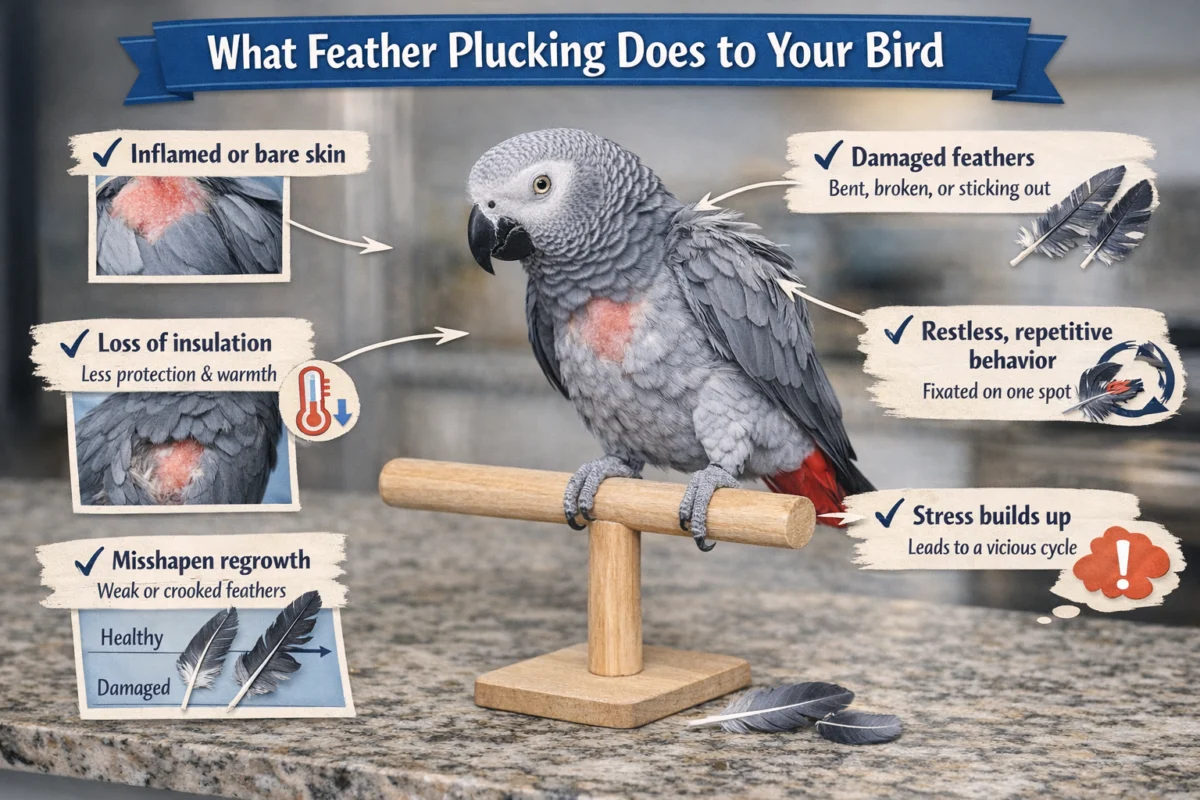
Feather destructive behavior, commonly known as feather plucking, represents one of the most challenging and distressing conditions encountered in captive avian populations. Far from a mere cosmetic issue, it is a complex symptom often indicative of underlying medical, environmental, or psychological distress, demanding immediate and thorough investigation. Early detection is paramount, as the longer the behavior persists, the more entrenched and difficult it becomes to reverse, frequently leading to chronic health issues and diminished quality of life for the affected bird.
The Enigma of Avian Feather Loss: Distinguishing Plucking from Natural Processes
The initial concern for many bird owners arises from observing feathers on the cage floor or noticing changes in their bird’s plumage. The critical first step is to accurately differentiate between normal physiological processes and the onset of feather plucking.
- Molting: This is a natural, cyclical process where birds shed old, worn feathers and grow new ones. It typically occurs once or twice a year, though timing can vary by species, age, and environmental factors like light cycles and nutrition. During a molt, feathers fall out gradually and symmetrically, often accompanied by the emergence of "pin feathers" – new feathers encased in a waxy sheath. The bird’s overall plumage remains relatively intact, albeit possibly appearing a bit scruffy. This process is essential for maintaining flight efficiency, insulation, and waterproofing.
- Preening: This is a vital maintenance behavior where birds use their beaks and tongues to clean, realign, and condition their feathers. A healthy bird preens calmly, methodically moving across different body parts, applying preen oil from the uropygial gland (located at the base of the tail) to waterproof and protect feathers. Preening is a normal and essential part of avian hygiene.
- Feather Plucking: This destructive behavior stands in stark contrast to molting and preening. It involves the bird excessively chewing, biting, breaking, or pulling out its own feathers. Unlike molting, plucking often focuses intensely on specific areas, leading to asymmetrical feather loss, bald patches, and visibly damaged or broken feathers. The behavior is repetitive, driven by an internal discomfort or compulsion, and is not a natural process. Studies suggest that feather destructive behavior affects a significant percentage of captive psittacine birds, with estimates ranging from 10% to 20% in some species, such as African Grey Parrots and Cockatoos, known to be particularly susceptible due to their high intelligence and complex behavioral needs.
- Self-Mutilation: This represents the most severe manifestation of feather destructive behavior, where the bird progresses beyond merely damaging feathers to actively injuring the underlying skin. This can involve biting, tearing, or digging at the skin, creating open wounds, lacerations, or even exposing muscle and bone. Self-mutilation is a medical emergency requiring immediate veterinary intervention to prevent infection, severe blood loss, and further physiological and psychological distress.
Owners often first notice damaged feathers that are not simply shed, or a bird fixating on a single area with intense, repetitive action. A quick self-check involves observing if the feathers are broken, chewed, or pulled out, rather than smoothly shed, and if specific areas of the body are consistently targeted.
Unraveling the Multifactorial Etiology: Why Birds Pluck
Feather plucking is rarely a straightforward issue; its causes are almost invariably multifactorial, requiring a comprehensive diagnostic approach. Avian veterinary specialists and behaviorists concur that the behavior is a symptom, not a primary disease, stemming from a bird’s attempt to regulate an internal imbalance or cope with external stressors.
- Medical Causes: A significant percentage of feather plucking cases have an underlying medical basis. These can include:
- Infections: Bacterial, fungal, or viral infections of the skin or feather follicles. PBFD (Psittacine Beak and Feather Disease) and Polyomavirus are particularly notorious for causing feather abnormalities and loss.
- Parasites: External parasites like mites or lice, or internal parasites, can cause intense itching and discomfort, leading to excessive preening that escalates into plucking.
- Nutritional Deficiencies: Inadequate diets, particularly those lacking essential vitamins (e.g., Vitamin A, D), minerals (e.g., calcium), or essential fatty acids (e.g., omega-3 and omega-6), can lead to poor feather quality, dry skin, and itching. All-seed diets are a common culprit.
- Organ Disease: Liver, kidney, or thyroid disorders can manifest as poor feather quality, skin issues, or generalized malaise that prompts plucking.
- Allergies: Environmental allergens (dust, pollen, molds) or dietary allergens can cause pruritus (itching) and skin irritation.
- Pain or Discomfort: Any source of pain, such as arthritis, internal masses, or injuries, can cause a bird to focus excessively on the affected area, leading to plucking.
- Heavy Metal Toxicity: Exposure to lead, zinc, or other heavy metals can lead to systemic illness, neurological symptoms, and skin/feather problems.
- Hormonal Imbalances: Birds experiencing reproductive urges or chronic hormonal activity may pluck due to frustration, nesting behaviors, or increased irritability.
- Environmental Factors: The captive environment often fails to replicate the complexity and stimulation of a bird’s natural habitat.
- Inadequate Humidity: Many tropical species require high humidity, and dry indoor air can lead to dry, itchy skin and brittle feathers.
- Lack of UV Lighting: Full-spectrum lighting, particularly UVB, is crucial for vitamin D synthesis and overall well-being. Its absence can contribute to nutritional deficiencies and behavioral issues.
- Cage Size and Enrichment: Cages that are too small or lack sufficient enrichment (foraging toys, shreddable items, varied perches, puzzles) lead to boredom, frustration, and a lack of outlets for natural behaviors.
- Exposure to Irritants: Smoke, aerosols, chemical cleaners, or other airborne toxins can irritate a bird’s respiratory system and skin.
- Inconsistent Routine/Stressors: Sudden changes in environment, new pets, household noise, or perceived threats can induce chronic stress.
- Behavioral and Psychological Triggers: Birds are highly intelligent and social creatures, and their psychological well-being is intrinsically linked to their physical health.
- Boredom and Frustration: Lack of mental stimulation and opportunities for natural behaviors (foraging, flying, socializing) can lead to redirected energy in the form of plucking.
- Anxiety and Fear: Chronic anxiety, separation anxiety, or fear of certain objects/people can manifest as self-mutilation.
- Social Isolation: Many parrot species are flock animals; being housed alone without adequate human interaction or a compatible avian companion can cause severe stress.
- Learned Behavior: Once initiated, plucking can become a compulsive habit, providing a form of self-stimulation or a coping mechanism, even if the original trigger is removed.
Dr. Evelyn Reed, an avian veterinary specialist, emphasizes that feather plucking is rarely a purely behavioral issue, stating, "It’s a symptom, not a diagnosis. Our primary goal is always to rule out underlying medical conditions before exploring environmental and psychological factors. Without addressing the root cause, any intervention is likely to be temporary at best."
The Progression of Feather Destructive Behavior: From Subtle Signs to Self-Mutilation
The progression of feather plucking can be insidious, often starting subtly before escalating into a severe condition.
- Initial Stages: Owners might first notice a few damaged feathers, an increase in "preening" time focused on one area, or a bird appearing slightly disheveled. The damage may be minor, such as frayed tips or broken barbs.
- Intermediate Stages: As the behavior intensifies, more significant feather loss becomes apparent, leading to bald patches, particularly on the chest, legs, or under the wings—areas easily accessible to the bird’s beak. The skin underneath may appear slightly irritated or reddened. Feathers that attempt to grow back may be weak, bent, or misaligned due to damaged follicles.
- Advanced Stages: The behavior becomes a deeply ingrained habit, often leading to raw, inflamed, or even open wounds on the skin. The bird loses vital insulation, making it susceptible to temperature fluctuations and increasing its vulnerability to injury. Exposed skin becomes highly sensitive, driving further picking and creating a vicious cycle of discomfort and self-trauma. At this point, the bird is struggling significantly, not just coping.
This cycle—something feels off, the bird plucks, skin/feathers worsen, the urge increases—reinforces itself, making early action critical. The longer the behavior goes unaddressed, the harder it is to break the cycle and achieve recovery.
Diagnostic Protocols: A Comprehensive Veterinary Approach

When a bird presents with signs of feather plucking, a thorough diagnostic workup by an avian veterinarian is essential. This typically involves:
- Detailed History: A comprehensive discussion with the owner about the bird’s diet, environment, social interactions, daily routine, onset of plucking, and any other observed symptoms.
- Physical Examination: A meticulous examination of the bird’s entire body, including palpation of internal organs, assessment of feather quality, and close inspection of the skin for lesions, parasites, or inflammation.
- Blood Tests: A complete blood count (CBC) and biochemistry panel can reveal signs of infection, inflammation, organ dysfunction, or nutritional deficiencies. Specific tests for viral diseases (e.g., PBFD, Polyomavirus) may also be performed.
- Feather and Skin Biopsies: Microscopic examination of plucked feathers and skin samples can identify bacterial or fungal infections, mites, inflammatory cells, or structural abnormalities of the feather follicles.
- Imaging: Radiographs (X-rays) or ultrasound may be used to assess internal organs, detect masses, or identify skeletal abnormalities that could be causing pain.
- Environmental Assessment: The veterinarian may ask for photographs or videos of the bird’s cage and living environment to identify potential stressors or deficiencies.
"A thorough diagnostic workup is crucial," notes Dr. Alex Chen, an avian behaviorist. "Jumping to conclusions without a full medical evaluation can lead to ineffective treatments and prolonged suffering for the bird. We need to be detectives, piecing together clues from multiple sources."
Therapeutic Strategies: A Holistic Path to Recovery
Stopping feather plucking involves not just interrupting a habit but addressing the root problems driving it. A multi-faceted approach, combining medical, environmental, and behavioral interventions, offers the best chance for success.
- Medical Interventions:
- Treating Underlying Diseases: Administering antibiotics, antifungals, antiparasitics, or antiviral medications as indicated by diagnostic tests.
- Nutritional Correction: Transitioning to a high-quality, species-appropriate pelleted diet supplemented with fresh fruits, vegetables, and sometimes specific nutritional supplements (e.g., Vitamin A, omega fatty acids).
- Pain Management: If pain is identified, appropriate analgesics are prescribed.
- Anti-inflammatories/Topical Treatments: To soothe irritated skin and reduce inflammation.
- Environmental Modifications:
- Optimal Humidity: Using humidifiers, regular misting, or providing frequent bathing opportunities.
- Full-Spectrum Lighting: Installing avian-specific UV lighting to mimic natural sunlight cycles.
- Enrichment Overhaul: Providing a variety of foraging toys, shreddable materials, puzzle toys, and rotating them frequently to maintain novelty. Offering multiple perches of varying textures and diameters.
- Safe Environment: Eliminating exposure to household toxins, ensuring a quiet resting area, and providing a predictable daily routine.
- Cage Size: Ensuring the cage is large enough for the bird to fully extend its wings and move comfortably.
- Behavioral Management:
- Increased Social Interaction: Providing consistent, positive interaction with owners, including training, play, and quiet companionship.
- Positive Reinforcement Training: Teaching new behaviors to redirect energy and engage the bird’s intellect.
- Stress Reduction: Identifying and mitigating specific stressors in the bird’s environment.
- "Comfort" Garments: In severe cases, protective collars (e.g., Elizabethan collars) or vests may be used temporarily to prevent self-mutilation while underlying causes are being addressed. However, these are management tools, not solutions, and can themselves be stressful.
- Pharmacological Interventions: In some severe, refractory cases, especially where anxiety or compulsive disorders are strongly suspected, avian veterinarians may prescribe psychotropic medications (e.g., antidepressants, anxiolytics) as an adjunct to other therapies, always under strict supervision.
There is no single "magic bullet" fix for feather plucking; it is a combination of carefully implemented and sustained changes that yields results.
Prevention and Long-Term Management: A Proactive Approach to Avian Welfare
The most effective strategy for feather plucking is prevention. Responsible pet ownership plays a critical role in minimizing the risk of this devastating condition.
- Early Socialization and Training: Exposing young birds to a variety of positive experiences, people, and objects helps build resilience and confidence.
- Optimal Diet from Day One: Establishing a balanced, species-appropriate diet from a young age is fundamental to long-term health.
- Consistent Routine and Environment: Providing stability, predictability, and a rich, stimulating environment throughout the bird’s life.
- Regular Veterinary Check-ups: Annual wellness exams can help detect subtle health issues before they escalate into serious problems like feather plucking.
- Owner Education: Understanding the complex needs of the chosen avian species, including their social, environmental, and dietary requirements, is paramount.
"Prevention is always superior to treatment when it comes to feather destructive behavior," states animal welfare organization ‘Wings of Hope’. "Educating prospective bird owners about the complex needs of these intelligent creatures is paramount to reducing the incidence of such welfare challenges."
Broader Implications for Avian Welfare and Responsible Pet Ownership
Feather plucking highlights several broader implications within the realm of avian welfare. For owners, dealing with a plucking bird can be emotionally draining and financially burdensome, often requiring extensive veterinary care, specialized diets, and ongoing environmental modifications. It underscores the profound responsibility inherent in keeping highly intelligent and sensitive species as companions.
The condition also emphasizes the ongoing need for scientific research into avian behavior, physiology, and pathology. Our understanding of avian psychology is constantly evolving, revealing the intricate connections between a bird’s environment, its physical health, and its mental well-being. This evolving knowledge challenges pet owners and the veterinary community to continually refine care standards, moving beyond simplistic explanations to embrace a holistic, evidence-based approach to avian health. The prevalence of feather plucking serves as a stark reminder that while birds bring immense joy, their complex needs demand diligent, informed, and compassionate stewardship to ensure a life free from preventable suffering.
Once the underlying drivers are identified and addressed, a consistent, dedicated approach can significantly improve a bird’s condition, allowing for feather regrowth and a return to a healthier, more comfortable life. The earlier intervention begins, the greater the likelihood of a positive outcome.

