


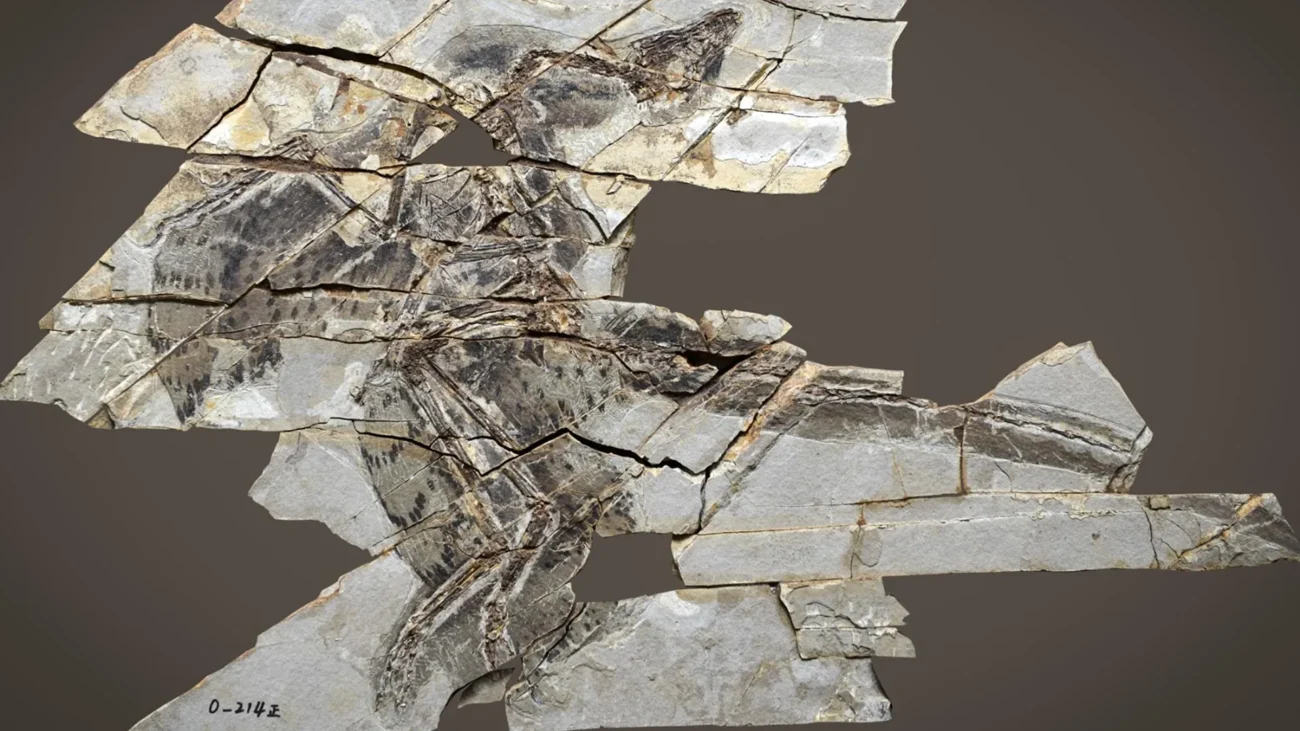
A groundbreaking study analyzing exceptionally preserved dinosaur fossils has revealed compelling evidence that some feathered species, once thought to be pioneers of flight, may have actually lost the capacity for aerial locomotion. The research, led by Dr. Yosef Kiat from Tel Aviv University’s School of Zoology and the Steinhardt Museum of Natural History, in collaboration with international colleagues from China and the United States, challenges long-held assumptions about the evolutionary trajectory of flight in dinosaurs and its connection to modern birds. Published in the prestigious journal Communications Biology by Nature Portfolio, this discovery offers an unprecedented glimpse into the lives of animals that roamed the Earth approximately 160 million years ago, fundamentally reshaping our understanding of wing evolution.
Unveiling Flightless Feathered Giants
For decades, the discovery of feathered dinosaurs has been a cornerstone in the argument for the avian origins of flight, painting a picture of a continuous evolutionary progression from ground-dwelling reptiles to the birds we see today. However, this new research introduces a significant complication to that narrative. By meticulously examining the fossilized remains of Anchiornis, a Pennaraptoran dinosaur from eastern China, scientists have identified a critical clue in the pattern of feather molting that strongly indicates a loss of flight capability in these ancient creatures.
"Feather molting seems like a small technical detail," explained Dr. Kiat, an ornithologist specializing in feather biology. "But when examined in fossils, it can change everything we thought about the origins of flight, highlighting how complex and diverse wing evolution truly was." This finding has broad significance, suggesting that the development of flight throughout the evolution of dinosaurs and birds was far more complex than previously believed. In fact, certain species may have developed basic flight abilities and then lost them later in their evolution, a phenomenon observed in some modern flightless birds.
The Evolutionary Tapestry of Feathers
To fully appreciate the implications of this discovery, it’s essential to understand the evolutionary context of feathers and their presence in dinosaurs. Reptiles and the lineage leading to dinosaurs diverged around 240 million years ago. In the subsequent evolutionary period, a remarkable development occurred: the emergence of feathers. These intricate, protein-based structures initially served multiple purposes, including insulation for thermoregulation and, as speculated, potentially for display or other non-flight-related functions.
A pivotal group within this evolutionary timeline is the Pennaraptora, a clade of feathered dinosaurs that appeared approximately 175 million years ago. Considered distant ancestors of modern birds, these dinosaurs are of particular interest because they represent the only dinosaur lineage to survive the catastrophic mass extinction event that marked the end of the Mesozoic Era, 66 million years ago. While it has long been assumed that Pennaraptora evolved feathers primarily for flight, this new research posits that environmental pressures or other evolutionary trade-offs might have led some of these feathered dinosaurs to relinquish their aerial capabilities, mirroring the existence of flightless birds like ostriches, emus, and penguins in the modern world.
A Window into the Past: The Anchiornis Fossils
The focus of the study was nine remarkably well-preserved Anchiornis fossils unearthed in eastern China. These specimens are exceptionally rare not only for their intact feathers but also for the preservation of their original coloration, a testament to the unique fossilization conditions prevalent in that geological region. Each of these fossils displayed wing feathers that were characterized by a distinct pattern: white with a prominent black spot at the tip. This extraordinary preservation allowed researchers to scrutinize the fine details of the feather structure and, crucially, to infer aspects of their growth and replacement.
The preserved coloration provided a visual roadmap, enabling scientists to examine the sequential development of feathers in a way that is typically impossible with fossilized remains. This granular level of detail became the key to unlocking the secrets of Anchiornis‘ flight capabilities.
Molting Patterns: The Silent Storytellers of Flight
Dr. Kiat elaborated on the crucial role of molting in understanding flight. Feathers, he explained, grow over a period of two to three weeks. Once they reach their full size, they detach from the blood supply that nourished them during their development and become nonliving structures. Over time, these feathers inevitably wear out and are replaced by new ones in a cyclical process known as molting. The nature of this molting process, according to Kiat, is a powerful indicator of an animal’s reliance on flight.
"Birds that depend on flight, and thus on the feathers enabling them to fly, molt in an orderly, gradual process that maintains symmetry between the wings and allows them to keep flying during molting," Dr. Kiat stated. This organized shedding and regrowth ensures that the animal retains sufficient flight surface area to remain airborne even as its plumage is renewed. Conversely, in birds that are flightless, the molting process tends to be more random and irregular. This lack of strict regulation reflects the absence of the selective pressure to maintain aerodynamic efficiency.
By applying this understanding to the Anchiornis fossils, the researchers meticulously analyzed the arrangement of the preserved wing feathers. They observed a continuous line of black spots along the wing edges, indicative of the feather tips. More importantly, they identified developing feathers, still in the process of growth, where these characteristic black spots were misaligned relative to the fully formed feathers. This misalignment suggested that the replacement of feathers was not occurring in a symmetrical or synchronized manner across the wing.
A detailed analysis of these growth patterns revealed that the molting sequence was irregular rather than orderly. This irregularity, when compared to the molting patterns of modern birds, strongly suggested that Anchiornis was not capable of sustained flight.
Re-evaluating Flightless Dinosaurs
The conclusion drawn by Dr. Kiat and his team is that the molting pattern observed in the Anchiornis fossils points towards a flightless existence for these feathered dinosaurs. "Based on my familiarity with modern birds, I identified a molting pattern indicating that these dinosaurs were probably flightless," he affirmed. "This is a rare and especially exciting finding: the preserved coloration of the feathers gave us a unique opportunity to identify a functional trait of these ancient creatures—not only the body structure preserved in fossils of skeletons and bones."
This discovery places Anchiornis in a growing category of dinosaurs that, despite possessing feathers, were not aerial acrobats. This adds significant complexity to the narrative of how flight evolved. It suggests that the development of feathers and the development of flight were not always directly correlated, and that evolutionary pathways could involve the acquisition and subsequent loss of flight.
Broader Implications for Evolutionary Biology
The implications of this research extend far beyond the specific case of Anchiornis. It fundamentally challenges the simplified view of a linear progression from feathered dinosaurs to flying birds. Instead, it highlights a more nuanced and intricate evolutionary landscape where different species explored various uses for feathers, and where the ability to fly was not a guaranteed outcome of feather development.
The study underscores the immense diversity of wing evolution. It suggests that even within groups closely related to the ancestors of birds, there were species that evolved specialized feather structures for reasons other than flight, or that lost the ability to fly after initially possessing some capacity for it. This adds a crucial layer to our understanding of the selective pressures and environmental factors that shaped the evolution of life on Earth.
Supporting Data and Context:
- Dinosaur and Bird Divergence: Dinosaurs and the lineage leading to birds diverged from other reptiles approximately 240 million years ago during the Triassic Period.
- Appearance of Pennaraptora: The Pennaraptoran group, which includes theropod dinosaurs closely related to birds, emerged around 175 million years ago during the Jurassic Period.
- Mass Extinction Event: The Cretaceous–Paleogene extinction event, which wiped out non-avian dinosaurs, occurred 66 million years ago.
- Fossil Location: Eastern China has yielded a rich trove of exceptionally preserved feathered dinosaur fossils, particularly from the Mesozoic Era, due to unique geological conditions that facilitated rapid burial and mineralization.
- Anchiornis Characteristics: Anchiornis huxleyi lived in the Late Jurassic epoch. It was a small, bipedal dinosaur, roughly the size of a crow, and possessed extensive feathering on its arms, legs, and tail. Previous studies had already indicated its potential flightlessness or limited gliding capabilities based on its skeletal structure.
Inferred Reactions from Related Parties:
While no direct statements from other paleontological institutions were included in the original text, it can be inferred that this research would likely be met with keen interest and further investigation by the wider scientific community. Paleontologists specializing in avian evolution and dinosaur paleontology would undoubtedly engage with these findings, potentially re-examining existing fossil evidence and incorporating the insights on molting patterns into their own research. This study could spur new avenues of inquiry into the functional morphology and paleoecology of feathered dinosaurs, particularly concerning the diverse roles feathers may have played beyond flight.
Broader Impact and Implications:
The significance of this research lies in its ability to complicate and enrich our understanding of a fundamental evolutionary transition: the origin of flight. It moves the discussion away from a simple, linear progression and towards a more dynamic and multifaceted evolutionary history. The findings suggest that:
- Feathers and Flight are Not Synonymous: The presence of feathers does not automatically equate to flight capability. This opens the door to exploring the diverse non-flight functions of feathers in extinct animals, such as thermoregulation, display, or even specialized locomotion like gliding or running.
- Evolutionary Reversals are Possible: The concept of "flight loss" in evolution, well-documented in modern birds, may have also occurred in dinosaur lineages. This highlights the plasticity of evolutionary pathways, where adaptations can be gained and subsequently lost in response to changing environmental or ecological pressures.
- Methodological Advancements: The study demonstrates the power of integrating fine-grained analysis of fossilized structures, such as feather coloration and growth patterns, with knowledge of modern biological processes. This interdisciplinary approach is crucial for unlocking deeper insights from the fossil record.
- Revisiting the Dinosaur-Bird Link: While this study focuses on a specific group, it contributes to the ongoing debate about the precise evolutionary steps leading to birds. It suggests that the path was likely more circuitous and varied than previously envisioned, with some feathered dinosaurs exploring different evolutionary trajectories.
In conclusion, the research on Anchiornis offers a compelling revision to our understanding of dinosaur evolution and the origins of flight. By delving into the subtle yet informative details of feather molting, scientists are painting a more complex and fascinating picture of these ancient creatures, reminding us that evolution is a journey of innovation, adaptation, and sometimes, even the strategic relinquishing of once-held abilities.

