


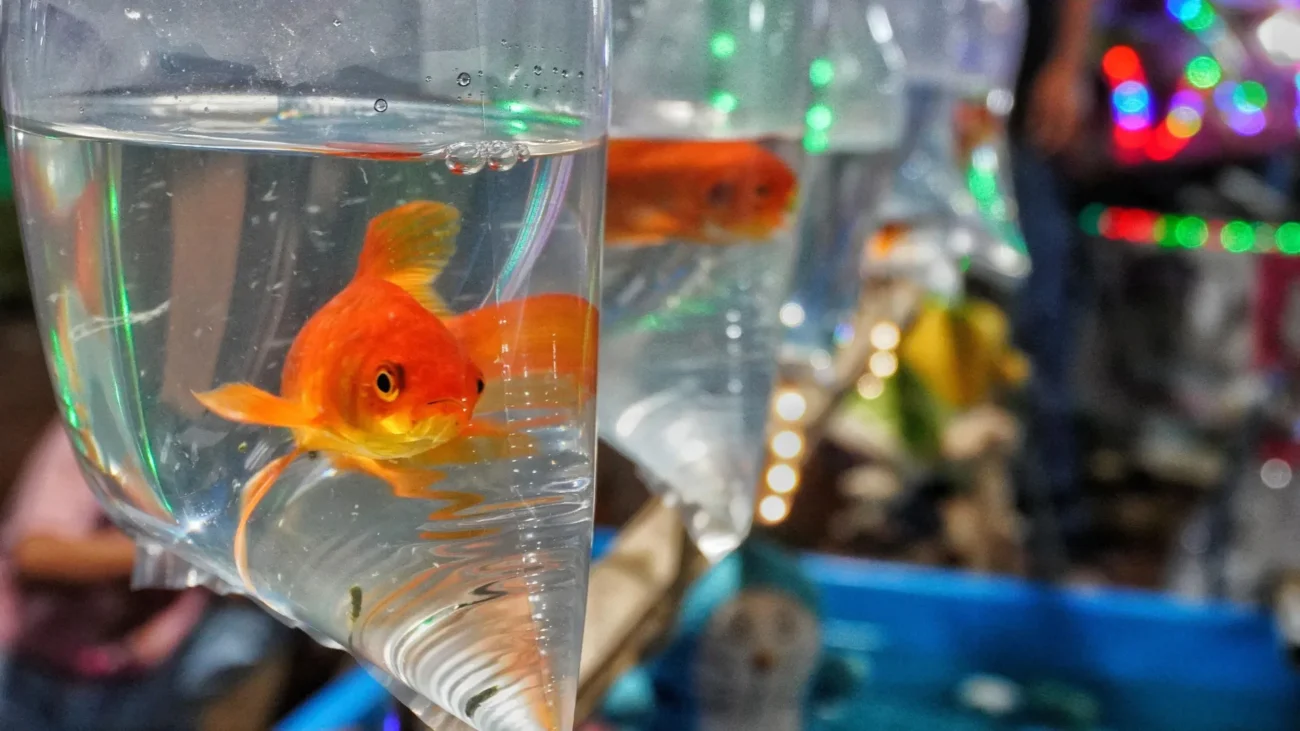
Few household pets enjoy a reputation as benign as the common goldfish (Carassius auratus). Often purchased on a whim at local carnivals or pet shops and housed in modest glass bowls, these shimmering golden fish are traditionally viewed as low-maintenance companions for children. However, a landmark peer-reviewed study published in the Journal of Animal Ecology has delivered a stark warning from the scientific community: when these seemingly harmless creatures find their way into natural waterways, they transform from domestic companions into aggressive ecological destroyers capable of upending entire freshwater habitats.
The comprehensive research, spearheaded jointly by environmental scientists at The University of Toledo (UToledo) and the University of Missouri (Mizzou), provides some of the most rigorous experimental evidence to date regarding the destructive potential of invasive goldfish. By utilizing large-scale outdoor freshwater mesocosms designed to precisely mimic natural lake dynamics, the research team demonstrated that abandoned or escaped goldfish can trigger catastrophic ecological regime shifts, fundamentally altering water quality, vegetation, and native aquatic life across diverse types of freshwater ecosystems.
The findings carry profound implications for pet owners, wildlife conservationists, natural resource managers, and environmental policymakers worldwide. As the global pet trade continues to transport aquatic species across international borders at unprecedented rates, the issue of pet abandonment has evolved from a localized nuisance into a formidable crisis for global biodiversity.
Methodology and Experimental Design: Simulating Real-World Lake Dynamics
To isolate the specific impacts of goldfish from other variables, the research team—led by Dr. William Hintz, an associate professor in UToledo’s Department of Environmental Sciences and Lake Erie Center, alongside Hannah Barrett and Dr. Rick Relyea of the University of Missouri—implemented a sophisticated experimental framework. The study, formally titled "Invasive goldfish trigger a regime shift in experimental lake ecosystems of varying trophic state," utilized outdoor mesocosms. These large tanks simulate natural environmental conditions much more accurately than small, indoor laboratory aquariums, accounting for weather fluctuations, natural sunlight, and complex biological interactions.
The researchers tested goldfish effects across two distinct freshwater environments: oligotrophic waters, which are nutrient-poor and typically clear with low biological productivity, and eutrophic waters, which are nutrient-rich and prone to dense algae blooms. Furthermore, the team employed both additive and substitutive experimental designs. This methodological rigor allowed scientists to successfully differentiate between the ecological impacts caused specifically by goldfish and those merely resulting from an overall increase in the total biomass of fish within a given body of water.
The analysis yielded clear, undeniable conclusions. While certain minor shifts in aquatic vegetation correlated with total fish abundance, the most severe, systemic ecological damage mapped directly and exclusively to the presence of goldfish. In both nutrient-poor and nutrient-rich testing environments, the introduction of goldfish set off a cascade of destructive environmental consequences.
Unraveling the Mechanisms of Destruction: Why Goldfish Thrive and Harm
To understand why a domestic goldfish can wreak such profound havoc in the wild, one must examine the biological traits of the species. Though diminutive in a home aquarium—often measuring only a few inches in length—Carassius auratus is a hardy, resilient member of the carp family (Cyprinidae). When introduced to natural lakes, ponds, and slow-moving rivers, goldfish escape the spatial constraints of captivity. Supplied with abundant natural food sources and lacking natural predators in many foreign environments, they experience rapid, exponential growth, often expanding into remarkably large fish.
Once established, goldfish exert pressure on native ecosystems through several distinct mechanisms. First, their standard foraging behavior involves bottom-feeding, a process known as bioturbation. As goldfish root through lakebeds in search of macroinvertebrates and plant matter, they continuously stir up fine sediment. This constant disruption suspends particulate matter in the water column, drastically reducing water clarity and blocking the sunlight necessary for native aquatic plants to photosynthesize.
Second, the loss of rooted aquatic vegetation destabilizes the sediment even further, promoting severe erosion along shorelines and releasing bound nutrients—such as phosphorus and nitrogen—back into the water. This nutrient release frequently triggers massive, toxic phytoplankton and filamentous algae blooms, transforming clear, healthy lakes into murky, green, degraded soup.
Third, goldfish are voracious generalist consumers. They outcompete native fish species for essential food resources, including zooplankton, aquatic insects, and benthic invertebrates. By depleting these foundational food webs, goldfish starve native fauna, precipitating a cascading decline in local biodiversity.
The Threat of Ecological Regime Shifts
Perhaps the most alarming takeaway from the UToledo and University of Missouri study is the documentation of what aquatic ecologists term a "regime shift." In environmental science, a regime shift represents a critical threshold where an ecosystem, under sustained stress, crosses a tipping point and rapidly reorganizes into a fundamentally different, highly degraded, and persistent state.
Unlike gradual environmental degradation, which allows for slow corrective measures, a regime shift happens swiftly and resists reversion. Once a lake transitions into a turbid, algae-dominated state driven by invasive bottom-feeders like goldfish, natural recovery becomes exceptionally difficult. Even if the initial stressors are removed, internal feedback loops—such as continuous nutrient recycling from disturbed sediments and the absence of stabilizing vegetation—lock the ecosystem into its degraded condition.
Restoring an ecosystem that has undergone a goldfish-induced regime shift requires extraordinary financial investment, intensive biological management, and years of active ecological restoration. Consequently, the study emphasizes that prevention must remain the primary line of defense for environmental protection agencies.
The Human Element: The Well-Intentioned Release of Pets
A central challenge in managing invasive goldfish populations lies in the psychology of pet ownership. Many individuals who release goldfish into local ponds or public waterways do so out of a misplaced sense of compassion. Believing that freeing a pet into the wild is a humane alternative to euthanasia or neglect, owners often view the act as benevolent.
Dr. William Hintz addressed this psychological hurdle directly, emphasizing the urgent need for public education. "It is critically important to inform the public that their pets can become pests that will harm freshwater ecosystems," Dr. Hintz stated. "The evidence is now clear — releasing a goldfish into the wild might be seen as an act of kindness, but it can turn into a major ecological threat."
This sentiment is echoed by co-author Dr. Rick Relyea, professor in the University of Missouri College of Agriculture, Food and Natural Resources and director of Mizzou’s Johnny Morris Institute of Fisheries, Wetlands and Aquatic Systems. "If goldfish are released into the wild, they rapidly grow into very large fish that stir up lake sediments, consume large numbers of prey and compete with native fish," Relyea explained.
The global trade in ornamental fish moves billions of animals across continents annually. While government agencies and international bodies rigorously monitor commercial aquaculture and ballast water discharge from cargo ships, the direct release of unwanted aquarium pets by hobbyists remains a notoriously difficult vector to regulate. A single well-meaning homeowner dumping an aquarium into a stormwater retention basin can inadvertently seed a population capable of migrating through interconnected watersheds during seasonal flooding events.
Policy Implications and Recommendations for Natural Resource Managers
In light of the study’s findings, researchers and conservationists are urging state, federal, and international natural resource management agencies to reevaluate how they classify and prioritize goldfish within invasive species frameworks. Traditionally overshadowed by higher-profile aquatic invaders such as Asian carp, zebra mussels, and sea lampreys, goldfish have frequently been dismissed as minor nuisances rather than severe ecological threats.
The new data demands a paradigm shift. The authors of the study recommend that wildlife authorities elevate goldfish to high-priority invasive species status, directing funding and resources toward early detection, rapid response protocols, and mechanical or biological control measures before wild populations become deeply entrenched.
Furthermore, public outreach campaigns must be overhauled. Educational initiatives should target pet store customers, school classrooms, and online hobbyist communities, clearly outlining the environmental consequences of releasing captive animals. Pet stores and commercial distributors can play an instrumental role by providing customers with responsible disposal information at the point of sale.
Practical Alternatives for Unwanted Aquatic Pets
For aquarium owners facing circumstances where they can no longer care for their goldfish, conservationists emphasize that viable, environmentally safe alternatives exist. Rather than resorting to the unlawful and ecologically damaging practice of releasing animals into public waters, pet owners are encouraged to explore the following options:
- Return the fish to a local pet store or commercial aquarium shop, many of which will accept healthy surrenders or trade-ins.
- Connect with local hobbyist groups, aquarist clubs, or online community networks to find another private owner willing to adopt the fish.
- Contact local botanical gardens, nature centers, or schools that maintain large indoor display aquariums.
- Consult with state wildlife or natural resource departments for guidance on humane, legal euthanasia options if rehoming proves impossible.
Broader Environmental Impact and Future Outlook
The publication of the UToledo and University of Missouri study arrives at a critical juncture for global freshwater conservation. Freshwater ecosystems cover less than one percent of Earth’s surface yet support roughly ten percent of all known animal species, making them among the most biodiverse and vulnerable habitats on the planet. Amid rising pressures from climate change, industrial pollution, habitat fragmentation, and agricultural runoff, the introduction of resilient invasive species like Carassius auratus compounds an already precarious ecological crisis.
As municipal governments and environmental agencies grapple with shrinking conservation budgets, the prevention of biological invasions remains vastly more cost-effective than post-hoc remediation. By illuminating the hidden mechanics through which a common household pet can dismantle the complex equilibrium of a freshwater lake, this research arms policymakers with the empirical data needed to enact stricter regulations and foster heightened public accountability.
Ultimately, the goldfish serves as a powerful reminder that human actions in domestic spaces carry profound consequences for the natural world. Protecting delicate freshwater environments requires a collective cultural shift—one that recognizes that true stewardship of nature begins not just in the wild, but in the living rooms and classrooms where humanity interacts with its smallest animal companions.

