


The diverse ecosystems of Georgia, from its coastal marshes and estuaries to the rolling Blue Ridge Mountains and the vast Okefenokee Swamp, provide a rich habitat for a remarkable array of wildlife. Among the most captivating are the birds of prey, commonly referred to as hawks. However, the precise classification of these magnificent creatures can be a source of confusion, with common names often masking complex scientific relationships. This article aims to demystify the avian taxonomy of Georgia’s hawks, exploring the distinctions within the Accipitridae family and detailing the species that grace the Peach State’s skies.
Georgia, a state renowned for its abundant natural beauty and agricultural prowess, ranks 32nd nationally in the number of documented bird species, with an impressive 438 species observed. This diverse avian population underscores the state’s ecological significance and its appeal to birdwatchers and naturalists alike. Within this rich tapestry, the hawks, members of the order Accipitriformes, represent a crucial component of the food web, showcasing incredible adaptations for hunting and survival.
Understanding the taxonomy of these raptors requires a closer look at their scientific classification. The order Accipitriformes encompasses the majority of diurnal birds of prey. Within this order lies the family Accipitridae, a broad grouping that includes hawks, eagles, and kites. Further refining this classification, the subfamily Accipitrinae is home to what are often termed "true hawks." This subfamily is further divided into several genera, including Accipiter, Microspizias, Erythrotriorchis, Megatriorchis, and Circus.

While the strict definition of "true hawk" adheres to the Accipitrinae subfamily, the common understanding of the term "hawk" often extends to include birds from the genus Buteo. These birds, though not classified as "true hawks" under the strictest taxonomic interpretation, are widely recognized and referred to as hawks due to their similar predatory roles and general appearance. For the purposes of understanding the hawk population in Georgia, it is pertinent to include these Buteo species, as they are commonly observed and integrated into the state’s avifauna.
Georgia’s diverse geography supports a variety of hawk species, each with unique characteristics, hunting strategies, and habitat preferences. While eBird data indicates four members of the Accipitrinae subfamily have been sighted in Georgia, this exploration will broaden to include key Buteo species commonly found within the state.
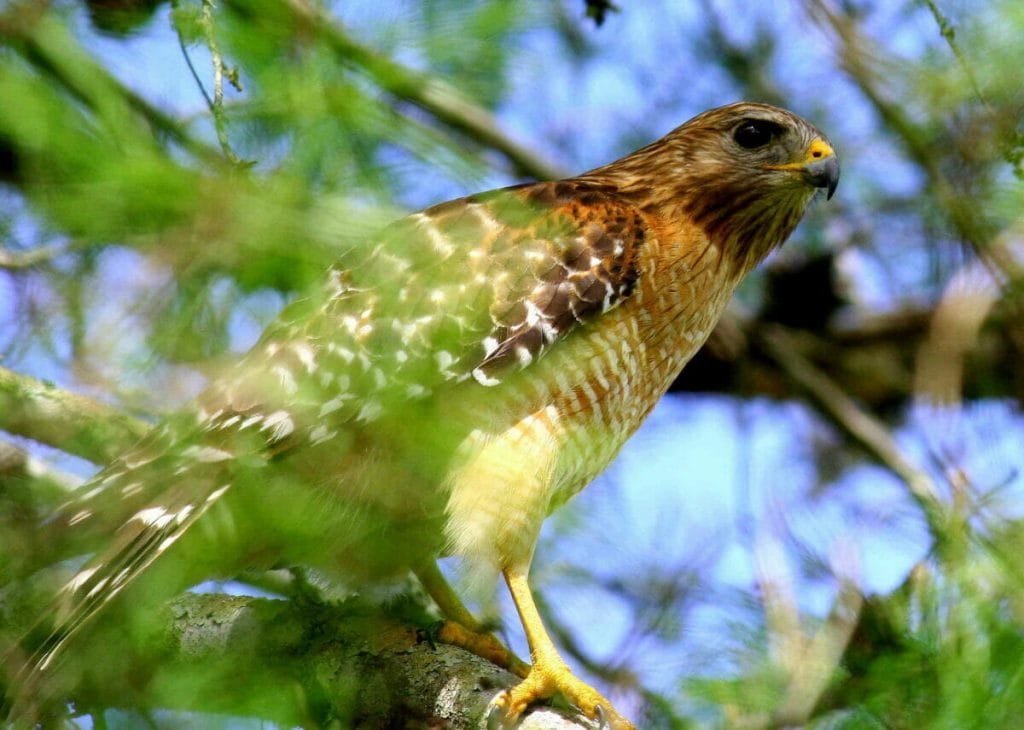
The Red-shouldered Hawk (Buteo lineatus)
The Red-shouldered Hawk is a striking resident of Georgia, identifiable by its distinctive rufous plumage on the breast and head, extending to its shoulders. The underside of its wings and tail are adorned with beautiful black and white checks. These hawks typically measure between 16.9 and 24.0 inches in length, with a wingspan ranging from 37.0 to 43.7 inches, and a weight of 17.1 to 27.3 ounces.
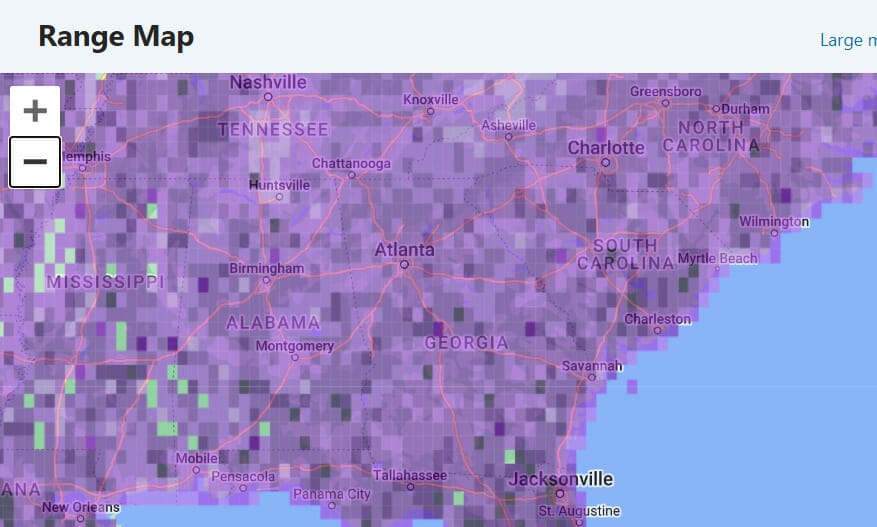
Distribution and Habitat: As indicated by eBird range maps, the Red-shouldered Hawk is found throughout Georgia, favoring woodland environments. Their presence is consistent year-round, making them a familiar sight for residents. These birds are often found near water sources, such as swamps, marshes, and riparian forests, where their prey is abundant.
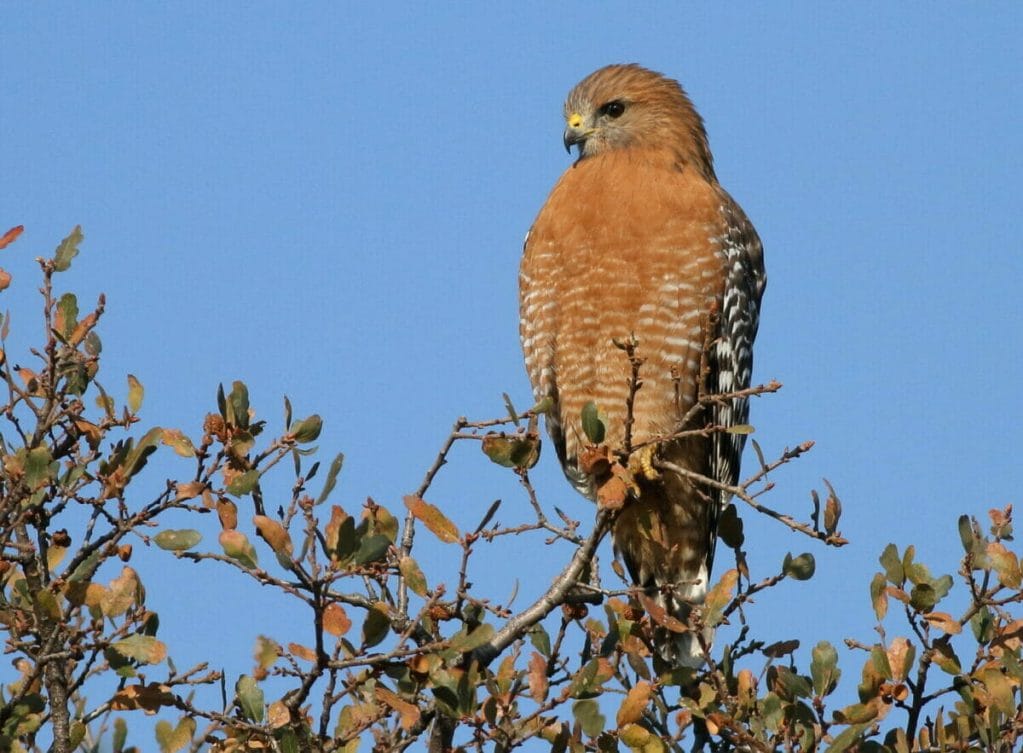
Ecological Role: The Red-shouldered Hawk is an opportunistic predator, primarily feeding on small mammals, reptiles, amphibians, and occasionally birds. Their hunting strategy involves perching and waiting for prey to emerge before launching a swift attack.
Interesting Fact: The distinctive call of the Red-shouldered Hawk, often described as a repetitive "kee-ah," can be heard frequently in its preferred wooded habitats.
The Cooper’s Hawk (Accipiter cooperii)
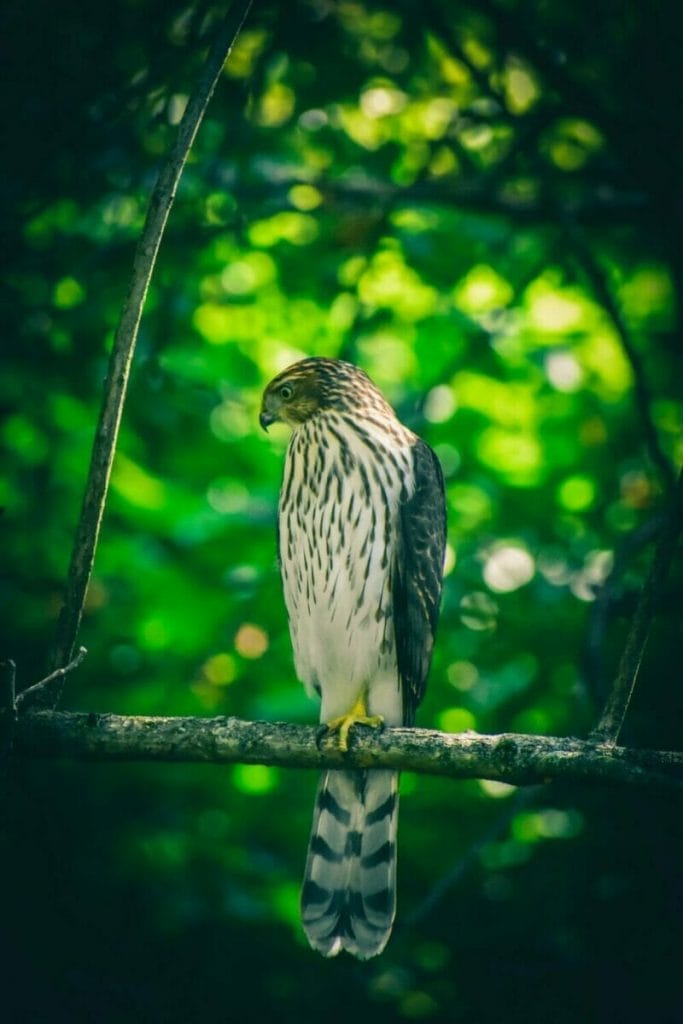
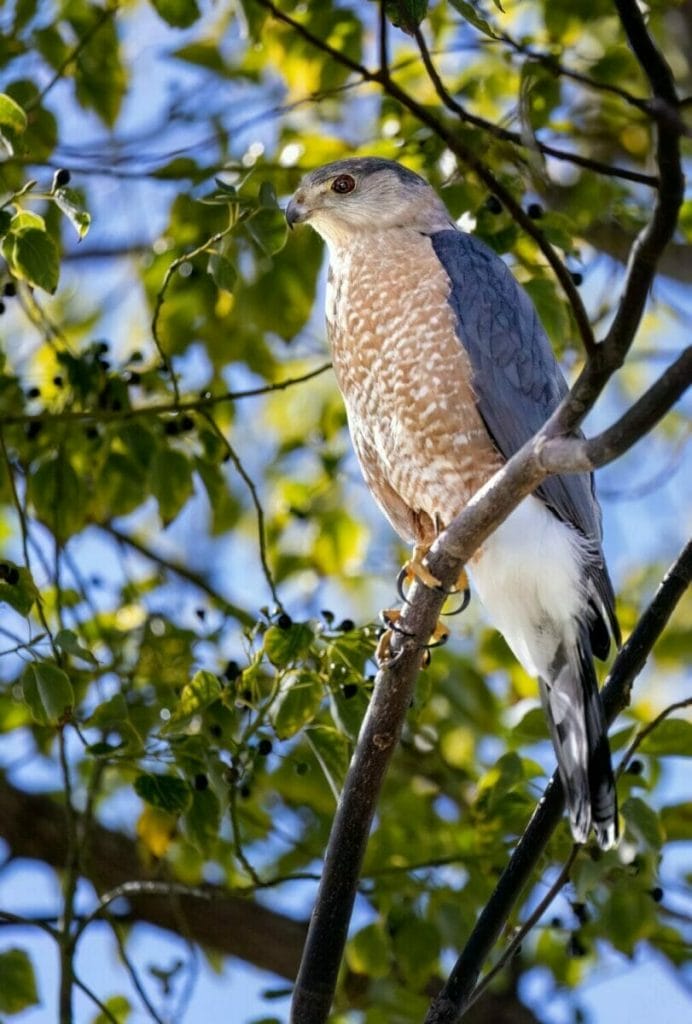
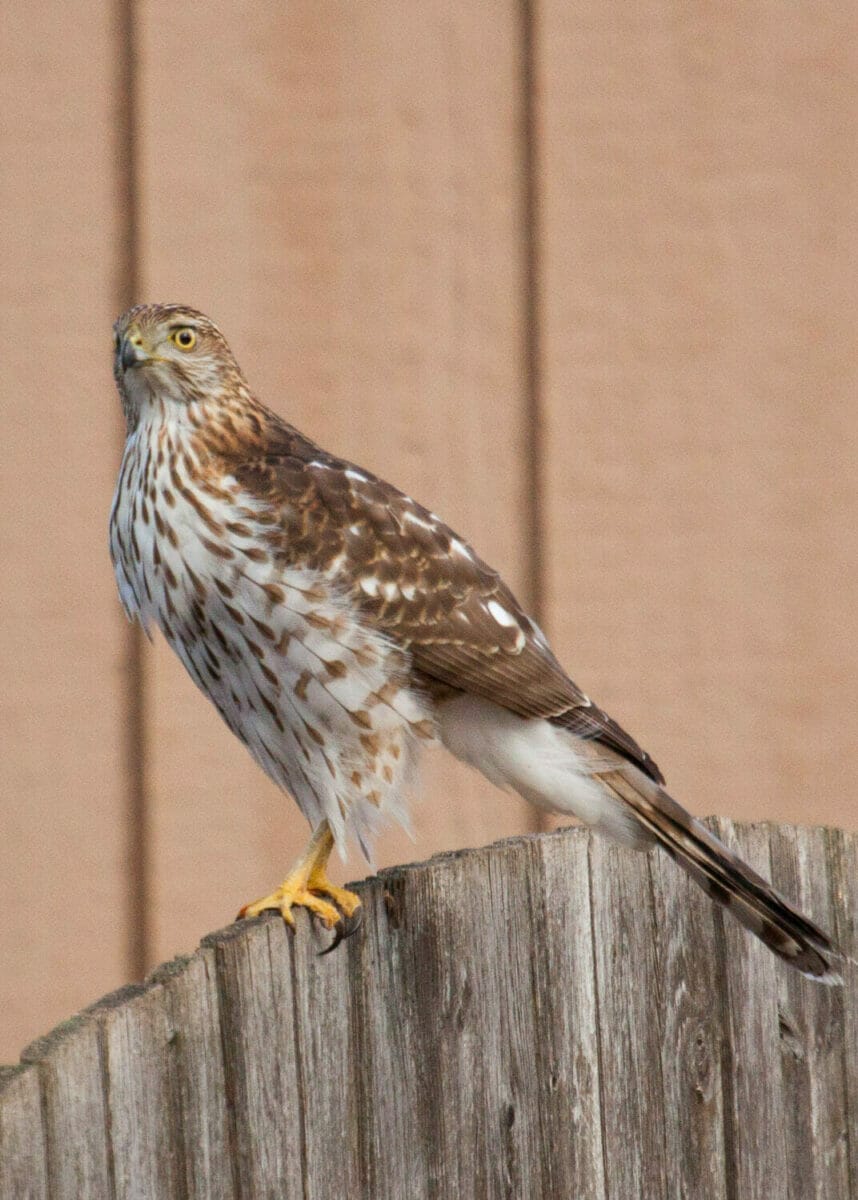
The Cooper’s Hawk, a member of the Accipiter genus, is a medium-sized hawk characterized by its dark gray upperparts and distinctive orange or rufous barring on its chest and pale belly. While males and females are similar in appearance, females are notably larger. Juvenile Cooper’s Hawks are brown with streaky underparts. Their eyes are a striking feature, often appearing dark and intense.
Identification and Size: Cooper’s Hawks typically measure between 14.6 and 17.7 inches in length, with a wingspan of 24.4 to 35.4 inches, and a weight between 7.8 and 24 ounces. The size difference between sexes is a common trait in Accipiter hawks.
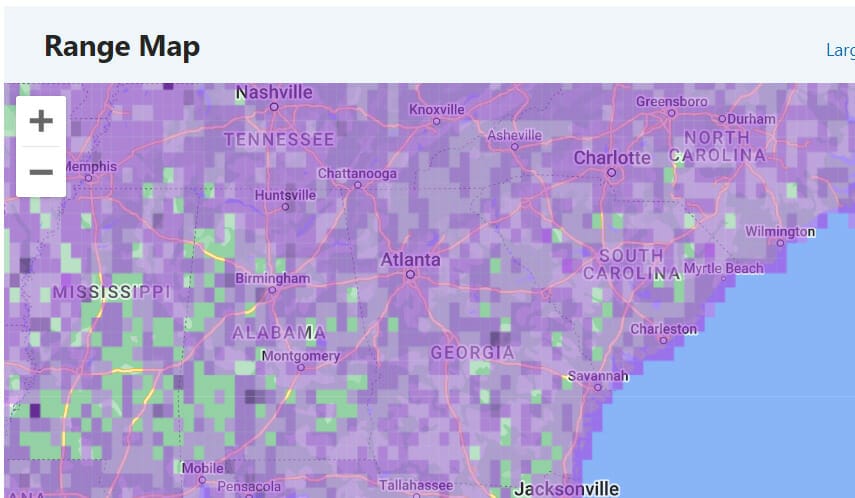
Distribution and Habitat: While migratory in many parts of the United States, the Cooper’s Hawk is a year-round resident in Georgia. They often inhabit the canopy of forests, making them slightly less visible than some other hawk species. Their presence is noted across the state, adapting to various wooded environments, including suburban areas with mature trees.
Hunting Strategy: Cooper’s Hawks are agile hunters, renowned for their ability to navigate dense woodlands to pursue their prey, which primarily consists of medium-sized birds. They employ a strategy of surprise and speed, often ambushing unsuspecting birds.
Interesting Fact: The Cooper’s Hawk is known for its powerful talons, which it uses to subdue and kill its prey through constriction.
The Sharp-shinned Hawk (Accipiter striatus)
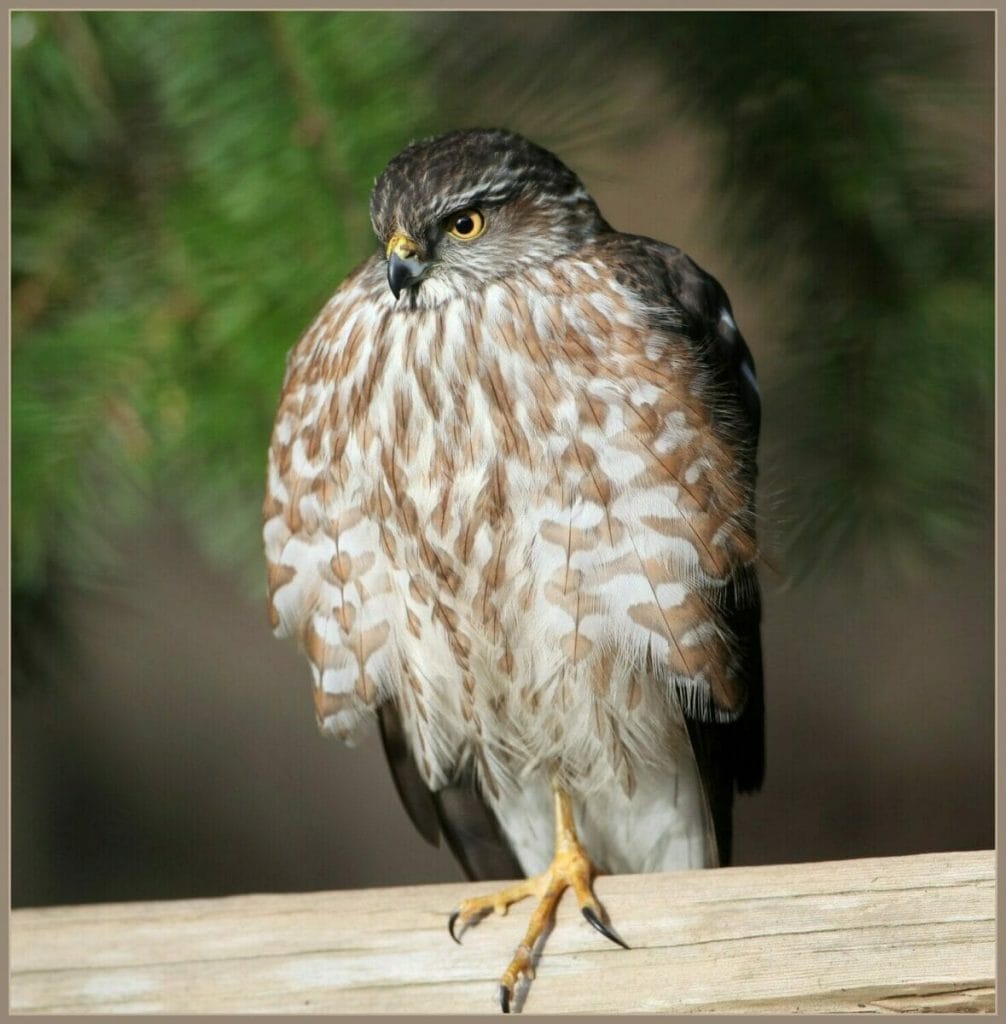
The Sharp-shinned Hawk is another Accipiter species found in Georgia, often confused with the Cooper’s Hawk due to their similar appearance. However, the Sharp-shinned Hawk is significantly smaller. It presents with dark gray upperparts and paler underparts, often with fine barring. Like the Cooper’s Hawk, females are larger than males.
Identification and Size: These smaller hawks measure between 9.4 and 13.4 inches in length, with a wingspan of 16.9 to 22.1 inches, and a weight ranging from 3.1 to 7.7 ounces. The tail of the Sharp-shinned Hawk is typically square-ended, contrasting with the Cooper’s Hawk’s more rounded tail.
Distribution and Habitat: The Sharp-shinned Hawk is a migratory species that spends the non-breeding season in Georgia, typically from fall through spring, before returning to its breeding grounds in Canada. They prefer dense forests, which can make them elusive.
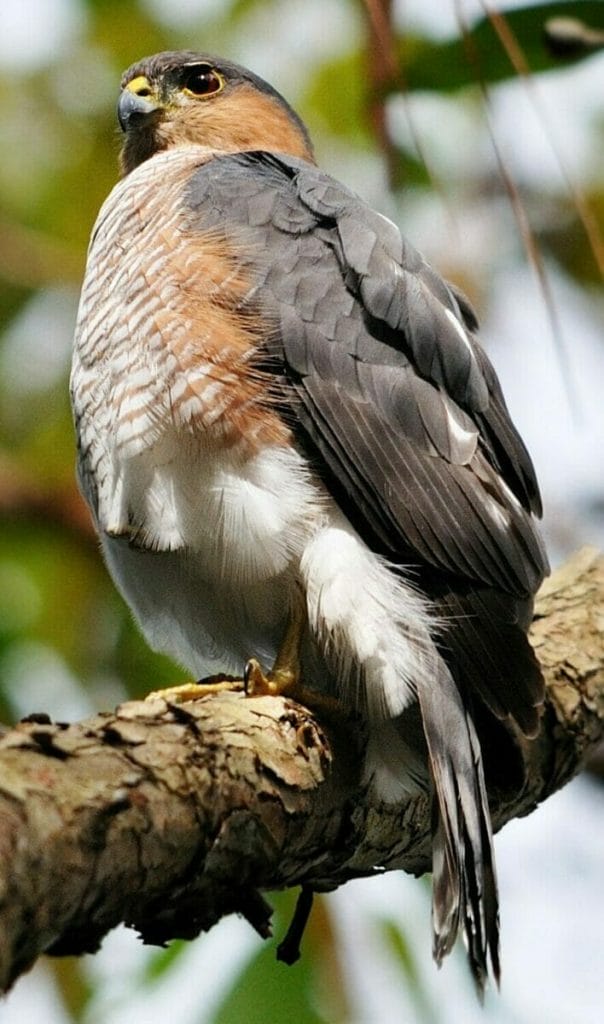
Diet and Hunting: Their diet consists mainly of small birds, which they pursue with remarkable agility through dense foliage. They are known to kill their prey by crushing them with their powerful talons.
Interesting Fact: The name "Sharp-shinned" refers to the narrowness of their leg scales, a feature that distinguishes them from their larger relatives.
The Red-tailed Hawk (Buteo jamaicensis)
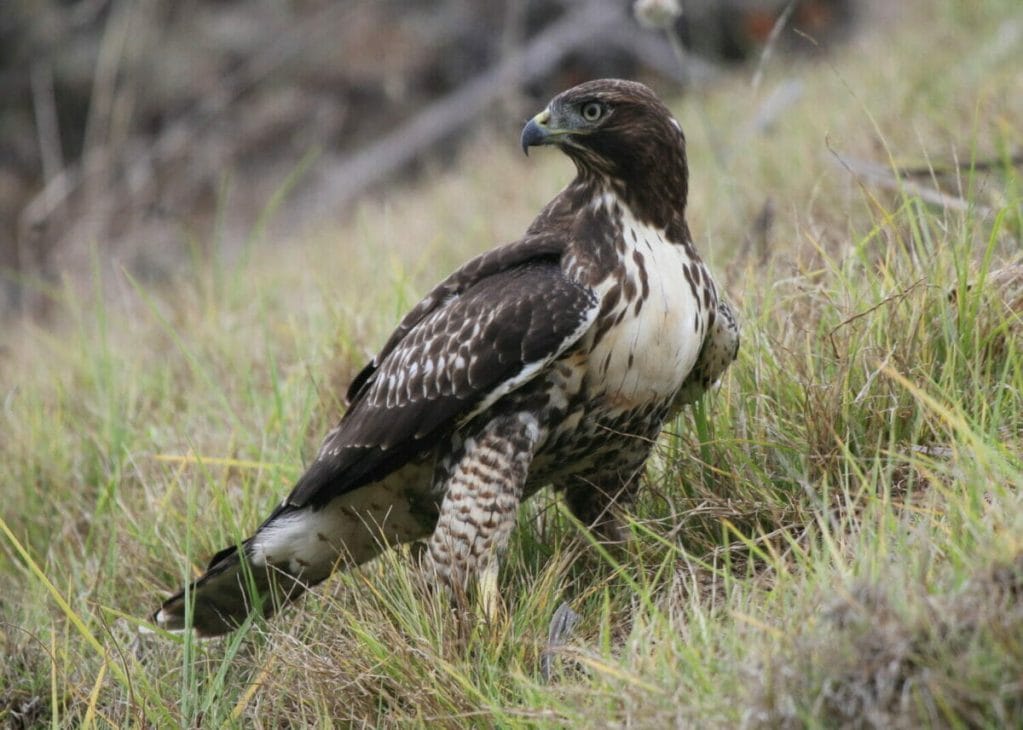
The Red-tailed Hawk is arguably the most common and widespread raptor in North America, and Georgia is no exception. Its most defining characteristic, when viewed from above, is its brick-red tail, although plumage can vary considerably across its vast range. Birds in Georgia typically exhibit a pale underside with red and brown markings. Males are smaller than females.
Identification and Size: This is one of the larger hawks found in Georgia, measuring between 17.7 and 25.6 inches in length, with an impressive wingspan of 44.9 to 52.4 inches. Their weight ranges from 24.3 to 51.5 ounces.
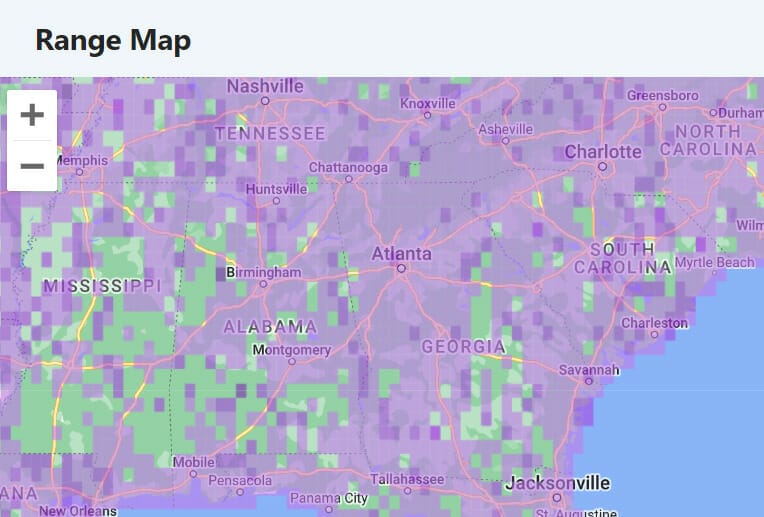
Distribution and Habitat: Red-tailed Hawks are found year-round throughout Georgia, inhabiting a wide variety of environments, including forests, woodlands, grasslands, deserts, and urban areas. Their adaptability allows them to thrive in diverse landscapes, from open country to wooded edges.
Ecological Niche: As a generalist predator, the Red-tailed Hawk preys on a wide range of animals, including small mammals, birds, reptiles, and amphibians. They are often observed soaring high in the sky or perched on prominent vantage points, scanning for prey.
Interesting Fact: The distinctive, shrill scream of the Red-tailed Hawk is so iconic that it is frequently used as a sound effect in Hollywood films, often to evoke a sense of wildness or danger, even when the visual depicts a different species.
The Broad-winged Hawk (Buteo platypterus)
The Broad-winged Hawk is a short-bodied hawk with notably wide wings, making it a distinctive sight during its migratory periods. Adults are characterized by brown upperparts and barred underparts, with rufous coloring near the shoulders and black and white banding on the wings and tail.
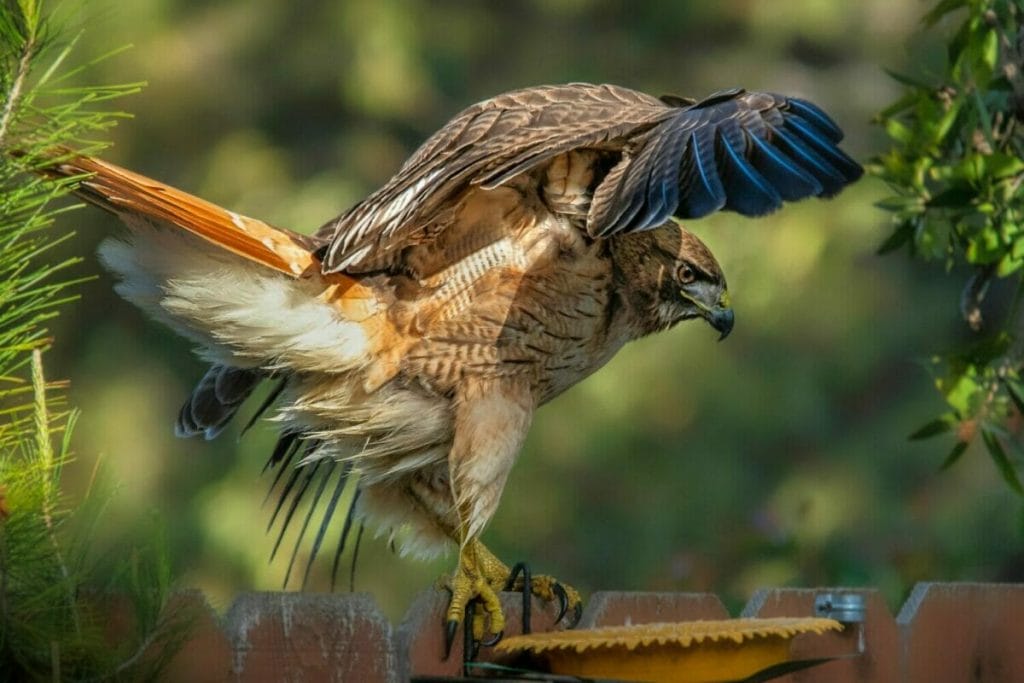
Identification and Size: This hawk measures between 13.4 and 17.3 inches in length, with a wingspan of 31.9 to 39.4 inches, and a weight of 9.3 to 19.8 ounces.
Distribution and Habitat: In Georgia, the Broad-winged Hawk is a summer visitor, breeding in the state before migrating to Central and South America for the winter. They prefer mature deciduous forests.
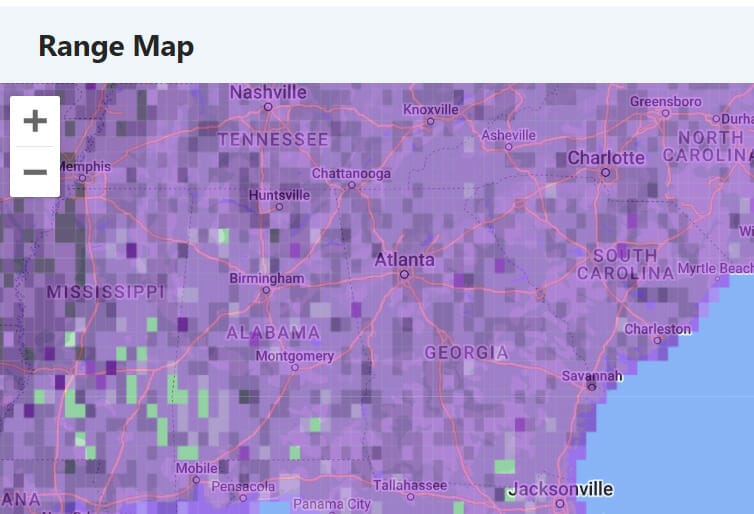
Behavior: A fascinating aspect of the Broad-winged Hawk’s life cycle is its migratory behavior. During their journeys, they often gather in large flocks known as "kettles," soaring in tight circles at high altitudes. This phenomenon creates a spectacular natural display.
Interesting Fact: Their diet primarily consists of small mammals, amphibians, and insects, which they hunt from perches within their forested habitat.

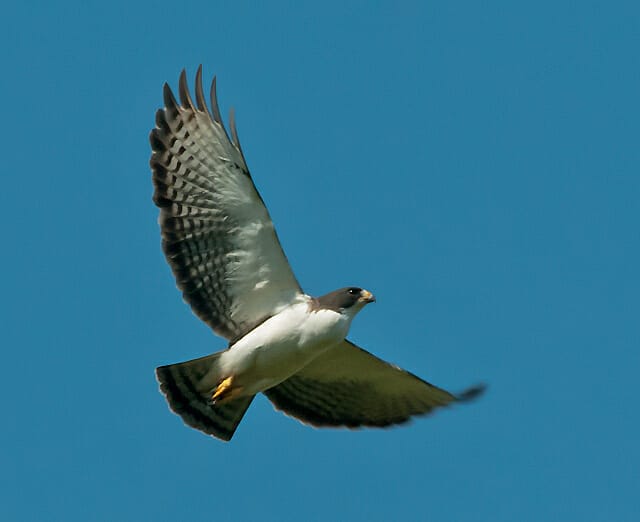
The Short-tailed Hawk (Buteo brachyurus)
The Short-tailed Hawk is a less common visitor to Georgia, with a more established population in south Florida. However, it does breed further north, and Georgia falls within its potential range.
Identification and Size: This hawk is easily identifiable by dark patches around its face that frame a white throat. Two morphs exist: a dark morph with a predominantly dark body and some white underwings, and a pale morph with a white underside and black barring. They measure between 15.3 and 17.3 inches in length, with a wingspan of 32.7 to 40.5 inches, and a weight of 13.6 to 16.9 ounces.
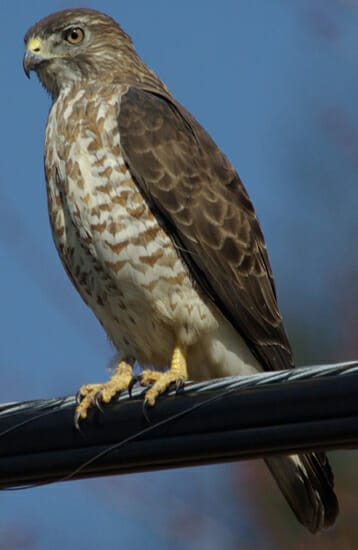
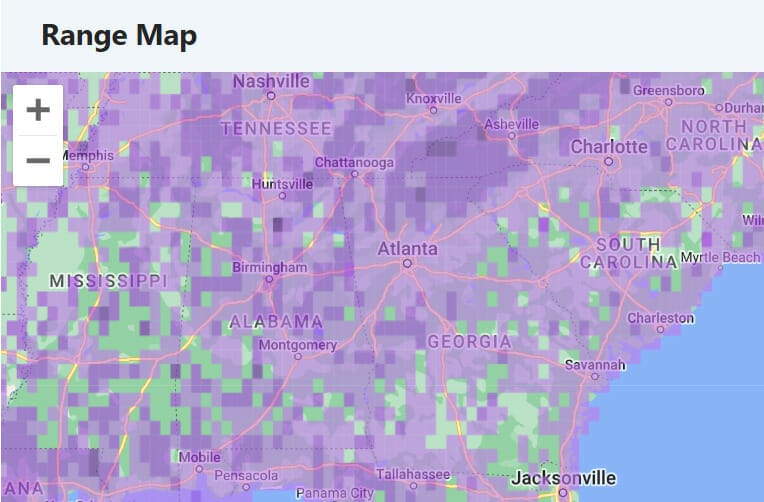
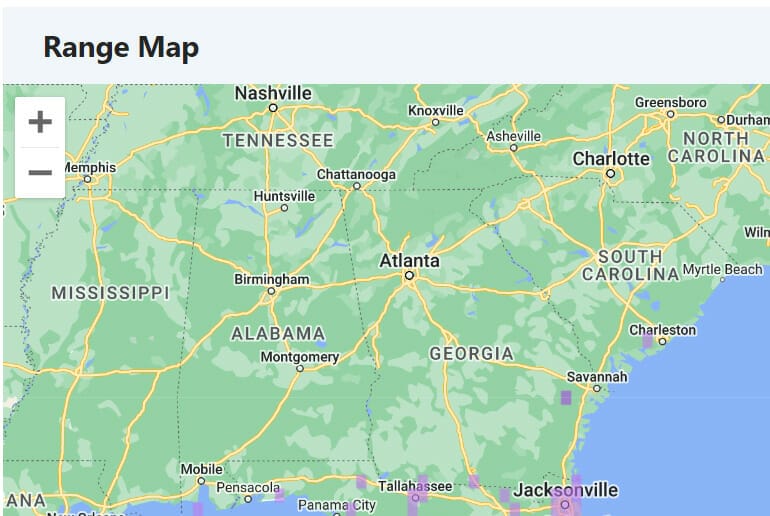
Distribution and Habitat: Sightings in Georgia are rare, with fewer than 15 reports logged in eBird. They are typically found in the southern parts of the state, favoring open woodlands and pine forests.
Interesting Fact: The dark morph is more prevalent in Florida and thus likely represents the form seen in Georgia, adding to its unique presence.
The Northern Goshawk (Accipiter gentilis)
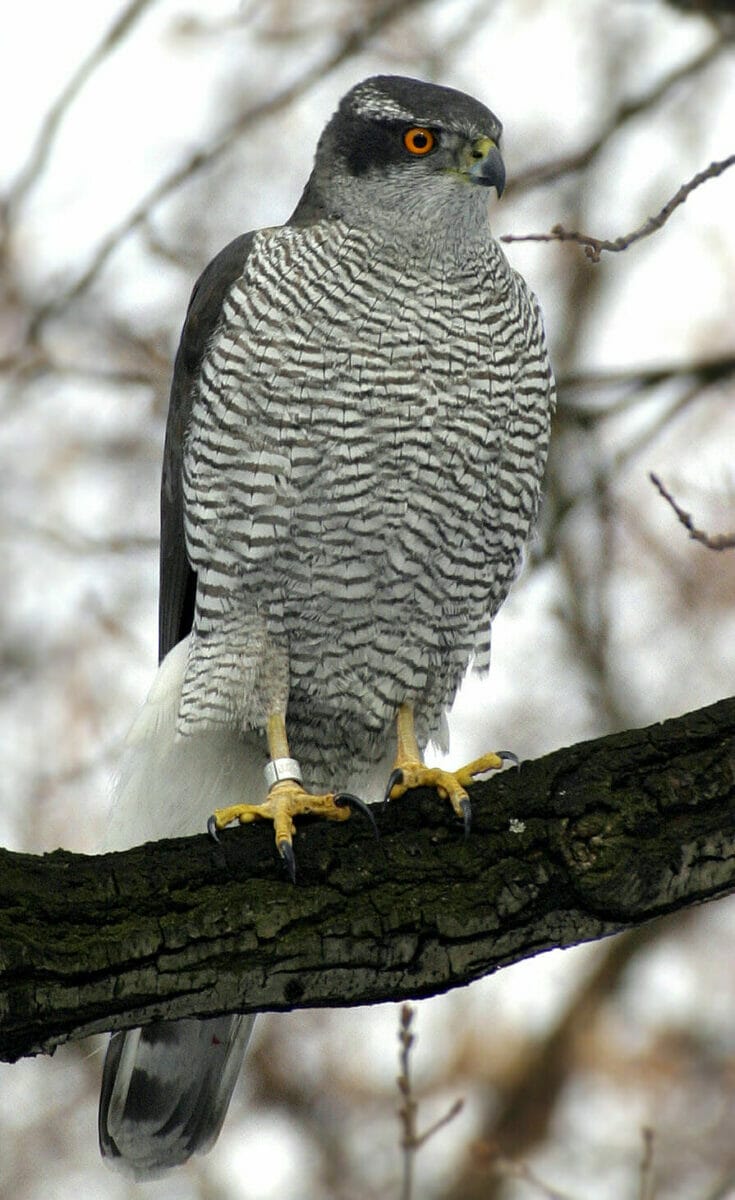
The Northern Goshawk is a powerful and imposing bird of prey, characterized by its dark gray back and intricate pale markings on its underside. A prominent red eye and a strong white brow stripe are key identification features. Juvenile birds exhibit varied brown plumage.
Identification and Size: This is one of the larger Accipiter species, measuring between 20.9 and 24.0 inches in length, with a wingspan of 40.5 to 41.1 inches, and a weight of 22.3 to 48.1 ounces.
Distribution and Habitat: The Northern Goshawk is a very rare sighting in Georgia, with only three reported occurrences on eBird. The northwestern border of the state lies at the southern edge of its typical range. They prefer mature, dense forests.
Nesting Behavior: A remarkable aspect of the Northern Goshawk’s reproductive strategy is its tendency to maintain multiple nesting sites, sometimes up to eight. They may alternate between these sites or reuse them from year to year, depending on the success of previous nesting attempts.
Interesting Fact: Their presence in Georgia is a significant ornithological event, highlighting the state’s role in the periphery of this species’ expansive range.
The Northern Harrier (Circus hudsonius)
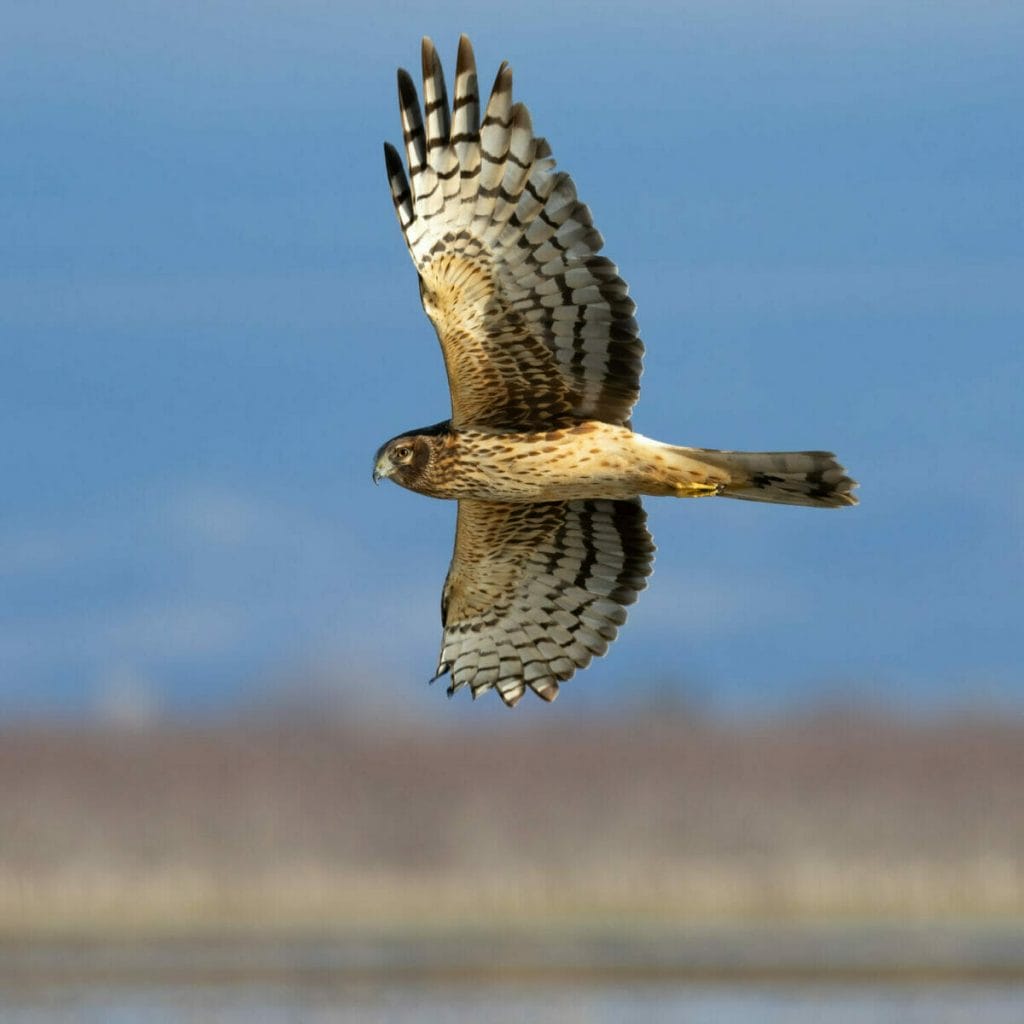
The Northern Harrier is an elegant and attractive hawk, easily recognized by its owl-like facial disc, which helps it to locate prey by sound. Adults are typically gray with distinctive markings around the face. They possess long wings with thick barring underneath and a long tail.
Identification and Size: Northern Harriers measure between 18.1 and 19.7 inches in length, with a wingspan of 40.2 to 46.5 inches, and a weight of 10.6 to 26.5 ounces.
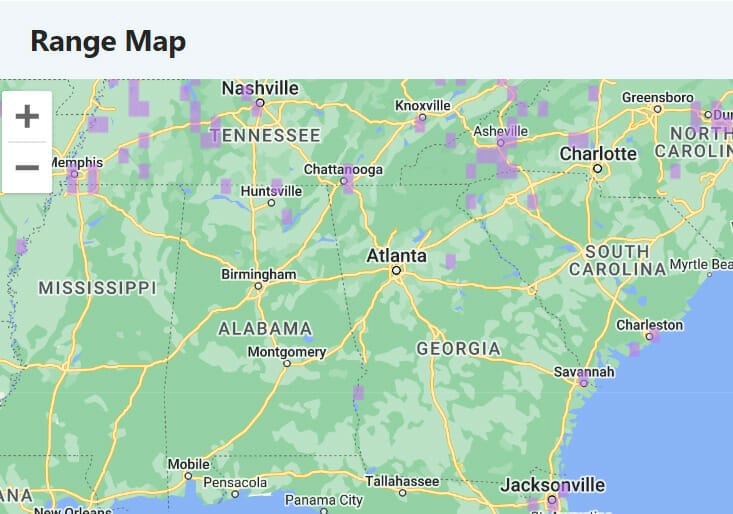
Distribution and Habitat: Georgia falls within the non-breeding range of the Northern Harrier, meaning they are present in the state during the spring, autumn, and winter months. They favor open habitats such as grasslands, marshes, and agricultural fields, where they hunt small mammals.
Hunting Technique: Unlike many other hawks that hunt from perches, the Northern Harrier hunts on the wing, flying low over open terrain with its head down, listening and looking for prey.
Interesting Fact: Their distinctive "harrier" flight pattern, low and gliding over open country, makes them a unique sight in Georgia’s wintering grounds.
Conclusion
In summary, Georgia is home to a compelling array of hawk species, encompassing the Buteo genus, the Accipiter genus, and the Circus genus. Our exploration has identified four Buteo species (Red-shouldered, Red-tailed, Broad-winged, and Short-tailed Hawks), three Accipiter species (Cooper’s, Sharp-shinned Hawks, and the Northern Goshawk), and one Circus species, the Northern Harrier. While initial assumptions might suggest Georgia’s geography could support a larger hawk population, the presence of other birds of prey, including three eagle species (Bald, Golden, and Osprey) and three falcon species (Peregrine, Kestrel, and Merlin), indicates a rich and diverse raptor community within the state.
The study of these birds offers a fascinating glimpse into the intricate relationships between species and their environments. Understanding the nuances of hawk classification not only satisfies ornithological curiosity but also underscores the importance of habitat conservation to ensure the continued presence of these magnificent predators in Georgia’s natural heritage.
FAQ
What is the largest bird of prey in Georgia?
Among the species discussed as hawks, the Red-tailed Hawk is the largest, closely followed by the Northern Harrier.
How do you tell if a bird is a hawk or a falcon?
Falcons possess a distinctive notch at the top of their bill, known as a "tomial tooth," which aids in killing prey. Hawks lack this feature. Additionally, falcons tend to be smaller, more slender, and exhibit greater agility in flight compared to many hawk species.
Can a hawk lift a dog?
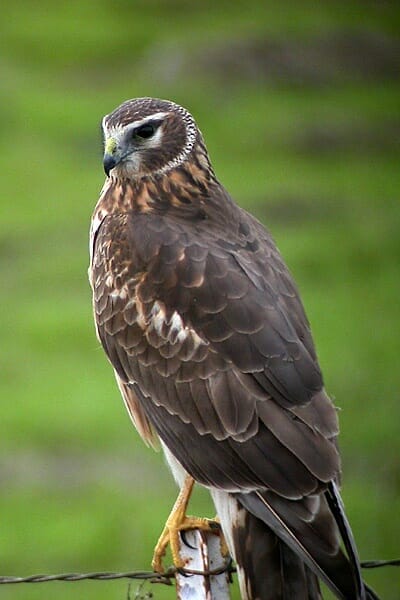
While large hawks, such as the Red-tailed Hawk, possess the strength to carry prey as heavy as small cats or rabbits, it is highly unlikely they would attempt to lift a domestic dog. Such an event would be exceptionally rare and would typically involve very small or incapacitated dogs in an unusual context.

