


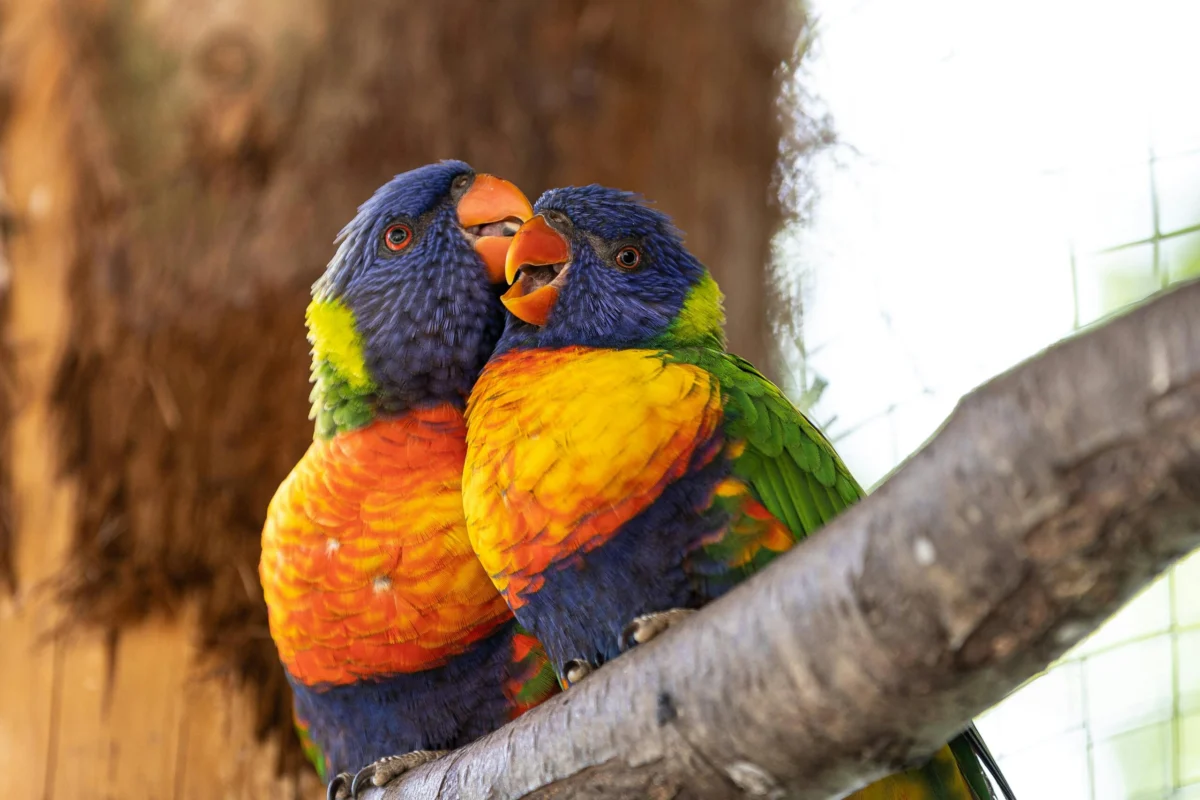
At first glance, these avian wonders might seem plucked from the pages of a fantasy novel or rendered by a digital artist. Their colors are so vibrant, their patterns so intricate, they appear almost too perfect to be real. Some might mistake them for plush toys, fantastical cartoon characters, or meticulously crafted digital illustrations. Yet, every bird on this list is a living, breathing testament to the extraordinary power and creativity of nature, existing right now in habitats across the globe. Remarkably, several of these astonishing creatures can even be observed within the United States. This article delves into ten of the world’s most unreal-looking birds and explores the fascinating evolutionary reasons behind their spectacular appearances.
A Symphony of Color: The Evolutionary Drivers Behind Avian Spectacle
The vibrant hues and complex patterns adorning these birds are not mere cosmetic embellishments. Instead, they serve crucial evolutionary functions, deeply intertwined with survival, reproduction, and communication. Scientists have long studied the role of coloration in the avian world, recognizing it as a sophisticated language that conveys vital information about an individual’s health, genetic fitness, and social standing.

The primary driver behind such striking appearances is often sexual selection. In many species, particularly males, the brightest and most elaborate plumage signals to potential mates that they are healthy, strong, and possess superior genes. This visual display is a form of honest signaling; only individuals in peak condition can afford to invest energy in developing and maintaining such vibrant coloration, which can also make them more conspicuous to predators.
Beyond mating rituals, coloration plays a significant role in species recognition, territorial defense, and even camouflage. The specific pigments and structural properties of feathers interact with light in complex ways, creating iridescent effects and colors that can be perceived differently by various species. It’s a reminder that the visual world experienced by birds is often far richer and more nuanced than our own human perception.
Ten Birds That Look Too Good to Be True
1. Resplendent Quetzal (Pharomachrus mocinno)

Often heralded as one of the most beautiful birds on Earth, the Resplendent Quetzal is a sight that truly belongs in a dreamscape. Its iridescent green plumage, combined with a vibrant red breast and an astonishingly long, flowing tail feather (which can extend up to three feet in males), creates an ethereal presence.
- Why it looks unreal: The quetzal’s dazzling emerald green and crimson hues, coupled with its impossibly long tail plumes, give it an almost otherworldly appearance.
- Evolutionary Significance: These spectacular colors are believed to play a crucial role in mate selection. The brilliance and length of the male’s tail feathers are indicators of his health and genetic quality, attracting females during the breeding season. The vibrant colors are created by the microscopic structure of the feathers, which refract light to produce brilliant iridescence, rather than solely relying on pigments.
2. Mandarin Duck (Aix galericulata)
The Mandarin Duck is a waterfowl that appears to have been meticulously painted by an artist with an extraordinary palette. The males, in particular, are adorned with a riot of colors and patterns, featuring striking orange "sails" on their backs, rich chestnut flanks, purple breasts, and an array of greens, blues, and whites on their heads and wings.

- Why it looks fake: Its complex and almost chaotic mosaic of colors and feather shapes makes it look like a creation from a whimsical illustration.
- Where to find it: While native to East Asia, small feral populations of Mandarin Ducks have established themselves in various parts of the United States, often found in parks and ornamental ponds, particularly in states like California and New York. Their presence in urban settings further adds to their surreal quality.
3. Painted Bunting (Passerina ciris)
The Painted Bunting is a small songbird that lives up to its name, appearing as if multiple pots of vibrant paint were spilled onto its form. Males are a breathtaking combination of brilliant blue heads, green backs, red underparts, and yellow flanks, creating a stunning visual spectacle. Females and juvenile birds are a more subdued, yet still attractive, lime green.
- Why it looks unreal: The sheer intensity and juxtaposition of its colors—electric blue, vivid green, and fiery red—make it look like a living jewel.
- Where to find it: These birds are primarily found in the southeastern United States, with their range extending across Texas, Oklahoma, Arkansas, Louisiana, and parts of the Carolinas and Florida. Birdwatchers often seek them out for their unparalleled beauty.
- Dietary Influence: The intense coloration of the Painted Bunting is thought to be influenced by its diet. Carotenoid pigments, obtained from seeds and insects, are incorporated into the feathers, contributing to their vibrant yellow and red hues.
4. Violet-Backed Starling (Cinnyricinclus leucogaster)

The Violet-Backed Starling presents a dramatic visual contrast that can be startling. While the female is a modest brown, the male is predominantly glossy black, but with an extraordinary, iridescent violet-blue back and upper wings that shimmer and shift in the light.
- Why it looks unreal: The deep, metallic violet sheen that seems to emanate from its back, changing hue with every subtle movement, gives it an almost magical quality.
- A Reminder of Avian Vision: This bird serves as a potent reminder that birds perceive a broader spectrum of light than humans. What appears as a brilliant violet to us is likely an even more intense and dynamic display to other birds, playing a significant role in their visual communication.
5. Atlantic Puffin (Fratercula arctica)
During the breeding season, the Atlantic Puffin transforms into a creature that looks remarkably like a character from a children’s animation. Their black and white plumage is offset by a spectacularly large, triangular bill that is brightly colored in bands of orange, yellow, and blue. Their striking facial markings and vibrant beak give them a comical yet captivating appearance.

- Why it looks fake: The combination of its tuxedo-like plumage, comical facial expression, and oversized, multi-colored beak gives it a distinctly cartoonish appeal.
- Seasonal Transformation: A fascinating aspect of the puffin’s appearance is its seasonal variability. Outside of the breeding season, their colorful beaks become duller and smaller, making their summer transformation even more dramatic and contributing to their unreal look during their most active period.
6. Golden-Headed Quetzal (Pharomachrus auriceps)
A close relative of the Resplendent Quetzal, the Golden-Headed Quetzal also boasts breathtaking plumage that defies expectation. Its body is a vibrant emerald green, contrasting sharply with a fiery red chest. Its most distinctive feature, however, is its brilliant golden-yellow head, which gives it its name and adds to its fantastical appearance.
- Why it looks unreal: The striking contrast between its emerald green body, ruby red chest, and vivid golden head creates a color combination that appears almost digitally enhanced.
- Structural Coloration: Similar to other birds with iridescent feathers, the vibrant colors of the Golden-Headed Quetzal are not solely due to pigments. The microscopic structure of its feathers interacts with light, scattering it to produce these intense, shimmering hues.
7. Blue Jay (Cyanocitta cristata)

Commonly found across eastern and central North America, the Blue Jay might seem familiar, but a closer look reveals its almost artificial-looking coloration. Its brilliant azure blue, white, and black plumage, along with its prominent crest, makes it a visually striking bird.
- Why it looks unreal: The intense, almost electric blue of its feathers, combined with its sharp black markings and elegant crest, can give it a strikingly artificial appearance, like a meticulously crafted ornament.
- A Surprising Fact About Its Color: The vibrant blue of a Blue Jay’s feathers is not due to pigment. Instead, it’s a result of the way light scatters off the microscopic structure of the feathers. This phenomenon is known as structural coloration. If you were to crush a blue feather, the color would disappear, a testament to its physical rather than chemical origin.
8. Scarlet Macaw (Ara macao)
The Scarlet Macaw is an iconic symbol of the rainforest, a flying embodiment of vibrant color. Its plumage is a dazzling spectacle of bright scarlet red, complemented by striking bands of yellow and blue on its wings and tail. Its large size and bold coloration make it impossible to miss.

- Why it looks fake: The extreme saturation and high contrast of its primary colors—scarlet, yellow, and blue—are so intense that they can appear almost hyperreal, like a fantasy creature.
- Communication Through Color: The extreme coloration of the Scarlet Macaw is not just for aesthetic appeal. In the complex social structures of macaws, these colors play a vital role in communication, signaling health, status, and readiness to mate. This vibrant display is a powerful example of how color functions as a sophisticated communication tool in the natural world.
9. Gouldian Finch (Erythrura gouldiae)
Hailing from Australia, the Gouldian Finch is a small bird that packs an immense visual punch. It is renowned for its tri-colored plumage, typically featuring a black, red, or yellow head, a vibrant green back, and a bright purple chest, all sharply delineated. The variations in head color alone add to its unique appeal.
- Why it looks unreal: The sharp, distinct borders between its neon green, vivid purple, and striking head colors, often in combinations of red or yellow, make it appear like a meticulously designed piece of art.
- Social Signaling: Each color variation on the Gouldian Finch plays a role in its social behavior and mate selection. These distinct color patterns allow individuals to recognize each other, signal their genetic quality, and maintain social hierarchies within their flocks.
10. Keel-Billed Toucan (Ramphastos sulfuratus)

The Keel-Billed Toucan is instantly recognizable by its extraordinarily large and vibrantly colored bill, which displays a stunning spectrum of green, blue, orange, and yellow. This remarkable appendage is not merely decorative; it serves a crucial biological function.
- Why it looks fake: The sheer size and the improbable rainbow of colors on its bill, coupled with its sleek black body, give it a comical and almost cartoonish appearance.
- Thermoregulation: This oversized, colorful bill is not just for show. It plays a vital role in thermoregulation. The bill has a rich network of blood vessels that allow the toucan to dissipate excess body heat in the warm tropical climates it inhabits, effectively acting as a natural radiator.
Can You See Any of These Birds in the United States?
While many of these extraordinary birds reside in tropical regions, some can indeed be found within the United States, offering local opportunities for observation:
- Blue Jay: A widespread resident across the eastern and central United States, easily spotted in wooded areas, parks, and suburban backyards.
- Painted Bunting: Primarily found in the southeastern United States, particularly in states like Texas, Oklahoma, Arkansas, Louisiana, and parts of Florida and the Carolinas. They favor brushy areas and open woodlands.
- Mandarin Duck: While not native, feral populations have established themselves in several states, often in parks and urban water features, particularly in California and some East Coast cities.
- Scarlet Macaw: While not a natural resident of the continental U.S., escaped pets and small, localized populations (often the result of introductions or escaped captive birds) have been reported in South Florida and the Rio Grande Valley of Texas. However, these are not wild, self-sustaining populations in the traditional sense.
- Atlantic Puffin: These seabirds breed on islands off the coast of Maine during the summer months, making them accessible to birdwatchers in that specific region.
The Broader Impact: Nature’s Unmatched Creativity
The existence of these visually arresting birds serves as a powerful reminder of nature’s boundless creativity and evolutionary ingenuity. These creatures, with their seemingly impossible colors and patterns, are not anomalies but rather sophisticated products of millions of years of adaptation. They demonstrate that "unreal" appearances are often merely a reflection of our limited human perspective and our conventional notions of what is possible.

The implications of studying these birds extend beyond mere aesthetic appreciation. Understanding the mechanisms behind their coloration—from pigment absorption and structural light scattering to thermoregulation and sexual selection—provides invaluable insights into evolutionary biology, animal behavior, and the intricate ways in which life adapts to its environment. It underscores that in the natural world, color is rarely just for decoration; it is a vital component of survival, communication, and the perpetuation of species.
As we observe these feathered marvels, we are invited to reconsider our definition of reality and to marvel at the artistry that unfolds in the wild. Once you begin to notice the extraordinary palette of the natural world, it becomes an endlessly fascinating journey, revealing that the most incredible designs are often found not in a designer’s studio, but in the heart of the wilderness.

