


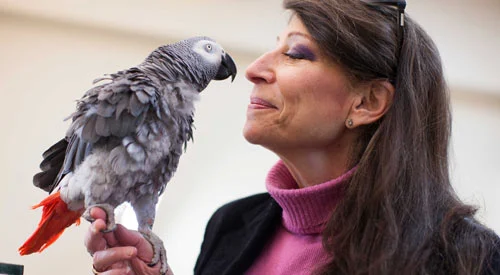
Dr. Irene Pepperberg, a globally recognized authority in avian cognition and research, successfully returned home on March 9th after an extended and perilous stranding in Dubai, a situation precipitated by escalating geopolitical tensions and widespread travel disruptions. The renowned scientist, best known for her groundbreaking work with African Grey parrots Alex and Griffin, recounts a challenging ordeal marked by bureaucratic frustrations, daily flight cancellations, and the looming threat of regional conflict, ultimately resolved through the unexpected intervention of dedicated philanthropic donors. Her experience sheds light on the vulnerabilities faced by international travelers caught in rapidly evolving geopolitical crises and underscores the critical role of private support when official channels prove insufficient.
Background to the Dubai Stranding: Geopolitical Unrest in the Gulf
Dr. Pepperberg’s predicament in Dubai occurred against a backdrop of heightened regional instability in early March 2023. While the specific nature of the conflict was not explicitly detailed in her initial communications, references to "missiles fly in Dubai" and nightly "Shelter in place" alerts strongly suggest a response to the ongoing threat of drone and missile attacks originating from various non-state actors in the wider Middle East, particularly those linked to the Houthi movement in Yemen. Over recent years, the United Arab Emirates has faced sporadic but significant aerial attacks targeting its infrastructure, including its capital Abu Dhabi and commercial hub Dubai. These incidents, often involving drones and ballistic missiles, have led to temporary disruptions to civil aviation and heightened security alerts across the Emirates. Such events necessitate stringent security measures, including airspace closures and flight diversions, which can cascade into widespread cancellations and leave travelers stranded.
Dr. Pepperberg had been in Dubai for professional engagements, likely related to her ongoing research or academic collaborations, when the situation deteriorated. Her work at The Alex Foundation, which focuses on studying cognitive and communicative abilities in African Grey parrots, often involves international travel for conferences, lectures, and collaborative studies. The sudden escalation of security concerns transformed a routine professional trip into an unforeseen struggle for repatriation.
The Initial Ordeal: A Labyrinth of Cancellations and Bureaucracy
The initial phase of Dr. Pepperberg’s stranding was characterized by a frustrating cycle of hope and disappointment. Her scheduled flights, operated by Qatar Airways, were repeatedly rescheduled only to be cancelled hours later. This pattern, common during periods of regional unrest or natural disaster, left her in a constant state of uncertainty, unable to make concrete plans for departure. The grounding of Qatar Airways flights from Dubai to Doha, a crucial transit hub for onward connections to the U.S., effectively severed her primary route home.
Seeking assistance, Dr. Pepperberg turned to the U.S. State Department, making almost daily calls to their various desks. While the personnel she spoke with were consistently described as "extremely friendly," their ability to provide tangible help proved limited. A particularly illustrative incident involved a call from the "processing desk" offering a flight to Dulles International Airport in Washington D.C., only for the promised email with flight details to never materialize. Subsequent attempts to follow up revealed a significant bureaucratic disconnect: "input" desks, responsible for gathering information on stranded citizens, had no direct communication channel with "processing" desks, which handled actual repatriation logistics. This siloed structure effectively rendered the State Department’s efforts largely ineffective for individual cases like Dr. Pepperberg’s, highlighting a systemic challenge in coordinating rapid responses during crises.
Adding to the financial burden, Dr. Pepperberg discovered that the UAE’s offer to cover hotel and food expenses for stranded travelers applied exclusively to those flying on Emirates Airlines. As her original booking was with Qatar Airways, she was ineligible for this support, forcing her to bear the costs of extended accommodation and meals. Fortunately, she had prudently opted for more economical food purchases at a local supermarket rather than relying on hotel dining, mitigating some of the financial strain. Nevertheless, the accumulated expenses, particularly for international communication, spiraled, with her overall phone bill exceeding $1,200. This unforeseen expenditure underscores the hidden costs and financial vulnerabilities associated with unexpected international travel disruptions.
Maintaining Professional Life Amidst Crisis
Despite the personal distress, Dr. Pepperberg remained committed to her professional responsibilities. She continued to engage in academic tasks, including reviewing and editing papers, transcribing falcon data, and reading journal articles. This dedication to her work provided a semblance of normalcy and purpose amidst the chaos. A poignant detail was her regular video calls to the lab, specifically to Griffin, the African Grey parrot who is a successor to the legendary Alex. These calls were not merely a personal comfort but a professional imperative, ensuring Griffin understood he had not been abandoned, a critical factor in maintaining the bird’s well-being and the continuity of their long-term research relationship, which relies heavily on trust and consistent interaction.
Throughout this period, Dr. Pepperberg also maintained contact with her Dubai colleagues, ensuring their safety and sharing updates on the evolving situation. Friends in the U.S. also attempted to assist, but their efforts were similarly met with the same friendly yet ultimately unhelpful responses from the State Department, further illustrating the limitations of official support for private citizens during such crises.

A Turning Point: The Role of Philanthropy
The turning point in Dr. Pepperberg’s ordeal came unexpectedly through the philanthropic network supporting The Alex Foundation. A donor, reaching out for routine tax paperwork, learned of her predicament. Their immediate and unequivocal response was a lifeline: "Do whatever you have to do to get out and we’ll cover the expense!" This extraordinary act of generosity removed the significant financial barrier that had limited her options, empowering her to seek more expensive, but potentially available, alternatives.
Initially, even with financial backing, options remained scarce. Reports of companies facilitating transit to Oman (a 10.5-hour, costly drive) were circulating, but this route was viable only for British citizens, as the U.K. was chartering evacuation flights from Oman. The U.S., by contrast, had primarily focused on evacuating its embassy and consulate staff and their families, leaving private citizens to navigate the crisis largely on their own, a stark contrast to public statements suggesting broader repatriation efforts. This discrepancy between official rhetoric and on-the-ground reality is a common critique leveled against governments during international crises.
However, the situation shifted when Dr. Pepperberg received an airline alert indicating that Emirates Airlines would soon resume direct commercial flights to a limited number of U.S. cities. Acting swiftly, she accessed the Emirates website and found a single available seat: a business class flight to New York City scheduled for Sunday, March 9th. Despite the substantial cost, the donors’ commitment provided the necessary assurance. This decisive action, made possible by philanthropic support, transformed a seemingly insurmountable challenge into a tangible path to repatriation. Without the donors’ intervention, Dr. Pepperberg acknowledged she might still be stranded in Dubai.
The Perilous Journey Home
Even with a confirmed flight, the journey home was not without its anxieties. On Friday, March 7th, at 7 a.m., a powerful explosion rattled her hotel, a particularly alarming event given the hotel’s robust soundproofing and its proximity to Dubai International Airport. News reports eventually confirmed that an incident, likely involving a drone or shrapnel from an interception, had occurred on the airport’s periphery, leading to a temporary closure. This unsettling event underscored the persistent danger and the fragility of the situation, adding another layer of stress to her already strained nerves.
The logistical challenges continued up to her departure. While Emirates typically allows check-in 48 hours in advance, Dr. Pepperberg was only permitted a partial check-in 12 hours prior to her 1 a.m. Sunday flight. She was informed she would only receive her boarding pass upon arrival at the airport, creating uncertainty about the precise timing and location for check-in. Opting to arrive early, she spent an hour navigating the sprawling airport with her luggage, seeking assistance. Eventually, a "wonderfully helpful woman" provided personal assistance and even a wheelchair, an offer Dr. Pepperberg, by then "so stressed," gratefully accepted. The perks of business class, including access to an "elegant lounge," offered a brief respite before boarding. Once airborne and with Wi-Fi connectivity, she immediately began informing her concerned network of her safe departure, a testament to the relief she felt.
Upon reaching U.S. soil, the immense relief was palpable, even with the remaining domestic travel hurdles. The subsequent steps—Customs, another TSA security check (luckily avoiding insane lines despite a government shutdown), a lengthy layover in New York City, a connecting flight to Boston, and the final trip home from the airport—were mere inconveniences compared to the ordeal she had just endured. The overwhelming sentiment was no longer being in a war zone.
The Aftermath: Recovery and Reflection
The month following her return has been dedicated to recalibrating her life and work. Dr. Pepperberg has spent significant time rescheduling appointments and meetings, addressing the backlog of tasks that accumulated during her unexpected delay. She admits to still experiencing "a wee bit PTSD-y," a common psychological response to acute stress and exposure to dangerous environments. This candid admission highlights the often-overlooked emotional toll of being caught in such situations, even for a relatively brief period.
Her experience has also provided a profound, albeit brief, glimpse into the reality of living in a conflict zone. She expresses deep empathy for those who endure such conditions for "weeks and months and years," acknowledging her inability to fully comprehend their resilience. As she notes, the global situation does not appear to be improving, underscoring the ongoing humanitarian crises worldwide. Dr. Pepperberg remains in contact with her Dubai colleagues, who are safe but stressed, as they collectively explore options to conclude their studies without requiring her return to the region next year, a clear indication of the lingering impact and the need for adaptive research strategies.
Dr. Pepperberg’s ordeal serves as a potent reminder of the fragility of international travel in an increasingly volatile world. It illustrates the critical need for robust government support mechanisms for citizens abroad, the limitations of such systems, and the invaluable role that private philanthropy can play in bridging these gaps. Her story, while personal, resonates with broader implications for global mobility, research continuity, and the psychological impact of geopolitical instability on individuals. With her life slowly returning to normal, Dr. Pepperberg plans to resume blogging about her lab and scientific endeavors next month, carrying with her a renewed appreciation for safety, stability, and the generosity of those who helped her navigate a truly harrowing experience.

