


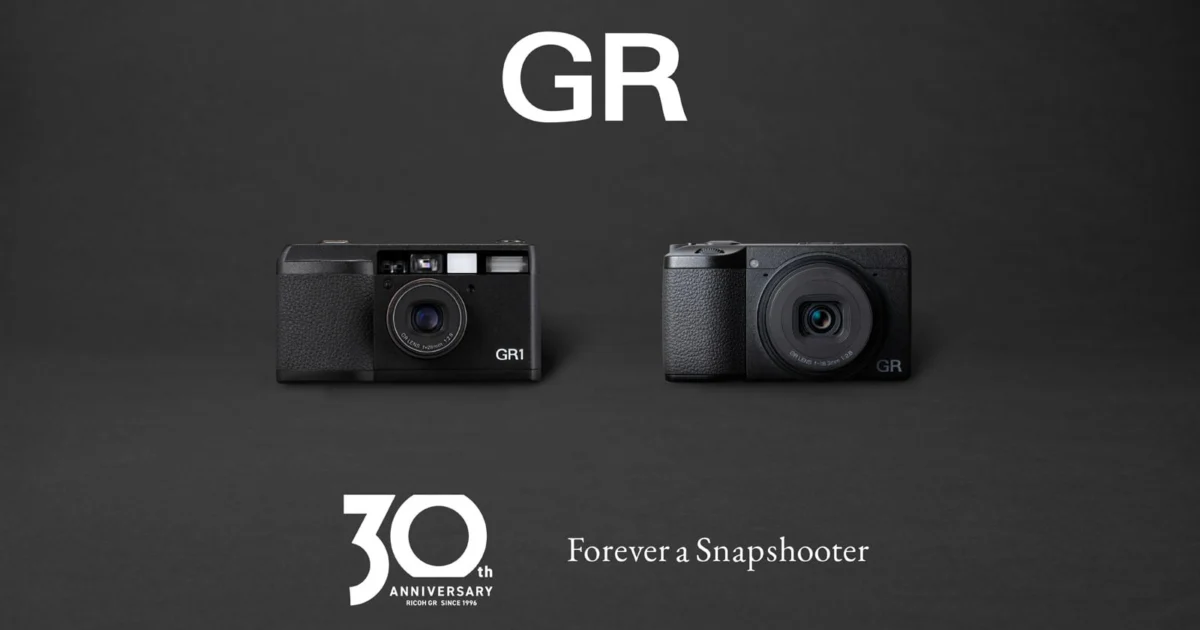
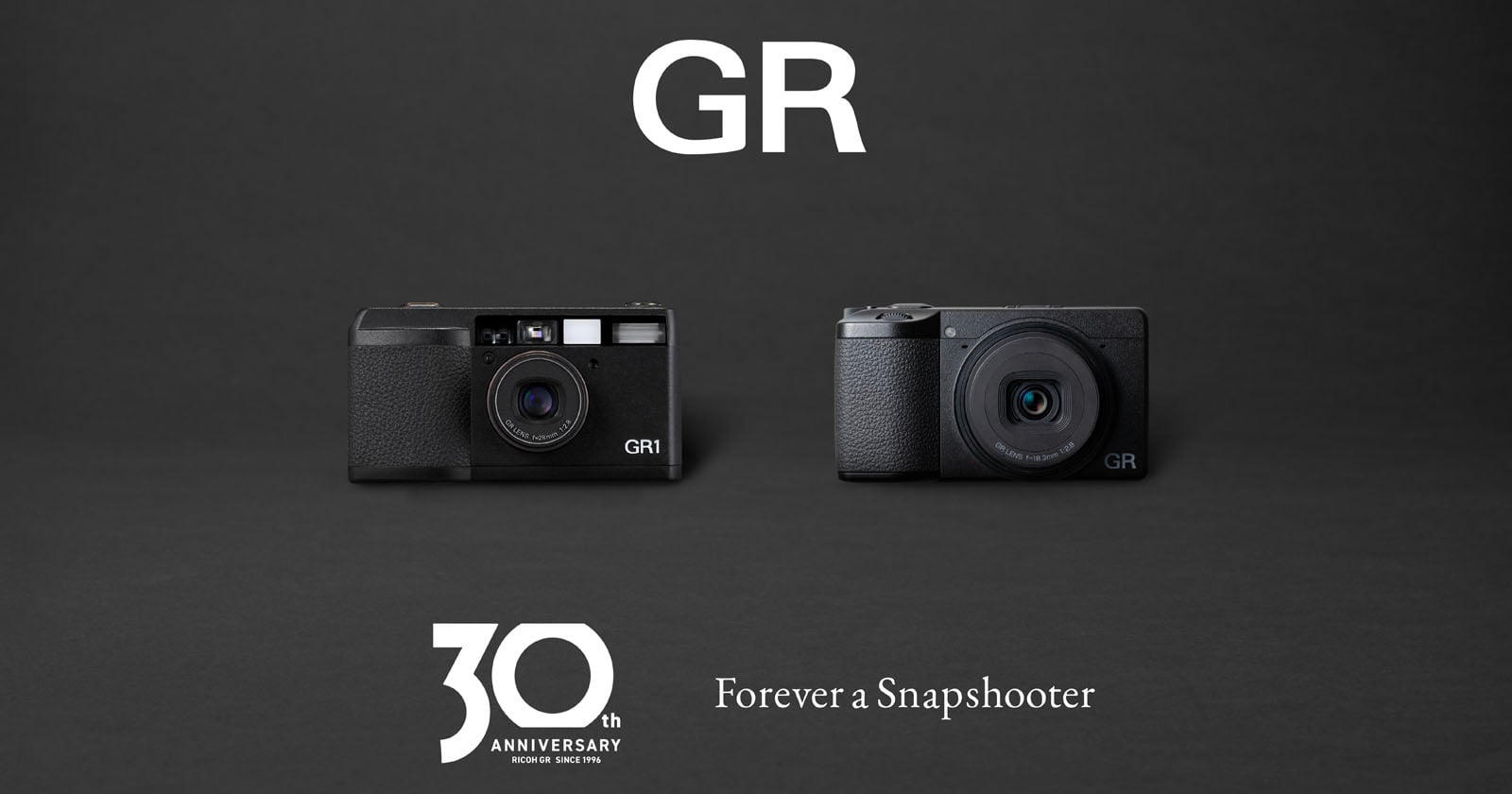
Ricoh Imaging has officially commenced a year-long celebration marking the 30th anniversary of its legendary GR camera series, unveiling a new commemorative logo and the evocative slogan "Forever a Snapshooter." This milestone, spanning from the launch of the original film-based RICOH GR1 in 1996 to the present day in 2026, represents one of the most enduring legacies in the compact camera market. While the announcement does not coincide with the immediate release of new hardware, the company has confirmed that it is developing a range of special commemorative items and planning a series of global fan events scheduled for the autumn of 2026. This strategic branding initiative is designed to reinforce Ricoh’s long-standing commitment to a specific photographic philosophy that prioritizes spontaneity, portability, and high-end optical performance in a pocketable form factor.
The "Forever a Snapshooter" campaign serves as a public reaffirmation of the core values that have defined the GR series since its inception. In an era where the digital imaging landscape is increasingly dominated by computational photography in smartphones and bulky, feature-heavy mirrorless systems, Ricoh’s dedication to the "snapshooter" niche highlights a unique market position. The company describes this vision as an unwavering commitment to the "ultimate" tool for capturing the fleeting moments of daily life—a mission that has remained remarkably consistent despite radical shifts in underlying technology.
Three Decades of Evolution: A Chronological Retrospective
The history of the Ricoh GR series is a study in disciplined evolution. The lineage began in October 1996 with the introduction of the RICOH GR1. At a time when professional photography was synonymous with heavy SLR bodies, the GR1 offered a high-performance 28mm f/2.8 GR lens housed in a slim, magnesium-alloy body that could literally fit into a shirt pocket. This combination of professional-grade optics and extreme portability quickly made it a favorite among street photographers and photojournalists, most notably the renowned Japanese photographer Daido Moriyama, whose gritty, high-contrast street aesthetic became inextricably linked with the GR brand.
As the industry transitioned from film to digital at the turn of the millennium, Ricoh faced the challenge of translating the GR’s analog soul into a digital format. In 2005, the company launched the RICOH GR DIGITAL. This inaugural digital model featured a 1/1.8-inch CCD image sensor with approximately 8.13 effective megapixels. While the sensor was small by modern standards, the camera maintained the ergonomics and the fixed 28mm-equivalent focal length that fans had come to expect. This model proved that the GR philosophy could survive the digital revolution, leading to several iterations (GR Digital II, III, and IV) that refined the CCD technology and lens brightness.
A pivotal moment in the series’ history occurred in 2013 with the release of the "RICOH GR" (dropping the "Digital" suffix). This model marked the transition to a much larger APS-C size CMOS sensor, drastically improving image quality, dynamic range, and low-light performance without significantly increasing the camera’s physical dimensions. This feat of engineering solidified the GR’s reputation as the "professional’s compact." The series continued to evolve through the GR II and the highly successful GR III, the latter of which introduced a modern 24-megapixel sensor, improved autofocus, and a touchscreen interface.
In 2025, Ricoh launched the RICOH GR IV, which brought further refinements to the platform, including a new 25.74-megapixel APS-C sensor. Following this, in February 2026, the company introduced the RICOH GR IV Monochrome. This specialized variant, equipped with a dedicated monochrome CMOS sensor, caters to the series’ deep roots in black-and-white street photography. By removing the color filter array, the Monochrome model offers superior detail and tonal gradation, appealing to purists who view the GR as a modern digital successor to the classic film cameras of the mid-90s.
The Four Pillars: Ricoh’s "Golden Rules" of Design
The longevity of the GR series is often attributed to Ricoh’s strict adherence to a specific set of design principles. In a recent dialogue, Ricoh Imaging President Yasutomo Mori and Kazunobu Saiki, General Manager of the Camera Business Division, outlined what they refer to as the "Golden Rules" of the GR system. These four principles serve as the framework for every decision made by the engineering team:
- Portability and Pocketability: A GR camera must always be small enough to be carried at all times. The design team prioritizes dimensions that allow the device to fit into a standard pocket, ensuring that the camera is available the moment a photographic opportunity arises.
- Quick Response: The "snapshooter" philosophy relies on speed. This includes fast start-up times, minimal shutter lag, and intuitive controls that allow for one-handed operation. The famous "Snap Focus" feature—which allows users to pre-set a focus distance and bypass the autofocus system entirely—is a hallmark of this principle.
- High Image Quality: Despite its small size, the GR must deliver images that rival or exceed those produced by larger professional systems. This is achieved through the synergy of a high-resolution sensor and a bespoke fixed-focal-length lens optimized specifically for that sensor.
- Continuous Evolution: While the first three principles remain static, the fourth dictates that the system must never become stagnant. Ricoh aims to integrate new technologies—such as the monochrome-dedicated sensor or improved stabilization—only if they enhance the primary goal of being the ultimate snapshooting tool.
Market Context and the Resurgence of Premium Compacts
The 30th anniversary of the GR series arrives at a fascinating juncture in the photographic industry. After years of declining sales for point-and-shoot cameras due to the rise of smartphones, there has been a significant resurgence in the "premium compact" segment. Cameras like the Fujifilm X100 series, the Leica Q, and the Ricoh GR III/IV have seen unprecedented demand, often leading to long backorders and high resale values.
Analysts suggest this trend is driven by a desire for a "tactile" and "intentional" photographic experience. Users are increasingly seeking dedicated tools that offer a different ergonomic experience and superior optical characteristics compared to the flat, AI-processed look of smartphone images. Ricoh’s 30-year commitment to a single focal length (28mm) and a minimalist design has allowed it to cultivate a cult-like following that transcends typical consumer electronics cycles. Unlike competitors who often pack their cameras with video features and complex menus, Ricoh has doubled down on the "stills-only" (or stills-centric) nature of the GR, a move that has resonated with a core demographic of enthusiasts and professionals.
Supporting Data and Technical Milestones
The technical trajectory of the GR series provides insight into the broader trends of sensor and lens development over three decades.
- 1996 (GR1): 35mm Film, 28mm f/2.8 lens (7 elements in 4 groups).
- 2005 (GR Digital): 1/1.8" CCD sensor, 8.13 MP.
- 2013 (GR): First APS-C CMOS sensor, 16.2 MP, no optical low-pass filter.
- 2019 (GR III): 24.2 MP APS-C sensor, 3-axis Shake Reduction, 6cm macro mode.
- 2026 (GR IV Monochrome): 25.74 MP monochrome-dedicated sensor, optimized for high ISO performance and tonal depth.
Data from recent market reports indicates that the GR series has seen a 40% increase in social media engagement and community-driven content over the last 24 months, particularly among younger photographers who are discovering the brand through film-era aesthetics. The decision to release a monochrome-only version in early 2026 further suggests that Ricoh is prioritizing niche, high-value segments over mass-market appeal, a strategy that has proven financially robust for the company.
Looking Ahead: Commemorative Events and Industry Impact
As Ricoh moves into the second half of 2026, the focus will shift toward community engagement. The company has announced that fan events will be held globally in the fall, providing a platform for "GRists"—as the community calls itself—to share their work and interact with the designers of the system. These events are expected to take place in major hubs such as Tokyo, London, Paris, and New York, potentially featuring exhibitions of work captured on GR cameras over the past 30 years.
The "special items" mentioned in the announcement remain a subject of intense speculation among the user base. Historically, Ricoh has released limited-edition versions of its cameras with unique finishes, such as the "Street Edition" or the "Diary Edition." For the 30th anniversary, industry insiders anticipate a highly exclusive commemorative kit, perhaps bundled with accessories that pay homage to the original 1996 GR1.
Ultimately, the 30th anniversary of the Ricoh GR is more than a celebration of a product line; it is a celebration of a specific way of seeing the world. By staying "Forever a Snapshooter," Ricoh has managed to navigate the turbulent waters of the digital age without losing its identity. The brand’s ability to maintain a consistent design language and a focused mission statement over thirty years is a rare feat in the technology sector. As the global fan events approach in the fall, the photography world will be watching to see how Ricoh intends to carry this legacy into its fourth decade, ensuring that the "decisive moment" remains as accessible as a pocket-sized camera.

