



The Tribeca Film Festival, a cornerstone of the global independent cinema circuit, has sparked significant industry debate following its decision to include a feature-length, fully AI-generated live-action film titled Dreams of Violets in its 2026 lineup. Produced by the technology-focused production house Fountain 0, the film represents a purported milestone in the integration of generative artificial intelligence within the traditional film festival ecosystem. While proponents of the technology herald the project as a democratizing force in cinema, the film’s trailer has ignited a firestorm of criticism from visual artists, cinematographers, and film critics who argue that the medium’s current technical limitations undermine the emotional and artistic integrity of storytelling.
The Emergence of Dreams of Violets
Dreams of Violets is marketed as the first feature-length "live-action" film created entirely through generative AI models. According to Tom Rogers, Executive Chairman of Fountain 0, the production was completed in approximately two months with a direct cash outlay of only $2,000. This figure stands in stark contrast to traditional independent feature films, which typically require budgets ranging from hundreds of thousands to millions of dollars and production schedules spanning years.
The film’s narrative focuses on the sociopolitical unrest in Iran, specifically touching upon themes related to the "Woman, Life, Freedom" movement. The creators have stated that the project was born out of a desire to tell stories that would otherwise be impossible to film due to safety concerns, geographical restrictions, or lack of traditional funding. However, the decision to use AI to depict a sensitive human rights crisis has raised ethical questions regarding the appropriateness of using "synthetic" actors to represent real-world trauma.

A Chronology of AI in Cinema
The inclusion of Dreams of Violets at Tribeca is the culmination of a rapid technological evolution that began in the mid-2010s.
- 2016: The short film Sunspring, written by an AI named Benjamin, debuted, though it was performed by human actors.
- 2022-2023: The release of text-to-video tools like Runway Gen-1 and Gen-2 allowed for short, surreal clips, often characterized by heavy "hallucinations" and morphing visuals.
- 2024: OpenAI’s announcement of Sora demonstrated a leap in temporal consistency and visual fidelity, though it remained inaccessible to the general public for long-form production.
- 2025: High-profile legal battles, such as the US Court of Appeals ruling denying copyright protection for AI-created images, established a precarious legal framework for the industry.
- 2026: Tribeca accepts Dreams of Violets, signaling a shift from experimental shorts to feature-length "AI-native" content.
Technical Critique and the Uncanny Valley
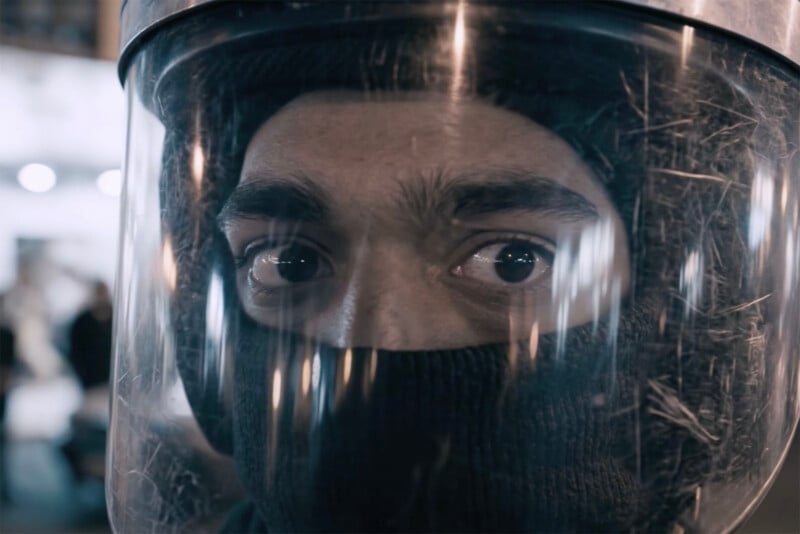
Despite the promotional buzz, the trailer for Dreams of Violets has been met with significant technical scrutiny. Critics point to the "uncanny valley"—a phenomenon where humanoid objects which appear almost, but not exactly, like real human beings elicit feelings of eeriness and revulsion.
The visual output in the trailer exhibits several hallmarks of current generative AI limitations. Facial expressions intended to convey profound sadness or anxiety have been described as "wooden" and "hollow facsimiles" of human emotion. Observers have noted that while the individual frames may appear visually striking, the temporal consistency—the way objects and light behave over time—remains flawed.
Specific technical anomalies highlighted by industry professionals include:

- Physics Discrepancies: Scenes where tear gas moves in slow motion while human figures walk at normal speed, suggesting a failure of the AI to understand the relationship between different physical elements in a 3D space.
- Inconsistent Lighting: "Flickering bokeh" and light artifacts that do not correspond to the time of day or the lens aperture implied by the shot.
- Anatomical and Procedural Errors: Background characters, such as motorcyclists, exhibiting "fidgeting" or unnatural movements, and practical errors like improperly tied blindfolds that defy the logic of the scene.
Supporting Data: The Hidden Costs of AI Production
Fountain 0’s claim that the film cost $2,000 has been challenged by energy and technology analysts. While the "out-of-pocket" cost for software subscriptions might be low, the environmental and computational resources required for such a project are immense.
A 2025 report from the MIT Technology Review provided a framework for understanding these hidden costs. The report noted that generating just five seconds of high-definition AI video consumes electricity equivalent to running a household microwave for over an hour. Scaling this to a feature-length film of 90 minutes suggests a carbon footprint that rivals, or even exceeds, traditional small-scale indie productions.
Furthermore, the $2,000 figure does not account for the billions of dollars in research and development invested by tech giants to create the underlying models (such as those from OpenAI, Runway, or Google) that Fountain 0 utilized. Critics argue that marketing AI as a "low-cost" alternative is misleading because it externalizes the massive environmental and capital costs onto the tech sector and the power grid.
Official Responses and Industry Reactions
The leadership at Fountain 0 remains steadfast in their defense of the project. Tom Rogers has claimed that when the film was screened for a "prominent name in the independent film business," the individual was unable to distinguish the AI-generated visuals from traditional cinematography. Rogers asserts that AI is a tool for empowerment, allowing creators without access to Hollywood infrastructure to compete on a global stage.

However, the response from the creative community has been largely defensive. Organizations like SAG-AFTRA and the Directors Guild of America (DGA), which recently concluded historic strikes partly centered on AI protections, view the promotion of "fully AI-generated" films as a threat to human labor.
In a statement following the Tribeca announcement, a representative for a prominent visual effects union noted, "The issue isn’t just that the visuals are imperfect; it’s that they are built upon the scraped work of millions of human artists without consent. Calling this ‘the future of film’ ignores the fact that it is a derivative medium by design."
Legal and Ethical Implications
The legal standing of Dreams of Violets remains a complex issue. Under current United States law, as reaffirmed by various appellate rulings in 2025, works generated entirely by artificial intelligence without significant human creative input are not eligible for copyright protection. This creates a unique paradox for the film: while it can be screened at a festival, it may essentially exist in the public domain from the moment of its release. This lack of intellectual property protection could deter future investors from backing similar "pure AI" projects.
Ethically, the use of AI to depict the Iranian protests has been criticized as a form of "digital voyeurism." By using synthetic imagery to recreate real-world suffering, the filmmakers risk distancing the audience from the actual human victims. There is a concern that if AI becomes the primary medium for depicting tragedies in "inaccessible" regions, the line between factual reporting and synthetic dramatization will blur, potentially fueling misinformation.
Broader Impact on the Future of Cinema
The debut of Dreams of Violets at Tribeca serves as a litmus test for the film industry. If the film is a critical or commercial success, it may encourage festivals to create dedicated categories for synthetic media. If it fails to resonate—or if the "uncanny valley" proves too distracting for audiences—it may be relegated to a historical footnote as a failed experiment.
For the time being, the consensus among traditional filmmakers is that AI remains a "dung beetle to a lion" in terms of its threat to high-level storytelling. The nuance of a human performance, the intentionality of a cinematographer’s lens choice, and the organic unpredictability of a live set are elements that current generative models have yet to replicate convincingly.
As the industry moves forward, the debate sparked by Dreams of Violets will likely shift from whether AI can make a movie to whether it should—and what is lost when the "human" is removed from the humanities. The Tribeca Film Festival’s gamble on this technology ensures that these questions will be at the forefront of the cinematic discourse for the foreseeable future.

