


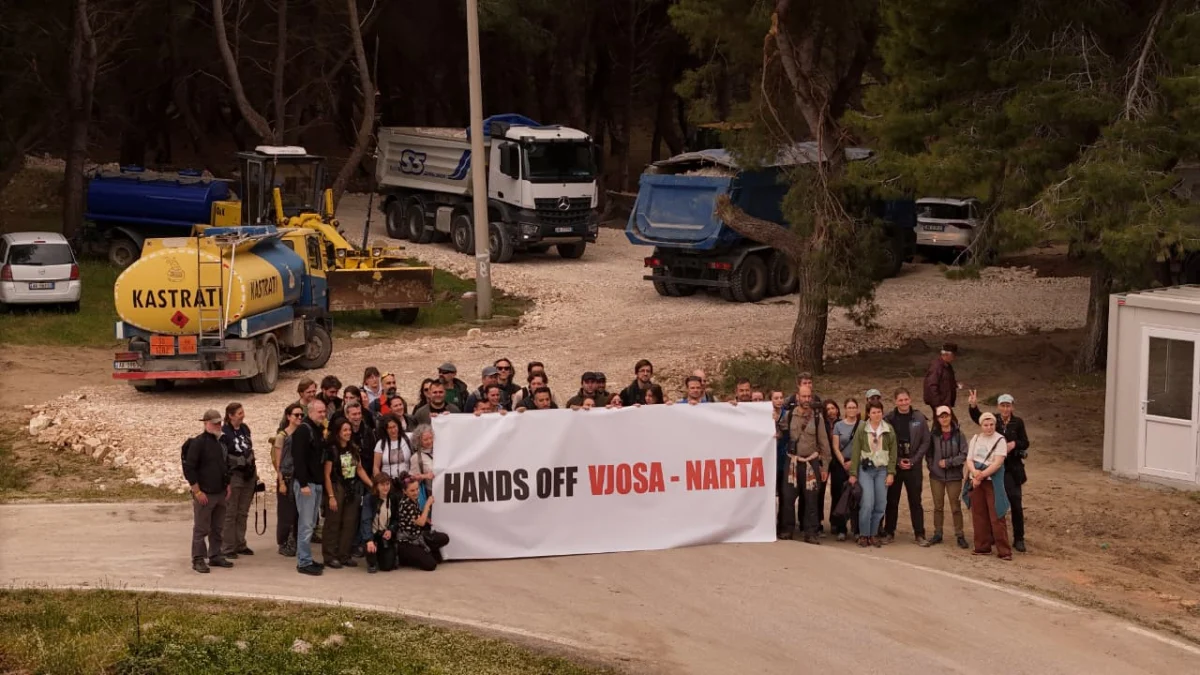
The Albanian coast in spring presents a breathtaking panorama of ecological richness. Flamingos gracefully wade through shimmering lagoons, their vibrant plumage a stark contrast to the azure waters. Majestic Dalmatian Pelicans, symbols of avian grandeur, glide effortlessly overhead, their vast wingspans casting fleeting shadows on the ancient landscapes. Millions of migratory birds, a testament to the continent’s interconnected ecosystems, find vital refuge in the shelter of centuries-old pine forests, pausing their arduous journeys between the vast expanses of Europe and the diverse habitats of Africa. This is Pishë Poro-Nartë, a jewel of the Mediterranean, recognized as one of the finest remaining wild coastlines and a site of immeasurable global ecological significance. Yet, this sanctuary is currently under assault, with bulldozers tearing through its delicate fabric.
The destructive incursion began at the end of April, a period typically associated with renewal and the flourishing of life, not ecological devastation. Heavy machinery descended upon this protected area without a single approved project, devoid of any public consultation process, and conspicuously lacking an environmental impact assessment. There is also no visible sign of a construction permit, raising profound questions about the authorization and legality of these operations. Trees are being felled indiscriminately, ancient sand dunes, sculpted by the patient hand of nature over millennia, are being leveled, and the identity of those who sanctioned this devastation remains shrouded in secrecy. This very opacity, this lack of accountability, is a scandal in itself, casting a long shadow over the integrity of environmental protection in Albania.
A Priceless Ecosystem Under Threat
Pishë Poro-Nartë is not merely a picturesque coastline; it is an integral part of the Vjosa-Nartë Protected Landscape, a vital component of the Vjosa River delta. The Vjosa itself is celebrated as one of Europe’s last truly wild rivers, a flowing artery of biodiversity that supports a remarkable array of life. The broader protected area encompassing Pishë Poro-Nartë is a sanctuary for over 70 endangered species, a testament to its ecological resilience. Furthermore, it provides a crucial habitat for more than 200 bird species, making it a birdwatcher’s paradise and a critical stopover point for avian travelers. The ancient pine forest, a living testament to time, is irreplaceable. Its strategic location along one of Europe’s most critical migration corridors, the Adriatic Flyway, underscores its international importance. The loss of this habitat would trigger a cascade of negative consequences, rippling far beyond Albania’s national borders, impacting bird populations and ecosystem health across continents.
Exploiting a Legislative Window of Opportunity
The current crisis unfolds against a backdrop of legislative maneuvers and evolving environmental policies. In a move that has drawn significant criticism and concern from international bodies, the Albanian government previously amended its Law on Protected Areas. This amendment controversially permits luxury resort construction within designated protected zones, a direct contravention of established EU nature protection standards. Albania’s ongoing accession negotiations with the European Union place this issue under a critical spotlight. The European Commission has unequivocally stated that this law must be revised to align with EU directives, and the Albanian government has provided assurances that such reforms are forthcoming.
However, while legal reforms are being debated and refined on paper, the physical destruction of the Pishë Poro-Nartë ecosystem is progressing at an alarming pace on the ground. Aleksandër Trajçe, Director of PPNEA, an Albanian partner organization dedicated to environmental protection, has articulated the apparent, albeit disturbing, logic driving these actions: to construct developments now, before a stricter and more protective law makes such endeavors impossible. This strategy appears to exploit a temporal loophole, a race against time to develop the land before regulatory frameworks can effectively safeguard it.
What makes this situation even more egregious is the strong indication that the current works are illegal even under the existing, already controversial legislation. The absence of mandatory environmental assessments, the circumvention of public consultation processes, the lack of transparent permitting procedures, and the conspicuous silence from any official authority regarding the nature of the construction or the identity of the developers all point towards a systemic disregard for established environmental governance. Adding another layer of complexity and suspicion, a major development project reportedly linked to Jared Kushner has been planned for this general area. While the direct connection between these current destructive works and that specific project remains unclear, the confluence of proposed large-scale developments in a protected zone raises serious questions about overarching development agendas and their potential impact on this fragile ecosystem.
A Call for Immediate Intervention and Accountability
In response to the escalating crisis, BirdLife Europe’s Regional Director, Ariel Brunner, and Head of Policy, Anouk Puymartin, undertook a visit to Tirana this week. Their engagements with Albanian authorities were described as constructive, and they reportedly received assurances that the relevant legislation will indeed be updated within the current year. While these assurances are welcomed, the urgency of the situation cannot be overstated. As Ariel Brunner emphatically stated during a press conference, "Bulldozers are operating in a completely illegal way, based on unclear decisions and a total lack of transparency – and this needs to stop." The stark reality is that good intentions articulated on paper hold little value when a protected area is being actively dismantled in real-time. The effectiveness of future legislation hinges on the preservation of the very habitat it is intended to protect. By the time any reformed law is enacted and comes into force, the ancient pine forest and its surrounding wetlands, the very heart of Pishë Poro-Nartë, may have already been irrevocably lost.
BirdLife Europe, along with its partner organizations, is issuing an urgent appeal to the Albanian institutions. They are calling for the immediate cessation of all ongoing works within the Pishë Poro-Nartë protected area. Furthermore, they demand the full disclosure of all permits and project documents pertaining to the site, urging for transparency and public access to information. Crucially, they are calling for a comprehensive legal investigation into the actions that have already taken place, seeking to establish accountability for the environmental damage inflicted.
Albania’s wild coast, with its unique biodiversity and breathtaking natural beauty, represents one of the nation’s most significant assets. The clandestine destruction of this invaluable natural heritage, conducted without proper authorization, within a designated protected area, and in direct violation of national and international environmental commitments, constitutes a profound betrayal. It is a betrayal of the Albanian people, who deserve to inherit a healthy and vibrant natural environment. It is a betrayal of Albania’s commitments to European integration and its aspirations to align with the highest environmental standards. And it is a betrayal of the millions of migratory birds that rely on this critical habitat as a vital lifeline, a sanctuary that has sustained their journeys for generations. The fate of Pishë Poro-Nartë hangs precariously in the balance, a stark reminder of the ongoing struggle to reconcile development with conservation in a world increasingly aware of the fragility of its natural wonders.

