


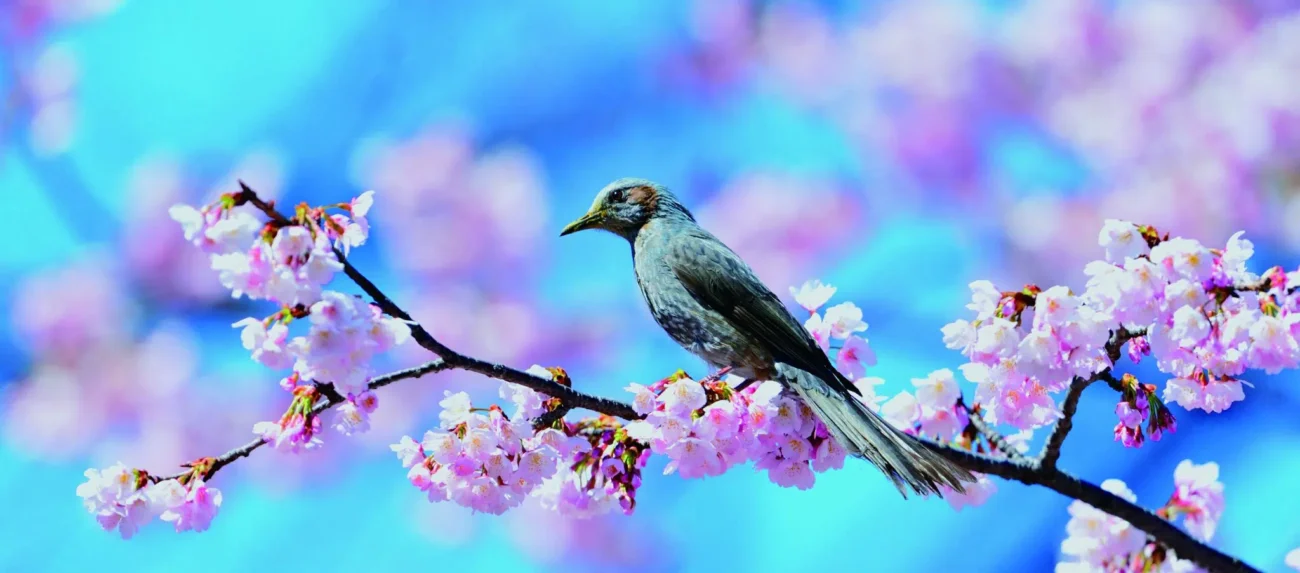
As the grip of winter loosens and the gentle caress of spring breezes begins to permeate the air, a familiar avian presence announces its seasonal return. HIH Princess Takamado, a renowned advocate for avian conservation and a keen observer of the natural world, has shared a compelling selection of her photographs and insights, urging a deeper appreciation for the seemingly commonplace Brown-eared Bulbul (Hypsipetes amaurotis). Her reflections, originally published in Fujingahou Magazine’s April 2026 issue under the "Through the Lens" series, offer a nuanced perspective on a bird often overlooked by many, yet deeply embedded in the Japanese ecological and cultural landscape.
The Princess’s observations are particularly poignant in the context of increasingly noticeable shifts in seasonal patterns, which she attributes in part to the pervasive effects of climate change. "In recent years, I feel spring and autumn have gradually been growing shorter," she notes, expressing regret over the diminishing beauty of these transitional periods. This concern for the environment underpins her focus on a species that, while abundant, serves as an indicator of broader ecological health and adaptation.
A Bird of Many Names and Perceptions
Known in Japan by its onomatopoeic name, "hiyodori," derived from its characteristic "hee-yo, hee-yo" call, the Brown-eared Bulbul is among the most frequently encountered birds, rivaling sparrows and crows in ubiquity. Despite its commonality, Princess Takamado highlights a curious paradox: while its presence is undeniable, its observational value is often understated. "At first glance, it may appear plain," she writes, "but when you look closely, you discover it has a rather charming appearance." This understated beauty is frequently overshadowed by a tendency for the bird to be dismissed with a casual remark, even within circles of dedicated birdwatchers.

The bulbul’s assertive nature contributes to its mixed reception. Known for its strong territorial instincts, it actively defends food sources like camellias and cherry blossoms, sometimes perceived as "mean" by observers. Its loud, piercing calls, while a distinctive characteristic, can also be interpreted as disruptive, further contributing to a perception of annoyance among some. This general lack of widespread affection among the Japanese populace stands in stark contrast to its popularity among international birders visiting Japan.
A Unique Appeal to Global Birdwatchers
A primary driver of the Brown-eared Bulbul’s appeal to foreign visitors lies in its relatively restricted geographic distribution. Primarily found in East Asia, with Japan serving as its core habitat, the species represents a significant sighting opportunity for those eager to encounter unique regional fauna. This endemic quality elevates its status from a common sight to a coveted avian prize for those exploring Japan’s diverse ecosystems.
Adaptation and Urbanization: The Bulbul’s Shifting Habitat
Princess Takamado’s childhood memories offer a fascinating glimpse into the bulbul’s changing habitat. She recalls not hearing their calls with the same frequency or observing them in her family garden in central Tokyo, despite the area’s greenery. This observation aligns with historical data suggesting that, until the mid-20th century, Brown-eared Bulbuls predominantly inhabited satoyama forests – secondary woodlands traditionally managed by local communities – at elevations between 400 to 1,000 meters. They would descend to lower plains during the winter months. Their subsequent expansion into urban environments is widely believed to be linked to the significant increase in urban "greening" initiatives and the proliferation of suitable habitats within cityscapes.
The adaptability of the Brown-eared Bulbul is further exemplified by its opportunistic and omnivorous diet, which has facilitated its successful integration into urban food webs. Their diet extends beyond nectar from flowering trees to include willow buds, young leaves, insects, and the berries of ornamental street trees like nandina and pyracantha. This dietary flexibility is enhanced by their ability to supplement their intake by drinking sap from broken branches and foraging for ripe fruits such as persimmons, mandarins, grapes, and apples, as well as leafy vegetables like cabbage and Chinese cabbage readily available in suburban areas. This year-round food security is a critical factor in their sustained presence in urban environments.

Resilience in Nesting Habits
The breeding habits of the Brown-eared Bulbul underscore their resilience and adaptability. They readily establish nests in city parks, residential areas, and private gardens, demonstrating a comfort level with human proximity. Notably, their nest-building materials are not limited to natural elements like twigs and plant fibers. They have ingeniously incorporated man-made materials such as vinyl and plastic into their constructions. This skillful utilization of resources found within human living spaces highlights their pragmatic approach to survival and their ability to thrive amidst anthropogenic landscapes.
An Indicator of Ecological Dynamics
Princess Takamado shares a personal anecdote that vividly illustrates the bulbul’s assertive behavior and its role in the local avian ecosystem. "Whenever I step into my garden," she recounts, "a Brown-eared Bulbul will cry out loudly as a warning, and other birds will hastily take flight from the birdbath." This behavior, while potentially disruptive, serves as a clear signal within the garden’s micro-ecosystem. Her experience of a bulbul tapping on a window when a feeding table was empty, only to allow other birds access once replenished, suggests a complex dynamic of resource competition and perhaps an implicit understanding of shared reliance. This interaction offers a compelling, albeit anecdotal, glimpse into the intricate relationships that govern bird communities.
Subspecies and Conservation Concerns
The Brown-eared Bulbul’s widespread distribution across the Japanese archipelago and surrounding regions, including the southern Korean Peninsula and Sakhalin, has led to the development of distinct subspecies. Populations ranging from Hokkaido to Kyushu and the Izu Islands, along with resident birds on islands such as Ogasawara, Amami, and Okinawa, have been classified into eight recognized subspecies. These subspecies exhibit unique forms and colorations, reflecting adaptation to diverse environmental conditions.
Current scientific understanding suggests that these eight subspecies can be further grouped into three broader categories. There is even a possibility that these groups may eventually be reclassified as three separate species. While the Brown-eared Bulbul as a whole is not currently considered globally threatened, a potential species-level classification could have significant conservation implications. Smaller island populations, in particular, might face designations as Endangered if they were to be recognized as distinct, vulnerable species. This underscores the importance of continued monitoring and research into the genetic and ecological distinctiveness of these populations.

Migration Patterns and Daylight Travel
The migratory behavior of some Brown-eared Bulbul populations adds another layer of interest to their ecology. Individuals inhabiting colder regions, such as Hokkaido and Tohoku, typically form flocks during autumn and migrate south to warmer areas for the winter. Their return journey north occurs from late April to May. Significantly, these migrations are undertaken during daylight hours, meaning their movements can be observed across Japan, offering opportunities for widespread citizen science engagement and birdwatching.
A Call for Renewed Appreciation
In conclusion, Princess Takamado’s reflections serve as a powerful call to re-evaluate our perception of the Brown-eared Bulbul. Moving beyond the tendency to dismiss it as "just a Brown-eared Bulbul," she urges a more attentive and appreciative observation of its "handsome appearance and acrobatic movements." In an era increasingly defined by environmental change and the need to understand and protect biodiversity, even the most familiar species hold vital lessons about adaptation, resilience, and the intricate web of life. The Brown-eared Bulbul, in its ubiquity and adaptability, stands as a testament to nature’s enduring capacity to thrive, even in the face of human-induced environmental shifts. Its story is a reminder that conservation begins with observation, appreciation, and a deeper understanding of the natural world that surrounds us.

