


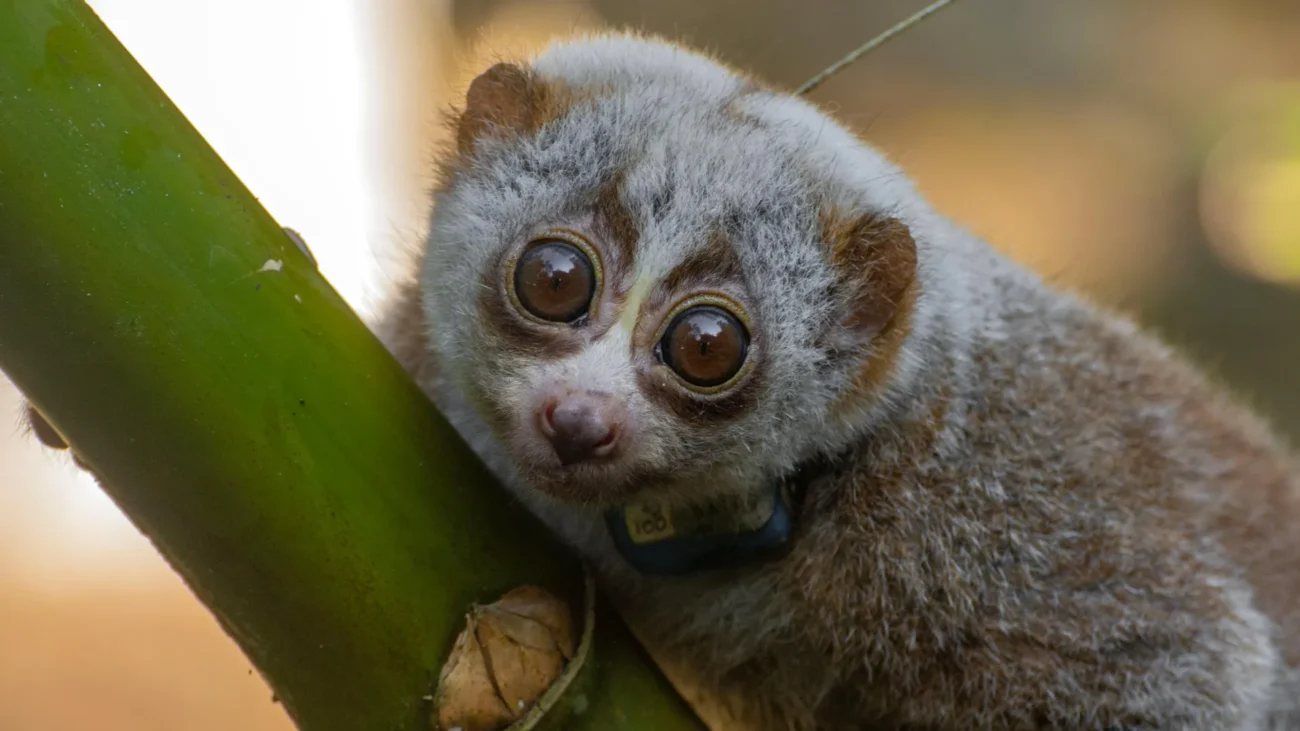
A groundbreaking scientific study has cast a stark light on the often-unforeseen dangers faced by rescued wildlife upon their return to natural habitats, suggesting that well-intentioned release programs can inadvertently transform wild environments into lethal arenas. The research, published in the esteemed journal Global Ecology and Conservation, challenges the prevailing assumption that returning captive animals to the wild is an unreservedly positive conservation outcome. Instead, it highlights critical risks, particularly for highly territorial species, which can lead to swift and fatal encounters, effectively turning the wilderness into what researchers describe as a "death trap."
The extensive investigation, led by Professor Anna Nekaris OBE, a distinguished primatologist from Anglia Ruskin University, in collaboration with experts from the conservation organization Plumploris e.V. and the University of Western Australia, focused on the fate of Bengal slow lorises (Nycticebus bengalensis) released into their native habitats in Bangladesh. This specific species, unfortunately, finds itself at the forefront of the illegal wildlife trade, a grim reality that necessitates frequent rescue operations and subsequent release efforts.
The Plight of the Slow Loris: A Victim of Its Charm
Slow lorises, with their large, expressive eyes and seemingly gentle demeanor, possess an aesthetic appeal that has tragically made them highly sought after in the illicit pet trade. This demand has placed them among the most heavily trafficked primates globally, pushing all species within the genus towards a precarious existence. The International Union for Conservation of Nature (IUCN) currently lists all slow loris species as either Critically Endangered, Endangered, or Vulnerable, underscoring the urgent need for conservation interventions. Rescue and release programs are a common, albeit complex, component of these efforts, aiming to bolster dwindling wild populations.
However, the findings of Professor Nekaris and her team paint a sobering picture of the efficacy and consequences of such programs. The study tracked nine Bengal slow lorises that had been fitted with radio collars and subsequently released into a national park in northeastern Bangladesh, a site previously utilized for wildlife reintroductions. The objective was to gain empirical data on their survival rates and behavioral adaptations post-release.
A Grim Reckoning in the Bangladeshi Forests
The results were, to put it mildly, alarming. Of the nine radio-collared lorises released, a staggering seven perished within a relatively short period. Three animals succumbed to fatal encounters within a mere ten days of their release, while an additional four died within the subsequent six months. Subsequent investigation by the research team allowed for the recovery of four of the seven deceased lorises. Autopsies and forensic examinations revealed a consistent and disturbing pattern: all four recovered individuals bore clear evidence of severe bite wounds, predominantly on their heads, faces, and digits. These injuries unequivocally pointed towards violent altercations with other slow lorises as the primary cause of death.
Territoriality and Venom: A Deadly Combination
This finding is deeply intertwined with the inherent biological characteristics of slow lorises. They are notoriously territorial animals, a trait amplified by their unique defense mechanism: they are the only known venomous primates in the world. Specialized glands in their elbows produce a toxin that, when mixed with saliva, creates a potent venom delivered through a bite from their modified teeth. The observed fatal injuries on the released lorises strongly suggest that their reintroduction into an already established and potentially densely populated area led to aggressive territorial disputes with resident individuals.
Further analysis revealed a correlation between the duration of captivity and survival rates. Lorises that had spent longer periods in captivity exhibited significantly lower survival rates after release. This suggests that prolonged absence from their natural environment may impair their ability to navigate the complex social dynamics and survival challenges of the wild. The study also noted behavioral anomalies in the released lorises, such as increased movement and heightened alertness compared to their wild counterparts. This heightened vigilance could be an indicator of stress or an inability to establish a secure territory.
The two individuals that did manage to survive exhibited a distinct pattern: they traveled across considerably larger home ranges than those that perished. This suggests that survival in such scenarios may be contingent on an individual’s ability to disperse widely, effectively seeking out and establishing new territories away from established resident populations, thereby minimizing confrontation.
Rethinking the Release Protocol: Beyond Good Intentions
The study’s implications extend far beyond the fate of the Bengal slow loris. Professor Nekaris highlighted a broader issue in wildlife conservation: the tendency to focus monitoring efforts on charismatic, large animals while smaller species often receive less intensive post-release observation. This disparity means that the success or failure of releases for many smaller, less conspicuous species often goes unrecorded, creating a blind spot in our understanding of conservation effectiveness.
"It is assumed that returning confiscated or rescued animals to the wild is always a positive conservation story," Professor Nekaris stated. "Our research shows that for highly territorial species like slow lorises, releasing them into areas that are already densely populated can be a death trap." She further elaborated on the public perception that often drives release decisions: "Many rescued endangered species are often released because the public expects it, but for animals such as the Bengal slow loris, this is not always the best course of action. Without fully understanding the animal’s behaviour, its time spent in captivity, and the density of resident populations at the release site, reintroductions may do more harm than good."
The researchers advocate for a paradigm shift in wildlife rescue and release protocols, emphasizing the critical need for meticulous planning and species-specific rehabilitation guidelines. This includes comprehensive evaluations of the suitability of potential release sites, thorough assessments of the physical and psychological condition of each individual animal, and detailed habitat assessments. Long-term monitoring is also deemed essential to accurately gauge the success of these interventions.
Hassan Al-Razi, the lead author and team leader of Plumploris e.V. Bangladesh, echoed these concerns, pointing to the increasing frequency of rescue and release operations in Bangladesh. "Rescue and release have become an increasingly common practice in Bangladesh," Al-Razi noted. "Many wild animals, including slow lorises, are rescued and subsequently released back into the wild. However, in many cases, these releases are conducted inappropriately." He identified a common pitfall: "For forest-dwelling species, release sites are often selected based on logistical convenience rather than ecological suitability. As a result, certain forests have effectively become dumping grounds for rescued animals and are no longer appropriate release sites."
Al-Razi concluded with a somber yet crucial observation: "Although our research has focused on the Bengal slow loris and demonstrated the consequences of such practices, we believe similar patterns likely affect many other species."
Broader Implications for Global Conservation Efforts
The study’s findings have significant implications for conservation organizations, governmental wildlife agencies, and the general public. It underscores the necessity of moving beyond simplistic "release and forget" models towards scientifically informed, adaptive management strategies. The economic and ethical costs of ineffective release programs are substantial, not only in terms of the loss of individual animals but also in the potential disruption of wild populations and the misallocation of valuable conservation resources.
For instance, the illegal pet trade, a major driver for the rescue and release of slow lorises, often involves removing animals from their natural environments at critical life stages. This disruption can have cascading effects on social structures and breeding success in wild populations. When these animals are then returned to environments that are no longer ecologically suitable or are already saturated, the conservation loop is broken, and the intended benefit is negated, potentially even causing harm.
The concept of "carrying capacity" is also brought into sharp focus. Release sites must be able to support the ecological needs and social dynamics of both resident and newly introduced animals. In the case of the Bengal slow loris, the study suggests that the tested release site, despite being a national park, had reached a point where it could not absorb new individuals without significant conflict. This points to the need for more sophisticated ecological modeling and site selection processes that consider population densities, resource availability, and interspecies competition.
Furthermore, the study highlights the importance of post-release rehabilitation and acclimatization protocols. Animals that have spent extended periods in captivity may require gradual reintroduction to natural diets, social cues, and environmental challenges to improve their chances of survival. This could involve intermediate stages in semi-wild enclosures or carefully managed release sites designed to ease the transition.
The researchers’ call for long-term monitoring is also critical. Without sustained observation, conservationists remain in the dark about the true success rates of their interventions. Technologies like GPS tracking, camera traps, and genetic sampling can provide invaluable data to assess survival, reproduction, and population health, enabling adaptive management strategies to be implemented if initial assumptions prove incorrect.
In conclusion, the research on Bengal slow lorises serves as a crucial wake-up call for the global conservation community. It demonstrates that well-intentioned actions, if not guided by robust scientific understanding and rigorous planning, can lead to unintended and tragic consequences. The future of endangered species like the slow loris hinges on a more nuanced, evidence-based approach to rescue and release, one that prioritizes the long-term welfare of animals and the ecological integrity of their natural habitats. The wilderness, it seems, is not always a sanctuary; for some, it can be a dangerous frontier, especially when they are ill-prepared for its unforgiving realities.

