


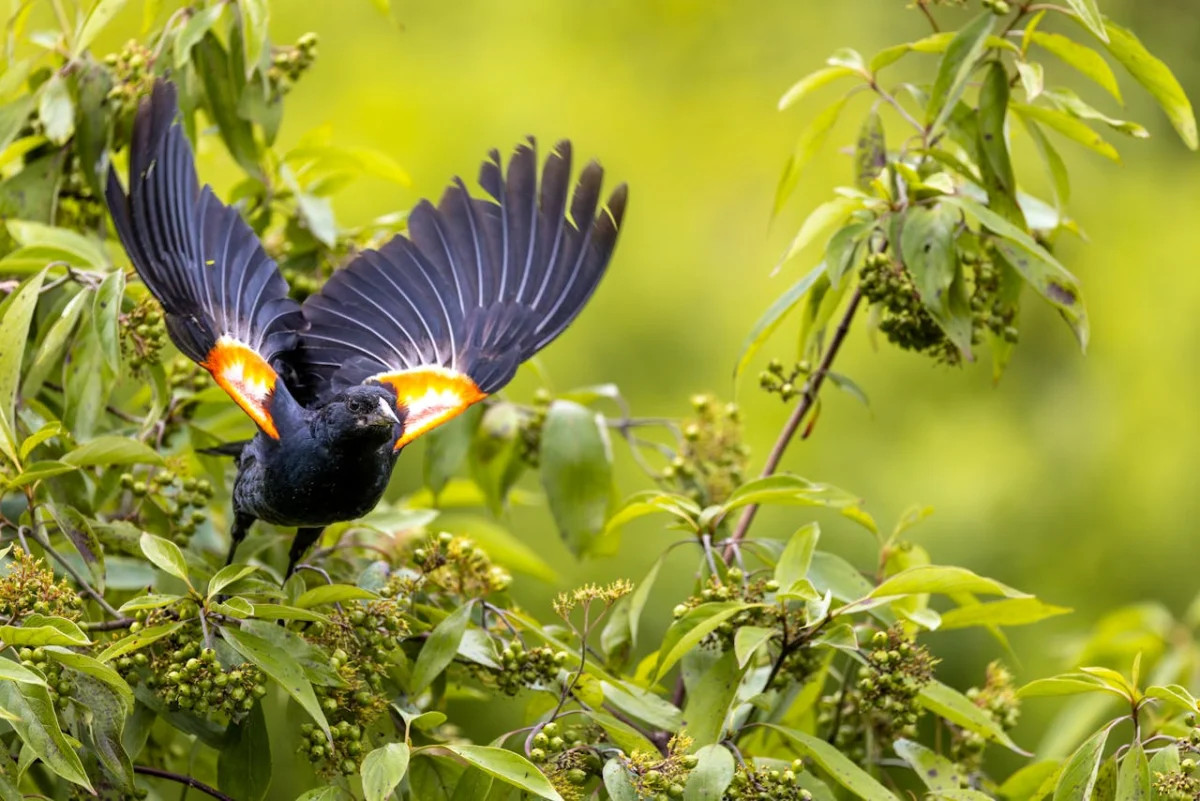
Across a diverse tapestry of environments, from the sprawling wetlands and rolling grasslands to the dense canopies of forests and even the manicured corners of urban parks, few avian displays command as much immediate attention as a black bird suddenly revealing a flash of red on its wings. This striking visual punctuation, sometimes a bold blaze and at other times a subtle, glowing ember, often feels deliberate, almost theatrical. These birds appear meticulously designed to capture the gaze, whether they are observed in silent repose or vocalizing from the heart of a reed bed. However, these black-and-red winged avians are far more than mere visual spectacles; they embody significant ecological roles, carry profound symbolic weight, and offer captivating narratives of evolutionary processes, intricate behaviors, and remarkable adaptations.
The Icon of the Avian World: The Red-winged Blackbird
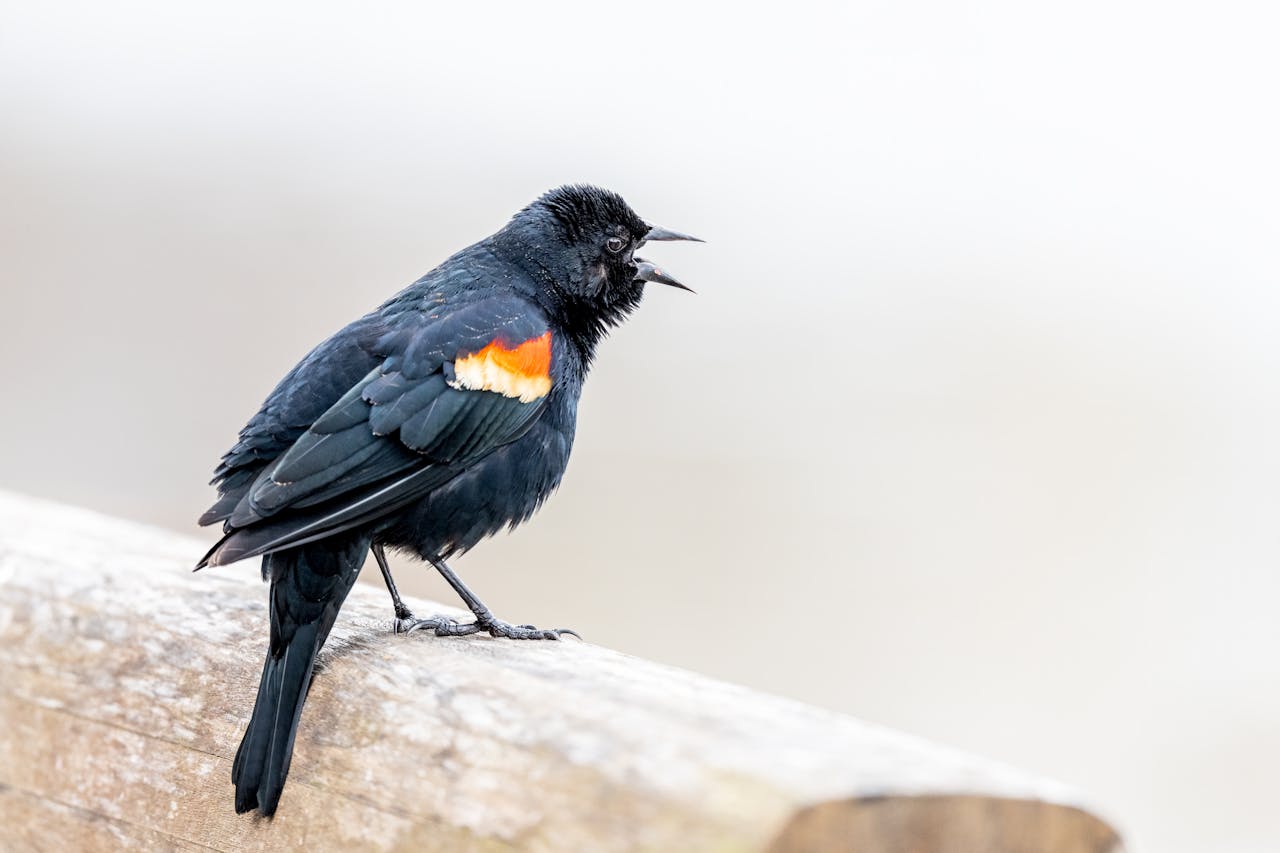
When the imagery of a black bird with red wings arises in popular consciousness, it most frequently conjures the likeness of the Red-winged Blackbird (Agelaius phoeniceus). Indigenous to North and Central America, this species is immediately and unequivocally recognizable. Adult males are characterized by their glossy, obsidian plumage, dramatically accented by vivid red shoulder patches, often delicately outlined with a contrasting yellow. In stark contrast, the females present a more subdued and camouflaged appearance, adorned in streaky brown feathers. This sexual dimorphism in coloration serves as a poignant reminder that the visual traits of a species are frequently shaped by divergent survival pressures experienced by males and females.
The iconic red wing patches, scientifically termed epaulets, are not a permanent fixture of the male’s visible plumage. Males possess the remarkable ability to conceal these vibrant markings by folding their wings, revealing the fiery red only when it serves a critical purpose – typically during territorial disputes or elaborate courtship rituals. When a male Red-winged Blackbird launches into its characteristic song from a perch atop a cattail or a weathered fence post, often with its wings partially spread, the red flashes serve as an unmistakable warning signal: this territory is occupied and defended.
Color as a Language: The Science of Avian Communication
The strategic juxtaposition of black and red represents one of the most potent and universally recognized color combinations found within the natural world. Black, with its light-absorbing properties, often conveys a sense of solidity and dominance. Red, conversely, is intrinsically linked to notions of urgency, aggression, and vital life force. In the avian realm, the presence of red pigmentation is frequently an indicator of an individual’s physiological fitness. The biological processes required to synthesize red pigments can be energetically costly, meaning that only robust and healthy individuals can afford to display these colors with such boldness and intensity.
For species like the Red-winged Blackbird and others that share similar coloration, these red markings serve a multifaceted purpose. They function as a deterrent to rivals, an attractant to potential mates, and a crucial element in establishing and maintaining social hierarchies. Intriguingly, scientific observations suggest that female birds often exhibit a preference for males displaying larger or more vibrant red patches. This preference implies that these striking markings act as honest signals of an individual’s genetic quality and overall health.
Beyond the Familiar: A Global Gallery of Red-Winged Wonders
While the Red-winged Blackbird holds the title of the most widely recognized example, it is by no means the sole species to feature black plumage adorned with red accents on its wings or body. Across the globe, similar color patterns manifest in a variety of unrelated species, often driven by analogous evolutionary pressures and serving comparable functions.
In the diverse ecosystems of South America, certain species of troupials and other blackbirds also exhibit conspicuous red or chestnut markings on their wings. This avian phenomenon is mirrored in the insect world; the striking black-and-red combination is a recurring motif found in creatures as varied as ladybugs and butterflies, underscoring the universal effectiveness of this high-contrast visual display.

The repeated evolution of similar traits in distinct lineages is a compelling illustration of convergent evolution. In such instances, different organisms independently develop analogous characteristics because those traits confer a significant advantage in similar environmental conditions.
The Nuanced Charm of the Tricolored Blackbird
Found predominantly along the coast of California and in specific pockets of the Pacific Northwest, the Tricolored Blackbird presents a fascinating study in subtle differentiation. These birds bear a striking resemblance to the Red-winged Blackbird, representing a classic example of "spot the difference" within the avian kingdom. The two species are exceptionally closely related, akin to evolutionary cousins, which explains their shared sleek black silhouette and a similarly assertive demeanor. However, their distinctions are not merely superficial; they are etched into their plumage and reflected in their ecological behaviors.
The most definitive characteristic for distinguishing between the two species lies in the coloration and bordering of their wing patches. The Red-winged Blackbird displays a bright red patch, typically bordered by a band of yellow or a pale, almost orange hue. In contrast, the Tricolored Blackbird features a deeper, crimson red patch bordered by a crisp, clean white stripe.
The yellow border of the Red-winged Blackbird’s epaulet is widely interpreted as a "stay away" signal. Red-winged Blackbirds are notoriously territorial and tend to nest as solitary individuals. They often perch conspicuously on cattails, prominently flashing their red and yellow markings to ward off other males with an unambiguous declaration: "This territory is mine, and you are not welcome."

Conversely, the white border of the Tricolored Blackbird’s patch is intrinsically linked to its colonial nesting habits. These birds congregate in massive, often densely packed colonies, sometimes numbering in the tens of thousands. Their slightly altered color scheme is believed to aid in individual recognition within such a crowded environment and may play a role in their unique, synchronized breeding displays, where cooperation is paramount and individual territoriality takes a backseat.
Geographically, the distinction is also instructive. If one encounters such a bird in the eastern United States, such as New York or Florida, it is almost certainly a Red-winged Blackbird. However, venturing into California’s Central Valley might reveal either species. The Tricolored Blackbird is a more habitat-specific specialist, largely confined to the western United States, whereas the Red-winged Blackbird stands as one of the most abundant avian species across the entirety of North America.
The Dramatic Flair of the Fan-tailed Widowbird
The Fan-tailed Widowbird, a resident of African grasslands, provides another vivid illustration of nature’s penchant for dramatic embellishment. Its plumage is a deep, velvety black, serving as an ideal canvas for its most celebrated feature: brilliant red epaulets. Much like its North American counterparts, these scarlet shoulder patches are elegantly bordered by a narrow band of buff or yellowish-white, creating a high-contrast visual signal that is virtually impossible to overlook.
During the crucial breeding season, the male Fan-tailed Widowbird deploys these striking patches as "badges of status." He will puff out his chest and flare the red feathers to intimidate rivals and to impress prospective mates. Intriguingly, when the bird seeks to remain inconspicuous or to evade potential predators, it can meticulously tuck these vibrant feathers away, effectively concealing its fiery shoulders beneath its black wing coverts until the opportune moment arises to reassert its presence.

The Elegant Elongation of the Long-tailed Widowbird
While the Long-tailed Widowbird is perhaps most renowned for its exceptionally elongated tail, which can exceed half a meter in length, its fiery red shoulder patches are the true anchors of its visual identity. Set against a backdrop of deep, iridescent black, these epaulets function as luminous beacons during the bird’s characteristic slow, undulating display flights over the expansive African grasslands. The red coloration is exceptionally saturated, frequently bordered by a distinctive white or pale-buff stripe that intensifies the color’s pop against the dark wing.
For a male Long-tailed Widowbird, these red wings are far more than mere ornamentation; they are a direct and honest indicator of his health and social standing. Scientific research has consistently demonstrated that females often utilize the size and brilliance of these "red badges" as a criterion for mate selection, as only the fittest males possess the physiological capacity to produce and maintain the pigments responsible for such a high-intensity display.
The Subtle Surprise of the Red-winged Starling
The Red-winged Starling adopts a distinct approach to the red-wing aesthetic, eschewing the small shoulder patches of its blackbird cousins for a more dramatic flash of cinnamon-red across its primary flight feathers. Unlike the blackbirds and widowbirds, whose red coloration is typically displayed on the "shoulders," this starling conceals its vibrant hue within the structure of its wings. When perched, the bird appears almost entirely iridescent black, with females exhibiting a slightly more subdued greyish tone. However, the instant it takes flight, its wings transform into vivid, rufous fans. This sudden explosion of color serves a dual purpose: it acts as a startling signal to potential predators and functions as a visual beacon to other members of its flock as they navigate the challenging terrains of rocky cliffs and the urban canyons of eastern and southern Africa.
Habitat Preferences and Behavioral Dynamics
Black birds adorned with red wings are frequently associated with open ecological niches. Environments such as marshes, wetlands, grasslands, and agricultural fields provide the necessary visual clarity for these birds to effectively employ their striking visual signaling. A brightly colored wing patch would be rendered largely ineffective within the dense undergrowth of a forest where visibility is severely limited.

The Red-winged Blackbird, in particular, is celebrated for its remarkable adaptability. While it thrives in natural wetland environments, it has also demonstrated an impressive capacity to flourish in human-altered landscapes, including roadside ditches and cultivated farmlands. This adaptability has been a key factor in its ascent to become one of North America’s most abundant avian species, even as many other bird populations face decline. Behaviorally, these birds are characterized by their bold and assertive nature. During the breeding season, males are known to vigorously defend their territories, engaging in aggressive aerial dives at perceived intruders – including unsuspecting humans – who venture too close to their nesting sites. The flash of red during these defensive maneuvers is not merely decorative; it is a potent warning backed by decisive action.
The Strategic Advantage of Female Camouflage
One of the most compelling aspects of observing black birds with red wings is the pronounced difference in appearance between the sexes. In a significant number of these species, females conspicuously lack the vibrant red markings that characterize the males. This absence of color is not an evolutionary oversight or a deficiency; rather, it represents a sophisticated survival strategy.
Female birds dedicate considerable periods to incubating their eggs and subsequently caring for their vulnerable young. Effective camouflage is paramount for their survival during these critical stages, enabling them to evade predators. While the males engage in loud, visually assertive displays, the females blend seamlessly into their surroundings, becoming nearly indistinguishable amidst reeds and grasses. This distinct division of roles – the flashy, conspicuous male and the subtly camouflaged female – vividly illustrates the fundamental evolutionary balance between the imperatives of attracting a mate and the necessity of ensuring survival.
The Indispensable Ecological Contributions
Despite their often-aggressive territorial reputation, black birds with red wings fulfill vital ecological functions. They play a significant role in regulating insect populations, consuming substantial quantities of beetles, caterpillars, and various other invertebrates. Furthermore, their diet includes seeds, which influences plant distribution patterns and contributes to the essential cycling of nutrients within their respective ecosystems.

Within wetland environments, Red-winged Blackbirds are frequently regarded as indicator species. Their presence serves as a reliable barometer of a healthy, functioning habitat that possesses adequate vegetation cover and a sufficient abundance of food sources. Conversely, the disappearance of these birds from a wetland often signals broader environmental degradation, such as habitat destruction or pollution, making their decline an early warning sign of more pervasive ecological challenges.
Cultural Resonance and Symbolic Meanings
Throughout human history, species endowed with striking coloration have consistently captured our imagination, and black birds adorned with red wings are no exception. Within the rich tapestry of folklore and symbolism, black birds are often associated with mystery, profound transformation, or the liminal space between different realms of existence. The addition of red further imbues these birds with connotations of passion, inherent danger, or formidable power.
In certain Indigenous cultures of North America, the Red-winged Blackbird is revered as a symbol of protection and vigilance, a direct reflection of its famously territorial nature. Other traditions associate its distinctive call with the cyclical rhythm of the seasons, as its return to the wetlands often coincides with the advent of spring and the promise of renewal.
In contemporary culture, the striking image of these birds is frequently employed in logos and artistic representations to evoke qualities of strength, defiance, or innate natural beauty – attributes that resonate deeply with the birds’ observable behaviors in the wild.

Conservation Imperatives and the Art of Coexistence
Although Red-winged Blackbirds currently enjoy a status of abundance, their strong dependence on wetland habitats renders them susceptible to environmental threats. Habitat loss, the pervasive use of pesticides, and the escalating impacts of climate change all pose significant risks to their populations. Consequently, the imperative to protect and preserve wetland ecosystems extends beyond the welfare of these birds, benefiting a myriad of other species and, critically, humans who rely on these vital environments for essential services such as water filtration and flood control.
Achieving harmonious coexistence with these birds can present certain challenges, particularly during the nesting season when their territorial defensiveness intensifies. However, the adoption of simple, practical measures – such as conscientiously avoiding known nesting areas or wearing a hat for protection – can significantly mitigate potential conflicts, allowing individuals to observe and appreciate these remarkable birds from a respectful and safe distance.
A Vivid Statement: The Enduring Allure of Red on Black
Black birds bearing red wings serve as a potent reminder that the natural world frequently communicates through the language of color and contrast. The sudden, dramatic flash of red against a backdrop of deep, lustrous black is not an arbitrary aesthetic flourish; it is a sophisticated communication system honed by millions of years of evolutionary refinement. This visual language speaks eloquently of territory and attraction, of the fundamental drives for survival and the assertion of strength, and of potent warnings interwoven with an undeniable sense of wonder.
The next occasion one observes a black bird take flight, revealing a vibrant blaze of red upon its wings, it is an invitation to pause and reflect. What unfolds before the eyes is not merely a moment of natural beauty, but a living signal – a profound connection of biology, ecology, and culture encapsulated within a single, unforgettable image.

