


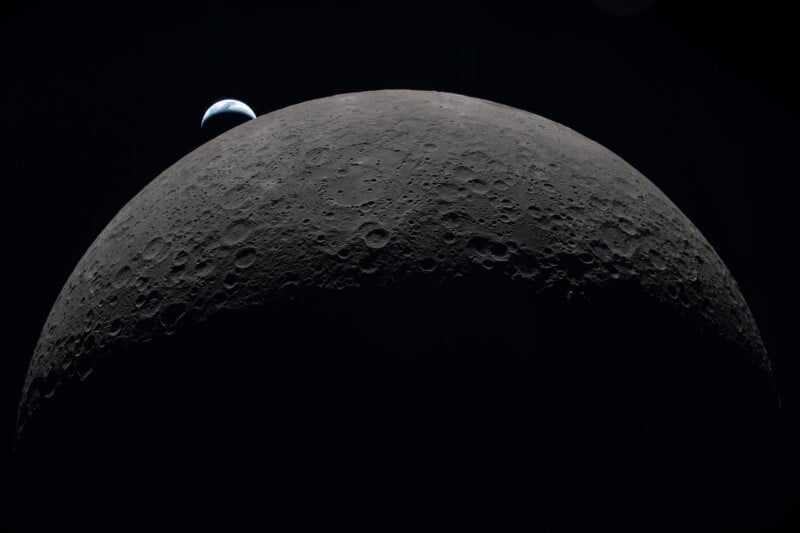
The successful conclusion of NASA’s Artemis II mission in April 2026 marks a pivotal turning point in the history of human spaceflight, signaling the definitive end of a five-decade hiatus from deep space exploration. As the first crewed mission to travel to the vicinity of the Moon since Apollo 17 in 1972, Artemis II was designed to test the integrated systems of the Orion spacecraft and the Space Launch System (SLS) rocket with astronauts aboard. Beyond the technical validation of life-support systems and navigation, the mission has left an indelible mark on the public consciousness through a series of high-resolution photographs captured by the crew. These images, ranging from the "Earthset" over the lunar limb to candid moments within the cockpit, serve as both scientific records and a testament to the return of the human element to the lunar environment.
A New Chapter in Deep Space Exploration
The Artemis II mission was the second scheduled flight of the Artemis program and the first to carry a human crew. The mission profile involved a ten-day flight around the Moon, pushing the boundaries of how far humans have traveled into the cosmos. The crew consisted of Commander Reid Wiseman, Pilot Victor Glover, and Mission Specialists Christina Koch and Jeremy Hansen. Each member brought a unique set of skills to the mission: Wiseman and Glover provided veteran piloting experience, Koch held the record for the longest single spaceflight by a woman, and Hansen represented the Canadian Space Agency (CSA), marking the first time a non-American has left Earth’s orbit for the Moon.
The mission was not merely a repeat of the Apollo era but a modernization of it. While the Apollo missions were driven by the geopolitical pressures of the Cold War, Artemis II was built on a foundation of international partnership and long-term scientific intent. The mission successfully reached a distance of approximately 253,000 miles from Earth, surpassing the records set during the 1970s. This trajectory took the crew around the far side of the Moon, providing them with views of the lunar surface that have not been witnessed by human eyes in over half a century.
Chronology of the Artemis II Mission
The mission followed a meticulously planned timeline, beginning with a high-energy launch from the Kennedy Space Center in Florida. The SLS rocket, the most powerful launch vehicle ever built by NASA, successfully placed the Orion spacecraft into a high Earth orbit. This initial phase allowed the crew to test the spacecraft’s maneuvering capabilities and life-support systems while still within reach of a quick return to Earth.
Following the successful checkout of the systems, the Orion’s service module executed the Trans-Lunar Injection (TLI) burn. This maneuver propelled the spacecraft out of Earth’s orbit and onto a trajectory toward the Moon. During the three-day transit, the crew focused on system monitoring and celestial photography, capturing the now-famous "Hello World" portrait of Earth.
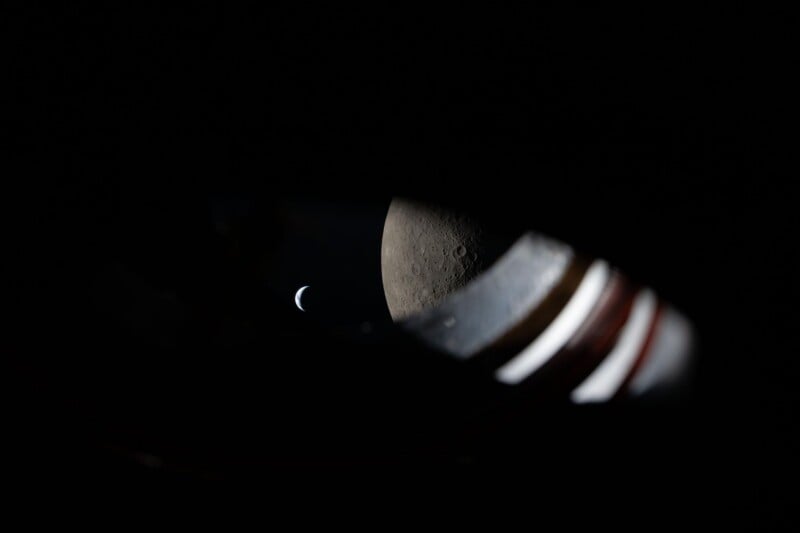
On April 6, 2026, Artemis II reached its closest approach to the Moon. The spacecraft passed within 4,067 miles of the lunar surface. During this critical flyby, the crew spent approximately seven hours stationed at the Orion’s viewports. They were tasked with capturing high-resolution imagery and recording observations of the lunar farside—a region that remains of intense interest to geologists and future mission planners.
The return journey began as the spacecraft used the Moon’s gravity to "slingshot" back toward Earth. This phase was characterized by intense data transmission as the crew sent back gigabytes of imagery and telemetry. On April 10, 2026, the mission reached its most perilous stage: re-entry. Entering the atmosphere at speeds exceeding 25,000 miles per hour, the Orion’s heat shield was subjected to temperatures nearing 5,000 degrees Fahrenheit. The spacecraft successfully deployed its parachute sequence and splashed down safely in the Pacific Ocean, where it was recovered by NASA and U.S. Navy teams.

The Human Perspective: Photography Beyond the Atmosphere
One of the most significant aspects of Artemis II was the emphasis on "human-centric" photography. While robotic probes and satellites have provided high-resolution maps of the Moon for decades, NASA officials emphasized that photos taken by astronauts offer a unique perspective that resonates with the global public. The crew utilized specialized digital camera systems, trained specifically to handle the harsh lighting conditions of space, where the contrast between the sunlit lunar surface and the blackness of the vacuum is extreme.
Commander Reid Wiseman’s "Hello World" photograph has been compared to the iconic "Blue Marble" taken by the Apollo 17 crew. It depicts the Earth as a fragile, luminous sphere against the void. Analysts suggest that such images are vital for maintaining public support for space exploration, as they provide a visual connection to the "overview effect"—the cognitive shift experienced by astronauts when seeing the planet from space.
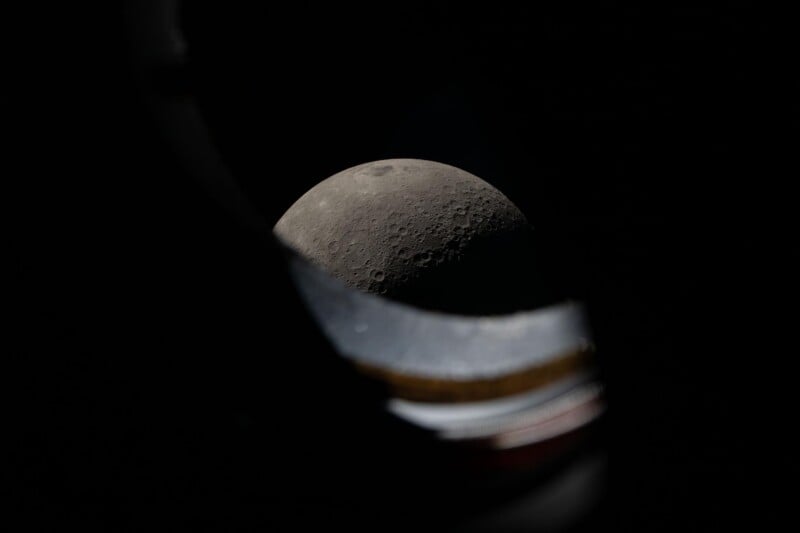
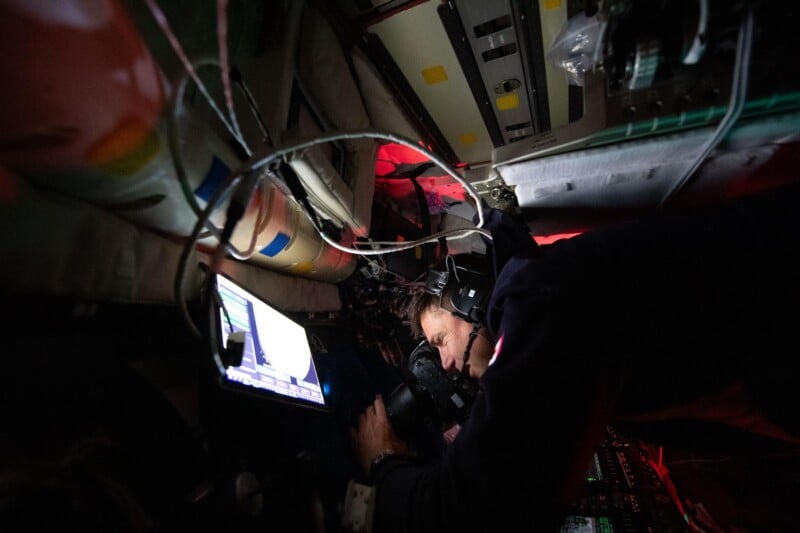
Furthermore, the interior photography of the crew—such as Mission Specialist Jeremy Hansen operating controls or Christina Koch embracing the capsule after recovery—highlights the physical and emotional reality of spaceflight. These images serve to demystify the technology while elevating the courage of the individuals involved. The candid shot of Koch hugging the charred Orion capsule post-splashdown became an overnight sensation, symbolizing the relief and triumph of a mission that many feared would be marred by the heat shield issues discovered during the uncrewed Artemis I flight.
Technical Milestones and Mission Objectives
The primary objective of Artemis II was the validation of the Orion spacecraft’s Crew Module Upgrades. Unlike Artemis I, which carried mannequins equipped with sensors, Artemis II required a fully functional Environmental Control and Life Support System (ECLSS). This system managed oxygen levels, removed carbon dioxide, and regulated the temperature for four humans in a confined space for ten days.
Key technical achievements included:
- Optical Communications: The mission tested the Artemis Optical Communications System, using lasers to transmit high-definition video and images back to Earth at much higher rates than traditional radio waves.
- Radiation Monitoring: Given that the crew traveled through the Van Allen radiation belts and into deep space, the mission provided critical data on how the Orion’s shielding protects the human body from cosmic rays.
- Manual Piloting: Victor Glover performed proximity operations, manually maneuvering the Orion to test how the spacecraft handles in the event of an automated system failure.
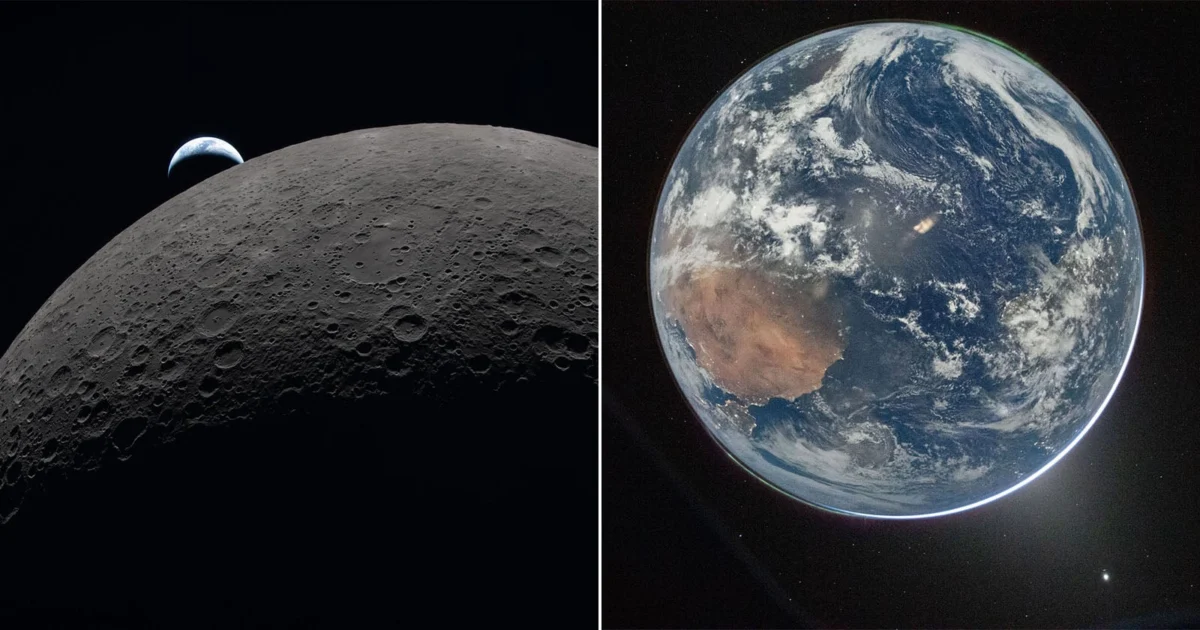
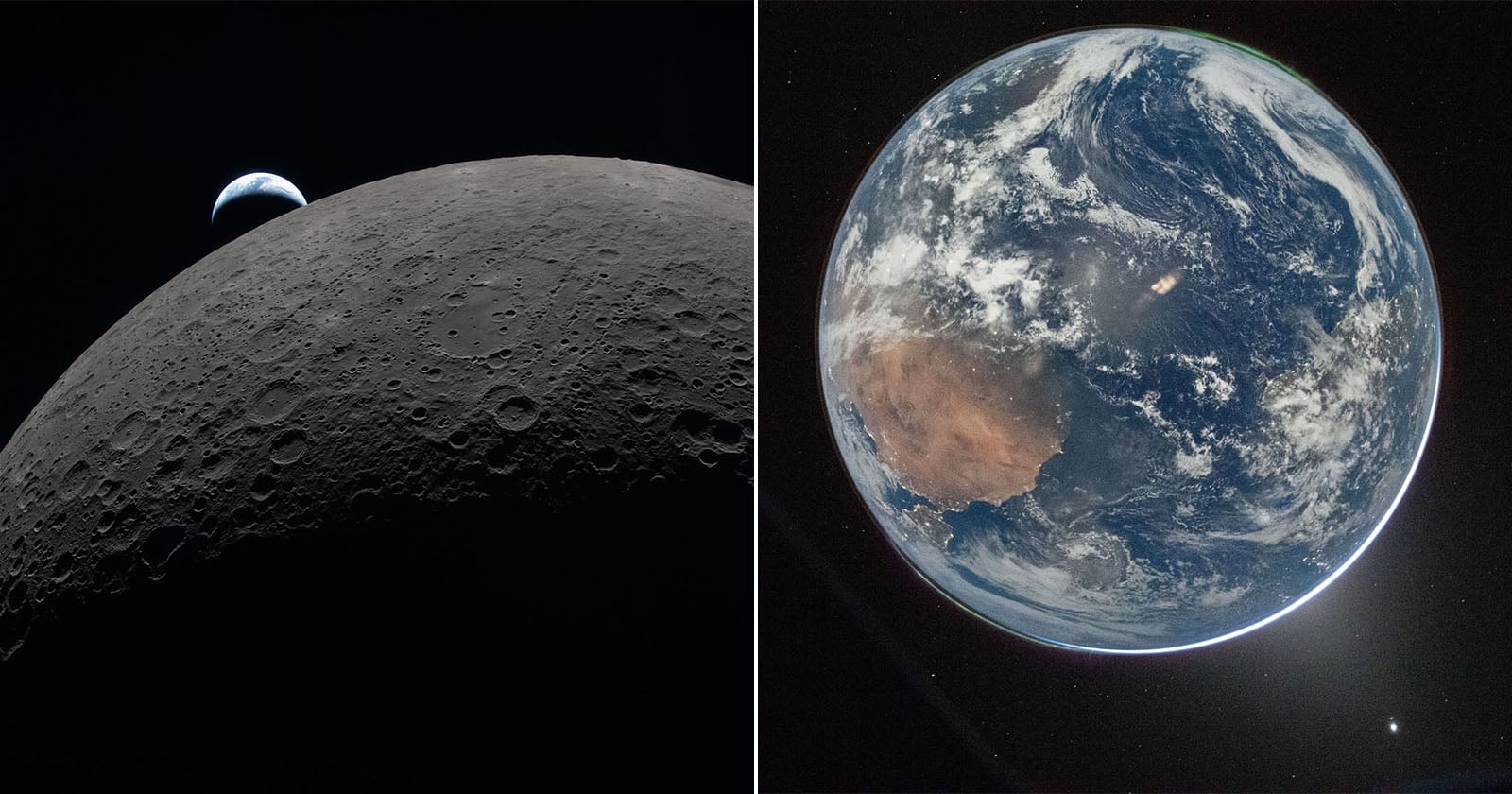
NASA’s accurate prediction of the visual data to be collected also showcased the advancement in simulation technology. Prior to the mission, NASA released "simulated" photos of what the crew was expected to see. The subsequent comparison between the simulations and the actual photographs taken by the crew demonstrated a near-perfect alignment, proving that NASA’s lighting and trajectory models are now more accurate than at any point in history.

Official Responses and Global Impact
The success of Artemis II elicited a wave of official statements from international space agencies and heads of state. NASA Administrator Bill Nelson remarked, "Artemis II has shown that the spirit of Apollo lives on, but with a new generation that looks like all of humanity. We aren’t just going back to the Moon; we are learning to live and work in the deep space environment to prepare for the journey to Mars."
The Canadian Space Agency also celebrated the mission as a milestone for international cooperation. The inclusion of Jeremy Hansen was seen as a validation of Canada’s long-term contributions to the space program, specifically the development of the Canadarm and future lunar gateway components. In a public statement, CSA officials noted that the imagery captured by Hansen would be used in educational curricula across Canada to inspire the next generation of scientists and engineers.

The scientific community has also begun analyzing the data. Geologists at the Lunar and Planetary Institute (LPI) noted that the seven hours of observations conducted by the crew during the flyby provided "contextual nuances" of lunar features that automated satellites often miss, particularly regarding the play of light and shadow over the Moon’s younger craters.
Future Implications for Lunar Habitation and Mars
With the successful completion of Artemis II, the path is now clear for Artemis III, which aims to land the first woman and the next man on the lunar surface, specifically at the lunar South Pole. The data gathered during the Artemis II flyby regarding radiation, communication lag, and spacecraft durability will be instrumental in the final planning phases of the landing mission.
The broader implications of Artemis II extend to the proposed Lunar Gateway—a small space station that will orbit the Moon and serve as a staging point for lunar landings and, eventually, missions to Mars. The "human touch" emphasized in the Artemis II photography serves as a reminder that these missions are not just about hardware, but about expanding the sphere of human influence.
The mission also addressed several "ceilings" within the aerospace industry. By including Victor Glover and Christina Koch, NASA fulfilled its promise of diversity in the Artemis program, ensuring that the return to the Moon reflects a global and inclusive effort. This social impact is viewed by analysts as being just as significant as the technical achievements, as it broadens the base of public engagement and inspires a more diverse workforce in the STEM fields.
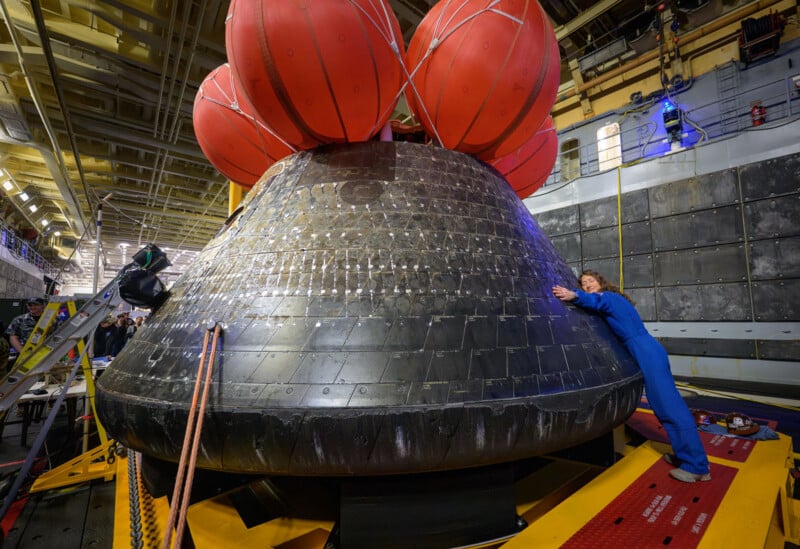
In conclusion, Artemis II was a resounding success that balanced rigorous engineering with a profound human narrative. The favorite photos of the crew and mission analysts are more than just aesthetic achievements; they are the visual evidence of a species once again finding its footing among the stars. As the Orion spacecraft sits in a refurbishment facility, being analyzed for its next journey, the images it brought back continue to circulate, reminding the world that the Moon is no longer a distant memory of the 20th century, but a tangible destination for the 21st.

