


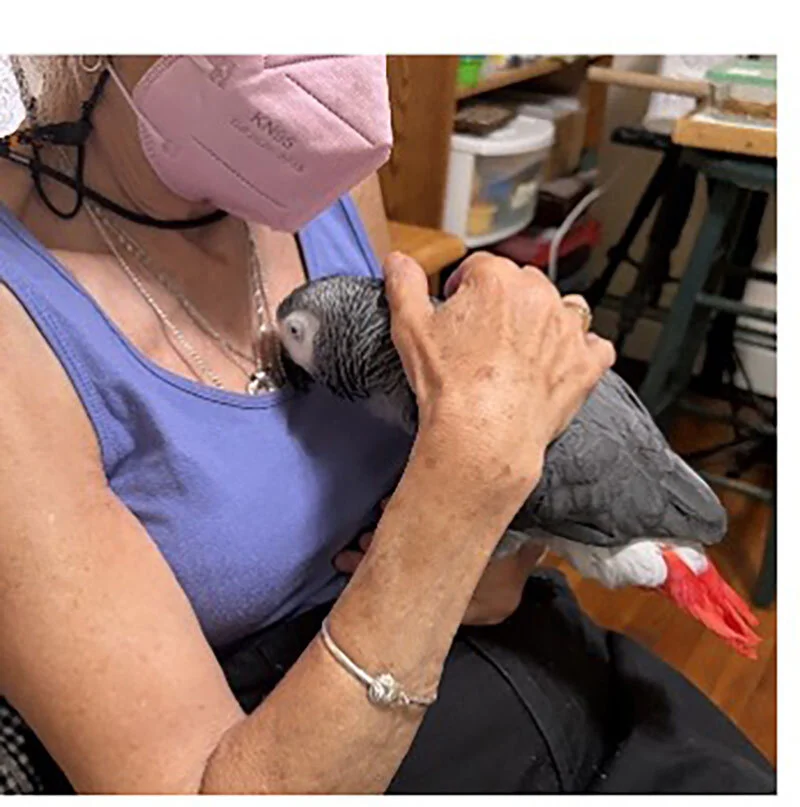
As the United States approached its annual Fourth of July holiday, traditionally marked by widespread fireworks displays, a peculiar observation from the lab of Dr. Irene Pepperberg highlighted a fascinating paradox in avian perception: while many companion animals experience profound distress from pyrotechnic explosions, her renowned African Grey parrot, Griffin, remains remarkably unperturbed. This stark contrast in reaction, particularly when juxtaposed with Griffin’s intense fear of a common domestic sound like a lawn mower, underscores the complex and often misunderstood auditory world of our feathered companions and necessitates a deeper scientific inquiry into avian psychoacoustics and welfare.
Dr. Pepperberg, a distinguished researcher known for her groundbreaking work on animal cognition, particularly with African Grey parrots like the legendary Alex and his successor Griffin, initially faced questions from her newer Research Assistants (RAs) regarding preparations for Griffin’s expected fear reactions to the holiday’s percussive cacophony. To their surprise, Dr. Pepperberg reassured them that Griffin, along with other birds under her care, typically remains unaffected. This assertion is not merely anecdotal; continuous nighttime monitoring via cameras has consistently shown that the birds exhibit no strong reactions, often experiencing no more than a brief awakening before quickly returning to rest. This calm demeanor extends to other major fireworks events, such as New Year’s Eve celebrations in the Boston area, where similar observations have been made.
The precise reasons for this remarkable calm in the face of widespread human-generated noise remain a subject of scientific speculation. One prevailing hypothesis suggests that distant fireworks might mimic the sound profile of a faraway thunderstorm. In natural environments, thunderstorms are a common occurrence, and while they can be intense, their characteristic rumble might be perceived differently from a direct, sudden explosion. Furthermore, the parrots’ consistent safety during these events could contribute to a learned sense of security, where the distance of the explosions is recognized, and the absence of immediate threat reinforces a calm response. This habituation, or the gradual decrease in response to a repeated stimulus, plays a crucial role in how animals navigate their sensory environments. If the birds consistently experience fireworks from a safe distance without direct harm, they may learn to categorize these sounds as non-threatening background noise, akin to a distant natural phenomenon.
However, this tranquility sharply contrasts with Griffin’s intense and visceral response to other relatively rare but seemingly unpleasant sounds: the whirring engine of a lawn mower. Dr. Pepperberg recounts that in two ground-floor apartments occupied since leaving her Harvard lab, the sound of lawn mowers has consistently triggered extreme distress in Griffin. The duration of this noise is typically brief, yet Griffin’s reaction is profound. Researchers are exploring whether this intense fear stems from the sound being a novel experience encountered later in his life, or if there’s a specific "sound signature"—a particular frequency, rhythm, or amplitude within the motor’s noise—that he finds inherently aversive. When confronted with a lawn mower, Griffin becomes visibly agitated, requiring significant effort to calm him, sometimes even needing to be held close to a researcher’s chest, a comfort technique typically reserved for chicks. This highlights a critical distinction: it’s not merely the loudness of a sound, but its specific acoustic properties, context, and the individual’s history with that sound, that dictate an animal’s emotional and behavioral response.
The nuanced nature of Griffin’s auditory processing is further evidenced by his reactions to other common household and urban sounds. While he reportedly gives the nightly vacuum cleaner a "stink eye," indicating mild displeasure, he has largely habituated to this consistent noise, quickly resuming his activities. Similarly, transient urban sounds like street cleaning machines and garbage removal trucks, though potentially startling briefly, are generally shrugged off. This relative indifference to frequent, predictable sounds, even if somewhat loud, reinforces the concept of habituation. These machines are often further from the windows and quickly pass, reducing their perceived threat. Yet, the mere sight of a now-quiet lawn mower can send Griffin into a frenzy, suggesting that the fear has become deeply ingrained and associated with the visual cue, not just the auditory one. This phenomenon, known as conditioned fear, means that even without the direct auditory stimulus, the visual trigger is enough to elicit a strong stress response.
The implications of these observations extend far beyond Dr. Pepperberg’s lab, underscoring a critical need for heightened awareness regarding the effects of sounds on all feathered companions. While the peak of avian hearing range overlaps with human hearing, birds often possess a much greater sensitivity at higher frequencies. This physiological difference means that sounds imperceptible or merely annoying to humans could be intensely disturbing or even painful to birds. Researchers in avian acoustics have long studied the intricate structure of bird ears, which, while differing structurally from mammalian ears, are highly adapted for detecting subtle environmental cues, including the complex vocalizations of their own species and potential predators. This enhanced sensitivity, particularly in the ultrasonic range for some species, can make them vulnerable to anthropogenic noise that humans might not even register.
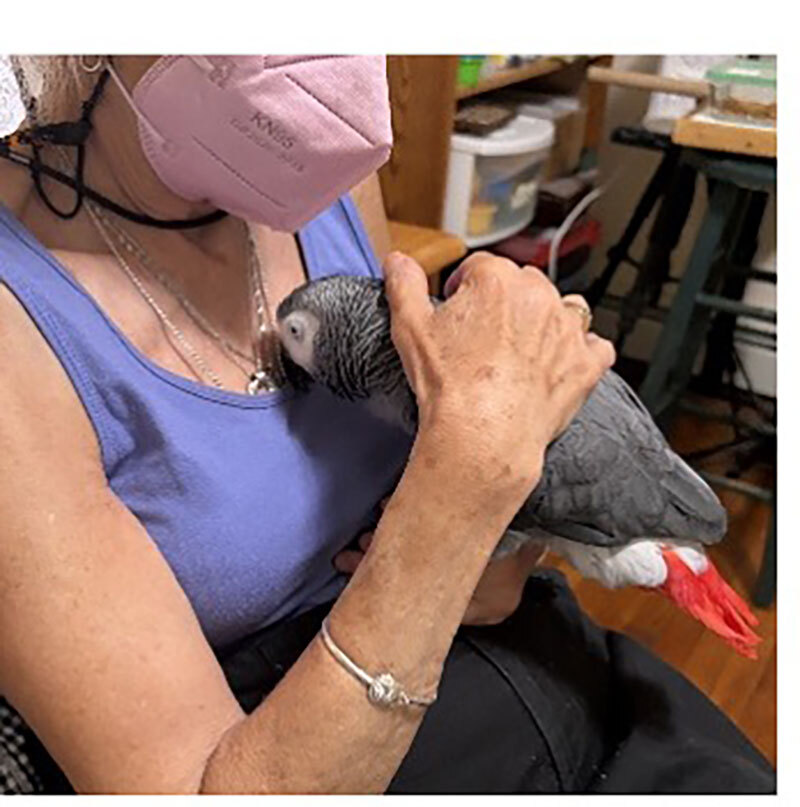
The perils of human oversight regarding avian acoustics are vividly illustrated by real-world cases. Dr. Pepperberg recounts a situation described by her close friend and colleague, Chris Davis, an avian behaviorist. Davis was called to assist a parrot owner whose bird had suddenly begun extensive feather plucking, a common stress-related behavior in captive parrots. Despite the owner’s claims of no changes in diet, household members, daily routine, or inter-personal dynamics, the bird’s distress was evident. The mystery began to unravel when Davis suddenly heard extremely loud "bongs" emanating from a grandfather clock in the entryway. A series of probing questions – "How long ago did you install the clock?", "How long after did your bird start plucking?", "Does the clock chime all night?" – quickly revealed the root cause. The constant, repetitive, and likely high-frequency chiming, particularly throughout the night, was a chronic stressor, disrupting the bird’s sleep cycle and mental well-being, leading to self-mutilation. This case serves as a stark reminder that even seemingly innocuous additions to a home environment can have profound, detrimental effects on sensitive avian inhabitants.
Another compelling example highlights the complexities of designing appropriate acoustic environments for birds in captive settings. A colleague involved in designing "soundscapes" for bird enclosures at a zoo discovered, upon reviewing scientific literature, the critical need for meticulous attention to detail. In one instance (Kleinberger, 2020), a chosen sound material intended to provide a naturalistic, calming enrichment experience inadvertently contained alarm calls. These calls, though perhaps subtle to human ears or even to researchers unfamiliar with the specific species’ vocalizations, were readily recognized by the birds as signals of danger. Consequently, the birds never habituated to these stress-inducing sounds, and the intended positive effects of the enrichment were completely negated, replaced by chronic anxiety and distress. This case underscores the ethical imperative in animal care to thoroughly vet all environmental stimuli, including auditory ones, through the lens of the animal’s natural biology and learned responses. The field of acoustic ecology within zoological institutions is increasingly recognizing the importance of such considerations, moving beyond simply reducing noise to actively shaping beneficial sound environments.
These anecdotes and observations collectively paint a picture of a species whose auditory experience is profoundly different from our own, demanding a more conscious and empathetic approach from human caregivers. The bottom line is that individuals sharing their homes with birds must become acutely aware of all sensory inputs received by their feathered companions. It is entirely possible that a particular bird might genuinely enjoy certain human music genres, such as heavy metal, if it has been positively conditioned or possesses an unusual tolerance. However, the responsibility lies with the owner to diligently observe their bird’s reactions before making assumptions or imposing preferred human soundscapes in enclosed areas. Signs of stress can range from subtle changes in posture, feather position, or vocalizations, to more overt behaviors like pacing, aggression, or feather plucking.
Beyond individual pet ownership, the broader implications extend to urban planning, animal welfare policies, and scientific research. Understanding how different sound profiles – be they transient, sustained, high-frequency, or low-frequency – impact avian physiology and psychology can inform strategies for reducing noise pollution in urban habitats, designing more effective and humane animal enclosures in zoos, and developing better guidance for pet owners. Research into avian psychoacoustics, including studies on stress hormone levels in response to specific sound stimuli, could provide invaluable data to support evidence-based welfare practices. Desensitization and counter-conditioning techniques, carefully implemented by experienced avian behaviorists, could also play a role in helping birds cope with unavoidable disturbing sounds.
In conclusion, the paradoxical reactions of African Grey parrots like Griffin to fireworks versus lawn mowers serve as a compelling reminder that the world is perceived differently through different ears. Our human auditory experience is not a universal metric, and assuming that what sounds benign or even pleasant to us will be so for a bird is a grave oversight. By delving deeper into the science of avian hearing, understanding the nuances of habituation and fear conditioning, and paying diligent attention to our birds’ individual responses, we can foster environments that truly promote their well-being, ensuring that our feathered friends can thrive, not just survive, in our shared spaces. The quiet lawn mower and the distant fireworks may be just sounds to us, but to a parrot, they can signify starkly different realities of comfort or profound fear.
References
Kleinberger, R. (2020). Vocal connection rethinking the voice as a medium for personal, interpersonal, and interspecies understanding (PhD dissertation). Massachusetts Institute of Technology.

