


New research from the University of Cambridge has unveiled a critical disparity in how bumblebees and honeybees interact with environmental contaminants, revealing that bumblebees can accumulate dramatically higher levels of toxic heavy metals than their honeybee counterparts, even when foraging in the same locations. This groundbreaking study, published in the esteemed journal Ecological Entomology, raises significant concerns about the hidden pollution impacting the health, survival, and reproductive capabilities of these vital pollinators. Scientists found that bumblebees collected up to seven times more heavy metals in their pollen, a finding that underscores a previously underestimated vulnerability within pollinator populations.
The Pervasive Reach of Heavy Metal Pollution
Heavy metal pollution is a widespread environmental issue, originating from a multitude of sources. Industrial sites, mining operations, and urban centers are well-established hotspots for these contaminants. However, the insidious nature of heavy metals means they are not confined to these areas. Airborne particles, the application of sewage sludge as fertilizer, and various agricultural products can transport these toxic elements far into rural landscapes, creating a silent threat to ecosystems that appear pristine.
Metals such as arsenic, cadmium, chromium, cobalt, lead, and tin, which were the focus of the Cambridge study, are of particular concern. These elements, even in relatively small quantities, can have profound detrimental effects on insect physiology and behavior.
Mechanisms of Heavy Metal Uptake in Bees
Bees, in their tireless pursuit of nectar and pollen, inadvertently become vectors for heavy metal contamination. As they forage, they come into contact with contaminated soil, dust particles, and pollen grains that have absorbed these toxic elements from their environment. The mechanisms of uptake are multifaceted. Direct contact with contaminated surfaces, ingestion of tainted pollen and nectar, and even inhalation of airborne particles laden with metals can all contribute to a bee’s internal exposure.
The consequences of this exposure are far-reaching and can manifest in subtle yet significant ways. Previous scientific investigations have established a clear link between heavy metal exposure and impaired cognitive function in bees. This can translate to difficulties with learning and memory, making it harder for individual bees to navigate their environment, locate food sources, and return to their colonies. Furthermore, a growing body of research points to a correlation between metal contamination and reduced reproductive success, a decrease in the number of viable offspring, and disruptions in the crucial developmental stages of brood.
Historically, honeybees ( Apis mellifera ) have been widely utilized as bioindicators of environmental contamination, particularly in areas with high levels of pollution. Their ubiquitous presence and their role as social insects, with large colony sizes that can provide a broader sample of environmental conditions, have made them a reliable, albeit incomplete, measure of pollution. However, the new Cambridge research challenges this established paradigm, demonstrating that different bee species exhibit distinct accumulation patterns, with bumblebees emerging as a particularly susceptible group.
A Comparative Analysis: Bumblebees vs. Honeybees
The study, conducted by researchers from the University of Cambridge’s Department of Zoology, involved meticulous collection of pollen using specialized pollen traps. The team then undertook the rigorous task of measuring the concentrations of six key heavy metals – arsenic, cadmium, chromium, cobalt, lead, and tin – in both the collected pollen and in adult bees. To ensure a direct comparison, researchers focused on honeybee and bumblebee colonies that were situated side-by-side in Cambridgeshire, England. This region was chosen, in part, because its soil contamination levels are generally considered to be relatively low, thus providing a baseline for understanding accumulation rates even in less overtly polluted environments.
The results of this carefully controlled experiment were striking and revealed significant differences in how the two species interact with their environment. Despite foraging across the same agricultural and semi-natural landscapes, the pollen collected by bumblebees consistently contained substantially higher concentrations of heavy metals – ranging from two to seven times more than the pollen gathered by honeybees, across most of the metals analyzed. This elevated level of contamination in their food source directly translated to higher internal exposure. The study found that bumblebees accumulated roughly three times higher concentrations of these heavy metals within their own bodies compared to honeybees.
Dr. Sarah Scott, the lead researcher on the study during her tenure at the University of Cambridge and now based at Newcastle University, emphasized the critical implications of these findings. "Most metal levels we found were not high enough to kill bees outright," Dr. Scott stated. "However, even low levels can still harm bee health and colony success in subtle but important ways, such as affecting their ability to forage and reproduce." This suggests that the cumulative impact of chronic low-level exposure, particularly for bumblebees, could be a significant driver of pollinator decline.
Unraveling the Biological and Behavioral Drivers of Differential Exposure
The researchers attribute the observed differences in heavy metal accumulation primarily to a combination of inherent biological characteristics and distinct foraging behaviors of bumblebees and honeybees. These factors interact to create a scenario where bumblebees are more frequently and more intensely exposed to contaminated resources.
Nesting Habits and Colony Size: A key distinction lies in their nesting preferences. Honeybees typically establish their colonies above ground, favoring cavities such as hollow trees or, in managed apiaries, artificial hives. These colonies are characterized by their large populations, often numbering between 30,000 and 60,000 individuals. In contrast, bumblebees generally construct their nests underground, utilizing spaces within soil, leaf litter, or abandoned rodent burrows. Their colonies are significantly smaller, typically ranging from 50 to 500 individuals. This difference in colony size has profound implications for task distribution and the impact of individual bee losses. A smaller workforce means that the loss of even a few individuals due to poisoning can have a disproportionately larger impact on the overall functioning and survival of a bumblebee colony.
Foraging Strategies and Flower Preferences: The way each species forages for food also plays a crucial role. Flower selection is a complex decision influenced by a variety of factors, including the nutritional needs of the colony, the bee’s body size, the length of its proboscis (tongue), and its feeding habits. Certain plant species have a greater capacity to absorb heavy metals from the soil. Consequently, the specific floral preferences of each bee species can directly influence the level of contamination they encounter.
Honeybees are known for their broad foraging strategies, visiting a wide array of flower species. This extensive diet can act as a diluting factor, spreading any contaminants across a larger and more diverse food supply, thereby reducing the concentration of metals in any single pollen load. Bumblebees, on the other hand, tend to collect smaller quantities of pollen from a more restricted range of plant species. This specialization means that their exposure is more heavily dependent on whether those particular plants have accumulated elevated levels of heavy metals in their tissues.
Foraging Range and Area Coverage: The distance bumblebees and honeybees travel from their nests while foraging also contributes to their differential exposure. Honeybees are renowned for their extensive foraging ranges, capable of traveling distances of up to 10 kilometers (approximately 6.2 miles) from their colony. Their large workforce enables them to spread out across vast areas, increasing their chances of finding uncontaminated food sources and potentially avoiding localized pockets of pollution. Bumblebees, conversely, typically forage within a much smaller radius, usually around 1.5 kilometers (approximately 0.9 miles) from their nests. This limited foraging range offers fewer opportunities to bypass areas with local heavy metal contamination.
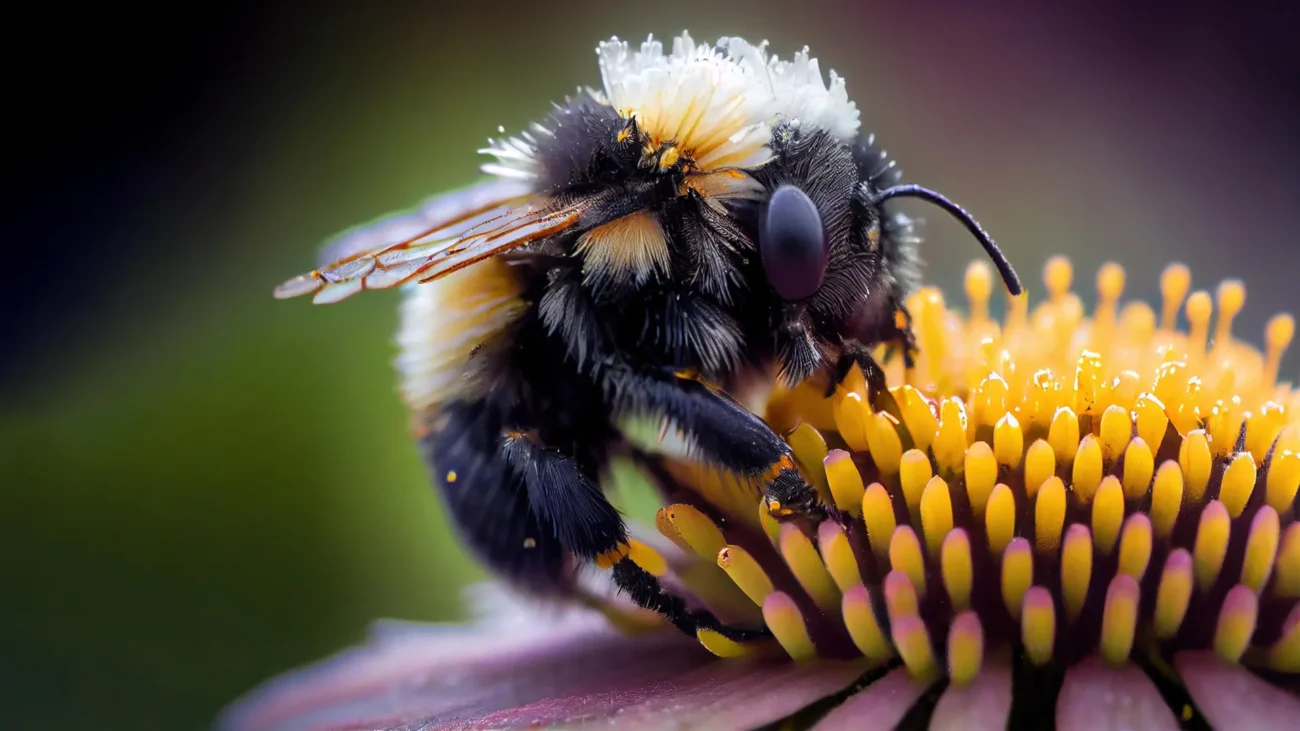
Physical Characteristics and Airborne Contamination: An often-overlooked factor is the physical appearance of the bees themselves. Bumblebees possess significantly hairier bodies than honeybees. This dense fuzz provides a larger surface area onto which dust and airborne particles containing heavy metals can readily adhere. These contaminated particles are then carried back to the nest along with the pollen, further contributing to the overall metal burden of the colony.
Hidden Risks in Seemingly Safe Rural Landscapes
Professor Lynn Dicks, a senior author on the study and a researcher at the University of Cambridge’s Department of Zoology, highlighted the concerning implications for rural environments. "Even in areas that we usually consider safe or lower risk for heavy metals – typically rural areas, away from industrial or mining areas – bees can pick up toxic metals," Professor Dicks stated. "Bumblebee colonies tend to have fewer workers available to perform tasks, so the loss of individuals can have a big impact on overall colony function." This underscores the fact that heavy metal pollution is not solely an urban or industrial problem but a pervasive issue that can affect even seemingly pristine natural habitats.
The implications of this research extend beyond the immediate health of individual bees. Pollinators are foundational to terrestrial ecosystems, playing a critical role in the reproduction of a vast array of plant species, including many that form the basis of human food security. A decline in bumblebee populations due to heavy metal toxicity could have cascading effects on biodiversity and agricultural productivity.
A Balanced Call to Action: Support Pollinators Despite Risks
Despite the concerning findings regarding heavy metal contamination, the researchers are keen to emphasize that the public should not cease their efforts to support pollinators. Planting flowers remains a crucial activity for bolstering bee populations, even in areas where contamination is a concern.
"Bees play a critical role in both biodiversity and food security, so we’d still encourage people to plant flowers to help them, even if you live in an area more likely to be contaminated," Dr. Scott advised. "At the end of the day, bees still need food. Even if it carries traces of heavy metals, having some food is better than having no food." This nuanced message acknowledges the risks while prioritizing the fundamental need for bee sustenance.
The research was generously funded by the Royal Society, a testament to the importance placed on understanding and addressing threats to pollinator health. Professor Dicks also holds a prestigious Fellowship at Selwyn College, University of Cambridge, further underscoring the academic rigor and institutional support behind this critical investigation.
This study serves as a vital reminder of the complex and often hidden environmental challenges facing pollinators. By understanding the differential vulnerabilities of bee species, scientists can develop more targeted conservation strategies and public health initiatives to mitigate the impact of heavy metal pollution on these indispensable creatures. The findings necessitate a re-evaluation of how we assess environmental risks and a renewed commitment to protecting the delicate balance of our ecosystems. The future of both biodiversity and food security may well depend on our ability to address these unseen threats to our pollinators.

