


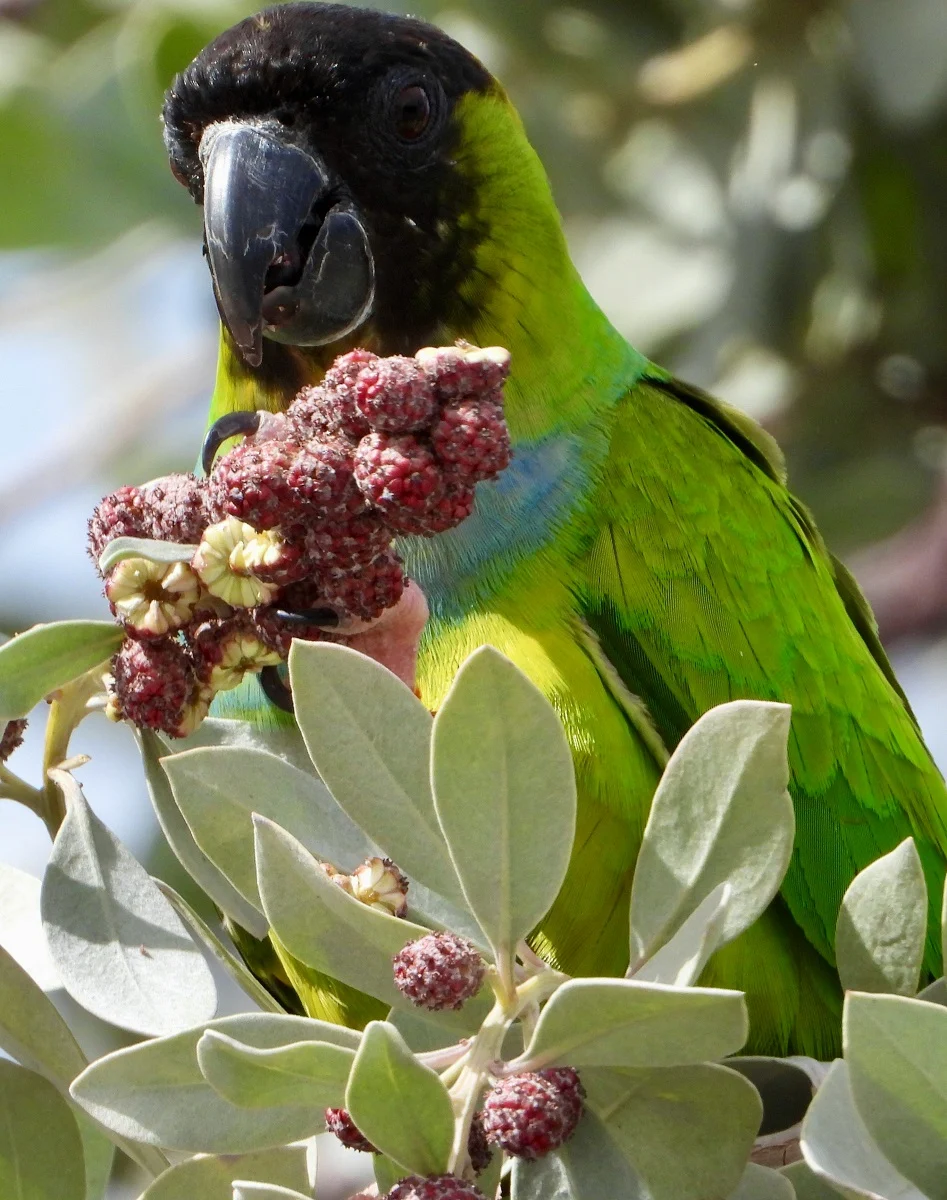
The nanday conure (Aratinga nenday), historically classified under its own monotypic genus as Nandayus nenday before phylogenetic reassessment, represents one of the most vibrant yet demanding avian companions available to bird enthusiasts. Known distinctively for its stark black hood, brilliant green plumage, and startling vocal capabilities, this small-to-medium South American parrot commands significant attention from both aviculturists and ornithologists alike. While its playful disposition and striking appearance make it an appealing household pet, potential owners must weigh its high social demands and exceptional noise levels before integrating the species into a domestic environment.
Taxonomic History and Evolution
The scientific classification of the nanday conure has undergone notable revision over the past two decades. For many years, the species was isolated within the monotypic genus Nandayus. However, a landmark molecular phylogenetic study published in 2004 fundamentally shifted this perspective. Researchers analyzing mitochondrial and nuclear DNA sequences concluded that the nanday conure did not warrant an exclusive genus. Instead, the data established its rightful place within the genus Aratinga, aligning it closely with other well-known conure species such as the sun conure (Aratinga solstitialis) and the jenday conure (Aratinga jenday). This reclassification reinforced existing behavioral and morphological similarities shared among members of the Aratinga lineage, clarifying the evolutionary trajectory of South American parakeets.
Natural Habitat, Geographic Distribution, and Ecological Role
Native to the open lowlands of central South America, the natural range of the nanday conure forms a distinct geographic corridor. This distribution stretches through the center of Paraguay, extending northward into southern Brazil, westward into eastern Bolivia, and southward into northern Argentina. Within these regions, the species predominantly inhabits flat, open terrain, including transitional forests, swampy lowlands, and cattle pastures dotted with native palms up to elevations of approximately 2,600 feet (800 meters).
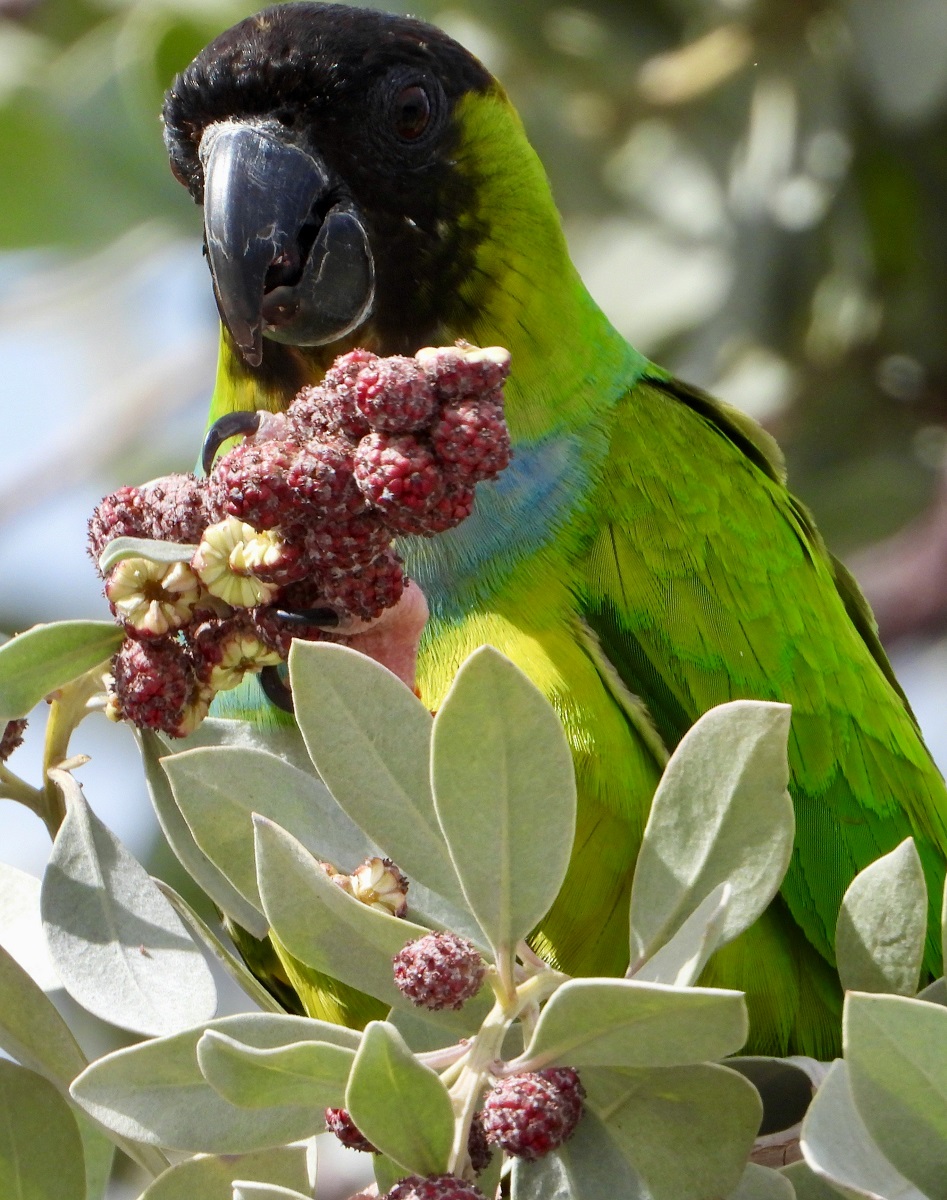
In the wild, the nanday conure plays a vital ecological role as both a consumer and a disperser. Field studies underscore its function as an active pollinator; for example, observations in western Brazil have documented the species feeding on the nectar of the flowering Erythrina dominguezii tree, facilitating cross-pollination in the process. Furthermore, wild nanday conures frequently visit natural mineral deposits known as clay licks. Ornithologists theorize that consuming this soil allows the birds to ingest essential micronutrients while neutralizing secondary plant toxins present in their natural diet of wild fruits, seeds, berries, and flower buds.
Global Conservation Status and Naturalized Populations
According to the International Union for Conservation of Nature (IUCN) Red List, the wild population of Aratinga nenday is categorized as Least Concern. Interestingly, unlike many avian species facing population declines due to deforestation, the nanday conure has demonstrated a degree of ecological adaptability. Anthropogenic landscape modifications, particularly the conversion of dense forests into agricultural cattle pastures, have inadvertently expanded suitable foraging habitats, leading to stable or even increasing wild population trends within its native range.
Conversely, the species has established a significant footprint outside of South America as an introduced and naturalized wildlife component. Due to the international pet trade and subsequent escapes or intentional releases, nanday conures have formed self-sustaining feral flocks in diverse international urban and suburban landscapes. Established populations now thrive in regions of Spain and across several areas in the United States, including California and Florida. Comprehensive ornithological surveys rank the nanday conure among the top naturalized parrot species in the United States. While these hardy flocks demonstrate remarkable adaptability to urban environments, wildlife management agencies note that introduced populations can occasionally generate agricultural concerns and compete with native fauna for nesting cavities.
Physical Characteristics and Lifespan
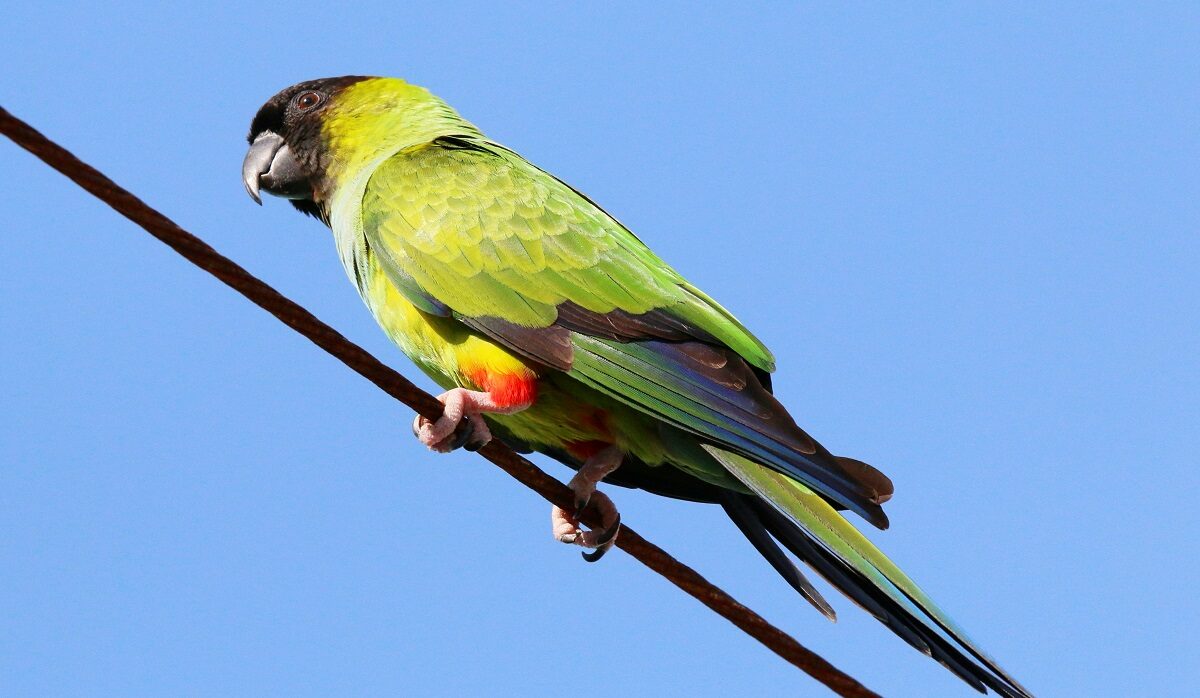
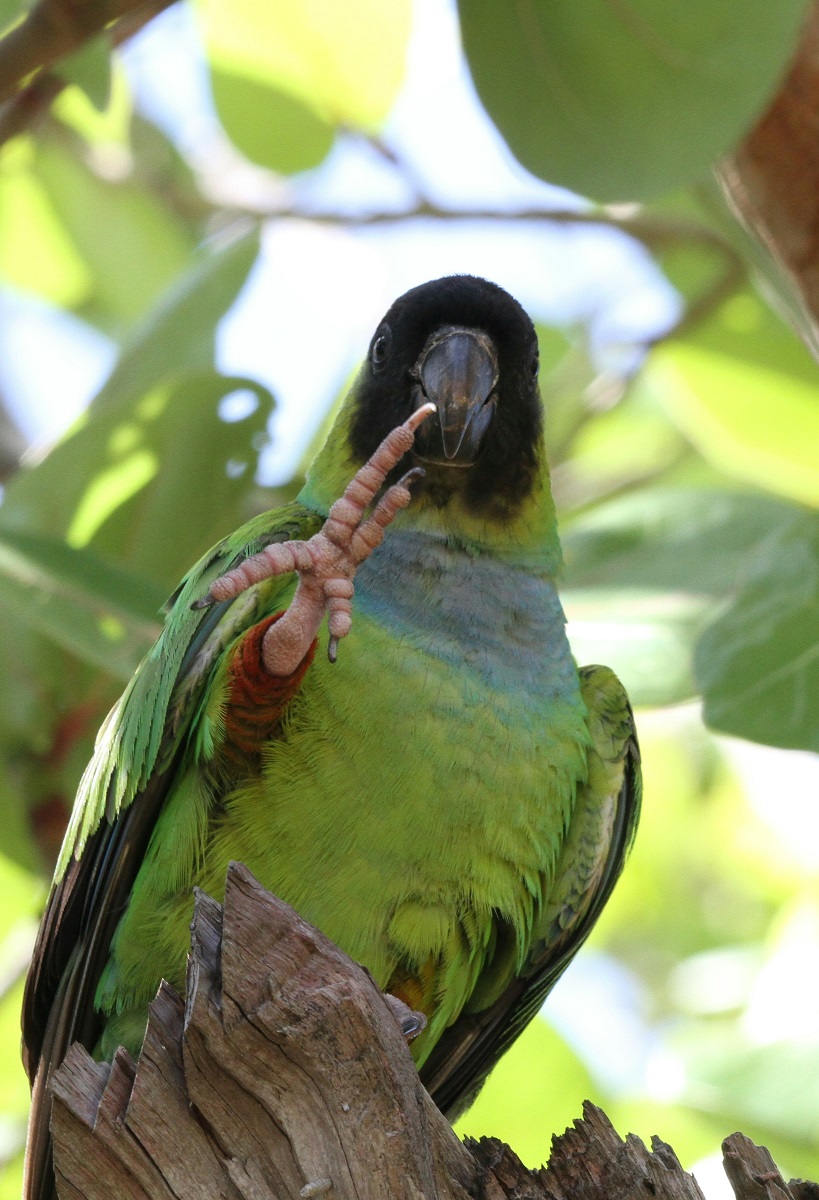
Adult nanday conures typically reach a length of up to 12 inches (30 centimeters) and maintain a body weight of approximately 140 grams. The most defining morphological feature is the stark, dark-black hood from which its alternative common name, the black-hooded conure, is derived. This facial mask is softly bordered by a collar of brownish feathers, contrasting sharply with the bird’s otherwise vibrant emerald-green body. Additional anatomical highlights include a robust black beak, prominent white periophthalmic eye rings, blue-green washings across the upper chest, and striking, brilliant-red feathers gracing the thighs.
When provided with optimal captive management, veterinary oversight, and a balanced nutritional regimen, nanday conures exhibit an impressive longevity. Individuals frequently achieve a lifespan of up to 30 years in captivity, making the acquisition of a nanday conure a multi-decade commitment that often requires long-term lifestyle planning on the part of the owner.
Captive Husbandry, Housing, and Environmental Safety
Maintaining a nanday conure in a domestic setting requires careful attention to spatial requirements, environmental enrichment, and avian safety standards. In professional avicultural settings, or where space permits, providing a full-sized outdoor or indoor aviary—ideally measuring 10 feet (3 meters) in length—is considered optimal. For owners keeping the bird primarily indoors, a spacious primary enclosure is non-negotiable. Avian welfare guidelines dictate that a cage measuring at least 30 x 24 x 24 inches (75 x 60 x 60 cm), with a strong emphasis on horizontal length over vertical height, is necessary to allow the bird to fully stretch its wings and move freely.
The interior of the enclosure must be thoughtfully appointed with natural wood perches of varying diameters to promote foot health, alongside a rotation of durable conure-safe chewing toys to mitigate behavioral stagnation. Furthermore, environmental safety within the home is paramount. Birds possess a highly specialized and sensitive respiratory system. Airborne toxins, volatile organic compounds, and chemical fumes pose immediate, life-threatening risks. Consequently, responsible parrot-proofing mandates the total elimination of cigarette smoke, aerosol sprays, scented candles, and the use of polytetrafluoroethylene (PTFE) nonstick cookware anywhere near the housing area.
Nutritional Requirements for Optimal Health
Dietary management has evolved significantly over recent decades. Historically, captive parrots were maintained primarily on seed-based mixtures. However, contemporary avian veterinary medicine strongly discourages exclusive seed diets, which are now widely recognized as primary contributors to nutritional deficiencies, hepatic lipidosis (fatty liver disease), and obesity in companion birds.
Modern nutritional protocols recommend a high-quality, commercially formulated pellet diet as the foundational base for a captive nanday conure. This baseline should be systematically supplemented with a diverse array of fresh, parrot-safe fruits and vegetables. Nutrient-dense produce such as leafy dark greens, bell peppers, broccoli, apples, and grapes provide essential vitamins and minerals. Additional dietary enrichment can include sprouted seeds, cooked whole grains such as brown rice or pasta, and occasional high-protein items like small portions of boiled egg. Access to fresh, clean drinking water at all times completes the essential nutritional framework.
Behavioral Enrichment and Social Dynamics
Nanday conures are exceptionally intelligent, highly social creatures that demand substantial daily interaction. In the wild, these birds exist within complex flock structures, relying heavily on conspecific communication and mutual bonding. In a domestic environment, this translates to a profound need for mental stimulation. Failure to provide adequate social engagement and environmental enrichment frequently precipitates severe psychological distress, manifesting in destructive behaviors such as chronic screaming, feather-plucking, and self-mutilation.
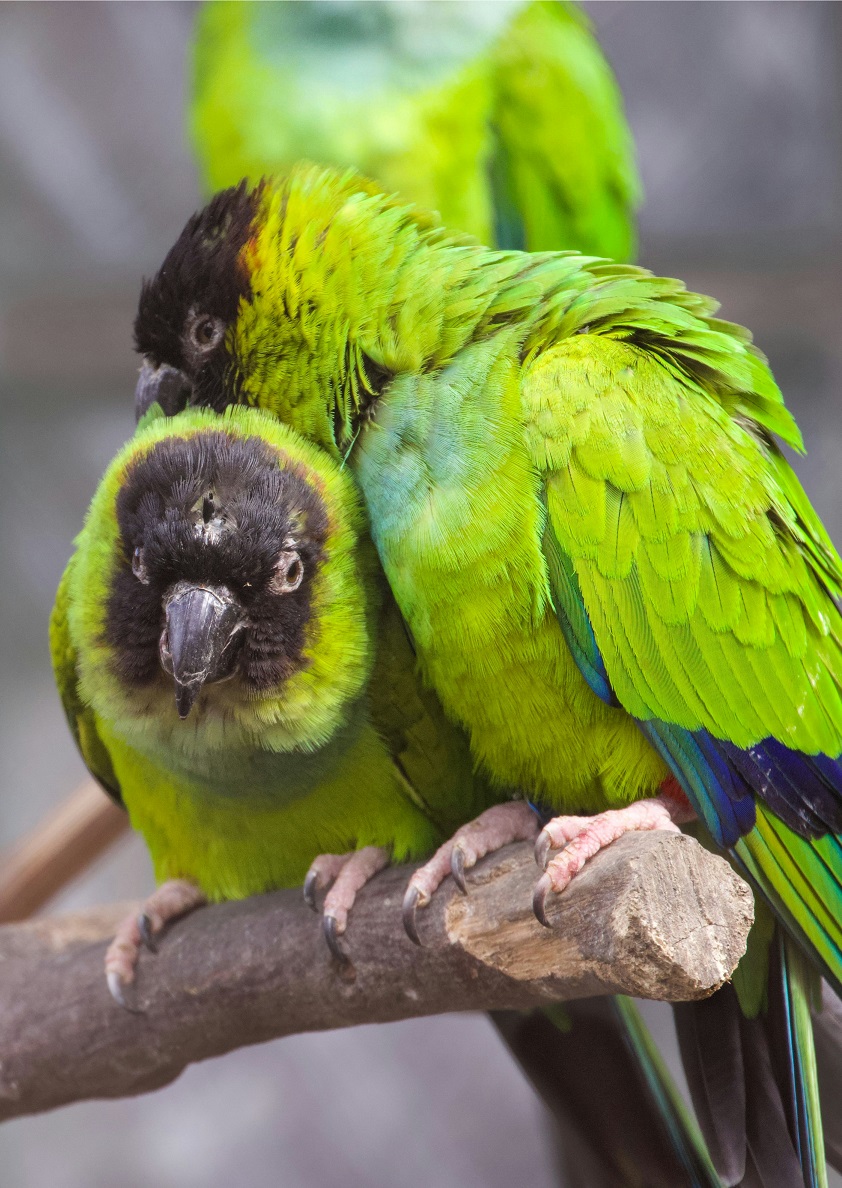
For households where human family members maintain standard full-time employment outside the home, acquiring a pair of nanday conures to provide mutual companionship is frequently recommended by behavioral specialists. Beyond social housing, owners must proactively counter boredom through foraging toys, puzzle feeders, and routine out-of-cage exploration time. Because parrots are notoriously curious and physically fragile, owners must also maintain vigilance regarding household hazards and be prepared to administer basic avian emergency care if accidents occur.
Temperament and Socialization
Among Aratinga conures, the nanday is frequently praised by experienced keepers for its generally affable, outgoing temperament. Unlike some smaller parrot species known for defensive nipping, a well-socialized nanday conure typically displays an accepting attitude toward new human acquaintances and integrates smoothly into active family dynamics.
Their high sociability, however, presents a double-edged sword. While they readily accept head scratches, enjoy participating in training sessions, and often delight in resting quietly on an owner’s shoulder, their intense need for connection can blur into extreme clinginess. Nandays can become intensely jealous of perceived competitors for their owner’s attention and may exhibit distress behaviors when isolated or ignored.
Vocalizations, Noise Levels, and Speech Capabilities
The single most critical factor prospective owners must evaluate before acquiring a nanday conure is its vocal volume. Conures belonging to the genus Aratinga are widely recognized as the loudest representatives of their size class, and nandays certainly uphold this reputation.
Avian literature and acoustic studies underscore the sheer power of the species’ vocalizations. While large macaws have been recorded screaming up to 105 decibels and Moluccan cockatoos can reach 135 decibels, extreme alarm calls from smaller species like the nanday conure have been documented at levels reaching an astounding 155 decibels—intensities capable of causing physical discomfort or auditory injury to human eardrums if experienced at close range. Consequently, nanday conures are fundamentally unsuited for apartment living or environments with strict noise ordinances. Behavioral vocalizations predictably peak during dawn and dusk, as well as during periods of excitement or separation anxiety.
In addition to their piercing flock calls, nanday conures communicate through varied whistles, chirps, and environmental mimicry. While they do not possess the advanced articulation capabilities of species such as the African grey parrot, many individual nandays successfully master a modest vocabulary of words, phrases, and household sounds, often practicing their vocalizations in a characteristic, melodic "baby babble" while engaged in play.
Conclusion
The nanday conure remains a captivating, intelligent, and deeply engaging avian companion for the right home. Its brilliant coloration, dynamic personality, and long lifespan offer a rewarding ownership experience for dedicated aviculturists. Nevertheless, the species demands an uncompromising commitment to time, specialized housing, nutritional planning, and, above all, a high personal tolerance for persistent, high-decibel vocalizations. Prospective owners must carefully evaluate their living arrangements and daily schedules to ensure they can meet the complex physiological and psychological requirements of this remarkable South American parrot.

