


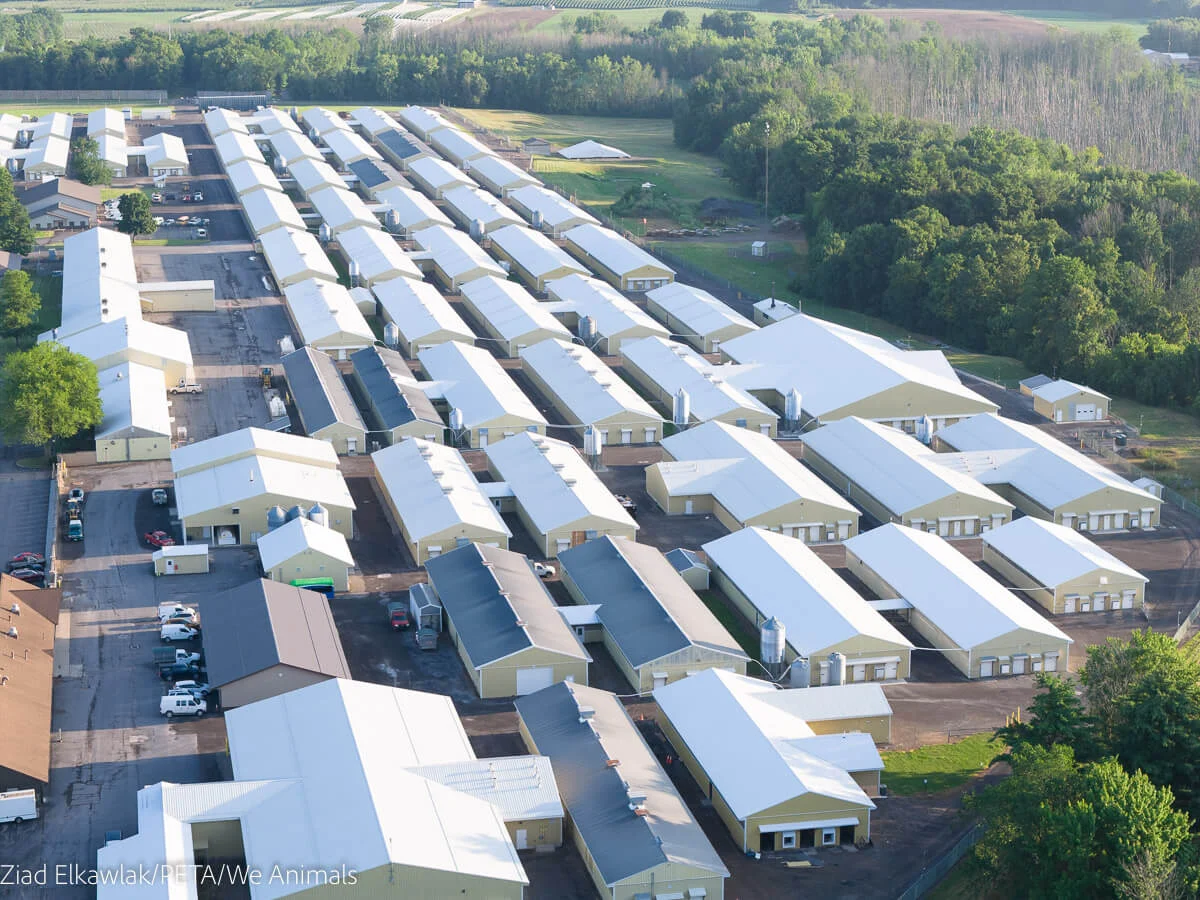
For decades, Marshall BioResources has operated largely away from public scrutiny, functioning as a massive, industrial-scale supplier of dogs, cats, ferrets, and minipigs to laboratories across the globe. Nestled between dense stands of towering trees near North Rose, New York, approximately an hour’s drive from the nearest major urban center, the facility presents a deliberately nondescript exterior. Its bland, utilitarian architecture masks an operation that handles tens of thousands of sentient animals annually, transforming living creatures into commodities destined for pharmacological, chemical, and biological testing facilities.
However, newly released drone footage obtained through a joint effort by People for the Ethical Treatment of Animals (PETA) and We Animals provides an unprecedented, comprehensive bird’s-eye perspective of the sprawling compound. The visual evidence strips away the isolation of the rural landscape, laying bare the true industrial scale of a facility where thousands of animals are bred, confined, and ultimately shipped to laboratories to face invasive experimentation.
A Sprawling Industrial Complex of Confinement
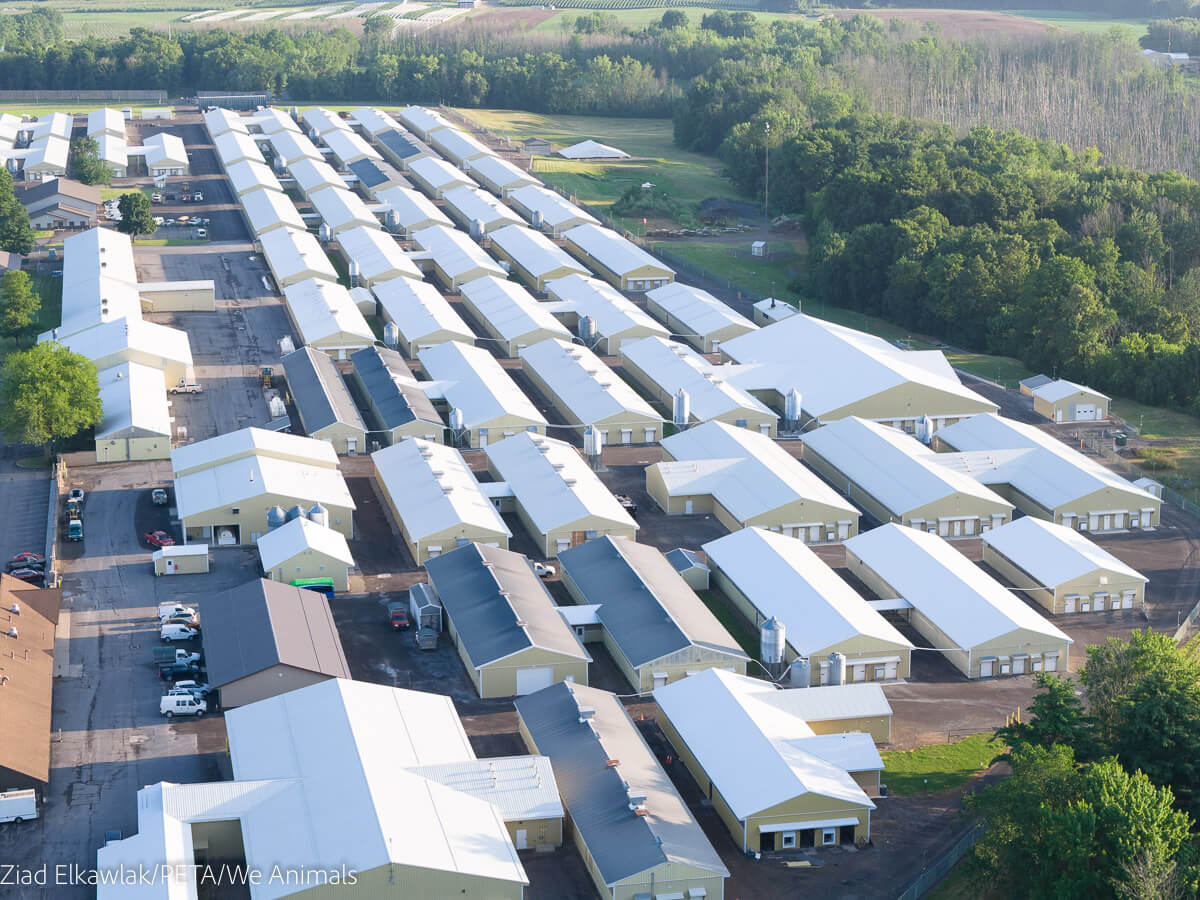
From an aerial view, the sheer magnitude of the North Rose property becomes impossible to ignore. Encompassing roughly 103 acres, the compound is so vast that its total land area could comfortably accommodate approximately 93 standard football fields, or cover nearly 60 commercial city blocks in Manhattan.
The infrastructure within this enclosed perimeter is meticulously organized for mass production. The drone footage reveals a dense concentration of approximately 50 uniform warehouses grouped around a central concrete compound. These buildings house thousands of animals, primarily beagles and ferrets, locked inside stacked cages from birth. Despite being surrounded by miles of lush New York countryside and open green spaces, the animals inside are denied any access to the outdoors, sunlight, or natural earth during their entire lives at the facility.
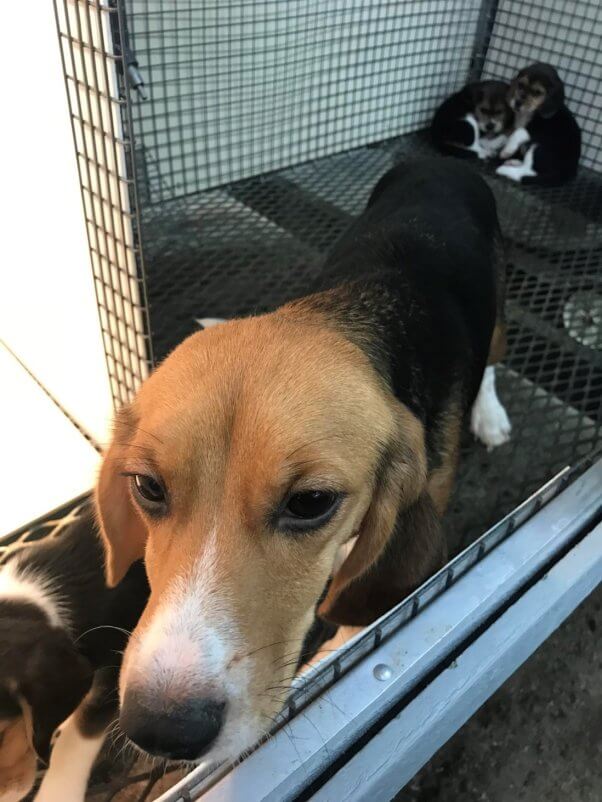
According to whistleblower accounts and investigative reports, the interior conditions starkly contrast with the pastoral outside world. Ferrets are routinely reported to be kept in cramped, dingy wire cages caked in waste, while breeding beagles and their litters languish on barren metal-floor enclosures suspended over soiled concrete trenches. The constant close confinement and lack of environmental enrichment lead to severe behavioral distress, including repetitive pacing and signs of psychological trauma. Furthermore, some dogs are reportedly fitted with tight inhalation masks—a specialized training procedure that allows Marshall to charge a premium to pharmaceutical and chemical testing clients who utilize aerosol inhalation testing protocols.
Background and Decades of Regulatory Scrutiny
Marshall BioResources occupies a unique and controversial position within the biomedical research supply chain as the last major commercial beagle breeder operating at scale within the United States. While other large-scale breeders have downscaled or closed following public pressure and legal challenges—most notably the closure of the massive Envigo beagle breeding facility in Virginia following a federal takeover—Marshall has continued to expand its footprint and influence.
The company generates tens of millions of dollars in annual revenue by supplying animals to a diverse clientele, including academic research universities, major pharmaceutical corporations, contract research organizations (CROs), and federal government agencies. In these laboratories, the animals are subjected to toxicity assays, pharmaceutical safety trials, surgical modifications, and disease-induction studies that frequently end in euthanasia.
Over the years, the facility has faced numerous citations and enforcement actions from federal regulators, most notably the United States Department of Agriculture (USDA), which is tasked with enforcing the federal Animal Welfare Act (AWA). Federal inspection reports have repeatedly documented violations at Marshall’s facilities, ranging from inadequate veterinary care and untreated injuries to structurally deficient housing and sanitation failures. Despite these recurring citations, the company has maintained its federal dealer license, allowing it to continue operations uninterrupted.
The Chronology of Industry-Wide Scrutiny
The release of the September 2026 drone footage marks the latest escalation in a multi-year campaign by animal advocacy organizations to shine a light on commercial laboratory animal breeding.
- Early 2000s to 2010s: Regulatory inspections intermittently flag sanitary and veterinary compliance issues at various Marshall facilities, resulting in civil penalties and official warnings from the USDA, though operations remain largely unhindered.
- 2022: The historic closure of the Envigo beagle facility in Cumberland, Virginia—prompted by a federal lawsuit detailing rampant Animal Welfare Act violations and the rescue of over 4,000 beagles—brings unprecedented public attention to commercial dog breeding for research, placing heightened scrutiny on remaining suppliers like Marshall BioResources.
- 2024: Investigative exposes, whistleblower testimonies, and photographic evidence detailing dead dogs and substandard conditions at Marshall facilities trigger intensified legal challenges and petitions from advocacy groups urging federal intervention.
- September 2026: PETA and We Animals release high-resolution drone footage exposing the massive scale of the North Rose, New York facility, prompting renewed nationwide calls for the USDA to revoke Marshall’s commercial dealer license.
Responses and Stakeholder Perspectives
The revelations captured by the aerial footage have drawn sharp responses from animal welfare organizations, industry watchdogs, and representatives of the scientific community.
Animal protection advocates emphasize that the industrial-scale breeding of dogs and cats for experimentation is an ethical anachronism that should be phased out in favor of modern, human-relevant non-animal testing methods. Activists argue that confinement in barren, industrial warehouses inflicts profound psychological and physical suffering on highly social animals like dogs, which are domesticated companions bred specifically for human interaction.
"The sheer scale of this operation is staggering, but even more horrifying is the hidden reality of what happens inside these 50 windowless warehouses," said an advocacy spokesperson following the release of the drone footage. "These are sentient, intelligent animals born directly into a lifetime of imprisonment simply to be sold to laboratories where they will be poisoned and killed."
Conversely, representatives of the biomedical research and commercial breeding sectors often defend their operations by asserting that animal models remain a regulatory and scientific necessity. Industry stakeholders maintain that certain complex systemic reactions—particularly in toxicology and pharmacology—cannot yet be entirely replicated by computational models, organ-on-a-chip technology, or in vitro assays. Consequently, industry groups argue that strictly regulated breeding facilities are essential to ensure the reproducibility and safety of new human therapeutics and medical devices.
However, even within the scientific and regulatory communities, there is a growing push toward the "3Rs" framework: Replacement, Reduction, and Refinement. Regulatory bodies in the U.S. and Europe have increasingly signaled a willingness to accept non-animal testing methods where scientifically justified, though complete replacement remains a long-term goal rather than an immediate reality.
Broader Impact and Industry Implications
The exposure of Marshall BioResources’ North Rose facility underscores a broader societal and regulatory tension surrounding the ethics of animal testing in the 21st century. As public awareness regarding the conditions of laboratory animal suppliers grows, companies operating in this sector face unprecedented levels of transparency and scrutiny from investigative journalists, drone operators, and undercover whistleblowers.
The implications of these ongoing investigations extend beyond a single company. Lawmakers at both the state and federal levels face mounting constituent pressure to introduce legislation aimed at restricting the commercial breeding of dogs and cats for research purposes, or to mandate adoption-release programs for surviving laboratory animals—policies that have already been enacted in several states under laws commonly known as "Beagle Freedom Laws."
As the pressure mounts on federal regulators, the central question remains whether the USDA will take decisive administrative action to revoke Marshall BioResources’ operating license based on its history of regulatory infractions. Until such action is taken, thousands of beagles, ferrets, cats, and minipigs will continue to be born into the concrete-and-steel environment of North Rose, awaiting an uncertain and fatal journey into the nation’s research laboratories.

