


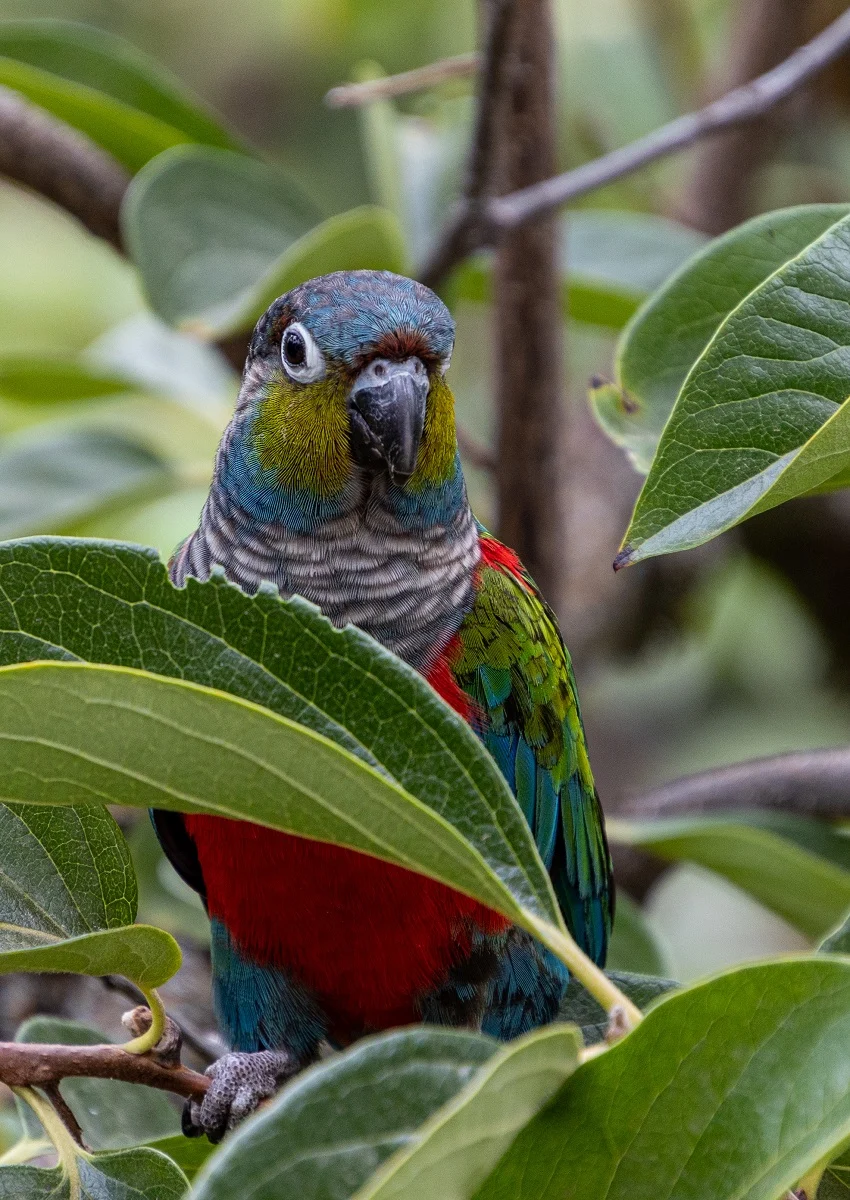
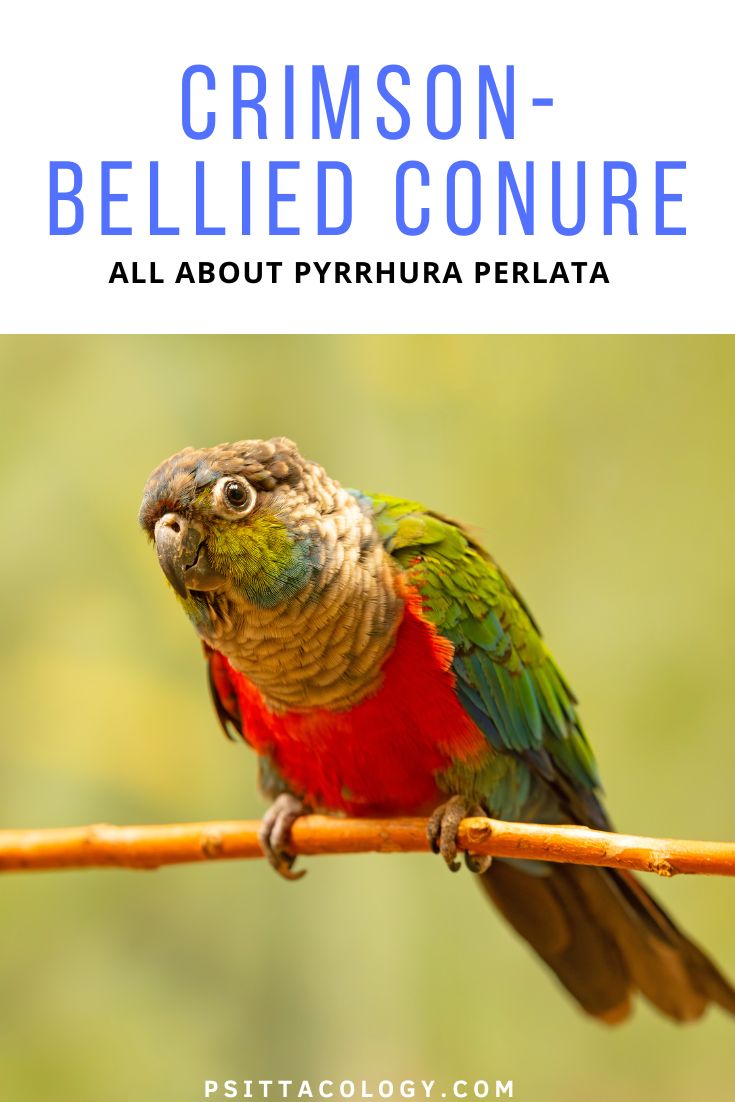
The crimson-bellied conure (Pyrrhura perlata), frequently referred to in aviculture as the crimson-bellied parakeet, represents one of the most vividly ornamented yet manageable small parrot species available to modern bird enthusiasts. Indigenous to the complex ecosystems of the Brazilian Amazon Basin and portions of northern Bolivia, this charismatic psittacine has steadily gained traction among avian hobbyists worldwide. Balancing an affectionate, playful disposition with a striking visual profile, the species requires specialized care, structured environmental enrichment, and a comprehensive understanding of its natural history to thrive in captivity.
Taxonomic Profile and Physical Characteristics
Scientifically classified as Pyrrhura perlata, the crimson-bellied conure belongs to the family Psittaculidae and the diverse genus Pyrrhura, a group of New World green-cheeked and related parakeets. Adult specimens typically measure up to 10 inches (25 centimeters) in total length, featuring a characteristic long, graduated tail, and maintain an average adult weight of approximately 90 grams.
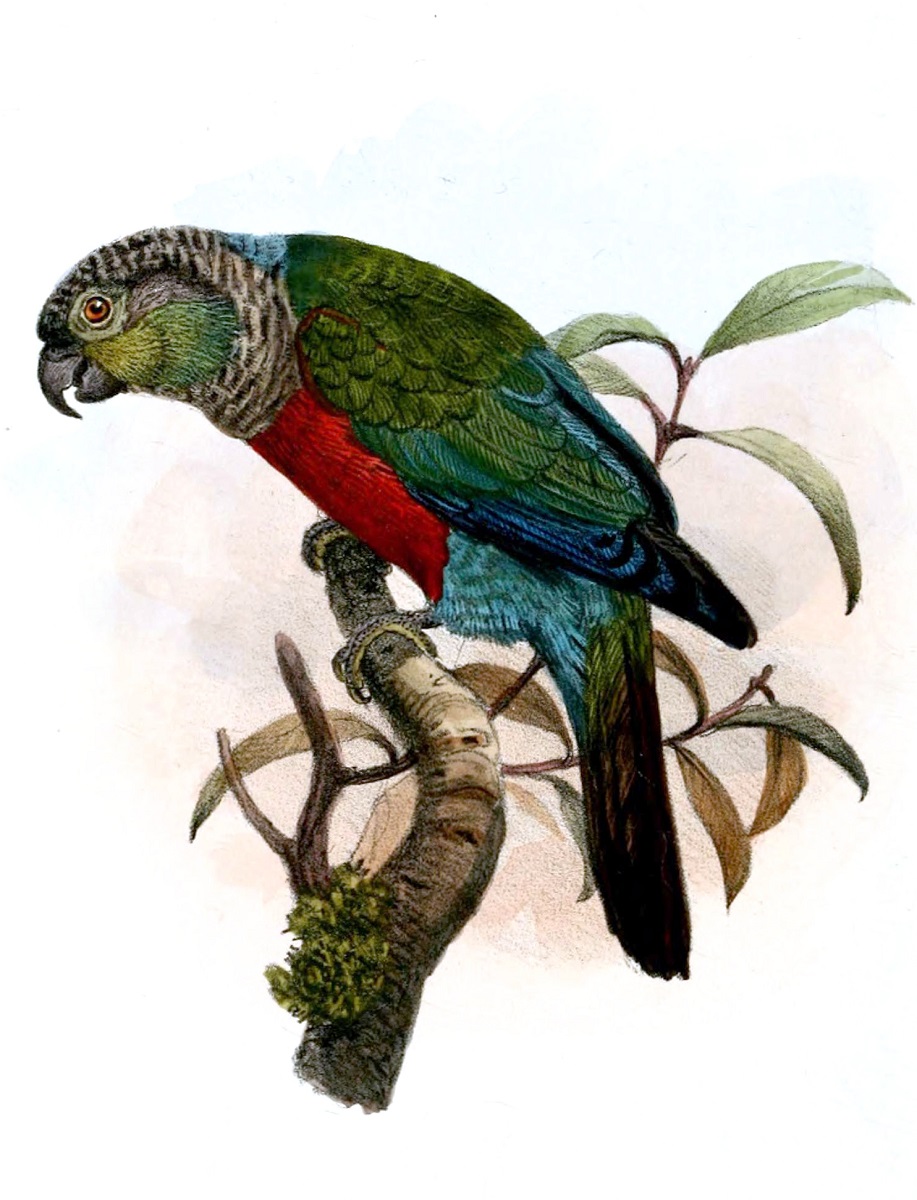
The species derives its common name from the vibrant, saturated red plumage that dominates its lower underparts. However, this coloration is complemented by a sophisticated palette: slate-gray to bluish crown feathers, auricular patches adorned with contrasting tones, and scalloped markings along the chest and neck. The facial anatomy includes distinct white peri-ophthalmic eye rings and a robust, dark gray to black beak designed for seed and nut cracking.
Aviculturists note that juvenile crimson-bellied conures do not display their full adult coloration immediately upon fledging. The signature crimson belly can take up to a full year to develop completely through successive molts. Furthermore, the species is sexually monomorphic, meaning there are no reliable external sexual dimorphisms. Determining the sex of an individual specimen requires molecular DNA testing via feather or blood samples rather than visual inspection.
Natural Habitat, Geographical Range, and Conservation Status
The ecological distribution of Pyrrhura perlata is concentrated primarily in central South America. The core of its native population resides within the Brazilian Amazon Basin—most notably documented in the state of Rondônia—with contiguous ranges extending westward into northern Bolivia.
Within these regions, the crimson-bellied conure exhibits a strong preference for primary and secondary moist tropical lowland forests. Specifically, they favor terra firme forests, which are dense canopy environments that remain largely unaffected by seasonal inundations. These habitats provide an abundance of hollow trees essential for nesting and roosting, as well as a rich canopy supporting diverse foraging opportunities.
Behaviorally, wild crimson-bellied conures are gregarious animals. They typically travel in small, tight-knit family units or flocks numbering fewer than twenty individuals. It is not uncommon for them to associate or forage alongside other related parakeet species, such as the painted conure (Pyrrhura picta).
From a conservation perspective, the International Union for Conservation of Nature (IUCN) currently lists Pyrrhura perlata as a species of Least Concern. Despite this relatively secure global status, field researchers and conservation biologists report a steady decline in regional population densities. Primary drivers of this population reduction include widespread deforestation driven by agricultural expansion and logging in the Amazon Basin, alongside localized capture for the international pet trade. Environmental authorities continue to monitor habitat fragmentation to prevent accelerated declines in vulnerable sub-populations.
Wild and Captive Nutritional Requirements
Avian nutritionists emphasize that the dietary needs of Pyrrhura perlata reflect the high-energy demands of a rainforest forager. In its natural environment, the species relies on a shifting array of seasonal botanical resources. Field observations confirm that wild crimson-bellied conures feed extensively on wild figs, berries, drupes, flowers, and developing catkins. A notable behavioral adaptation involves regular visits to Amazonian clay licks (colpas), where the birds ingest mineral-rich soil. This behavioral mechanism allows them to neutralize plant toxins ingested during foraging and secure essential micronutrients, particularly sodium and calcium.
Replicating this nutritional diversity in a domestic setting is critical for longevity and disease prevention. According to avian veterinary professionals, including specialized practitioners in exotic animal medicine, captive diets should avoid exclusive seed regimens, which frequently induce nutritional deficiencies, hepatic lipidosis (fatty liver disease), and obesity.
Instead, the baseline captive diet should consist of high-quality, commercially formulated pelleted food designed for small-to-medium parrots. This staple must be supplemented daily with a wide variety of fresh vegetables, leafy greens, and moderate portions of safe, low-sugar fruits. Additional nutritional enrichment can include cooked whole grains such as quinoa and brown rice, sprouted seeds, and pesticide-free foraged grasses. Access to fresh, clean drinking water must be maintained without interruption.
Housing Specifications and Environmental Management
Despite their modest physical dimensions, crimson-bellied conures possess high metabolic rates and an abundance of physical energy. Consequently, captive housing must prioritize horizontal flight space over vertical height. Avian welfare guidelines recommend a minimum cage width of 36 inches (approximately 90 centimeters), provided the bird is granted several hours of supervised out-of-cage free flight daily. If the bird is to remain confined for extended periods, a full-scale indoor aviary is strongly recommended.
Cage infrastructure must be carefully selected to promote physical health. Straight plastic perches and uniform wooden dowels should be avoided, as they can cause pressure sores and bumblefoot over time. Instead, enclosures should feature natural wood branches of varying diameters and bark textures to exercise the feet and maintain nail health.

Furthermore, environmental safety within the home is paramount. Because these conures are naturally curious and possess strong exploratory drives, any room granting free-flight access must be thoroughly bird-proofed. Owners must eliminate hazards such as non-stick polytetrafluoroethylene (PTFE) cookware fumes, toxic houseplants, open bodies of water, and exposed electrical wiring.
Behavioral Enrichment and Psychological Well-Being
Cognitive stimulation is a cornerstone of proper psittacine husbandry. As highly intelligent animals, crimson-bellied conures require continuous mental engagement to prevent behavioral pathologies. In the wild, a significant portion of the bird’s day is consumed by foraging, social interaction, and navigating complex canopy structures. In captivity, the absence of these stimuli can lead to severe psychological stress.
Chronic boredom frequently manifests in destructive behaviors, including excessive vocalization, stereotypic pacing, stress bars on feathers, and feather-destructive behavior (feather plucking). To mitigate these risks, caretakers must implement dynamic enrichment programs. This includes rotating a diverse selection of chewable wooden toys, puzzle feeders, foraging boxes containing hidden treats, and shreddable materials like untreated paper or cardboard.
Social interaction also plays a vital role in psychological stabilization. Whether housed with a compatible conure companion or integrated closely into a human family network, Pyrrhura perlata requires consistent engagement to maintain emotional equilibrium.
Temperament and Socialization
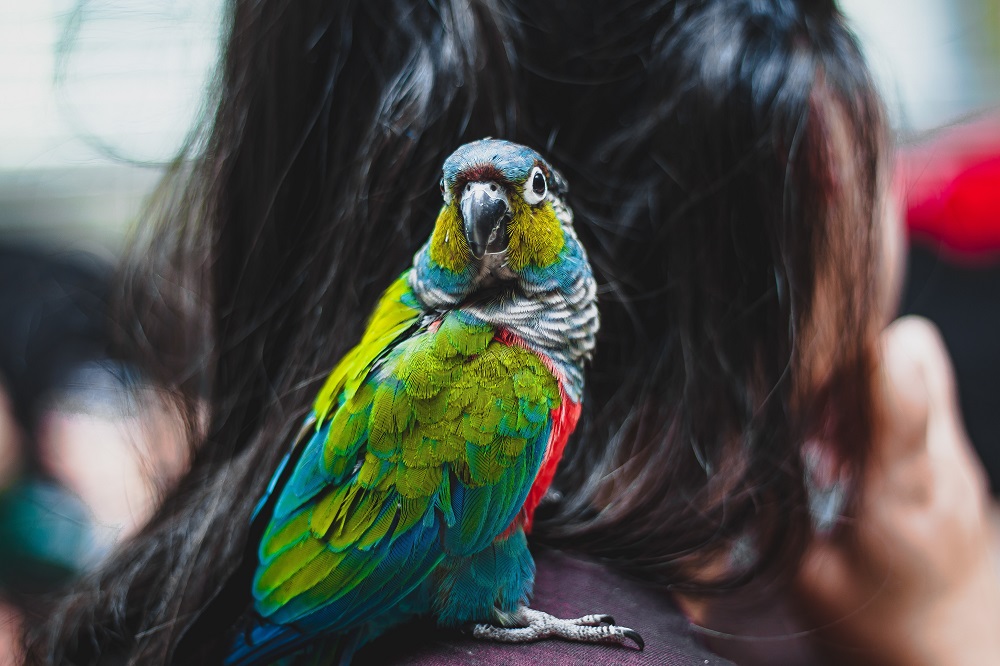
Referred to by many experienced handlers as "lovable rogues," crimson-bellied conures combine a mischievous, clownish demeanor with a deep capacity for affection. When properly socialized from a young age, they generally develop a strong bond with their human caregivers, frequently seeking physical contact such as shoulder perching and head scratches.
However, this high level of sociability is balanced by a distinct streak of independence and tenacity. They are active explorers that thoroughly enjoy investigating household items, often resulting in minor chewing damage to furniture, paper goods, and clothing. Prospective owners must weigh this characteristic against the desire for a low-maintenance pet.
Additionally, as with all companion parrots, early socialization is critical to prevent fear-based biting or territorial aggression during maturity. Establishing clear behavioral boundaries through positive reinforcement training helps ensure a harmonious relationship between the bird and its human household.
Vocalizations and Auditory Profile
Acoustically, crimson-bellied conures occupy a moderate position within the broader conure spectrum. While they are significantly quieter than larger parakeet and parrot species—such as Aratinga conures or cockatoos—they are by no means silent animals.
Their standard vocal repertoire includes soft chattering, contact calls, and inquisitive murmurs. However, when startled, excited, or demanding attention, they are capable of producing sharp, piercing screeches. Because noise tolerance varies significantly among households, prospective owners are advised to audition audio recordings of the species or consult established breeders to assess sound levels prior to acquisition.
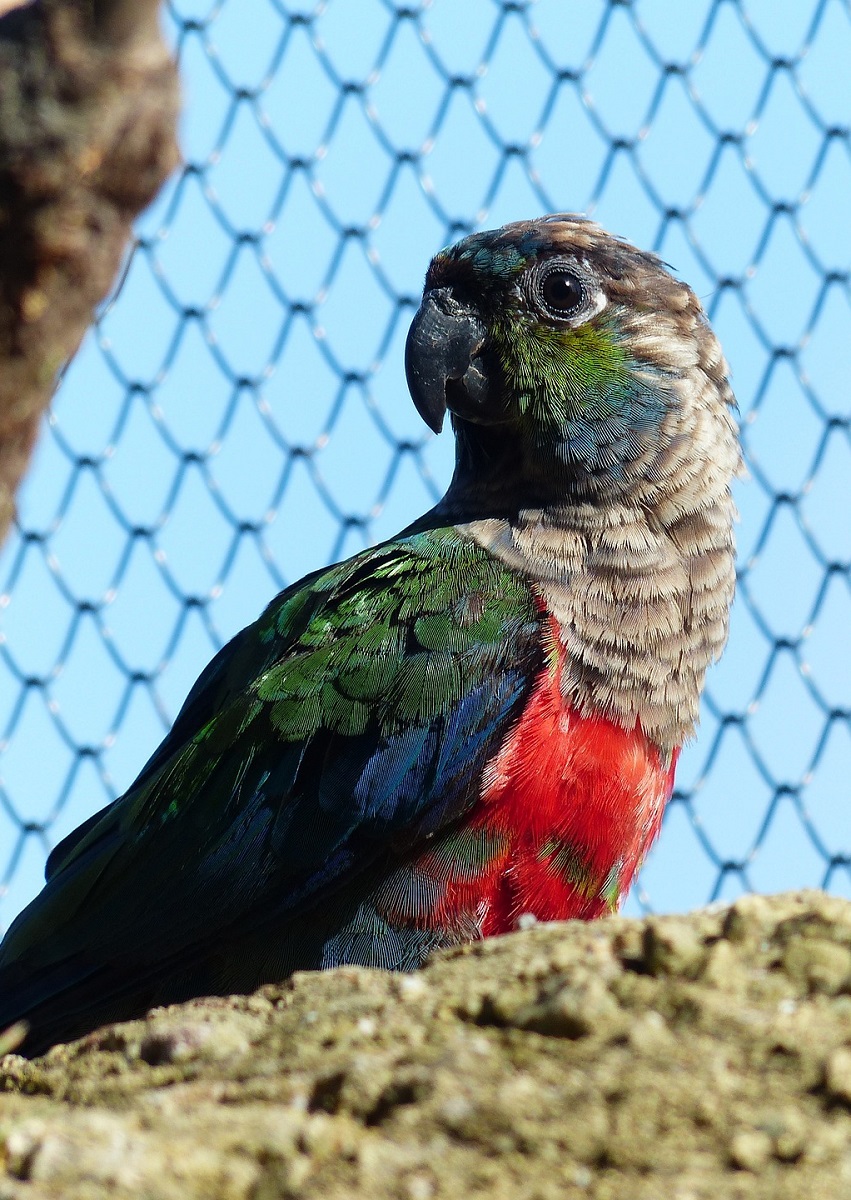
Regarding human speech acquisition, Pyrrhura conures are generally not recognized as premier talkers. While individual birds may demonstrate an unexpected capacity for mimicking simple household noises, mechanical sounds, or a limited vocabulary of distinct words, most specimens will not develop conversational speech capabilities.
Lifespan and Long-Term Commitment
Adopting a crimson-bellied conure represents a multi-decade commitment. Under optimal conditions of husbandry, veterinary care, and nutrition, Pyrrhura perlata frequently achieves a lifespan exceeding 20 years.
This extended longevity requires owners to plan for the bird’s long-term welfare, including provisions for veterinary care by a certified avian specialist and emergency contingency planning in the event of life changes. Understanding these foundational requirements ensures that both the physical and psychological needs of the crimson-bellied conure are met throughout its lifetime.

