


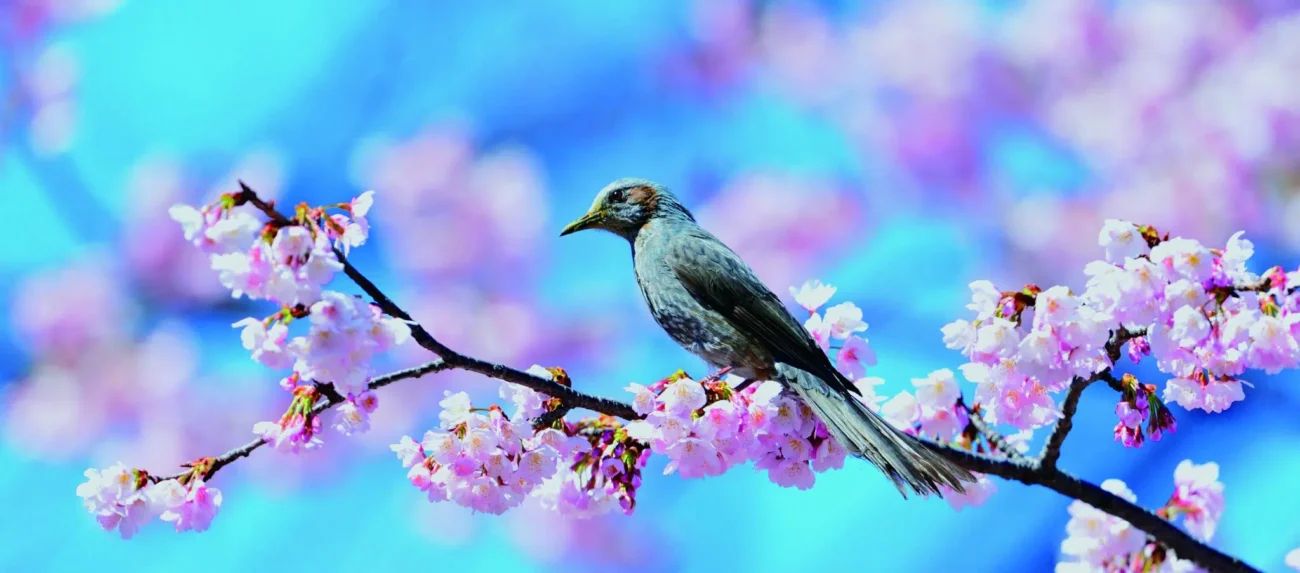
As the chill of winter recedes, heralding the gentle arrival of spring, a familiar avian presence commands attention across Japan: the Brown-eared Bulbul (Hypsipetes amaurotis). This ubiquitous bird, often overlooked in the avian landscape, is the subject of a poignant photographic essay and accompanying text by Her Imperial Highness Princess Takamado, featured in the April 2026 issue of Fujingahou Magazine. Through her discerning lens and insightful observations, Princess Takamado invites readers to reconsider their perception of this common species, highlighting its ecological significance, adaptive prowess, and unique appeal, particularly to international visitors.
A Bird of Seasons and Shifting Landscapes
Princess Takamado’s essay opens with a somber reflection on the perceived shortening of spring and autumn, a phenomenon she attributes to the accelerating impacts of climate change. This environmental context underscores the importance of appreciating the natural world around us, even its most familiar inhabitants. The Brown-eared Bulbul, with its distinctive call that sounds like "hee-yo, hee-yo" – a sound that inspired its Japanese name, hiyodori – is one of the most recognizable birds in Japan, second only to sparrows and crows in commonality. Yet, despite its omnipresence, it often elicits a dismissive sentiment, even among seasoned birdwatchers. "Oh… it’s just a Brown-eared Bulbul," is a frequently heard remark, suggesting a lack of perceived value in observing such a common creature.
This underappreciation, Princess Takamado notes, stems partly from the bulbul’s assertive nature. They are known for their strong territorial instincts, vigorously defending prime feeding spots on camellias and cherry blossoms, often driving away other avian visitors. Their loud, piercing calls can shatter the tranquility of their surroundings, leading to them being perceived as somewhat bothersome. This combination of territorial dominance and vocal assertiveness has, unfortunately, contributed to a less-than-favorable reception among many in Japan.
An International Fascination: The Exotic Appeal of the Familiar

Paradoxically, the Brown-eared Bulbul holds a distinct appeal for birders visiting Japan from abroad. One significant factor contributing to this international fascination is the species’ relatively restricted geographic distribution. Primarily inhabiting East Asia, with a strong concentration in Japan, the bulbul represents a unique opportunity for overseas visitors to observe a bird that is endemic to the region. For many, encountering a Brown-eared Bulbul is a highlight of their ornithological pursuits in Japan, a testament to its perceived rarity and distinctiveness from a global perspective.
Adapting to the Urban Jungle: A Story of Resilience
Princess Takamado’s essay traces the remarkable adaptive journey of the Brown-eared Bulbul, illustrating its successful integration into increasingly urbanized environments. She recalls a childhood in central Tokyo, where, despite the presence of abundant greenery, the loud calls of bulbuls were not a prominent feature of her surroundings, nor were they frequent visitors to her family garden. This personal anecdote provides a striking contrast to the bird’s current prevalence.
Historically, the Brown-eared Bulbul’s primary habitat was satoyama forests – secondary woodlands traditionally managed by local communities – typically found at elevations between 400 and 1,000 meters. During winter, they would descend to lower plains. However, approximately 50 to 60 years ago, a significant shift occurred. Their expansion into urban areas is strongly linked to the widespread "greening" initiatives in cities, which have created more hospitable environments.
This urbanization has been further facilitated by the bulbul’s highly adaptable omnivorous diet. Beyond the nectar of camellias and cherry blossoms, they readily consume nectar from plum and apricot blossoms, willow buds and young leaves. Their diet also includes insects and the berries of common street trees like nandina and pyracantha. Their resourcefulness extends to year-round sustenance; they can drink sap from broken branches and find a readily available supply of fully ripened fruits such as persimmons, mandarins, grapes, and apples in suburban areas, along with leafy vegetables like cabbage and Chinese cabbage. This diverse and accessible food base has been crucial to their urban success.
The breeding habits of the Brown-eared Bulbul further underscore their adaptability. They are known to nest in city parks, residential areas, and private gardens. Their nest-building materials are a testament to their opportunistic nature, incorporating not only natural elements like twigs and plant fibers but also human-made materials such as vinyl and plastic. This skillful utilization of resources found within human living spaces highlights their tenacious survival strategies in a rapidly changing landscape.

A Glimpse into Avian Dynamics: Interactions and Adaptations
Princess Takamado shares a personal anecdote illustrating the bulbul’s assertive behavior and its role in the local ecosystem. She recounts how, upon entering her garden, a Brown-eared Bulbul would often issue a loud warning cry, causing other birds to hastily depart from the birdbath. During one winter, when her feeding table was inadvertently left empty, a bulbul was observed persistently flapping its wings against the large glass window of her sunroom, flying upwards from bottom to top. This persistent action, she realized, was a clear signal for replenishment. Once the food was restocked, other birds could also partake, leading Princess Takamado to perceive this as a small, yet significant, act of mutual support within the avian community.
Subspecies Diversity: A Hidden Tapestry of Variation
The Brown-eared Bulbul’s presence extends across the entire Japanese archipelago and surrounding regions, including the southern Korean Peninsula and Sakhalin. Populations in colder areas like Hokkaido and Tohoku form flocks in autumn and migrate south for the winter, returning north between late April and May. Their diurnal migration patterns make them observable across Japan.
Currently, the species is classified into eight subspecies, each exhibiting distinct forms and colorations. These subspecies inhabit regions ranging from Hokkaido to Kyushu and the Izu Islands, as well as island populations in Ogasawara, Amami, and Okinawa. These eight subspecies can be further grouped into three larger categories, leading to the possibility of future reclassification into three separate species.
While the Brown-eared Bulbul, as a whole, is not currently facing global extinction threats, a potential speciation event could have significant implications. If distinct species were recognized, smaller island populations might be classified as Endangered, highlighting the vulnerability of isolated populations to environmental changes and habitat loss. This underscores the importance of continued monitoring and conservation efforts for all subspecies.

A Call for Appreciation: Reconsidering the Common Bulbul
Princess Takamado concludes her essay with a heartfelt plea for a shift in perspective. She urges readers to move beyond the dismissive label of "just a Brown-eared Bulbul" and instead, to observe and appreciate its "handsome appearance and acrobatic movements." Her photographs, meticulously capturing the bird’s subtly varied plumage and dynamic behavior, serve as a powerful visual argument for this reevaluation.
The Brown-eared Bulbul, often taken for granted, is a testament to the resilience and adaptability of nature. Its journey from satoyama woodlands to urban landscapes, its diverse diet, and its intricate subspecies variations paint a compelling picture of an avian species that, while common, is far from ordinary. Princess Takamado’s essay serves as a timely reminder that even the most familiar creatures hold a wealth of wonder and ecological importance, deserving of our attention, admiration, and protection. The evolving classification of its subspecies also highlights the dynamic nature of scientific understanding and the potential for previously overlooked biodiversity to be revealed through careful study and appreciation.

