


The health of a companion bird is often most accurately reflected in its digestive output, a fact that remains a primary concern for avian enthusiasts and veterinary professionals alike. As of May 25, 2026, with updates current to July 2026, clinical observations and nutritional research have increasingly highlighted that many digestive irregularities in pet birds are not necessarily indicators of acute illness, but rather the cumulative result of long-term dietary deficiencies. While persistent or severe symptoms—such as hematochezia (blood in stool), significant weight loss, or lethargy—require immediate intervention from a licensed avian veterinarian, minor fluctuations in stool quality often originate from chronic, low-grade dietary stress.
The Biological Basis of Avian Digestion
Birds in their natural habitats have evolved to thrive on complex, seasonal diets comprising a vast array of seeds, buds, insects, fibrous plant materials, and high-moisture vegetation. This evolutionary adaptation stands in stark contrast to the standard domestic practice of providing a repetitive, calorie-dense, and biologically "dry" diet. When a bird is confined to a consistent, processed regimen for years, the digestive tract undergoes subtle physiological shifts.
The primary issue, according to current avian nutritional discourse, is the lack of moisture and fiber. In the wild, moisture intake is intrinsically tied to food consumption. In a captive environment, birds fed exclusively on dry pellets or seeds often compensate by increasing their water intake, which frequently results in polyuria (excessive liquid in the droppings) or loose stools. This is not necessarily an indication of disease, but rather an osmotic response to a high-salt or low-moisture diet. Over time, this imbalance can affect the microbiome and the overall efficiency of the gastrointestinal tract.
Chronology of Dietary Impact
The progression of digestive health issues in parrots and other companion birds typically follows a predictable timeline:
- Phase One (Early Stage): The bird consumes a diet lacking in variety. The owner may notice intermittent changes in droppings, such as increased moisture or occasional undigested particles, but the bird maintains normal activity levels and plumage.
- Phase Two (Adaptive Period): The bird’s digestive system begins to rely on artificial supplementation rather than natural fiber-based nutrient absorption. During this phase, the bird may develop a "selective eating" habit, favoring high-fat seeds over vegetables.
- Phase Three (Symptomatic Manifestation): Chronic digestive fatigue sets in. This is often where owners report "messy stools," a decrease in vegetable intake, or stress-induced digestive upset during environmental changes.
- Phase Four (Clinical Intervention Required): If the diet remains unchanged, the cumulative stress can lead to systemic issues, including malabsorption, lethargy, or immune suppression, necessitating medical diagnostics.
Analytical Data on Nutritional Components
Recent findings from sources including the Merck Veterinary Manual and Clinical Avian Medicine (Harrison & Lightfoot) emphasize the necessity of integrating specific "superfoods" to mitigate these imbalances.
| Ingredient Category | Primary Benefit | Physiological Mechanism |
|---|---|---|
| Sprouted Seeds | High Enzyme Activity | Mimics seasonal dietary shifts; increases bioavailable moisture. |
| Chia/Flax/Hemp | Essential Fatty Acids | Supports mucosal integrity and healthy intestinal transit. |
| Leafy Greens | Phytochemical Diversity | Provides essential fiber for microbial balance. |
| Calming Herbs | Neuro-Gut Modulation | Reduces stress-induced spasms in the gastrointestinal tract. |
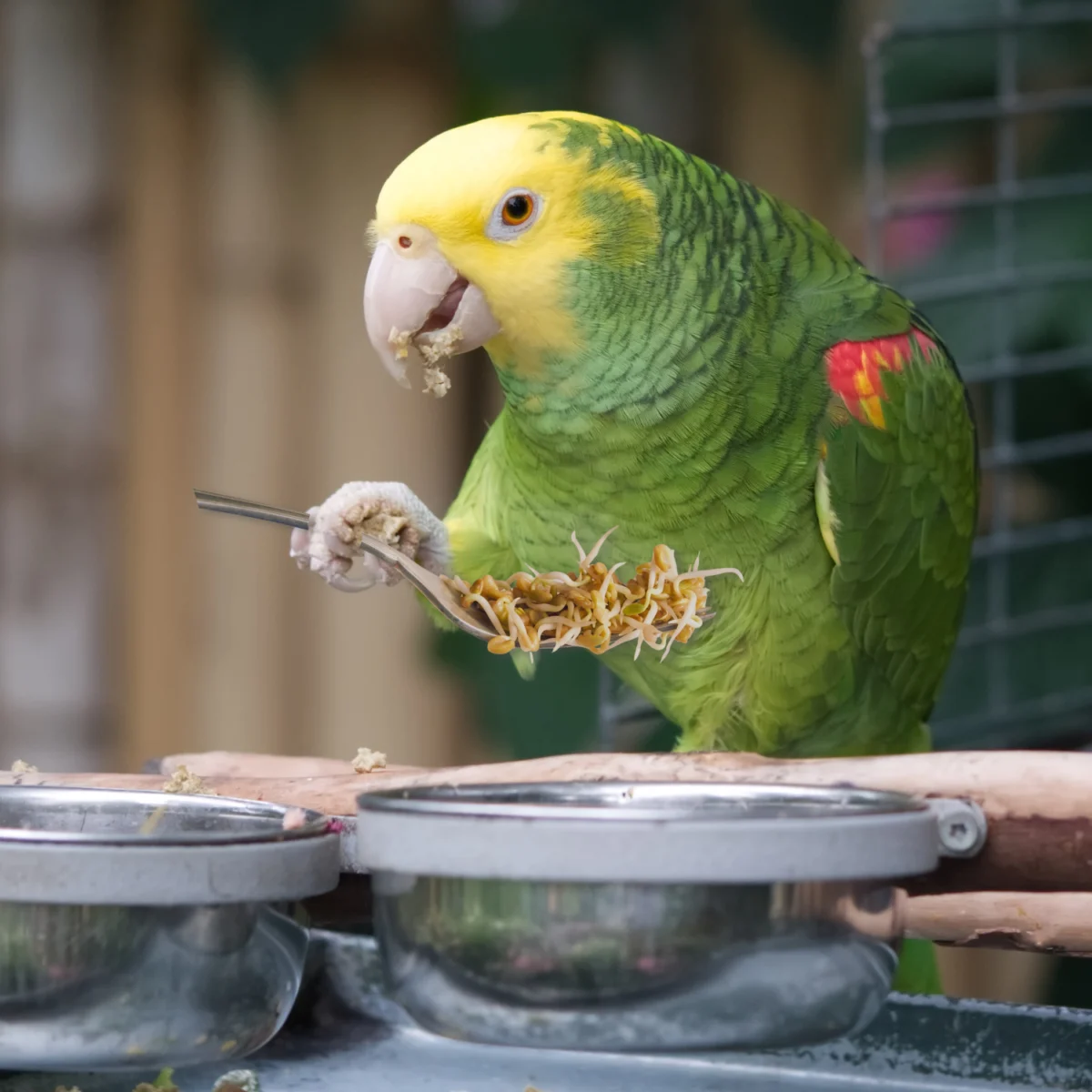
The integration of sprouts is particularly notable. Sprouting dormant seeds initiates a biochemical process that converts complex starches into simpler, more digestible forms, while simultaneously increasing the water content of the food. For birds that have historically rejected fresh vegetables, sprouts often serve as a bridge, offering a familiar texture with superior nutritional density.
The Role of the Nervous System in Gut Health
A critical, yet often overlooked, aspect of avian digestion is the bidirectional communication between the central nervous system and the enteric nervous system. Parrots are highly sensitive to their environment; changes in household dynamics, seasonal hormonal fluctuations, or even minor shifts in their physical surroundings can trigger "stress poops."
Clinical data suggests that the gut is frequently the first organ system to manifest the physical symptoms of anxiety. When a bird is stressed, the release of glucocorticoids can accelerate gut motility, leading to watery droppings. Managing this is not solely a matter of diet; it requires a holistic approach that includes stress-mitigation strategies. The use of calming, tea-based botanical infusions has shown promise in anecdotal and preliminary studies for birds experiencing transient, stress-related digestive disturbances.
Addressing the Probiotic Debate
The marketing of avian probiotics has led many owners to view these supplements as a panacea for all digestive woes. However, veterinary consensus suggests that while probiotics can be beneficial during or after antibiotic treatment, they are not a substitute for a robust, fiber-rich diet. A healthy microbiome is the product of long-term feeding habits. When a bird consumes a diverse array of plants, the microbiome naturally self-regulates. Relying on a powder to "fix" a poor diet is a temporary solution that fails to address the foundational lack of nutritional variety.
When to Seek Professional Care
While proactive dietary management is effective for mild irregularities, it is imperative that owners distinguish between nutritional adjustment and medical emergency. Veterinary intervention is non-negotiable if the bird exhibits:
- Regurgitation or Vomiting: Unlike courtship behaviors, clinical vomiting is often a sign of obstruction or infection.
- Hematochezia: Any presence of blood in the stool.
- Weight Loss: Rapid or significant decline in muscle mass (monitored via keel bone palpation).
- Postural Changes: A bird that remains fluffed, lethargic, or holds its head in a tucked position is showing classic signs of illness.
Broader Implications for Avian Wellness
The current shift in avian care toward "naturalistic feeding" represents a move away from the convenience-based models of the late 20th century. By prioritizing moisture, fiber, and botanical diversity, owners are essentially attempting to replicate the nutrient density and variety of a wild diet.
The broader implication is a move toward preventative care. By monitoring the quality and frequency of droppings as a daily metric, owners can identify the "low-grade dietary stress" mentioned earlier and intervene long before a bird requires clinical treatment. This shift not only improves the bird’s digestive function but also contributes to long-term vitality, better feather quality, and improved immunological resilience.
As research in avian nutrition continues to evolve, the consensus remains clear: the most effective way to support a bird’s health is to move beyond the static bowl of dry feed. Instead, the focus should remain on creating a dynamic, nutrient-dense, and moisture-rich environment that encourages the bird to engage in the natural, complex feeding behaviors for which it is evolutionarily adapted. This approach, while requiring more time and effort from the owner, offers the most sustainable pathway to maintaining a healthy avian companion.

