


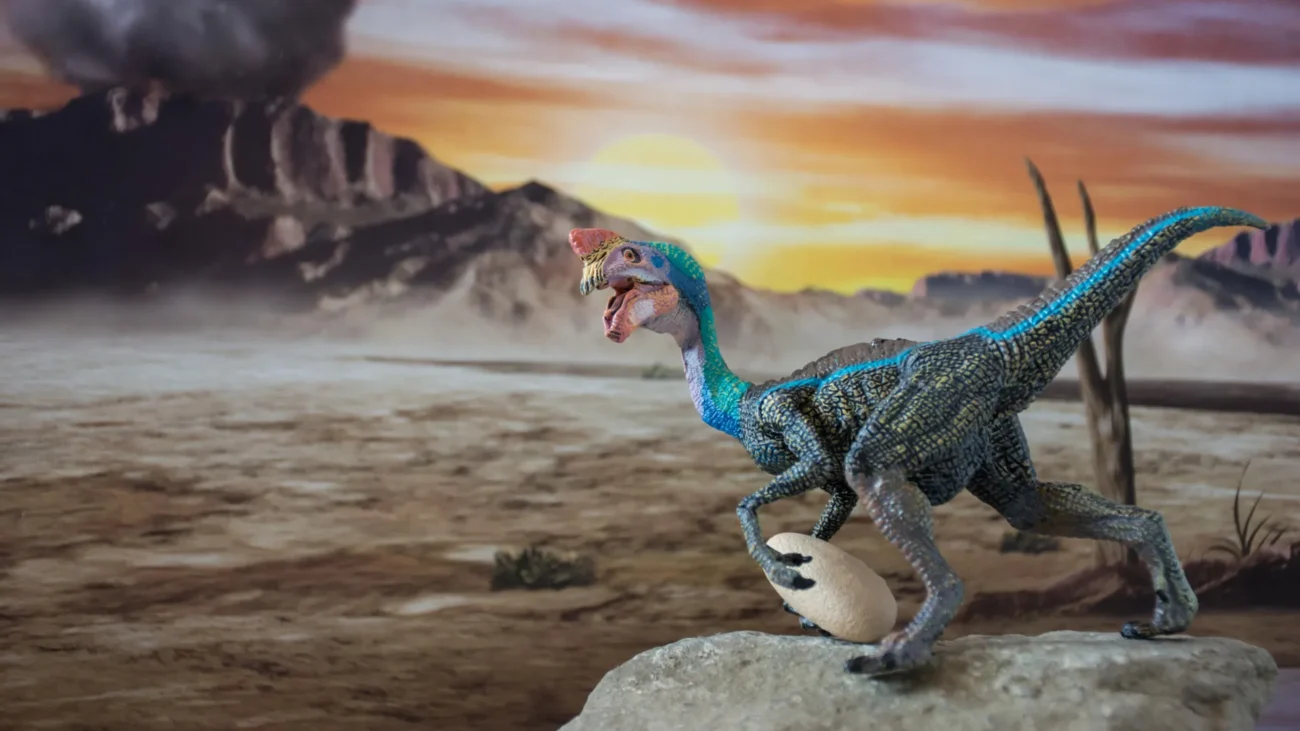
For generations, paleontologists have debated the reproductive habits of non-avian theropod dinosaurs, questioning whether creatures like the feathered, bird-like oviraptors incubated their eggs with the devoted body heat of modern avian species or relied on external environmental sources akin to modern reptiles. A groundbreaking study published in the scientific journal Frontiers in Ecology and Evolution has shed new light on this enduring evolutionary mystery. By merging physical experimentation with advanced computer simulations, an international research team has demonstrated that oviraptors likely utilized a hybrid incubation strategy, acting as "co-incubators" alongside the natural heat of the sun. This revelation not only bridges a critical gap in our understanding of prehistoric parenting behaviors but also redefines how scientists view the evolutionary transition from reptiles to birds.
The core of the investigation centered on Heyuannia huangi, a distinct species of oviraptor that roamed the earth approximately 70 to 66 million years ago during the Late Cretaceous Period. Measuring roughly 1.5 meters in length and weighing in at an estimated 20 kilograms, this bipedal dinosaur built complex, semi-open nests featuring intricate double rings of elongated eggs. To model how these ancient creatures warmed their clutches, researchers in Taiwan constructed a life-sized physical replica of the dinosaur alongside artificial nests. The torso of the model was meticulously assembled using a supportive wooden framework, lightweight polystyrene foam, and layers of cotton, cloth, and bubble paper designed to simulate the soft tissues of a brooding adult. Concurrently, resin was cast to replicate the unique morphological structure of oviraptor eggs—a task complicated by the fact that their geometry differs vastly from that of any living organism today.
This hands-on reconstruction allowed scientists to evaluate how varying environmental conditions and the physical positioning of the adult dinosaur impacted internal egg temperatures. The findings indicate that the relative position of the brooding adult played a decisive role in embryonic development across the clutch. Under cooler environmental scenarios, eggs situated in the outer ring of the nest exhibited temperature disparities of up to 6 degrees Celsius compared to those closer to the center. Such thermal inconsistency would have inevitably induced asynchronous hatching, meaning certain offspring within the same clutch emerged significantly earlier than others. Conversely, under warmer simulated conditions, the temperature variance between inner and outer eggs plummeted to a mere 0.6 degrees Celsius, heavily suggesting that ambient sunlight served as a vital supplementary heat source.
Contextualizing the Evolutionary History of Oviraptors
To fully comprehend the significance of these findings, it is essential to examine the broader historical context of oviraptor research. Living between 100 and 66 million years ago across what is now modern-day Asia—with particularly rich fossil beds discovered in Mongolia and China—oviraptors were small-to-medium-sized omnivores characterized by beak-like jaws, long necks, and prominent cranial crests. When the first fossil of this group was unearthed near a clutch of eggs in the early 20th century, researchers mistakenly assumed the dinosaur was raiding a foreign nest, inspiring the moniker Oviraptor, which translates directly to "egg thief."
Decades of subsequent fossil discoveries ultimately vindicated the species. Paleontologists uncovered preserved adult specimens sitting atop nests in classic brooding postures, confirming that these animals were fiercely protective parents rather than thieves. Because oviraptors share anatomical and behavioral traits with both non-avian dinosaurs and modern birds, they occupy a crucial position in evolutionary biology. Their skeletal adaptations, complex feather structures, and dedicated nesting habits demonstrate that many sophisticated parental care behaviors evolved millions of years before the appearance of the first true birds.
Evaluating Modern Birds Versus Prehistoric Dinosaurs
The recent study provides a direct comparative analysis between oviraptor brooding techniques and those of modern avian species. Today’s birds rely heavily on thermoregulatory contact incubation, a highly efficient process wherein an adult directly transfers internal body heat to every egg by sitting firmly upon them. This modern strategy requires the parent to maintain consistent physical contact with the entire clutch, act as the exclusive heat source, and regulate temperatures within a very narrow, optimal range.
The physical and computational models constructed by the Taiwanese research team revealed that oviraptors could not fulfill these stringent biological criteria. Because of their unique nest architecture and body proportions, the adults were physically incapable of making direct contact with every egg simultaneously. Consequently, the researchers concluded that oviraptors and ambient sunlight acted as co-incubators. While this method yielded a lower overall incubation efficiency when compared to contemporary birds, the researchers emphasize that this lower efficiency does not equate to an evolutionary failure.
"Modern birds aren’t ‘better’ at hatching eggs," explained Dr. Tzu-Ruei Yang, senior author of the study and associate curator of vertebrate paleontology at Taiwan’s National Museum of Natural Science. "Instead, birds living today and oviraptors have a very different way of incubation or, more specifically, brooding. Nothing is better or worse. It just depends on the environment."
Implications and Future Directions in Paleontological Research
The implications of this study extend well beyond the specific nesting habits of Heyuannia huangi. By successfully pairing physical reconstructions with sophisticated heat-transfer computer modeling, the research team has pioneered a robust methodology for investigating prehistoric reproduction—an area of paleontology that has historically relied solely on static fossil records. This interdisciplinary approach allows modern scientists to test complex behavioral hypotheses that were once considered entirely untestable.
Furthermore, the study highlights the changing global climate between the Late Cretaceous Period and the modern era. Earth’s atmospheric conditions, ambient temperatures, and solar radiation levels 70 million years ago differed significantly from today’s climate, factors that must be integrated into future paleobiological models. Oviraptors themselves are believed to have sustained significantly longer incubation periods than their modern avian descendants, requiring a delicate balance between parental guarding and environmental exposure.
Beyond the scientific contributions, the successful completion of this project carries considerable symbolic weight for the international academic community. Led by a team based in Taiwan—where native dinosaur fossils have never been discovered—the research serves as a powerful reminder that geographical limitations do not preclude groundbreaking scientific discovery. As first author Chun-Yu Su, who was a high school student in Taichung when the research was conducted, noted alongside his colleagues, the fusion of innovative engineering, computational power, and classical paleontology continues to unlock the deepest secrets of our planet’s ancient past, proving that the evolutionary story of dinosaurs is still being written.

